


How to Build Your Outdoor Spa Brand with Factory Support?
2026-09-24 15:35Driven by the global trend of upgrading wellness consumption, shifting home leisure habits, and the rise of high-end outdoor lifestyles, outdoor spa equipment is evolving from a niche amenity found only in select luxury residences or hotels into a key feature of home gardens, commercial resorts, fitness centers, and wellness spaces. Market analyses indicate that the global outdoor spa equipment sector will continue to grow steadily in the coming years—particularly in North America, Europe, Australia, and the Middle East—as consumer demand rises for home wellness management, relaxation, and outdoor recreational spaces.
However, for companies aiming to enter this industry and establish their own outdoor spa brands, the market opportunity is accompanied by a persistent challenge: while many brands recognize the demand for these products, they often underestimate the complexity involved in manufacturing them.
Many new entrants mistakenly believe that simply finding a supplier to manufacture a few hot tubs with similar aesthetics—and then slapping on their own brand label—is enough to quickly enter the market. The reality, however, is far more complex. Outdoor spa equipment is not merely a simple plastic product or a standard household item; it encompasses a wide range of specialized fields, including water circulation systems, electrical safety, heating efficiency, thermal insulation structures, jet design, material weather resistance, smart control systems, and long-term after-sales maintenance.
To cut costs, some manufacturers lacking technical expertise often resort to using low-grade materials, employing rudimentary assembly methods, or bypassing systematic testing protocols. While such products may offer a price advantage during initial sales, they frequently encounter issues once put into actual use—such as unstable water temperatures, excessive noise, leaks, control system failures, and poor thermal insulation. For companies aspiring to build a brand with long-term viability, these quality issues not only tarnish product reviews but can also severely damage the brand's reputation.
Therefore, the core question for companies truly committed to building an outdoor spa brand is not "Where can I buy a batch of outdoor spa equipment?" but rather "How can I find a professional factory capable of supporting the brand's long-term growth?"
A mature outdoor spa manufacturing facility should offer more than just production capacity; it should serve as a technical partner in the brand's development. From product R&D, structural optimization, and supply chain integration to quality control, certification support, and OEM/ODM customization capabilities, the comprehensive strengths offered by a factory often determine whether an outdoor spa brand can establish a competitive edge in a crowded market.
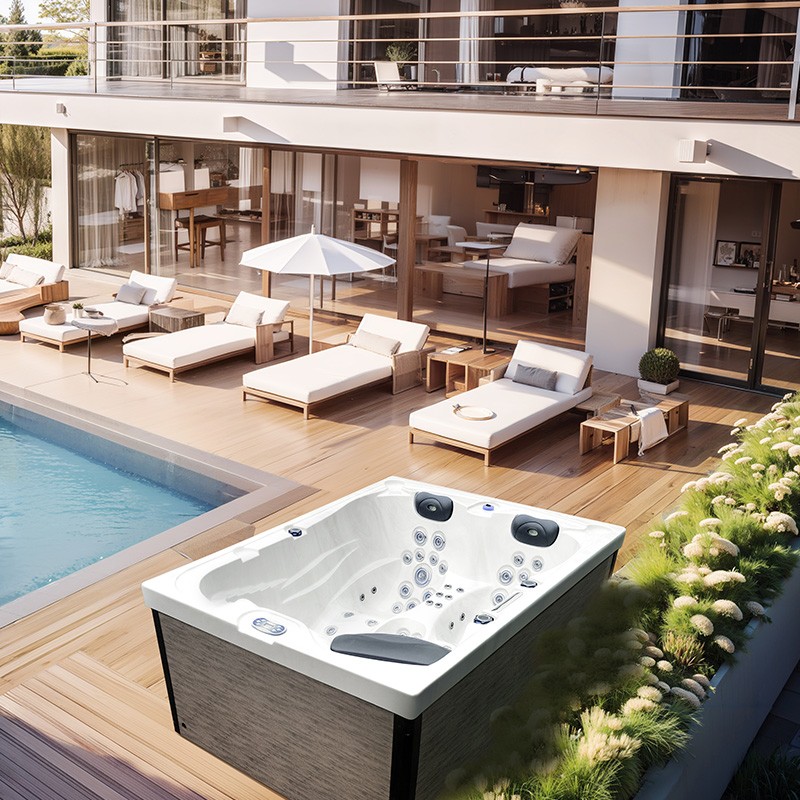
What are the core challenges companies face when building an outdoor spa brand?
1. Lack of professional manufacturing expertise makes it difficult to control product quality
Outdoor spa equipment is a complex, integrated product that combines mechanical engineering, electrical control systems, water treatment technology, and ergonomic design. For instance, a high-quality spa hot tub typically comprises several core components: massage jet systems, water pumps, filtration systems, heaters, control panels, lighting systems, insulation layers, and the acrylic shell.
Flaws in the design of any single component can compromise the ultimate user experience.
For example, simply increasing the number of massage jets is not necessarily better; the configuration must be balanced against pump power, piping layout, and targeted massage zones. If the number of jets is increased without adequate pump performance, water pressure drops, preventing consumers from experiencing an effective massage.
Similarly, the insulation capability of outdoor spa equipment directly impacts both user experience and operating costs. To cut production costs, some low-end products use only basic insulation materials, whereas premium products typically employ structures like closed-cell foam to enhance heat retention. For users in cold regions, insulation performance can even determine the equipment's year-round usability.
Therefore, a truly capable outdoor spa factory must possess comprehensive engineering and development capabilities, rather than relying merely on sourcing parts for simple assembly.
2. Difficulty for brands to independently establish a supply chain system
For startup outdoor spa brands, building an in-house production system usually requires significant capital investment—covering factory facilities, equipment, engineering teams, quality inspection systems, and supply chain resources.
A complete production system for outdoor spa equipment involves a wide array of partners, including suppliers of acrylic materials, water pumps, electrical control systems, filtration equipment, and electronic components, as well as packaging and logistics networks. A disruption at any stage can jeopardize product delivery.
For many brands, the real challenge is not a lack of market demand, but the absence of a stable manufacturing foundation. In contrast, partnering with established factories—utilizing OEM or ODM models to enter the market—can significantly reduce upfront investment. It also allows companies to leverage existing technical expertise, production experience, and supply chain infrastructure to launch products quickly.
For instance, LOVIA® has long specialized in the wellness and hydrotherapy equipment sector. We provide home and commercial hydrotherapy solutions to global clients through the R&D, production, and sales of outdoor hydrotherapy equipment, including spa hot tubs, swim spas, and cold plunge tubs. Companies can develop branded products by leveraging professional manufacturing capabilities rather than building a production system from scratch.
3. Price-based competition leads to severe market homogenization
The outdoor hydrotherapy equipment industry has grown rapidly in recent years, attracting new market entrants. However, some companies compete using low-price strategies, securing orders by downgrading material specifications, cutting testing procedures, or reducing after-sales service costs.
While this model may lower sales prices in the short term, it erodes industry trust in the long run.
When consumers purchase outdoor hydrotherapy equipment, they are not merely buying a standard commodity; they are investing in a user experience that will last for years—or even a decade or more. Frequent equipment malfunctions lead to higher repair costs and user dissatisfaction, regardless of the low initial purchase price.
For brands, the truly effective way to compete is not simply to lower prices, but to enhance product value through manufacturing capabilities while maintaining reasonable costs. Key areas for value enhancement include more stable water circulation systems, superior electrical safety, better thermal insulation designs, richer product configurations, and comprehensive after-sales support.
This is why an increasing number of overseas hydrotherapy brands are seeking manufacturing partners with long-term R&D and production capabilities, rather than simply looking for the lowest-priced suppliers.
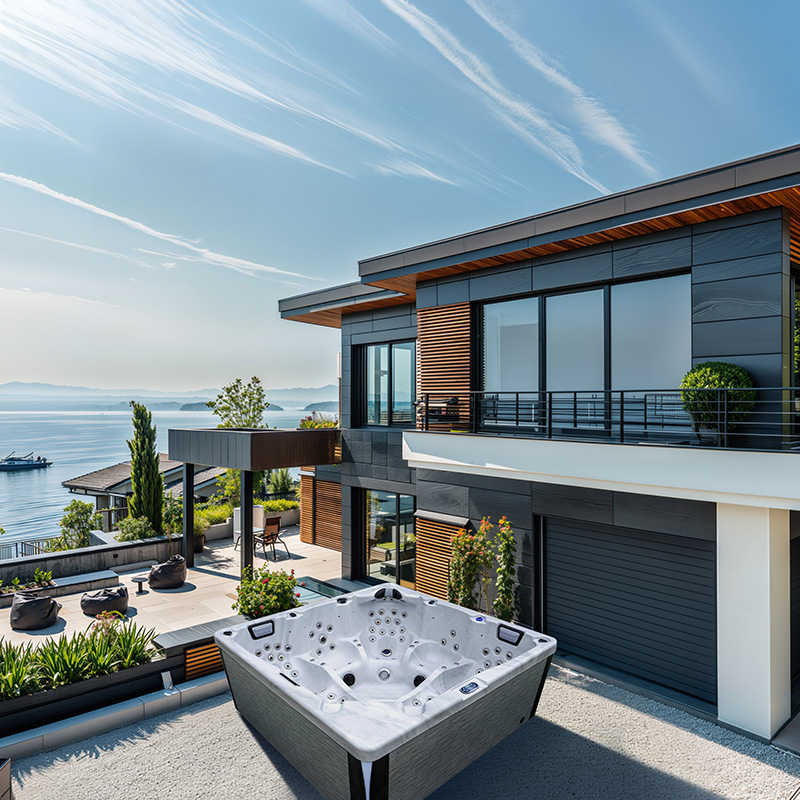
Why is factory support a crucial foundation for building an outdoor hydrotherapy brand?
1.Professional factories assist brands with product positioning and R&D planning
The first step in building an outdoor hydrotherapy brand is not immediate production, but clearly defining the target market.
Consumer needs for outdoor hydrotherapy equipment vary significantly by region. For example:
The North American market prioritizes residential backyard use, high-capacity massage experiences, and smart control features; European consumers focus on energy efficiency, eco-friendly materials, and product certifications; and hotels and commercial projects prioritize equipment stability, ease of maintenance, and long-term operating costs.
Without manufacturing-side experience, brands risk a mismatch between product positioning and actual market demand. A professional outdoor spa equipment factory can offer R&D recommendations based on market positioning, including:
•Product dimension planning;
•Jet layout design;
•Pump configuration schemes;
•Heating system selection;
•Control system matching;
•Exterior color and material selection;
•Energy-saving and insulation solutions.
LOVIA® has accumulated extensive product development experience through years of manufacturing. Our current products feature jet configurations ranging from 30 to 90 jets depending on the model, pump power between 2 and 5 horsepower, and a standard 3kW heating system. We also provide electrical configurations—such as 110V, 220V, and 380V—to meet diverse market demands, enabling brand clients to develop products tailored to their target markets.
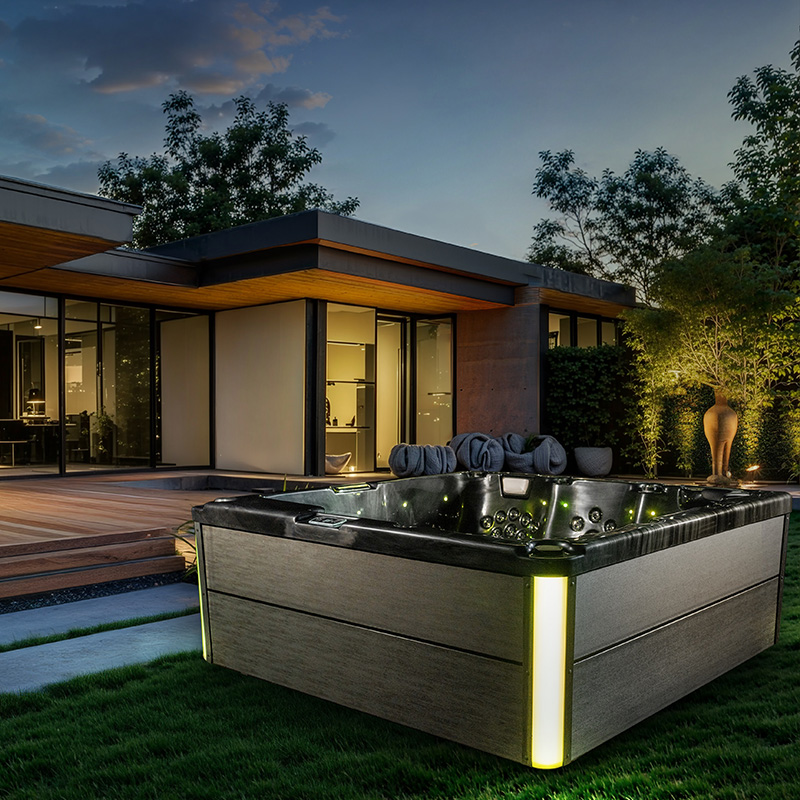
2.Stable production capacity determines a brand's supply chain competitiveness
The growth of an outdoor spa brand ultimately depends on stable delivery capabilities.
If a brand secures orders through marketing efforts but the manufacturing factory fails to deliver on time, it can damage channel relationships and erode consumer trust.
Therefore, when selecting a manufacturing partner for outdoor spa equipment, it is crucial to evaluate the following aspects:
First, production scale.
Large-scale manufacturing bases typically possess more robust production processes and supply chain management capabilities. For instance, LOVIA® operates a production facility spanning approximately 45,000 square meters, equipped with 12 production lines and a workforce of over 200 employees. With a monthly capacity of 1,200 units, we can meet the procurement needs of clients of all sizes.
Second, quality control systems.
Outdoor spa equipment operates in environments involving water, electricity, and high temperatures; therefore, quality testing is critical.
Established factories usually implement multi-stage testing systems covering everything from raw materials to finished products.
Examples include:
IQC (Incoming Quality Control) to verify specifications of core materials;
IPQC (In-Process Quality Control) to monitor key production stages;
OQC (Outgoing Quality Control) to conduct comprehensive testing of the finished unit.
LOVIA® implements rigorous IQC, IPQC, and OQC processes. For example, we control acrylic material thickness within a tolerance of ±0.1mm; conduct a 0.3MPa pressure leak test for 30 minutes on every tenth unit; and perform tests for jet pressure, heating precision, and electrical safety. These standardized processes help brands mitigate after-sales risks and enhance market competitiveness.
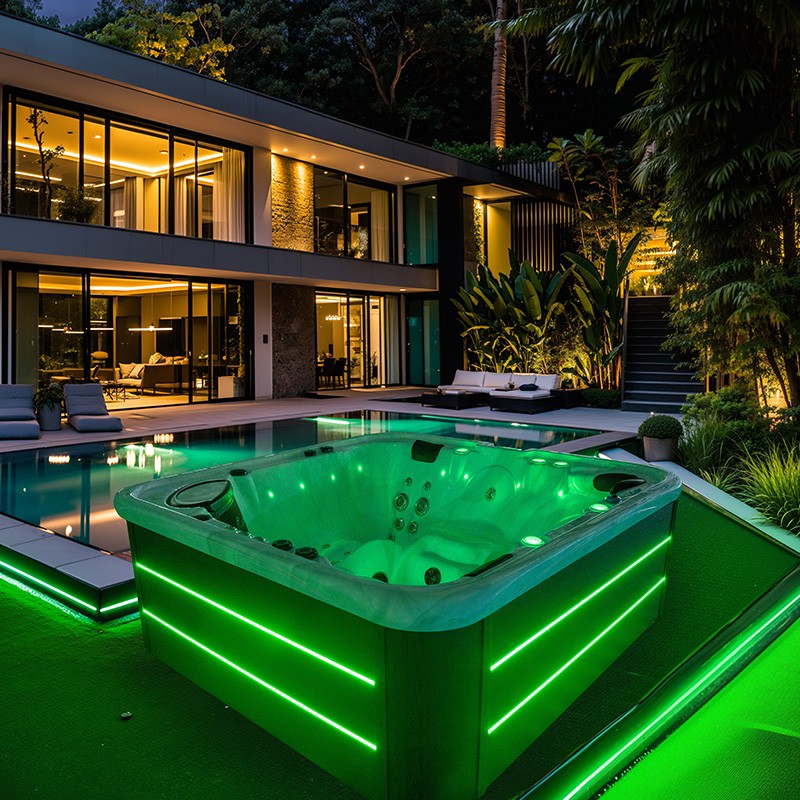
FAQ: Common Questions About Building an Outdoor Spa Brand with a Manufacturing Partner
Q1: Can I create my own brand without prior experience in manufacturing outdoor spa equipment?
Yes. Many overseas brands do not build their own factories; instead, they partner with professional manufacturers through OEM/ODM models. The key is selecting a partner with capabilities in R&D, production, certification, and supply chain management.
Q2: What is the Minimum Order Quantity (MOQ) for outdoor spa equipment OEM?
MOQs vary depending on the product model and the level of customization. Standard products usually have lower MOQs, whereas projects involving mold development, aesthetic modifications, or special configurations require a project-specific assessment.
Q3: Should an outdoor spa brand prioritize price or quality?
In the long run, quality and reliability are far more important. Low pricing may help a brand secure orders quickly; however, a high product failure rate drives up after-sales costs and damages the brand's reputation.
Q4: What are the most important criteria when selecting a manufacturer for outdoor spa equipment?
It is recommended to focus on R&D capabilities, production scale, quality management systems, certification expertise, supply chain capabilities, and OEM/ODM experience, rather than simply comparing price quotes.
Q5: Why are more and more brands choosing to partner with specialized factories?
Because specialized factories provide comprehensive support—ranging from product development to mass production—helping brands reduce investment risks, accelerate market entry, and continuously enhance product competitiveness.