


Commercial vs. Residential Outdoor Hot Tubs: What’s the Difference?
2026-09-30 15:35From five-star hotels and boutique resorts to spa clubs, fitness centers, wellness facilities, and high-end vacation rentals, an increasing number of commercial operators are installing professional-grade outdoor hot tubs to create unique, differentiated experiences.
However, during the procurement process, many clients wonder: what exactly distinguishes a commercial outdoor hot tub from a residential model? Given that they look similar and both serve the purpose of hot-water soaking and massage, why can't commercial venues simply choose standard residential models? Is a commercial hot tub merely larger and more expensive, or are there fundamental differences in structural design, operational capabilities, water treatment systems, and service life?
In reality, while commercial and residential outdoor hot tubs share the same basic operating principles, their usage scenarios differ vastly. Residential hot tubs typically cater to a small number of users—usually 2 to 8 people—with intermittent usage patterns (often just 30 minutes to two hours a day). Since the equipment remains idle for most of the time, manufacturers prioritize comfort, aesthetics, energy efficiency, and ease of installation for the home.
Commercial outdoor hot tubs, conversely, operate in a completely different environment. A resort hotel, for instance, might host dozens or even hundreds of users daily. Especially during peak tourist seasons, the equipment may run continuously from morning till night.
This high-frequency usage places greater demands on the equipment:
First, the circulation system must operate stably over the long term. While a standard residential unit might circulate water for only a few hours a day, commercial equipment typically requires prolonged circulation to maintain water quality. Second, the structure must withstand heavier loads. Frequent entry and exit by commercial users, combined with varying body weights and high usage frequency, place greater stress on the equipment.
Third, water treatment capabilities must be superior. A larger number of users introduces more contaminants—such as sweat, sebum, and skincare products—into the water, necessitating highly efficient filtration and disinfection systems.
Therefore, a commercial outdoor hot tub is not merely an enlarged version of a residential model; it is professional-grade equipment redesigned specifically for high-intensity operational environments.
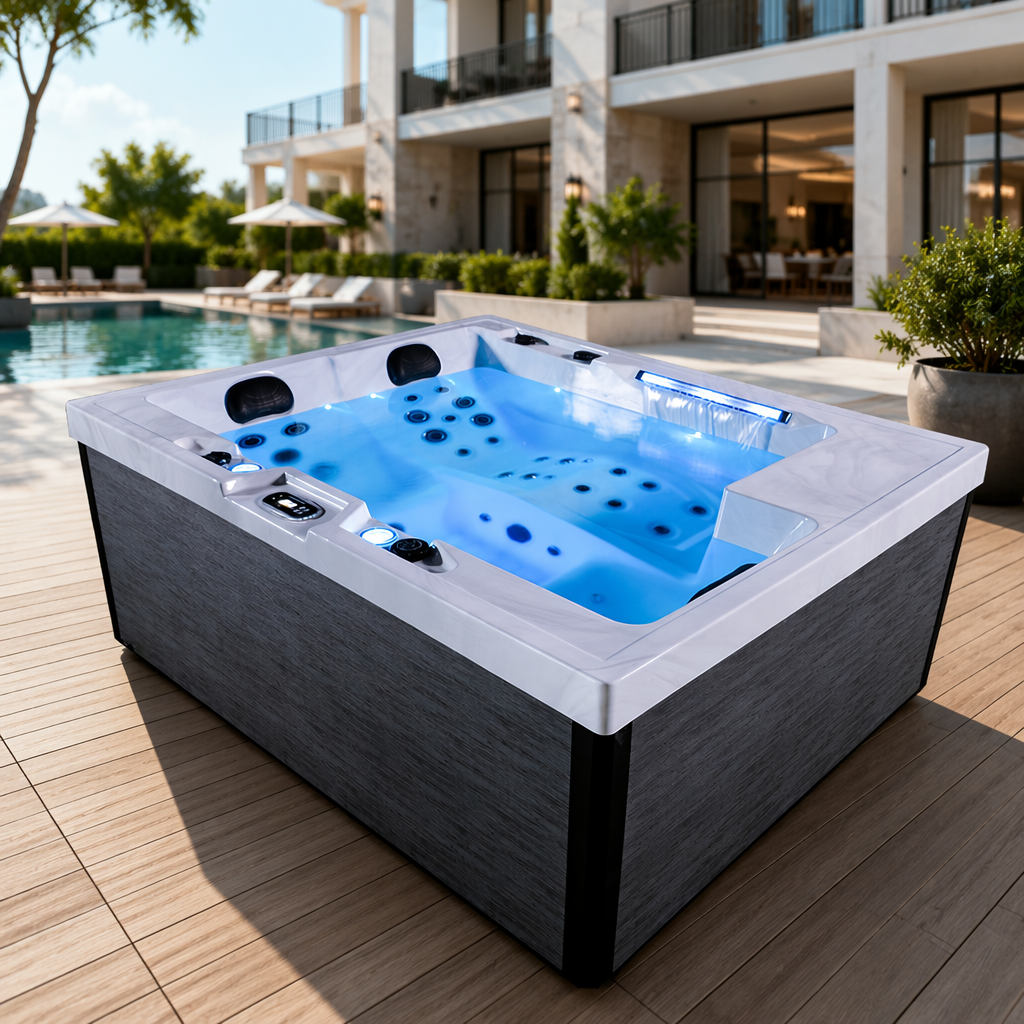
Commercial Outdoor Hot Tubs Feature More Durable Structural Designs
Structural durability is a key distinction between commercial and residential outdoor spa hot tubs.
Residential hot tubs are typically installed in private backyards, serving a limited number of users and requiring relatively simple maintenance; thus, their structure is designed primarily for stable, long-term household use.
Commercial hot tubs, however, must account for more demanding conditions. For instance, hotel guests may enter and exit the tub frequently, subjecting the equipment to greater mechanical stress. Consequently, commercial models often incorporate reinforced base support structures, more stable frame designs, and higher-grade shell materials.
Examples include:
Reinforced load-bearing structures at the base of the tub;
Internal support frames made from corrosion-resistant materials;
Increased acrylic shell thickness and more robust composite layering;
Exterior materials better suited for long-term outdoor exposure.
For commercial clients, equipment longevity impacts not only maintenance costs but also the overall guest experience. An outdoor spa hot tub prone to frequent breakdowns diminishes customer satisfaction and increases operational strain.
Therefore, commercial outdoor hot tubs prioritize long-term reliability over simply seeking the lowest purchase price.
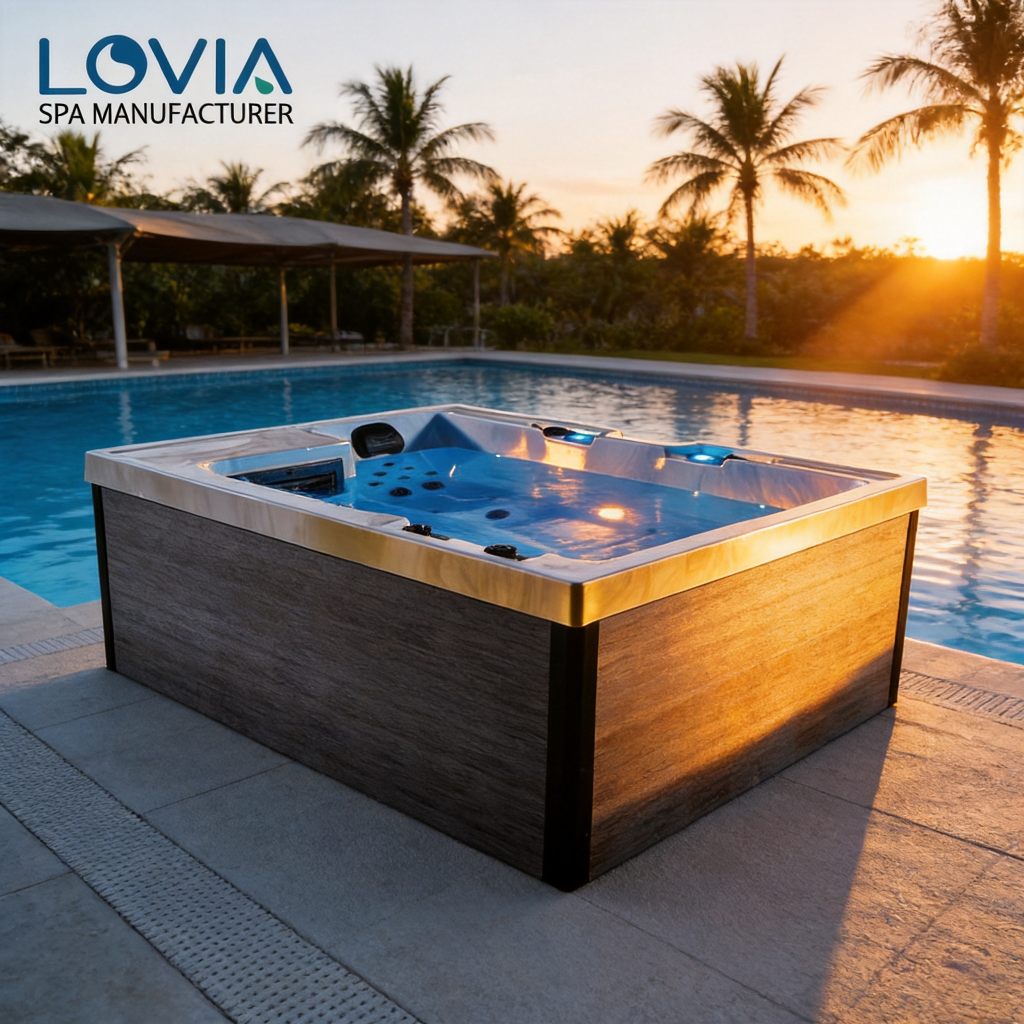
Commercial Outdoor Hot Tubs Feature More Powerful Massage Systems
The massage experience is a key value proposition of outdoor hot tubs, yet there are distinct differences between commercial and residential models in this regard.
Residential spa hot tubs are usually configured with a specific number of jets—ranging from 20 to 30 or even 50—to meet the household's daily relaxation needs.
Commercial outdoor hot tubs, however, place greater emphasis on consistent performance and the user experience over extended periods. Since different customers have varying preferences regarding massage intensity and target areas, commercial units are typically equipped with a wider range of jet types, including:
Back massage jets;
Shoulder massage jets;
Lumbar massage jets;
Foot massage jets;
Directional massage jets.
Additionally, commercial models usually require more powerful pump systems to ensure consistent massage pressure when multiple users are utilizing the unit simultaneously.
If a hotel or spa uses a standard residential outdoor spa hot tub, activating the massage function for multiple users at once can lead to drops in water pressure and diminished massage effectiveness, thereby compromising the user experience.
Consequently, commercial outdoor spa hot tubs typically employ higher-power circulation and massage pumps to meet the demands of simultaneous multi-user operation.
Water Treatment Systems: A Key Differentiator for Commercial Outdoor Hot Tubs
For commercial operators, water quality management is often a primary concern when selecting equipment.
Residential outdoor hot tubs generally serve a consistent group of users, making sources of contamination relatively controllable. Since the volume of contaminants introduced by family members is limited, standard filtration systems usually suffice.
In contrast, commercial outdoor hot tubs cater to a large number of different users daily, leading to a significantly faster rate of water contamination.
Substances such as sweat, sebum, cosmetics, sunscreen, and external dust inevitably enter the water. Without a robust water treatment system, issues like turbidity, excessive foaming, unpleasant odors, and bacterial growth can easily arise.
Therefore, commercial outdoor hot tubs are typically equipped with comprehensive water treatment solutions, including:
High-flow circulation filtration systems;
Multi-stage filtration units;
Ozone disinfection systems;
UV disinfection systems;
Smart water quality monitoring systems.
These features help commercial operators reduce the burden of manual maintenance and ensure consistent water quality.
For hotels and spas, water quality is not merely a matter of equipment operation; it directly impacts brand reputation.
Commercial Outdoor Hot Tubs Require Superior Heating and Insulation Capabilities
Energy consumption represents another significant difference between commercial outdoor hot tubs and residential models.
Outdoor spa hot tubs must maintain a constant temperature over extended periods—typically between 37°C and 40°C. If the unit lacks adequate insulation, the heating system will cycle on and off frequently, driving up operating costs.
Residential models are generally designed for intermittent use, allowing users to simply activate the heating system a few hours in advance. Commercial models are different. Hotels or spas require equipment to be ready for use at all times, necessitating highly efficient insulation structures and heating systems.
Professional commercial outdoor spa hot tubs typically feature:
Thicker insulation layers;
High-density insulation materials;
Energy-efficient circulation systems;
Smart temperature control technology.
High-quality units minimize significant heat loss through optimized insulation design. Over the long term, this energy-efficient design can substantially reduce energy costs for hotels.
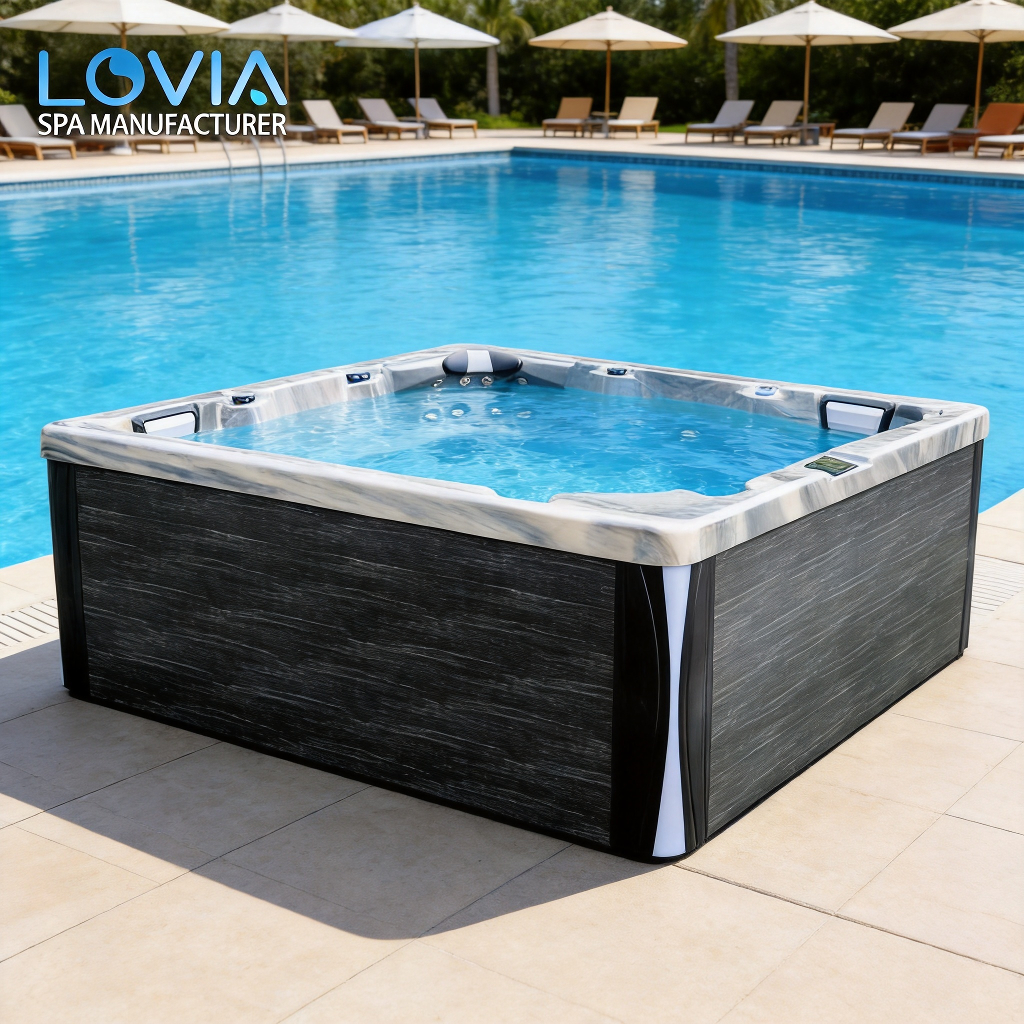
Commercial models are generally larger, but it’s not just about size
Many consumers assume the only difference between commercial and residential outdoor spa hot tubs is size.
In reality, size is merely a superficial distinction.
Commercial outdoor hot tubs usually have larger capacities to accommodate more users simultaneously. While a residential unit might suit 3 to 7 people, a commercial unit might be designed for 8, 10, or even more users.
However, a larger size implies:
Greater water capacity;
More powerful circulation capabilities;
Higher heating demands;
More complex water quality management.
Consequently, commercial units require comprehensive upgrades rather than simply increasing the tub's length and width.
A hot tub truly suitable for a commercial environment must maintain water circulation efficiency and user comfort alongside increased capacity.
Commercial Outdoor Hot Tubs Place Greater Emphasis on Safety Design
Commercial venues face customers of different ages and physical conditions every day, thus requiring higher levels of safety.
Residential users are usually familiar with their equipment and operate it according to household habits.
Commercial environments differ; hotel guests may be encountering the equipment for the first time, requiring robust safety features.
Examples include:
Non-slip bottom design;
Safety handrails;
Non-slip steps;
Smart temperature control;
Automatic protection systems;
Emergency stop functions.
These features reduce usage risks and enhance the customer experience.
For high-end hotels, safety is not merely an equipment requirement but a matter of brand responsibility.
Commercial Outdoor Hot Tubs Require Higher Maintenance
While all spa equipment requires maintenance, commercial outdoor spa hot tubs have more stringent maintenance standards.
Residential units might require water quality checks once a week and filter cleaning once a month.
Due to high usage frequency, commercial units require much more rigorous maintenance protocols.
Routine tasks typically include:
Daily monitoring of water quality parameters;
Regular cleaning of the filtration system;
Checking the operating status of circulation pumps;
Inspecting the heating system;
Periodic deep cleaning.
Inadequate maintenance can lead to water quality issues in commercial equipment, disrupting normal business operations.
Therefore, when purchasing outdoor spa hot tubs, commercial clients should look beyond the price and consider whether the supplier offers comprehensive technical support and after-sales service.
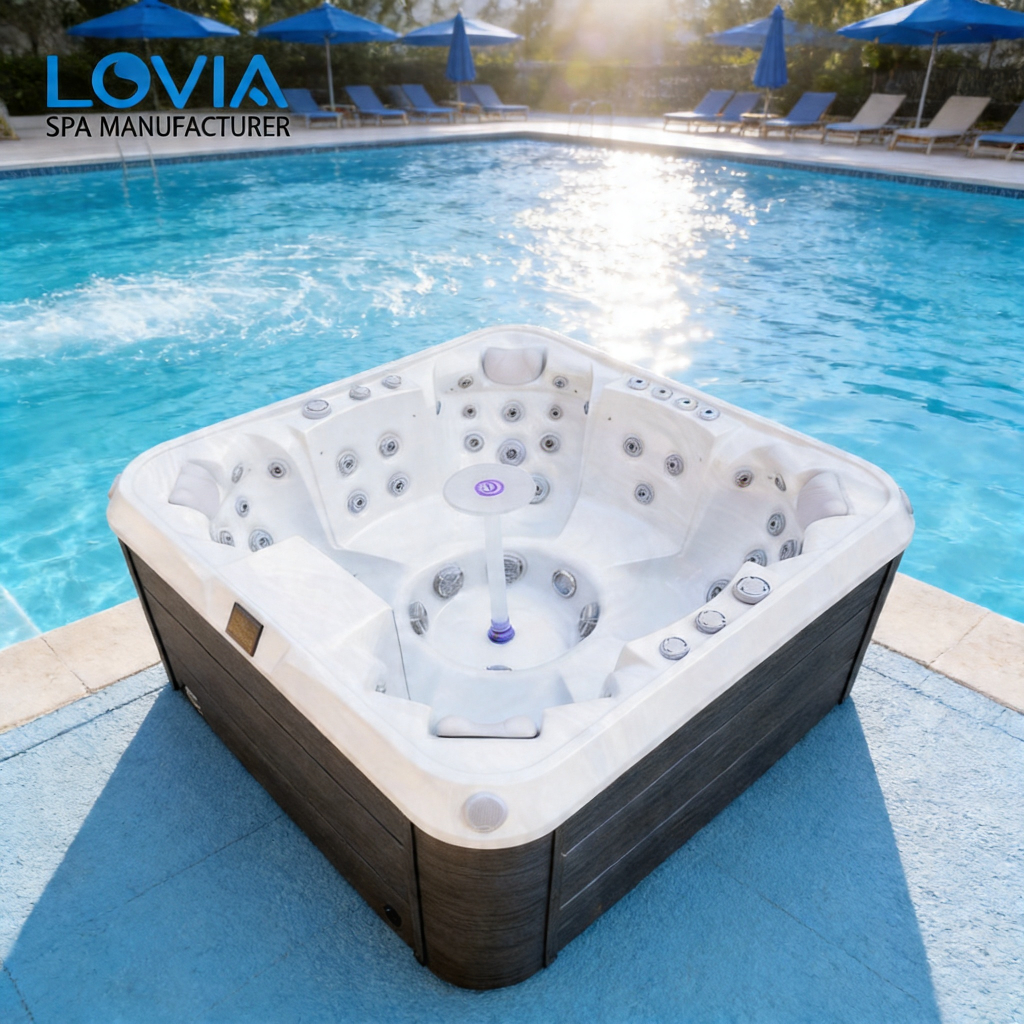
What factors should be considered when purchasing commercial outdoor hot tubs?
For hotels, resorts, and commercial spa projects, selecting an outdoor spa hot tub requires a comprehensive evaluation rather than focusing solely on appearance and price.
First, clarify the usage scenario. Different settings—such as hotel guest rooms, public spa areas, or private villa zones—require different models.
Second, focus on equipment stability. Commercial units operate for long hours daily, making the quality of core components—such as pumps, heaters, control systems, and filtration systems—crucial.
Third, consider the supplier's experience. Commercial projects often require custom designs (dimensions, colors, features, and installation plans), so the manufacturer's engineering capabilities are vital.
Fourth, consider long-term operating costs. The purchase price is merely the initial investment; energy consumption, maintenance costs, and equipment lifespan determine the long-term investment value.
FAQ
What is the main difference between commercial and residential outdoor hot tubs?
The primary difference is the intensity of use. Commercial outdoor hot tubs must withstand high-frequency, multi-user, long-term operation; consequently, they have stricter requirements regarding structure, water treatment, circulation systems, and durability.
Can hotels use standard residential outdoor spa hot tubs?
It is not recommended. Residential models generally cannot withstand the high-frequency usage found in commercial environments over the long term, leading to increased maintenance demands and a shortened equipment lifespan.
Do commercial outdoor spa hot tubs require daily maintenance?
Yes. Commercial units typically require daily water quality checks and regular cleaning of the filtration system based on usage frequency.
What is the typical lifespan of a commercial outdoor spa hot tub?
With proper maintenance, high-quality commercial outdoor spa hot tubs can provide stable service for many years; the exact lifespan depends on materials, configuration, and the level of maintenance.
What should commercial clients prioritize when purchasing outdoor spa hot tubs?
Beyond price, the focus should be on equipment reliability, water treatment capabilities, energy efficiency, supplier experience, and after-sales service capabilities.