


How to Assess the Jet Strength of a Spa Jacuzzi Tub?
2026-04-02 15:30When selecting or using a spa jacuzzi tub, many people invariably ask a fundamental question:“Is the jet strength of this spa jacuzzi tub powerful enough?”
Jet strength directly determines a spa jacuzzi tub's massage efficacy, comfort level, and functional value. If the jet strength is too weak, the massage effect will be negligible; conversely, if it is too strong, it may cause discomfort. Therefore, accurately assessing the jet strength of a spa jacuzzi tub is a crucial step—one that cannot be overlooked—during the purchasing, usage, and maintenance processes.
So, how can one scientifically determine whether a spa jacuzzi tub's jet strength is sufficiently powerful, by examining it from multiple angles—including structural design, configuration, technical parameters, and actual performance?
In this article, we will provide a professional, systematic, and comprehensive breakdown of the key methods for assessing the jet strength of a spa jacuzzi tub.
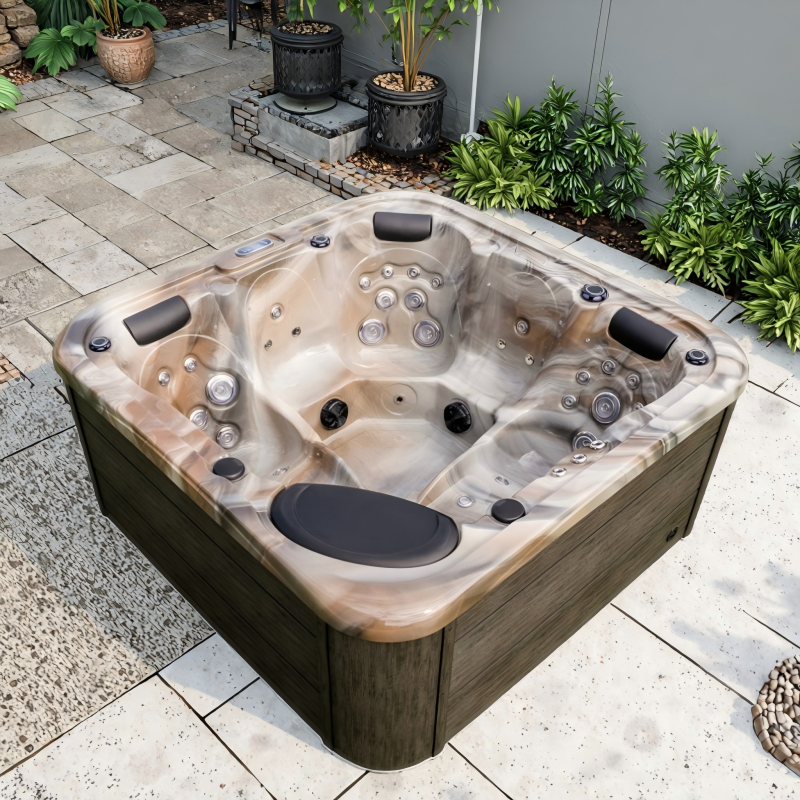
What Exactly Is "Jet Strength" in a Spa Jacuzzi Tub?
Before discussing how to assess jet strength, we must first clarify a fundamental concept: What constitutes the "jet strength" of a spa jacuzzi tub?
The Essence of Jet Strength
The jet strength of a spa jacuzzi tub refers to the impact force and coverage capability generated by the jets as they project a stream of water (or a mixture of water and air) onto the body within a given timeframe.
Jet strength is primarily manifested in the following aspects:
• The intensity with which the water stream impacts the skin.
• The degree of concentration or dispersion of the water stream.
• The depth to which the water stream penetrates the muscles.
• The rhythmic quality and consistency of the massage sensation.
Jet strength is not a singular parameter, but rather a composite outcome determined by the interplay of multiple system components.
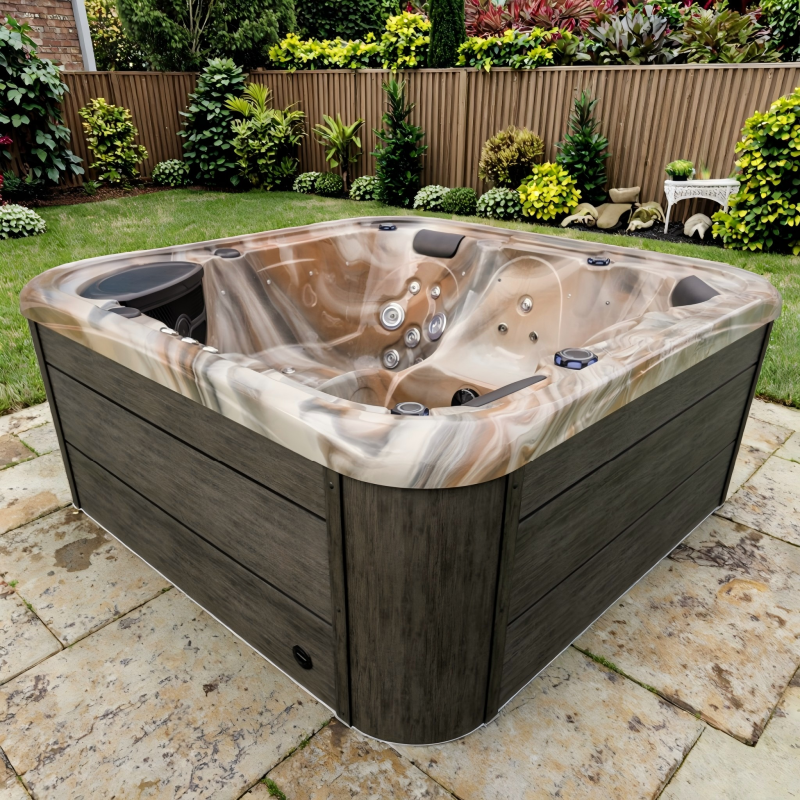
Why Is Jet Strength So Crucial for a Spa Jacuzzi Tub?
Jet strength serves as one of the key metrics for evaluating the core performance of a spa jacuzzi tub. Its importance is primarily reflected in the following areas:
1. Determining the Efficacy of the Massage
One of the primary functions of a spa jacuzzi tub is to provide a massage to the body through the flow of water. If the jet strength is insufficient, the water stream will merely skim the surface of the skin, failing to generate any substantial stimulation for the underlying muscles.
2. Influencing the Massage Experience for Different Body Parts
Different areas of the body—such as the back, lower back, shoulders and neck, or legs—have varying requirements regarding the intensity of the water stream's impact. When jet power is insufficient, certain deep muscle groups may barely perceive any massage effect.
3. Impact on User Comfort
Jet power that is too weak renders a hydro-massage bathtub—or "spa jacuzzi"—meaningless as a massage device; conversely, jet power that is too strong can cause a stinging sensation for the user. Therefore, appropriate and controllable jet power is of paramount importance.
How can one determine the jet power of a spa jacuzzi tub based on water pump specifications?
Among all the factors that determine jet power, the water pump serves as the core power source.
1. Water Pump Horsepower (Power Output)
Generally speaking, the common power range for water pumps used in hydro-massage bathtubs includes:
• 1.5 HP
• 2.0 HP
• 2.5 HP
• 3.0 HP and above
Assuming all other conditions remain equal, a higher-horsepower water pump generates greater water pressure, thereby ensuring more robust jet power.
2. Water Pump Rated Flow Rate
In addition to horsepower, one must also consider the water pump's flow rate parameters (such as GPM or L/min).
A high flow rate signifies that a larger volume of water is delivered per unit of time, which facilitates the creation of stronger and more stable jet effects.
3. Single-Pump vs. Multi-Pump Systems
• Single pump driving multiple jets: Jet power tends to be dispersed.
• Multi-pump zone-based driving: Each group of jets benefits from more independent and stable jet power.
Consequently, hydro-massage bathtubs equipped with multi-pump systems typically demonstrate a more balanced performance in terms of jet power.
Does a higher number of jets necessarily mean stronger jet power in a spa jacuzzi tub?
This is a very common question, yet one that is frequently misunderstood.
The answer is: Not necessarily.
1. The Relationship Between Jet Quantity and Jet Power
A high number of jets does not guarantee that the jet power from each individual nozzle will be strong. An increase in the number of jets implies that:
• The water flow must be distributed across a greater number of outlets.
• The water pressure delivered to each individual jet may decrease.
If the water pump capacity and plumbing design are not upgraded in tandem, increasing the number of jets may actually result in a dilution of jet power.
2. The More Critical Factor: "Matching Jets to Power Source"
High-quality hydro-massage bathtubs are designed to configure the number of jets rationally—based on the water pump's capabilities—rather than simply pursuing a high jet count for its own sake.
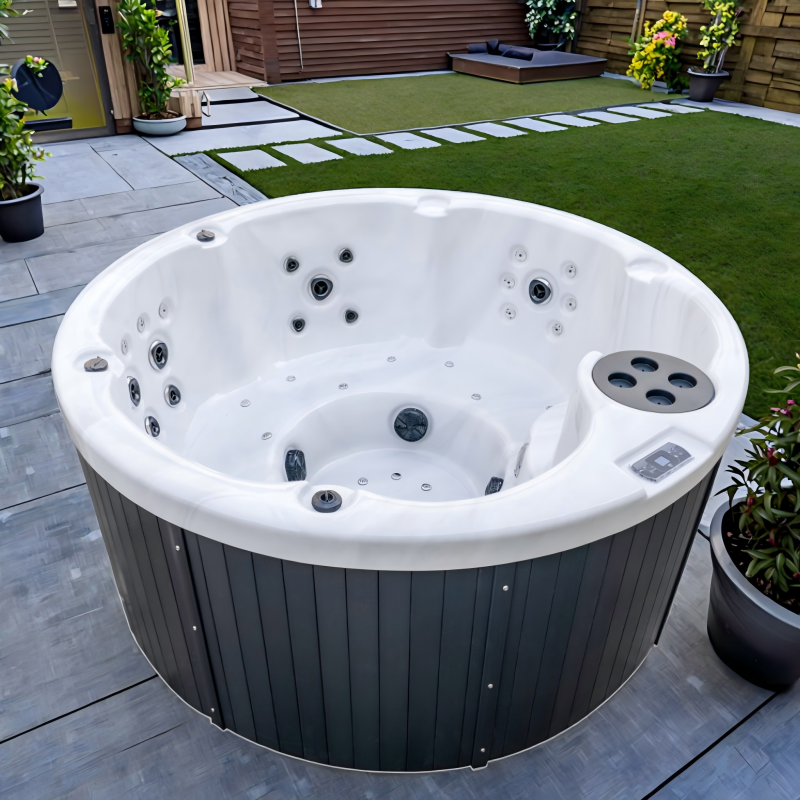
How significantly does nozzle structure affect the jet force in a spa jacuzzi tub?
The structure of the nozzle itself plays a crucial role in determining the performance of the jet force.
1. Nozzle Orifice Size
• Small-diameter nozzles: Produce a more concentrated water stream with stronger impact force.
• Large-diameter nozzles: Cover a larger surface area, but the impact force is relatively gentler.
2. Nozzle Rotatability or Adjustability
Rotatable nozzles allow the water stream to create a pulsating effect, giving the jet force a more rhythmic quality.
3. Nozzle Shut-off or Independent Control Capabilities
When specific nozzles are shut off, the water flow is redirected and concentrated through the remaining active nozzles, thereby intensifying the localized jet force.
Does the plumbing design of a spa jacuzzi tub affect the jet force?
Yes, and the impact is very significant.
1. Pipe Length and Number of Elbows
The longer the piping and the greater the number of elbows (bends), the higher the water flow resistance; consequently, the jet force is more prone to attenuation.
2. Pipe Diameter
An appropriately designed pipe diameter minimizes water flow loss, ensuring a more stable and consistent jet force.
3. Pipe Sealing Integrity
Even minor air leaks or water leaks within the piping system will directly diminish the jet force.
Do spa jacuzzi tubs offer adjustable jet force?
Whether or not the jet force can be adjusted is one of the key indicators used to assess the quality of a hydro-massage spa tub.
Common adjustment methods include:
• Nozzle adjustment (rotating to increase or decrease intensity)
• Zone-specific valve control
• Air valve regulation (adjusting the air-to-water mixing ratio)
Spa tubs equipped with multiple adjustment methods allow users to freely customize the intensity of the jet force according to their specific needs.
What role does the air mixing system play in the jet force of a spa jacuzzi tub?
Many hydro-massage spa tubs utilize a "water-plus-air" mixed-jet delivery method.
The benefits of air mixing include:
• Enhancing the tactile sensation of the water stream's impact
• Giving the jet force a more elastic or resilient quality
• Intensifying the perceived physical intensity of the massage
It is important to note that air mixing primarily enhances the *perceived* intensity of the jet force—the tactile sensation experienced by the body—rather than simply increasing the raw water pressure; nevertheless, it has a profound impact on the overall massage experience.
Is the intensity of the jet force related to the seating layout of the spa jacuzzi tub?
Yes, the layout design is equally important.
1. Ergonomic Layout
Whether the nozzles are precisely aligned with key areas—such as the back, lower back, shoulders, and neck—directly determines whether the jet force is effectively applied.
2. Differences Between Deep and Shallow Seating Positions
The water level varies depending on the seating position, which in turn affects the pressure performance of the nozzles during water discharge.
How can you assess jet force based on the actual water flow?
When using a hydro-massage bathtub, you can evaluate the jet force based on the following observable indicators:
• Does the water flow visibly push against the skin and muscles?
• Can you feel a steady, continuous impact?
• Are there distinct variations in intensity (strong vs. weak)?
• Can you achieve a noticeable difference in intensity through adjustment?
In a hydro-massage bathtub with powerful jet force, the feedback from the water flow is typically distinct, direct, and layered.
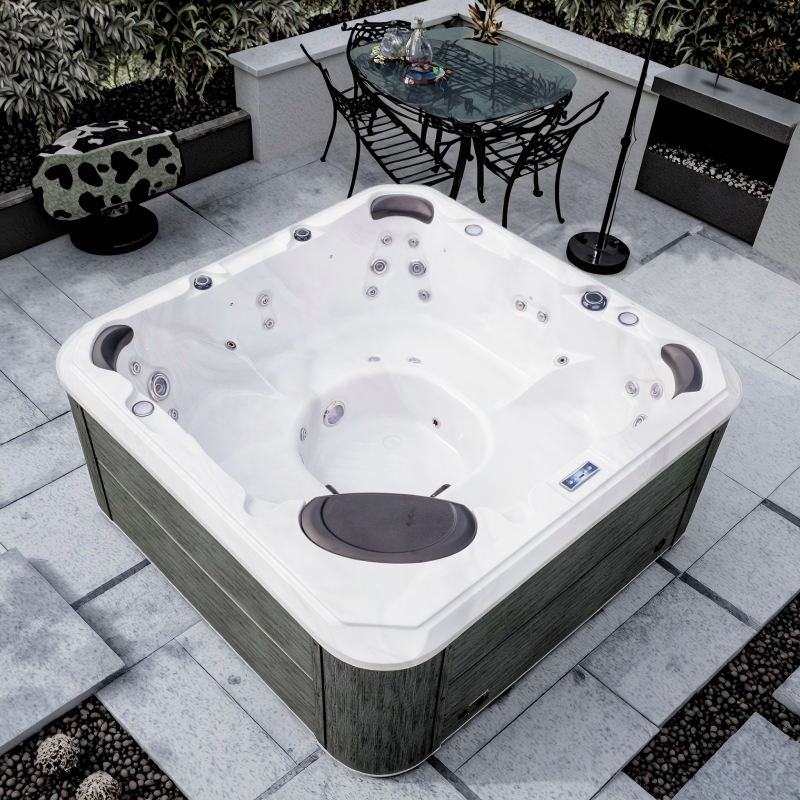
Do different massage needs require the same level of jet force in a spa jacuzzi tub?
Different individuals have varying requirements regarding jet force:
• Relaxation-focused needs: A preference for gentle, uniform jets.
• Deep-tissue massage needs: A requirement for more concentrated and powerful jets.
• Targeted massage needs: An emphasis on precision and controllability.
An excellent hydro-massage bathtub should be designed—through both its structural layout and adjustment mechanisms—to accommodate this diverse range of jet force requirements.
Common Misconceptions When Evaluating Spa Jacuzzi Tub Jet Force
Misconception 1: Focusing solely on the number of nozzles.
A high number of nozzles does not necessarily equate to powerful jet force.
Misconception 2: Focusing solely on pump power.
If the plumbing and nozzle designs are poorly engineered, even the most powerful pump will struggle to deliver effective results.
Misconception 3: Overlooking adjustability.
The ability to adjust the jet force is often far more practical and useful than simply having a high "maximum jet force."