


How Manufacturers Improve Water Flow Performance in Outdoor Swim Spa?
2026-09-18 15:35In the past, residential buyers of outdoor spa equipment focused primarily on hydrotherapy and relaxation. Today, however, more people seek a single unit that accommodates swim training, physical recovery, daily fitness, and family leisure. Consequently, outdoor swim spas have become key features in villa gardens, high-end residences, resorts, and wellness-oriented developments.
Compared to traditional outdoor hot tubs, the primary advantage of an outdoor swim spa hot tub is the addition of swim training capabilities. Equipped with high-performance water flow systems, these spas generate a continuous counter-current, allowing users to engage in swim-like training within a limited space—eliminating the need for a full-sized swimming pool. For households with limited space that still desire the benefits of a private pool, this equipment offers a flexible and efficient solution.
However, the user experience of an outdoor swim spa hot tub is determined not merely by its dimensions or aesthetics, but by the performance of its internal water flow system. While many consumers focus on the number of massage jets, smart control features, and visual design when shopping, they often overlook the importance of the water flow system. In reality, a superior outdoor swim spa requires a stable, uniform, and adjustable flow environment; without this, even a high-power unit may fail to deliver a comfortable, natural swimming experience.
For manufacturers, enhancing water flow performance is a complex undertaking that goes beyond simply increasing pump power. Optimization across multiple areas—including pump systems, outlet design, plumbing architecture, fluid dynamics simulation, smart controls, and overall structural design—is essential to providing users with an experience that closely mirrors professional training environments.
This article examines methods for improving water flow performance from a manufacturer's R&D perspective, detailing how various technologies influence the swimming experience, energy efficiency, and long-term value of outdoor swim spa hot tub combos.
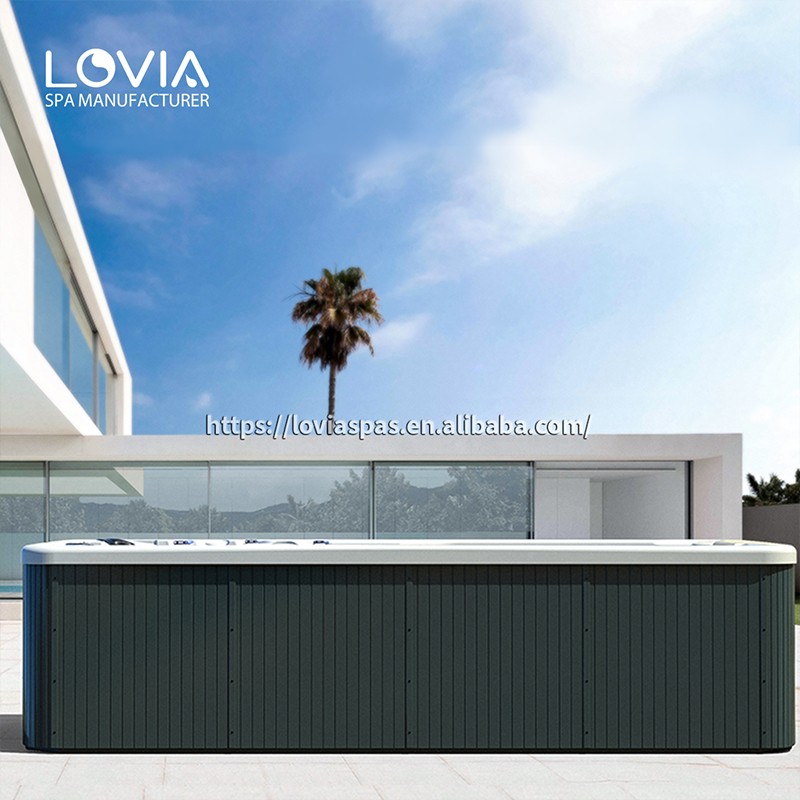
Why has water flow performance become the core technical benchmark for outdoor swim spas?
The fundamental difference between an outdoor swim spa and a standard outdoor hot tub lies in the requirement to support "continuous exercise."
Standard outdoor hot tubs primarily utilize massage jets to create localized currents, targeting specific areas of the body such as the shoulders, back, waist, and legs for therapeutic massage. In contrast, outdoor swim spas require a continuous flow of water that covers the entire body, allowing the user to swim in a stationary position. Consequently, outdoor swim spas place higher demands on their water flow systems.
If the water flow velocity is unstable, swimmers are forced to constantly adjust their body position—drifting forward or being pushed back—making it impossible to establish a natural swimming rhythm. Uneven flow distribution, which subjects different parts of the body to varying levels of resistance, can also compromise swimming posture and training effectiveness. Therefore, the goal for high-quality outdoor swim spa hot tubs is not merely high water volume, but a stable, efficient flow environment that aligns with human movement mechanics.
From a manufacturing perspective, an excellent outdoor swim spa water flow system must address several core challenges. First is power output: the pump's ability to deliver sufficient and steady flow. Second is flow dynamics: the design strategy used to ensure the water evenly covers the swimming area. Finally, there is the user experience, encompassing factors such as noise levels, resistance adjustability, and suitability for a wide range of users.
Consequently, manufacturers typically prioritize water flow performance during research and development, employing a combination of technologies to enhance overall system capabilities.
Utilizing High-Performance Pump Systems to Boost Water Flow Power in Outdoor Swim Spas
The pump is the powerhouse of an outdoor swim spa's water flow system. Simply put, the pump circulates a large volume of water and delivers pressurized flow to the swimming area, creating a counter-current environment.
Many consumers believe that installing a higher-wattage pump guarantees a better swimming experience; however, manufacturers must consider a broader range of factors during the design process. Pump performance encompasses not only power output but also flow stability, operational efficiency, noise control, and long-term reliability.
High-quality outdoor swim spa hot tubs typically feature pump systems tailored to the unit's size and intended use. For instance, compact residential models prioritize comfort and energy efficiency, whereas commercial or professional training models require robust, continuous operational capabilities.
When enhancing water flow performance, manufacturers focus first on optimizing the pump's flow output. Flow rate determines the volume of water moving through the system per unit of time, and a steady flow is fundamental to a high-quality swimming experience. If the flow rate is insufficient, users will feel a lack of propulsive force; conversely, if the flow rate is excessive but uncontrolled, it can lead to turbulent water.
Therefore, modern outdoor swim spa manufacturers generally do not simply aim for maximum flow; instead, they achieve a balance between power and comfort through optimized pump matching, plumbing design, and control systems.
Furthermore, high-efficiency pumps represent a key direction for the future development of outdoor swim spa hot tub combos. Since these units typically operate over long periods, low pump efficiency leads to increased energy consumption. Consequently, manufacturers are increasingly prioritizing energy-efficient motors, high-efficiency circulation systems, and intelligent operating modes to minimize wasted energy and improve the long-term cost-effectiveness of the equipment.
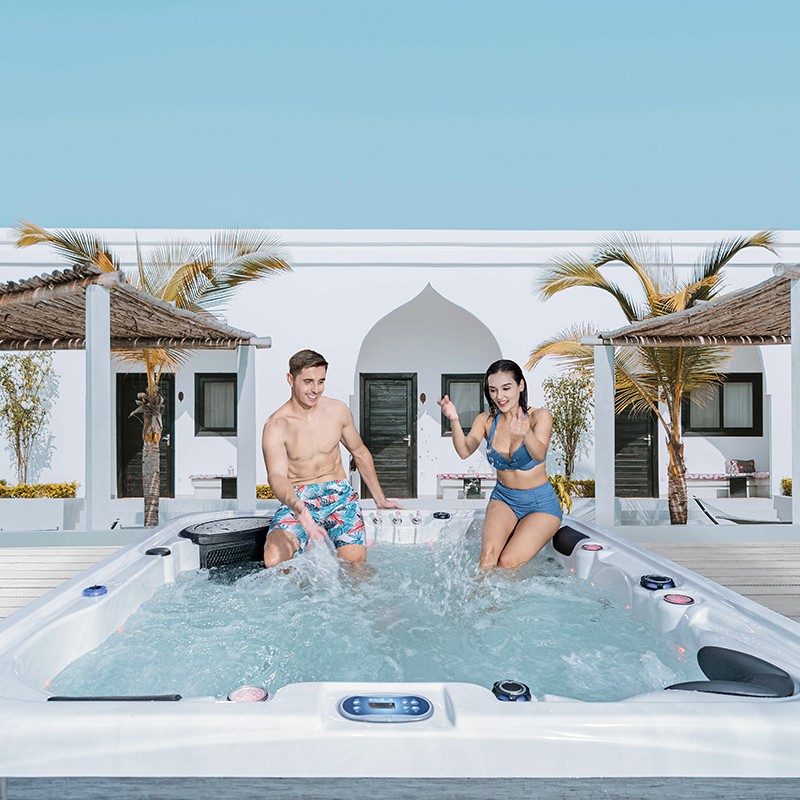
Optimizing Water Outlet Design to Create a Stable Counter-Current Environment
Beyond the pump system, the design of the water outlets is a critical factor influencing an outdoor swim spa's performance. Many believe that a powerful pump alone guarantees an ideal swimming experience; however, the water must ultimately be discharged through outlets. If the outlet structure is poorly designed, even immense power cannot be converted into a comfortable, stable current.
An ideal current for an outdoor swim spa should possess several characteristics:
First, the flow coverage must be wide enough to encompass the user's torso and key body areas; second, the flow direction must remain stable, avoiding significant turbulence; and third, the flow velocity should be uniform, allowing the user to maintain a natural swimming posture.
Consequently, manufacturers focus heavily on optimizing outlet layout during development. For instance, some high-performance models utilize multiple outlets rather than a single one to create a more balanced flow distribution. Increasing the number of outlets reduces the pressure at any single point, resulting in a gentler current while expanding the effective coverage area.
Outlet positioning is another area of intense focus. If outlets are too close to the user, they may cause localized impact, making it difficult to maintain a stable posture; if they are too far away, the current's propulsive force may dissipate before reaching the swimmer. Engineering teams must therefore design the layout carefully, taking into account the unit's length, water depth, and the user's swimming zone.
Some high-end outdoor swim spas also incorporate specialized flow-shaping structures; by modifying the internal geometry of the outlets, they transform the water flow from a simple jet into a smoother, more stable laminar flow. Although consumers often cannot see these internal designs at the time of purchase, these details frequently determine the level of comfort experienced during long-term use of an outdoor swim spa hot tub.
From a manufacturing perspective, superior water outlet design prioritizes a natural feel during physical activity rather than aiming for a visually dramatic impact. A truly high-quality outdoor swim spa should make the user feel as though they are swimming against the current in a real pool, rather than simply being pushed along by a powerful stream of water.
Optimizing Internal Water Flow Structures in Outdoor Swim Spas via Fluid Dynamics Analysis
As technology in the outdoor swim spa industry advances, an increasing number of manufacturers are utilizing modern engineering analysis tools to optimize product designs. Computational Fluid Dynamics (CFD) has emerged as a key technology for enhancing the water flow performance of these spas.
Traditional product development relied heavily on empirical testing; engineers typically had to build prototypes, observe water flow effects through actual testing, and then iteratively adjust the structure. While this approach could solve problems, it resulted in long development cycles and made it difficult to precisely analyze the complex flow dynamics occurring inside the equipment.
In contrast, CFD simulation technology allows manufacturers to optimize internal structures by simulating water flow patterns on a computer before production begins. For instance, engineers can analyze flow velocities, pressure variations, and turbulence zones at various locations, enabling them to identify potential issues affecting the user experience early in the process.
For outdoor swim spas, fluid simulation helps address several key areas:
First, it optimizes flow uniformity. Significant variations in water flow within the swimming area can cause users to feel unbalanced while exercising. Through simulation analysis, manufacturers can adjust pump placement, outlet direction, and internal structures to maintain a consistent flow environment throughout the swimming zone.
Second, it reduces energy loss. Water circulating through pipes and equipment loses energy due to friction, directional changes, and structural obstructions. Fluid analysis enables manufacturers to optimize plumbing design and improve pump efficiency.
Third, it lowers noise levels. When water moves at high speeds, poor internal structural design can lead to bubble formation, vibration, and noise. CFD technology helps engineering teams pinpoint the sources of these issues and implement targeted adjustments.
Consequently, the manufacturing of modern outdoor swim spa hot tubs is shifting from traditional, experience-based methods toward data-driven design. Through engineering analysis techniques, manufacturers can create Outdoor Swim Spas that are more stable, efficient, and comfortable.
Optimizing Piping Systems to Minimize Flow Loss and Enhance Overall Operational Efficiency
Beyond the design of pumps and outlets, the internal piping system significantly influences the water flow performance of an Outdoor Swim Spa.
When purchasing an Outdoor Swim Spa hot tub, many consumers focus solely on pump specifications, overlooking the fact that the power generated by the pump must travel through a complex network of pipes to reach the swimming area. If the piping design is flawed, even a high-performance pump may fail to deliver optimal flow due to pressure losses during transmission.
Manufacturers typically optimize piping systems in several ways:
First, by minimizing unnecessary pipe length. The longer the path the water travels, the greater the resistance it encounters. Therefore, strategically planning the internal layout to ensure efficient connections between the pump, waterways, and outlets is crucial for enhancing flow performance.
Second, by reducing pipe bends. Sharp turns create additional resistance and pressure fluctuations. Consequently, high-quality Outdoor Swim Spa hot tub combos often feature streamlined piping paths that avoid abrupt changes in direction.
Third, by properly matching pipe diameters. Pipes that are too narrow restrict flow capacity, preventing the pump from operating at full potential; conversely, pipes that are too wide can increase manufacturing costs and complicate pressure control. Manufacturers must therefore select the appropriate specifications based on pump flow rate, equipment dimensions, and target performance.
Although these internal engineering details are not immediately visible to the user, they directly determine whether the Outdoor Swim Spa can maintain excellent water flow performance over the long term.
Leveraging Smart Control Systems for Precise Water Flow Adjustment
With the advancement of smart home technology, modern Outdoor Swim Spas are increasingly incorporating intelligent features. In the past, users were often limited to simply turning the water flow on or off; today, however, more products include smart control functions that allow users to adjust flow patterns according to their specific needs.
Smart control systems play a vital role in enhancing the water flow experience, as different users have varying preferences regarding flow intensity. For instance, first-time users might prefer a lower-intensity current to adjust to the counter-current environment; individuals with an active fitness routine might require higher resistance for their workouts; and users in a recovery phase might opt for a gentler flow to enjoy a soothing hydrotherapy experience.
Consequently, manufacturers typically incorporate electronic control systems to offer adjustable flow settings. For example, variable-frequency drive technology allows the system to modulate the water pump's operation, enabling the outdoor swim spa hot tub combo to deliver various intensity modes tailored to user needs.
Furthermore, smart control systems help reduce energy consumption. The unit can automatically adjust its operating mode based on usage duration, temperature requirements, and operational status, thereby avoiding prolonged periods of high-power consumption.
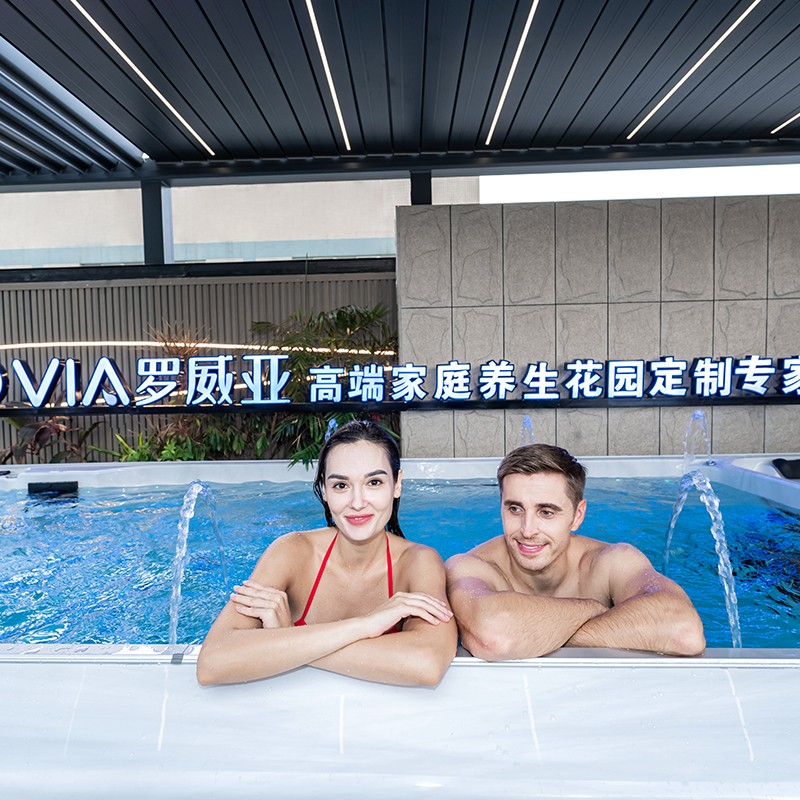
Enhancing the Water Flow Experience and Overall Performance through Structural Design
Beyond the internal propulsion system, the overall structure of the outdoor swim spa hot tub combo significantly influences water flow performance.
When designing these spas, manufacturers must carefully consider factors such as the length of the swimming area, water depth ratios, internal geometry, and user movement patterns.
For example, an insufficient swimming area length restricts movement space, while inadequate width hinders proper swimming strokes; conversely, overly complex internal structures can lead to unwanted backflow and turbulence.
Therefore, high-quality outdoor swim spas often feature designs aligned with ergonomic principles, allowing users to perform swimming exercises more naturally.
Water depth is another critical design factor. Different users have varying depth requirements; products designed for home use must balance the needs of children—prioritizing safety—with the experience of adult users, whereas professional training models focus more heavily on athletic performance.
Manufacturers must conduct extensive testing to strike the optimal balance between space utilization, flow efficiency, and user comfort.
How do requirements for water flow performance differ across various types of outdoor swim spas?
Different users have distinct needs regarding water flow performance in outdoor swim spa hot tub combos; consequently, manufacturers must tailor their designs to specific market segments during product development.
Residential outdoor swim spas typically prioritize the overall user experience. For the average household, these spas serve not only as a venue for swim training but also as a hub for family entertainment and relaxation. Therefore, manufacturers aim to strike a balance between flow intensity, comfort, and energy efficiency. Rather than simply chasing maximum power, these products focus on natural water flow, ease of operation, and reasonable long-term operating costs.
Professional training-oriented outdoor swim spa hot tub combos prioritize athletic performance. Users in this category typically engage in regular training, demanding greater stability in the water flow, adjustable resistance levels, and the ability to operate continuously. Manufacturers employ precise flow control technologies to allow users to adjust training intensity according to their skill level. For instance, beginners can select a low-resistance mode, while advanced swimmers can increase the flow intensity for endurance training.
Commercial outdoor swim spas—such as those found in hotels, fitness centers, and resorts—must withstand high-frequency usage. Since these units serve multiple users daily, manufacturers must enhance not only flow performance but also equipment durability, focusing on factors like pump longevity, plumbing stability, and ease of maintenance.
Thus, top-tier outdoor swim spa manufacturers do not simply pursue "maximum flow"; instead, they design optimal flow solutions tailored to specific application scenarios. Consumers, too, should base their purchasing decisions on their intended use rather than merely comparing technical specifications.
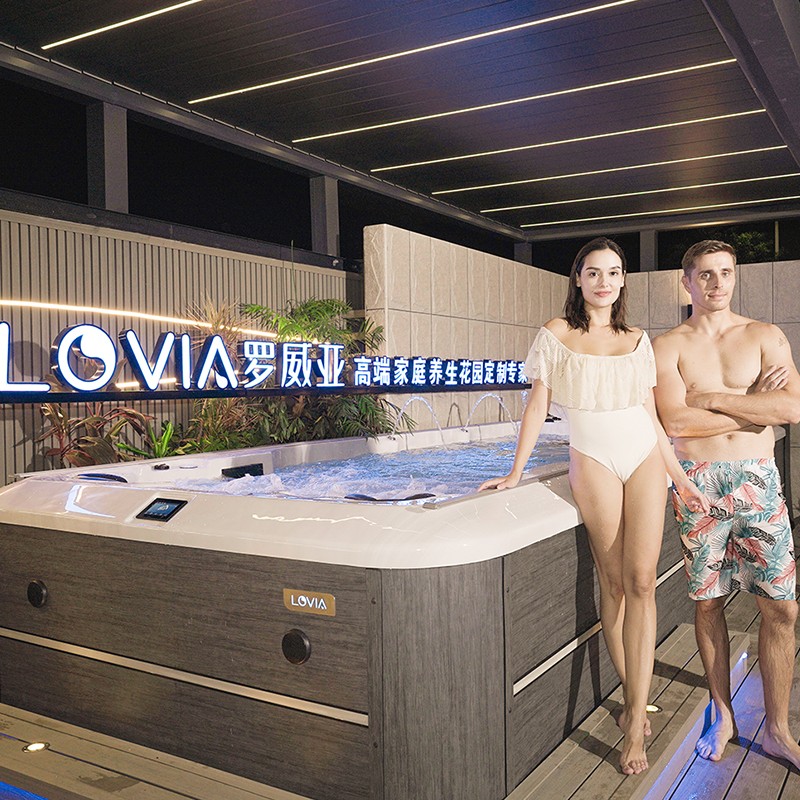
Outdoor Swim Spa Water Flow Performance: FAQs
FAQ 1: Does a stronger water flow in an outdoor swim spa guarantee a better swimming experience?
Not necessarily. Excessive flow can compromise body stability; a high-quality outdoor swim spa prioritizes a flow environment that is uniform, stable, and adjustable.
FAQ 2: How do manufacturers improve water flow performance in outdoor swim spas?
Key methods include optimizing pump systems, water outlet designs, piping structures, and fluid dynamics simulation technologies, as well as implementing smart control systems.
FAQ 3: Why do outdoor swim spa hot tub combos require multiple pumps?
Using multiple water pumps can increase water flow output while helping manufacturers achieve more stable and adjustable water flow performance.
FAQ 4: Is an outdoor swim spa hot tub combo suitable for professional swim training?
Some high-performance outdoor swim spa hot tub combos can meet daily training needs, though professional athletes may still need to supplement this with training in standard swimming pools.
FAQ 5: Does the water flow system affect the energy consumption of an outdoor swim spa?
Yes. High-efficiency pumps, optimized plumbing design, and smart control systems can reduce energy consumption while maintaining excellent water flow performance.