


Single-Zone vs. Dual-Zone Outdoor Swim Spas: What’s the Difference?
2026-09-07 15:35As healthy lifestyles gain popularity, more households are seeking outdoor equipment that caters to exercise, leisure, and physical recovery needs. Outdoor swim spas—combining swimming training with hydrotherapy massage—have emerged as a popular choice for villa gardens, high-end residences, resorts, and wellness spaces.
Unlike traditional swimming pools, outdoor swim spas do not require a large footprint yet deliver a continuous swimming experience via powerful water current systems. Compared to standard outdoor hot tubs, they add exercise capabilities, meeting needs ranging from daily workouts and low-impact training to post-exercise recovery. Consequently, an increasing number of consumers are looking to install outdoor swim spa hot tubs to create a private, year-round wellness space at home.
However, buyers often face a key decision: what exactly distinguishes single-zone swim spas from dual-zone models? Which type is better suited for home use? Beyond structural differences, how do they compare in terms of the swimming experience, massage functions, energy consumption, installation requirements, and ideal use cases?
In reality, neither type is inherently superior; rather, they represent two product designs tailored to different user needs. Single-zone swim spas typically feature a unified water temperature and an integrated layout, emphasizing compactness, efficiency, and space optimization. Dual-zone swim spas, conversely, utilize a partitioned design that separates the swimming area from the hydrotherapy zone, allowing for simultaneous exercise and relaxation.
This article provides an in-depth analysis of the differences between single-zone and dual-zone swim spas—covering structural design, functional features, and user experience—to help consumers make an informed choice that best suits their needs.
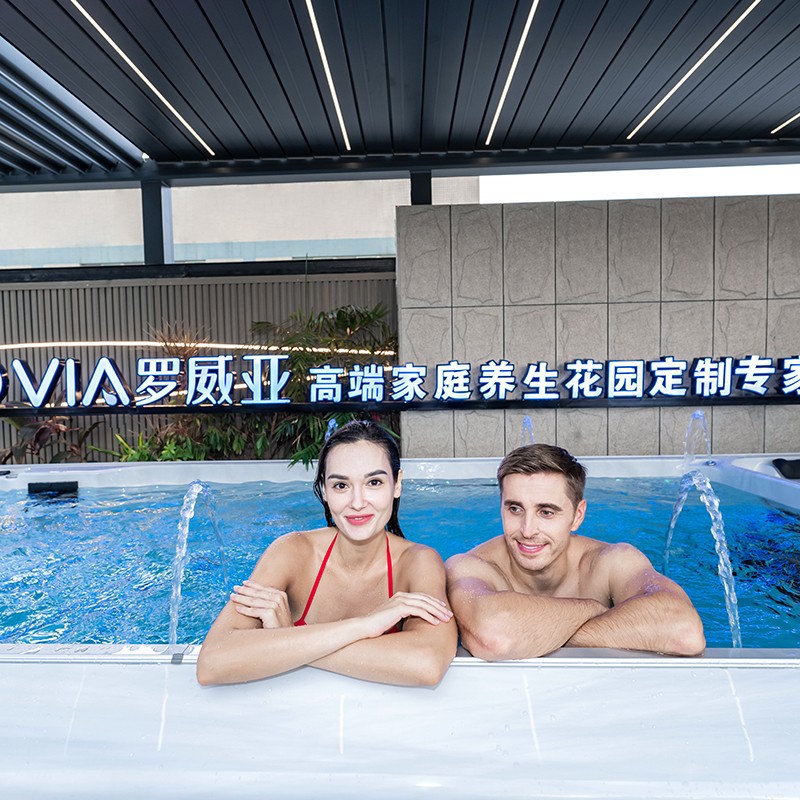
Outdoor Swim Spas: Why Do Single-Zone and Dual-Zone Designs Exist?
An outdoor swim spa hot tub is a comprehensive outdoor wellness product that combines the features of a swimming pool, a hydrotherapy spa, and home fitness equipment. Typically, powerful pumps generate a continuous current, enabling users to engage in uninterrupted swimming training within a compact space, while massage jets, warm water, and water currents facilitate physical relaxation. Traditional swimming pools require significant architectural space, whereas outdoor swim spa hot tubs overcome space constraints through counter-current technology. For instance, a residential outdoor swim spa might measure only 4 to 6 meters in length, yet by adjusting the water flow speed, users can still engage in a workout experience akin to actual swim training.
As market demands evolve, outdoor swim spas have developed into two primary structural configurations:
The first is the single-zone outdoor swim spa, also known as an all-in-one design. The swimming area and the hydrotherapy massage area share the same body of water, allowing users to exercise and relax within a single temperature environment.
The second is the dual-zone outdoor swim spa hot tub, or split-zone design. Structural engineering separates the swimming area from the massage area, enabling the two zones to operate at different temperatures and with distinct functional modes.
The key differences between these two designs lie in whether the spaces are independent and whether the functions are separated.
Single-zone models emphasize compactness and overall efficiency, whereas dual-zone models prioritize a professional-grade swimming experience and independent hydrotherapy.
Structural Features and Advantages of Single-Zone Outdoor Swim Spas
The single-zone outdoor swim spa is a common design in today's market. It typically utilizes a unified body of water, featuring a swim current system at the front or middle and massage seats or jets at the opposite end.
The defining characteristics of this design are its simple structure and high space utilization efficiency.
For residential users, single-zone outdoor swim spa hot tubs offer distinct advantages. First, their overall footprint is generally more compact. Because there is no need for a separate partition, they provide more usable space within the same overall length.
For example, a single-zone swim spa approximately 5 meters long can simultaneously accommodate basic swim training and daily massage needs. This design is also easier to install for users with limited yard space.
Second, maintenance for single-zone units is relatively straightforward.
Since the entire body of water relies on a unified circulation system, filtration, heating, and water treatment processes are centralized. Users manage a single water environment rather than maintaining two separate zones.
Additionally, single-zone outdoor swim spas typically offer better spatial continuity. Users can move freely—transitioning directly from the swimming area to the massage area—without structural obstructions. For families looking to balance exercise and leisure with relatively balanced usage patterns, a single-zone outdoor swim spa is an economical and practical choice.
Structural Features and Advantages of Dual-Zone Outdoor Swim Spas
The defining feature of a dual-zone outdoor swim spa hot tub is the complete separation of the exercise area and the hydrotherapy (spa) area.
Typically, one side of the unit serves as the swim training zone, while the other functions as the massage and relaxation zone, with a partition structure connecting the two.
This design overcomes the primary limitation of single-zone models: the inability to accommodate different water temperature requirements simultaneously.
For instance, a lower water temperature is ideal for swim training, as the body generates continuous heat during physical exertion; conversely, many users prefer higher temperatures for massage and relaxation to ensure a more comfortable spa experience.
Dual-zone outdoor swim spa hot tubs allow the two areas to maintain distinct temperatures.
For example:
The swim zone can be maintained at approximately 26°C to 30°C;
The massage zone can be maintained at approximately 36°C to 40°C.
While specific temperatures depend on product design and user preference, this independent temperature control capability is a key advantage of dual-zone outdoor swim spas.
Furthermore, the dual-zone design is better suited for simultaneous use by multiple people. For example, one family member can train in the swim zone while another relaxes in the massage zone without interfering with each other.
Consequently, dual-zone outdoor swim spas hold greater appeal for larger families, households with high usage frequency, or users seeking a premium spa experience.
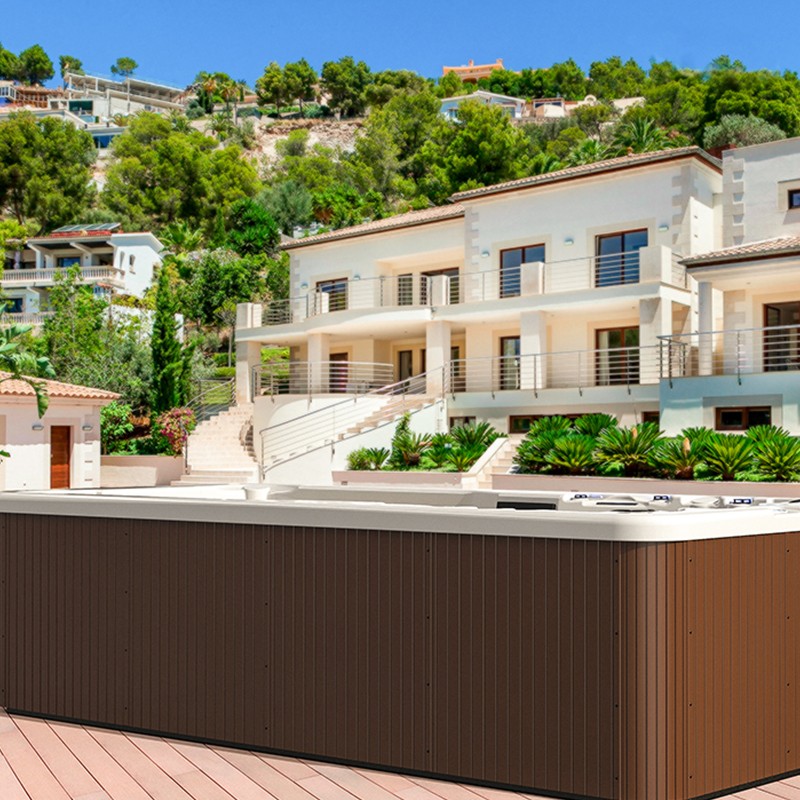
Single-Zone vs. Dual-Zone Outdoor Swim Spas: Differences in the Swimming Experience
For those purchasing an outdoor swim spa hot tub, the swimming function is often a primary consideration.
Both single-zone and dual-zone outdoor swim spas offer a counter-current swimming experience, yet there are differences in the user experience.
With a single-zone design, the continuous open space allows for a greater range of movement. For general home fitness, this design is sufficient to meet daily swim training needs.
Examples include:
Light swimming workouts;
Water-based activities for children;
Basic physical conditioning.
However, because the space must also accommodate massage functions, the swimming length of some single-zone models may be limited.
In contrast, dual-zone outdoor swim spa hot tubs typically place greater emphasis on the design of the swim training zone. Because the swimming area is separate, manufacturers can optimize water flow direction, pump configuration, and the training space itself.
For individuals seeking long-term swimming training—such as fitness enthusiasts, competitive swimmers, or those undergoing professional rehabilitation—a dual-zone outdoor swim spa can offer an experience that closely rivals professional training equipment.
This is particularly true regarding water flow stability; high-end dual-zone models typically feature more powerful flow systems, allowing users to adjust training intensity according to their fitness levels.
Single-Zone vs. Dual-Zone Outdoor Swim Spas: Differences in the Spa Experience
Beyond exercise capabilities, the spa experience is a key value proposition of outdoor swim spa hot tubs.
In a single-zone model, the spa area usually shares the same body of water as the swimming area, offering a more flexible overall experience; users can move directly from their workout into the massage area to relax.
This design is ideal for daily family use, such as:
A morning swim workout;
An evening massage for relaxation.
However, because the entire unit maintains a uniform water temperature, it cannot simultaneously satisfy conflicting needs.
For instance, a conflict might arise if one person wants to swim in cooler water while another wishes to enjoy a hot massage.
Dual-zone outdoor swim spa hot tubs effectively resolve this issue.
Thanks to the independent zone design, users can simultaneously enjoy:
An active workout in the swimming zone;
Warm relaxation in the massage zone.
This separation of experiences adds significant value for high-end residential or commercial projects.
For example, in a resort hotel, guests can choose between exercise and leisure based on their preferences without having to wait for other users to change the equipment settings.
Single-Zone vs. Dual-Zone Outdoor Swim Spas: Which is More Energy-Efficient?
Many consumers consider long-term operating costs when choosing an outdoor swim spa hot tub.
In reality, energy consumption depends not only on the number of zones but also on the unit's size, insulation performance, frequency of use, and the local climate.
Due to their simpler construction, single-zone outdoor swim spas often offer the following advantages:
Lower water volume;
A more centralized heating system;
Simpler operational logic.
Consequently, single-zone models may be more energy-efficient for households that use the spa less frequently.
In contrast, while dual-zone models offer more features, the need to maintain different temperatures across two separate zones can result in higher initial heating and ongoing thermal maintenance costs. However, if users frequently utilize both the swimming and massage functions, a dual-zone design may actually prove more efficient.
For instance, if family members use the massage zone daily but the swimming zone only occasionally, a dual-zone setup prevents the need to maintain the entire unit at a high temperature constantly, thereby reducing energy waste.
Therefore, one cannot simply assume that a single-zone model is inherently more energy-efficient or that a dual-zone model necessarily consumes more power; actual costs depend on usage patterns and equipment design.
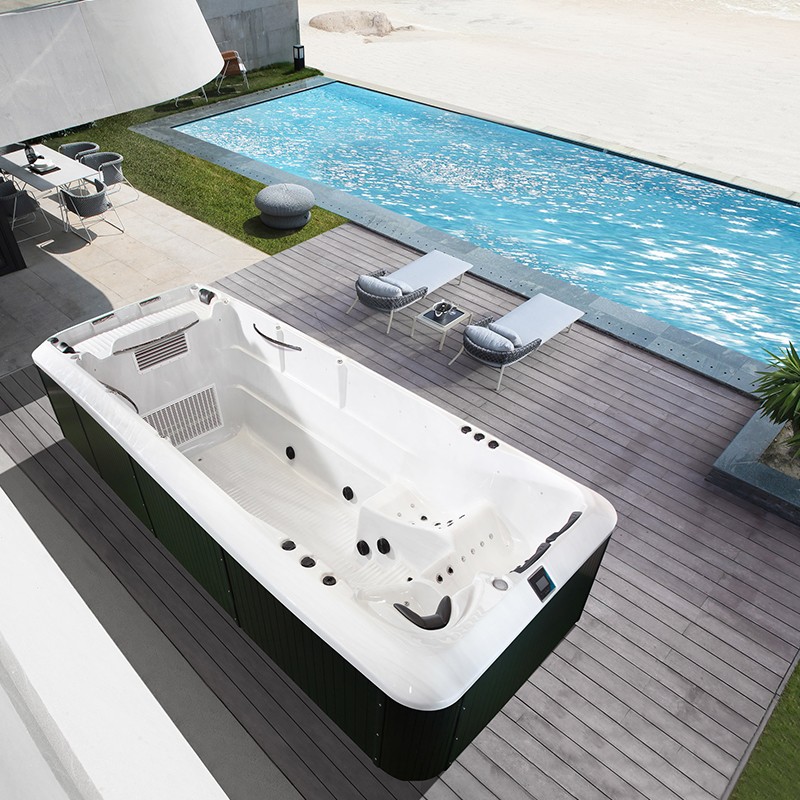
How should one choose an outdoor swim spa based on different usage scenarios?
I. Private home use: Choose based on household size and habits
For the average household, the choice between a single-zone and a dual-zone outdoor swim spa hot tub depends on the primary intended use.
If the main needs are:
Occasional swimming;
Weekend family recreation;
Daily massage;
...then a single-zone model is usually sufficient.
However, if there is a large family with diverse preferences—such as some members enjoying exercise while others prefer hydrotherapy—a dual-zone design offers greater convenience.
For example:
Parents enjoy relaxing massages;
Young adults prefer swim training;
Children enjoy playing in the water.
In such cases, a dual-zone outdoor swim spa provides a superior shared experience for the whole family.
II. Villa courtyards: The advantages of dual-zone models are more pronounced
Villa owners typically have more outdoor space and place a high value on quality of life.
Consequently, dual-zone outdoor swim spa hot tubs often align better with the requirements of high-end residences.
It serves not merely as a piece of equipment but as an integral part of the landscape design.
By combining it with:
Outdoor lounge areas;
Landscaping;
Smart lighting;
Shading structures;
...one can create a comprehensive private wellness space.
III. Hotels and resorts: Prioritize dual-zone designs
For commercial applications, customer experience is paramount.
Hotels, resorts, and high-end vacation rentals often look to outdoor swim spa hot tubs to enhance the value of their services.
A dual-zone design caters to a wider range of customer needs:
Athletic guests can engage in swim training;
Leisure-seeking guests can enjoy massages;
Multiple users can utilize the spa simultaneously.
Therefore, in commercial settings, dual-zone outdoor swim spa hot tubs generally offer greater competitive appeal.
What key factors should be considered when purchasing an outdoor swim spa?
Regardless of whether one chooses a single-zone or dual-zone model, users should look beyond the structural configuration and comprehensively evaluate product quality.
First, consider the water flow system; a stable counter-current is essential for a satisfying swimming experience.
Second, consider the water quality management system. An excellent filtration and disinfection system can reduce maintenance demands.
Third, consider thermal insulation performance. A highly efficient insulation structure helps lower long-term energy consumption.
Fourth, pay attention to material quality. Outdoor equipment is constantly exposed to the elements, so it requires excellent weather resistance.
Fifth, consider the manufacturer's capabilities. Specialized outdoor swim spa manufacturers typically offer more consistent quality, customization options, and reliable after-sales support.
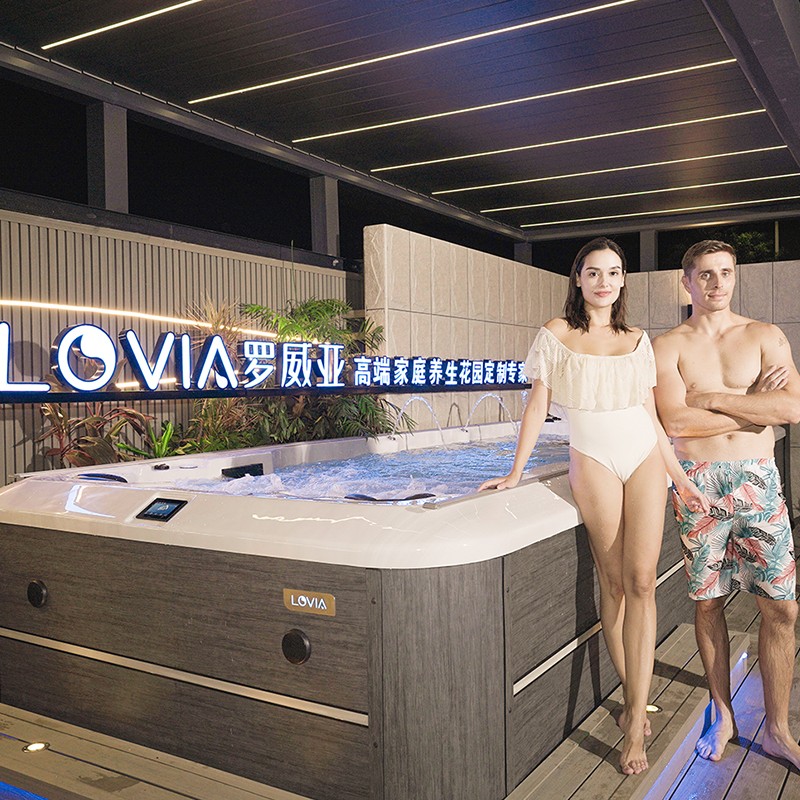
Outdoor Swim Spa FAQs
FAQ 1: What is the main difference between single-zone and dual-zone outdoor swim spas?
The primary difference lies in the spatial design. A single-zone model features a unified body of water where swimming and massage areas are shared; a dual-zone model separates the swimming and hydrotherapy sections, allowing for distinct functions and independent temperature controls.
FAQ 2: Should I choose a single-zone or dual-zone outdoor swim spa for home use?
If the spa is primarily for family leisure and light exercise, a single-zone model is usually sufficient. However, if you have a large family or require both swimming training and massage relaxation simultaneously, a dual-zone model is more suitable.
FAQ 3: Is a dual-zone outdoor swim spa necessarily better than a single-zone model?
Not necessarily. While dual-zone models offer more features, they are larger in size and may come with higher price points and maintenance requirements. The choice should be based on your specific needs.
FAQ 4: Can outdoor swim spa hot tubs be used year-round?
Yes. High-quality outdoor swim spa hot tubs are typically equipped with heating and insulation systems; provided the configuration is appropriate for the local climate, they can be used throughout the year.
FAQ 5: How much installation space is required for an outdoor swim spa?
Dimensions vary by model. Residential models typically require a space ranging from a few square meters to over ten square meters, while large dual-zone products require a more spacious backyard or a commercial-sized installation area.