


How Do Chemical Substances Affect Outdoor Spa Hot Tubs?
2026-11-26 15:30Outdoor spa hot tubs are popular leisure features in residential gardens, villas, and resorts, serving as a key element in enhancing the quality of outdoor living. Unlike standard bathtubs, outdoor hot tubs are typically equipped with circulation and filtration systems, thermostatic heating, and massage jet systems, which keep the water circulating and maintained at an optimal temperature. However, over long-term use, various chemical substances in the water can directly impact water quality, user safety, and the lifespan of the equipment.
Many consumers focus primarily on water temperature, massage performance, and cleanliness, often overlooking the role of chlorine, bromine, pH adjusters, calcium ions, and other chemical agents. Insufficient use of disinfectants can lead to bacterial proliferation, while an imbalance in pH levels can cause metal corrosion, scale buildup in heaters, and damage to plumbing. In an outdoor setting, factors such as sunlight, rain, dust, and temperature fluctuations further complicate water quality management.
So, what specific effects do chemical substances have on outdoor spa hot tubs? How should various water treatment agents be applied? And how can one balance water safety, equipment longevity, and daily maintenance costs? This article provides a detailed analysis, covering common chemical substances, their impact on equipment, and more.
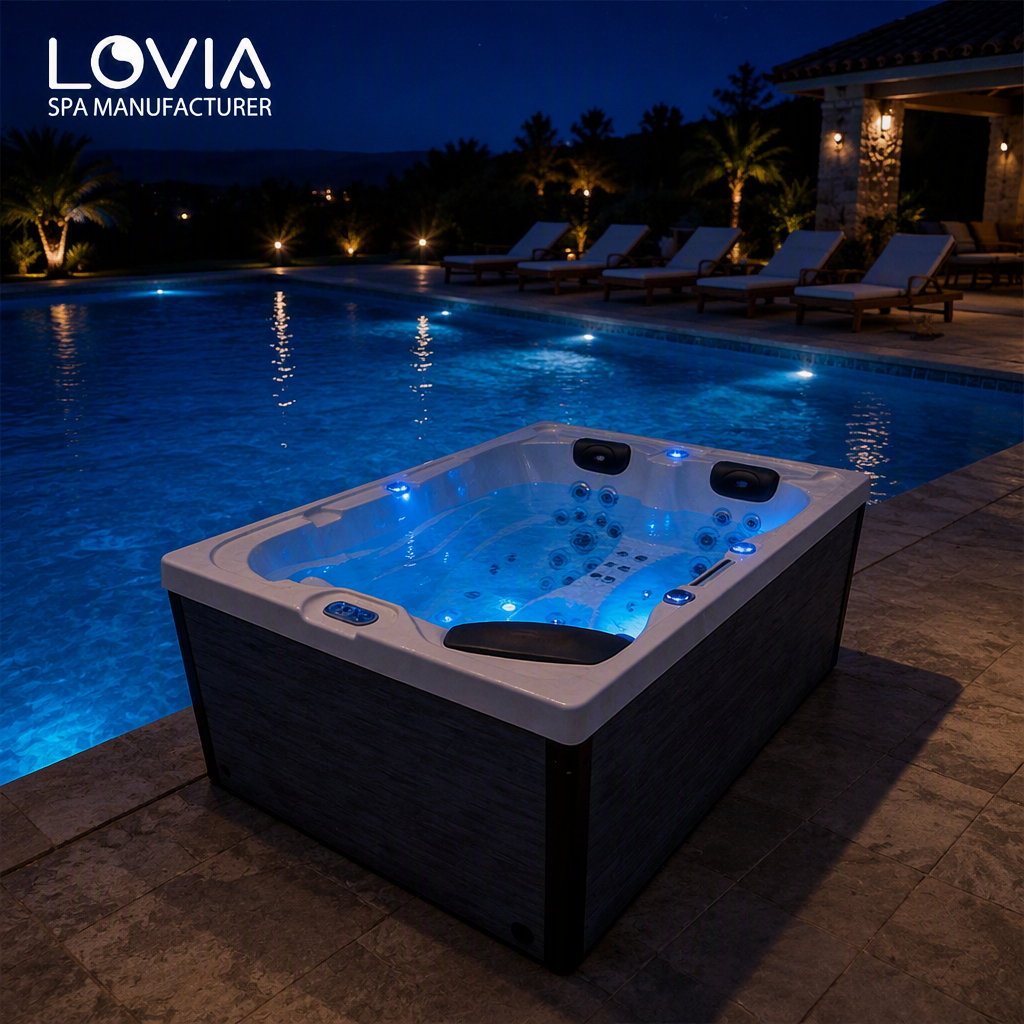
Why Are Chemical Substances So Important for Outdoor Hot Tubs?
Outdoor spa hot tubs typically operate in warm water—ranging from 37°C to 40°C—with water constantly flowing through circulation pumps, filters, heaters, and massage jets. Because the water is kept at a high temperature and reused repeatedly, substances such as human sweat, skin oils, cosmetic residues, and external pollutants can gradually accumulate.
The impact of chemical substances on outdoor hot tubs manifests in three main areas:
First, they affect water hygiene. A warm aquatic environment is conducive to the growth of certain microorganisms. If disinfectant concentrations are inadequate, bacteria and other microbes can accumulate in the water and within the internal plumbing, posing health risks to users.
Second, they affect equipment performance. Minerals in the water can form scale inside heaters and plumbing, while improper pH levels or disinfectant concentrations can accelerate the degradation of metals, rubber seals, and other materials.
Ultimately, this affects maintenance costs. Long-term water quality imbalances can lead to reduced filtration efficiency, longer heating times, clogged jets, and a higher frequency of repairs. Therefore, proper chemical management is not only essential for keeping an outdoor spa hot tub clean but also a key strategy for reducing long-term ownership costs.
Common Chemicals and Their Impact on Outdoor Hot Tubs
Managing water quality in an outdoor spa hot tub involves various chemicals, most notably chlorine-based disinfectants, bromine-based disinfectants, pH adjusters, total alkalinity adjusters, calcium hardness adjusters, and supplemental oxidizers.
1. Chlorine-based Disinfectants: Controlling Bacteria, with a Risk of Equipment Damage
Chlorine is a common disinfectant for outdoor spa hot tubs; it destroys the structure of bacteria and other microorganisms through oxidation, thereby reducing the risk of water contamination. For both residential and commercial hot tubs, the appropriate use of chlorine helps manage hygiene issues caused by sweat, skin oils, and other organic pollutants.
However, the effectiveness of chlorine is closely linked to the water's pH level. If the pH is too high, chlorine’s disinfecting capacity may decrease. Conversely, if chlorine concentrations are too high, it can cause irritation to the skin, eyes, and respiratory tract. Furthermore, improper long-term use can accelerate the aging of certain metals and sealing materials.
Additionally, when chlorine reacts with organic matter—such as sweat or urea—it can form chloramines, which produce an unpleasant, irritating odor. Therefore, a strong "chlorine smell" in an outdoor spa hot tub does not necessarily indicate better disinfection.
Maintenance Tip: For spa hot tubs using chlorine, regularly test the levels of free chlorine and pH. A common maintenance guideline for residential spas is to keep free chlorine between 3–5 mg/L; however, you should always follow the specific recommendations provided by the equipment manufacturer and adhere to local health regulations.
2. Bromine-based Disinfectants: Well-Suited for Warm-Water Environments
Bromine-based disinfectants are another common choice for treating water in outdoor whirlpool spa hot tubs. Compared to chlorine, bromine offers greater versatility for disinfection across a wider pH range. Furthermore, bromamines—byproducts formed when bromine reacts with contaminants—typically do not produce the strong, irritating odors often associated with certain chloramines.
Consequently, bromine-based disinfection systems are frequently used in high-end outdoor spa hot tubs, hotel whirlpools, and private spa facilities.
However, if bromine levels are too low, they will fail to effectively control microorganisms; conversely, excessively high levels can cause skin irritation and damage to equipment components. A typical recommended range for bromine concentration is 4–6 mg/L, though users should always refer to specific product instructions and applicable standards.
It is important to note that chlorine and bromine represent distinct disinfection systems; consumers should not mix concentrated chemical agents themselves, nor should they switch between disinfection methods without proper guidance.
3. pH Adjusters: Influencing Disinfection Efficacy and Equipment Longevity
pH level is a critical parameter in managing the water quality of outdoor hot tubs. It is generally recommended to maintain the pH between 7.2 and 7.8, with the precise range depending on the specific disinfection system and equipment requirements.
If the pH is too low, the water becomes acidic, which may increase the risk of corrosion for metal components and potentially damage certain sealing materials. If the pH is too high, the effectiveness of chlorine-based disinfection may decrease, and there is an increased risk of calcium carbonate deposits forming.
Therefore, the primary function of pH adjusters is to help maintain an appropriate acid-base balance, preventing water quality issues that could interfere with the proper operation of the spa hot tub.
4. Total Alkalinity Adjusters: Maintaining Water Quality Stability
Total alkalinity reflects the water's buffering capacity—its ability to resist changes in pH. For outdoor whirlpool spa hot tubs, the recommended range for total alkalinity is typically 80–120 mg/L (expressed as CaCO₃).
If total alkalinity is too low, the pH level may fluctuate significantly; if it is too high, adjusting the pH becomes difficult, and the risk of scale formation increases.
Sodium bicarbonate is a common agent used to adjust total alkalinity. However, water should always be tested before adding any chemicals to avoid causing an imbalance in the water chemistry.
5. Calcium Hardness Adjusters: Reducing Scale Formation
Calcium hardness refers primarily to the concentration of calcium ions present in the water. For outdoor hot tubs, the typical reference range for calcium hardness is 150–250 mg/L (expressed as CaCO₃).
When calcium hardness is too high, calcium ions tend to form deposits with carbonates—a process that frequently leads to scale buildup, especially on high-temperature surfaces like heaters. Such scale reduces heat transfer efficiency, resulting in longer heating times and increased energy consumption.
Conversely, if calcium hardness is too low, it may increase the risk of corrosion to equipment components, depending on the water treatment system in use. Therefore, it is a misconception to assume that lower calcium levels are always better.
In regions with hard water, it is advisable to test the source water’s hardness before filling the spa hot tub, and to employ water pre-treatment equipment or appropriate scale-control products if necessary.
6. Supplemental Oxidizers: Reducing the Accumulation of Organic Contaminants
Non-chlorine oxidizers, such as potassium monopersulfate, are frequently used as supplemental water treatments for outdoor hot tubs. They help oxidize substances like perspiration, skin oils, and various organic pollutants, thereby easing the burden on the primary disinfection system.
However, supplemental oxidizers cannot serve as a complete substitute for the continuous sanitizing action provided by chlorine or bromine. Furthermore, be aware that certain products may interfere with water testing results; always follow the manufacturer’s instructions to select the appropriate testing method.
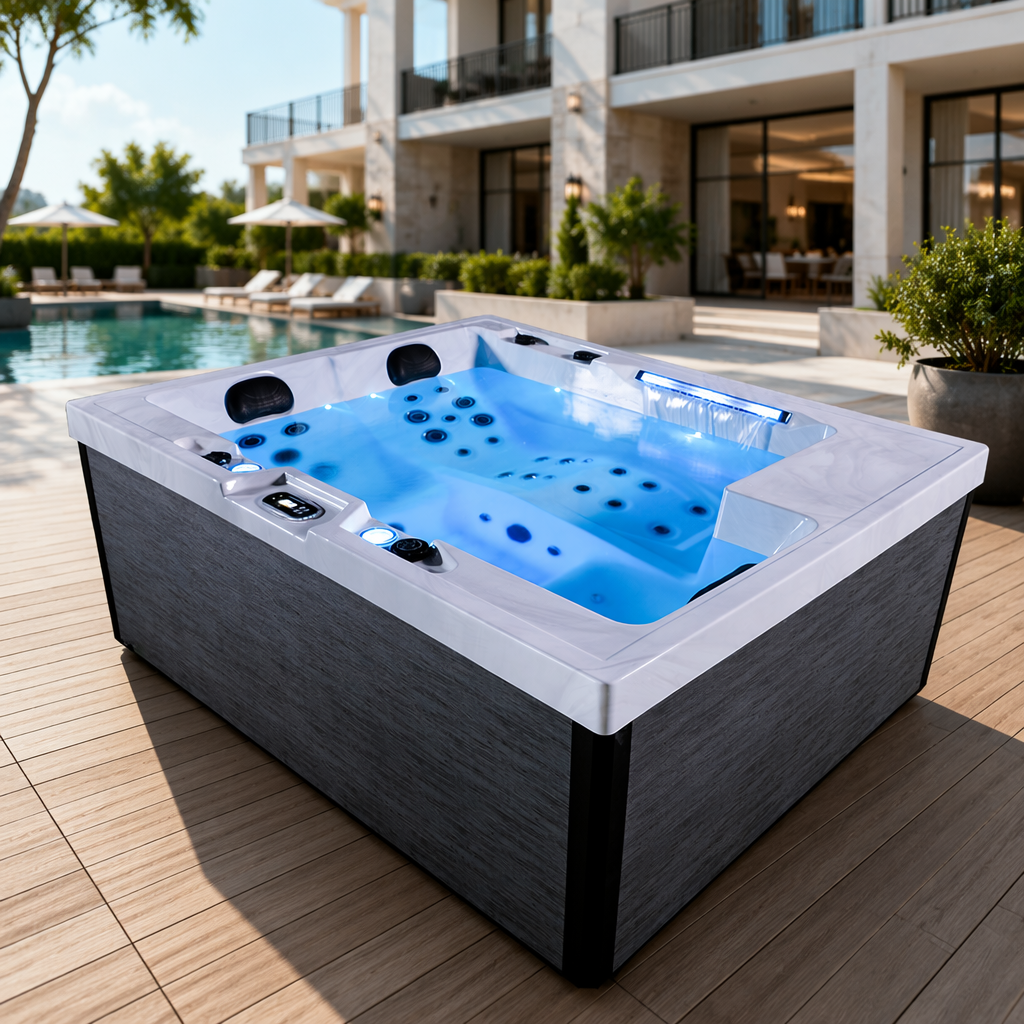
How Do Chemicals Affect Outdoor Hot Tub Equipment?
Beyond water hygiene, chemical substances can also impact a whirlpool spa hot tub’s interior shell, heater, circulation piping, and sealing components. These effects are generally cumulative—while they may not be immediately apparent, improper long-term maintenance can increase the likelihood of equipment failure.
1. Effects on Acrylic Shells
Acrylic is a common material for the shells of many mid-to-high-end outdoor whirlpool spa hot tubs, prized for its smooth surface, ease of cleaning, and high-quality aesthetic.
Under normal water conditions, an acrylic shell is well-suited for long-term immersion. However, prolonged exposure to high concentrations of disinfectants, strong acids, strong bases, or incompatible organic solvents can cause the surface to lose its luster, become discolored, or even sustain material damage.
It is particularly important never to pour undiluted, concentrated chemical agents directly onto the surface of the hot tub. High concentrations of chemical agents in localized areas can potentially damage the acrylic surface.
2. Impact on the Heater
The heater is a critical core component of an outdoor spa hot tub. Calcium and magnesium ions in the water, combined with an improper pH level, can lead to the formation of scale on the heater's surface.
Because scale has lower thermal conductivity than the metal heating surface, it increases resistance to heat transfer, requiring the equipment to run for a longer period to reach the set temperature.
For example, to raise the water temperature of a 1,500-liter outdoor spa hot tub from 20°C to 38°C, approximately 31.4 kWh of energy is theoretically required—though actual energy consumption will also depend on heating efficiency and heat loss to the environment.
If scale accumulates on the heater over time, both energy consumption and the equipment's operating time will likely increase. Therefore, properly managing calcium hardness, pH levels, and total alkalinity is essential for maintaining the efficiency of the heating system.
3. Impact on Circulation Piping and Massage Jets
Outdoor hot tubs contain an extensive network of circulation pipes and massage jets. The long-term presence of mineral deposits and organic contaminants in the water can cause pipe blockages, uneven water flow from the jets, and reduced circulation efficiency.
Furthermore, organic contaminants can adhere to the inner walls of the piping, forming a "biofilm" that provides a habitat for microorganisms to attach and thrive.
It is recommended to clean the filter regularly and use specialized pipe-cleaning products—as specified by the manufacturer—to remove internal deposits whenever the water is changed.
4. Impact on Metal Components and Seals
The pumps, valves, fittings, and seals in an outdoor hot tub are constantly exposed to warm water and chemical agents. If the water remains in a state of high acidity, high oxidant concentration, or other unsuitable conditions, it can accelerate the corrosion of metal parts and the degradation of rubber seals.
Consequently, when purchasing an outdoor whirlpool spa hot tub, consumers should look beyond the material of the tub shell and also consider the chemical resistance of the jets, piping, heater, and sealing components.
Chemical Substances and Safety in Outdoor Hot Tub Use
Water quality management not only affects the lifespan of the equipment but also has a direct impact on the health and safety of the users. First, insufficient disinfectant levels can increase the risk of microbial proliferation. *Pseudomonas aeruginosa* is a common pathogen associated with spa hot tub-related skin infections and can cause folliculitis. *Legionella* bacteria are also a significant concern; inhaling water mist contaminated with *Legionella* can lead to serious health issues, such as Legionnaires' disease. The CDC specifically emphasizes the importance of monitoring residual disinfectant levels and controlling the buildup of sediment and biofilm in spa hot tubs.
Second, excessive use of chemical agents also poses risks. High concentrations of chlorine or bromine can cause dry skin, eye irritation, and respiratory discomfort. Furthermore, different concentrated chemicals should never be mixed—especially acidic cleaners and chlorine-based products—as this can result in the release of toxic gases.
Additionally, water temperature must be carefully managed. The CDC recommends that hot tub water temperature should not exceed 40°C (104°F) to reduce the risk of overheating and burns.
Most importantly, clear water does not necessarily mean safe water. Certain types of microbial contamination and chemical imbalances cannot be detected by the naked eye and require professional testing equipment for accurate assessment.
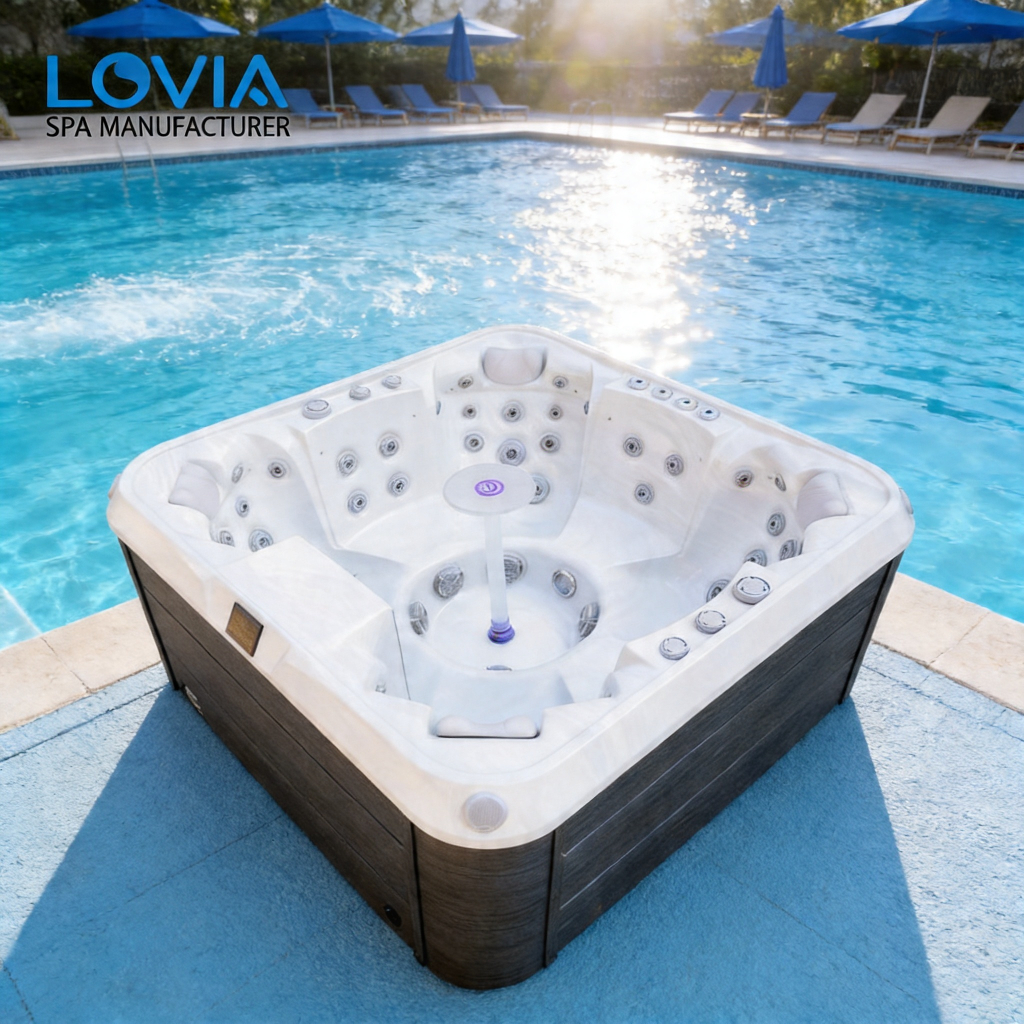
Key Parameters for Outdoor Hot Tub Water Quality Management
To effectively manage the chemical balance in an outdoor spa hot tub, users should focus on parameters such as pH level, disinfectant concentration, total alkalinity, and calcium hardness.
| Parameter | Recommended Reference Range | Main Function |
| pH Level | 7.2–7.8 | Maintains water balance and disinfection efficiency |
| Free Chlorine | 3–5 mg/L | Controls bacteria and microorganisms |
| Total Bromine | 4–6 mg/L | Maintains bromine disinfection |
| Total Alkalinity | 80–120 mg/L | Stabilizes pH levels |
| Calcium Hardness | 150–250 mg/L | Helps prevent scaling and corrosion |
| Water Temperature | Maximum 40°C | Reduces overheating risks |
Note: The values provided above are general maintenance guidelines and do not constitute a universal standard for all outdoor whirlpool spa hot tubs. The CDC recommends a minimum free chlorine level of 3 mg/L and a minimum bromine level of 4 mg/L; however, actual practice should always align with local regulations and the manufacturer’s specific requirements.
Frequently Asked Questions (FAQ) About Outdoor Hot Tub Chemical Management
Q1: Are chemical disinfectants necessary for outdoor spa hot tubs?
For outdoor spa hot tubs that use recirculating water, a reliable and continuous disinfection system is essential. Chlorine and bromine are the most common choices. While UV and ozone systems can serve as supplementary treatment technologies, they generally cannot fully replace the need for continuous chemical disinfection.
Q2: What should the chlorine level be in an outdoor spa hot tub?
For typical residential hot tub maintenance, the recommended range is 3–5 mg/L. The CDC recommends maintaining a free chlorine level of at least 3 mg/L in whirlpool spa hot tubs; however, you should always follow local health regulations and the manufacturer’s instructions.
Q3: Why is there a noticeable chlorine odor in an outdoor spa hot tub?
This is likely due to the formation of chloramines, which occur when chlorine reacts with organic matter such as sweat or urea. It is recommended to test for free chlorine, total chlorine, and pH levels rather than simply adding more chlorine.
Q4: Why does scale tend to form in outdoor whirlpool spa hot tubs?
Scale formation is primarily related to calcium hardness, pH levels, total alkalinity, and water temperature. You should test the water quality regularly and, if necessary, use water-softening methods or appropriate scale-control products.
Q5: Can I use household cleaning agents to clean an outdoor spa hot tub?
It is not advisable to use just any household cleaner. Common cleaning products may contain ingredients that are unsuitable for acrylic surfaces or the circulation system. You should prioritize using specialized cleaning products approved by the equipment manufacturer.