


How can we prevent urinary tract infections caused by outdoor swim spas?
2026-10-16 15:30Driven by the growing demand for healthy home living, athletic recovery, and outdoor leisure, outdoor swim spas are increasingly being installed in residential backyards, hotels, resorts, fitness centers, and wellness facilities. Unlike standard swimming pools, outdoor swim spas typically combine features such as swim training, massage relaxation, and hydrotherapy. They operate at relatively high water temperatures and contain complex internal systems—including circulation pumps, filters, heaters, massage jets, and intricate piping. Consequently, while users value the spa experience, they are also increasingly concerned about water hygiene; a common question is whether using an outdoor swim spa hot tub combo can lead to urinary tract infections.
First, it is important to clarify that using an outdoor swim spa hot tub combo does not automatically lead to a urinary tract infection (UTI). UTIs generally occur when bacteria enter the urethra and infect the urinary tract; *E. coli* is a common causative pathogen. Swimming itself has not been proven to generally increase the risk of UTIs. However, if an outdoor swim spa lacks long-term maintenance—resulting in inadequate disinfection, a contaminated filtration system, biofilm buildup in the piping, or a heavy influx of contaminants from multiple users—the risk of microbial exposure may increase.
Therefore, the real challenge lies in managing three key areas—equipment, water quality, and usage habits—to keep the hygiene risks associated with outdoor swim spas within reasonable limits.
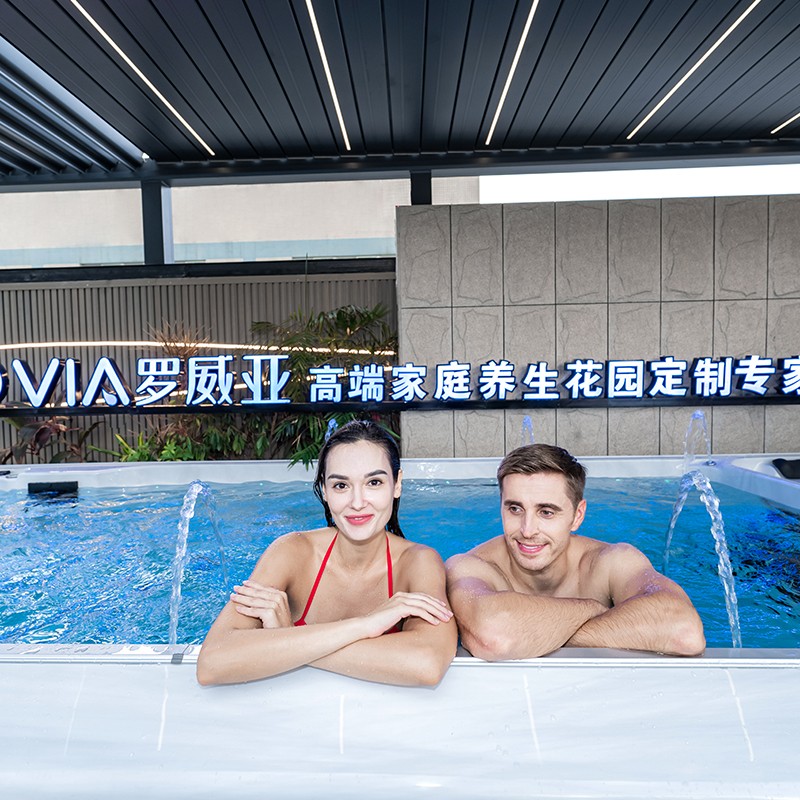
Why is water quality a critical concern for outdoor swim spas?
Outdoor swim spas typically utilize a recirculating water system, where water is filtered, heated, and disinfected before returning to the spa. However, circulation is not synonymous with disinfection. If organic substances—such as sweat, sebum, cosmetic residues, and other matter—accumulate in the water without a timely adjustment of disinfectant levels, water quality can deteriorate.
This is particularly true at higher water temperatures, which increase human perspiration and raise the organic pollution load in the water. These changes become even more pronounced during periods of continuous use by multiple people. If filters are not cleaned regularly, the circulation flow rate drops, thereby compromising the efficiency of the water treatment system. Furthermore, outdoor swim spas contain extensive piping and numerous jets; without regular cleaning, sediment and biofilm can accumulate on the inner walls of the plumbing. Clear water does not necessarily guarantee good sanitary conditions. Therefore, maintaining hygiene in outdoor swim spas requires attention to disinfection, pH levels, filtration, water circulation, water replacement, and plumbing maintenance.
Controlling Disinfectant Levels and pH is Central to Water Quality Management
For outdoor swim spas, free chlorine and pH are the two most critical baseline indicators. According to CDC recommendations for residential pools and hot tubs, free chlorine levels in hot tubs should reach at least 3 ppm (or 4–8 ppm when using bromine), and the pH should be maintained between 7.0 and 7.8.
If the pH is too high, the disinfecting efficiency of chlorine decreases; if the pH is too low, it can cause skin and eye irritation and damage metal components and other parts of the equipment. Therefore, one should not simply assume that "more disinfectant means greater safety"; instead, disinfectant concentrations and pH levels must be kept within appropriate ranges.
Home users can test water quality before use—ideally at least twice a day under normal circumstances. However, testing frequency should be increased if the spa is used by multiple people in succession or is located in a high-traffic setting like a hotel or resort. Commercial outdoor swim spa hot tub combo operators should also establish a water quality logging system based on local regulations, equipment capacity, and actual user volume.
It is important to note that water capacity, temperature, and water treatment systems vary among different outdoor swim spa models. Actual parameters should be determined by consulting the manufacturer's maintenance instructions rather than relying on a single, fixed value.
Filtration Systems Cannot Be Replaced by Disinfectants
This is an often-overlooked aspect of outdoor swim spa hot tub combo maintenance. Disinfectants primarily control and neutralize microorganisms, whereas filtration systems are responsible for removing suspended particles, dead skin cells, hair, and certain organic contaminants; the two systems serve distinct functions.
If the filter becomes clogged and circulation flow drops, simply adding more disinfectant will not resolve all water quality issues. Therefore, users must clean or replace filters regularly in accordance with the manufacturer's guidelines. For an outdoor swim spa that sees frequent daily use, the maintenance schedule for filters should be adjusted based on actual contamination levels rather than being performed mechanically at fixed intervals.
Attention must also be paid to the pool walls, bottom, massage jets, and water return areas. With outdoor swim spas in long-term use, cleaning only the water surface while neglecting the plumbing and jets can create unsanitary "dead zones." Therefore, it is recommended to perform regular pipe flushing and deep cleaning according to the product manual, utilizing pipe-cleaning solutions compatible with the equipment when necessary.
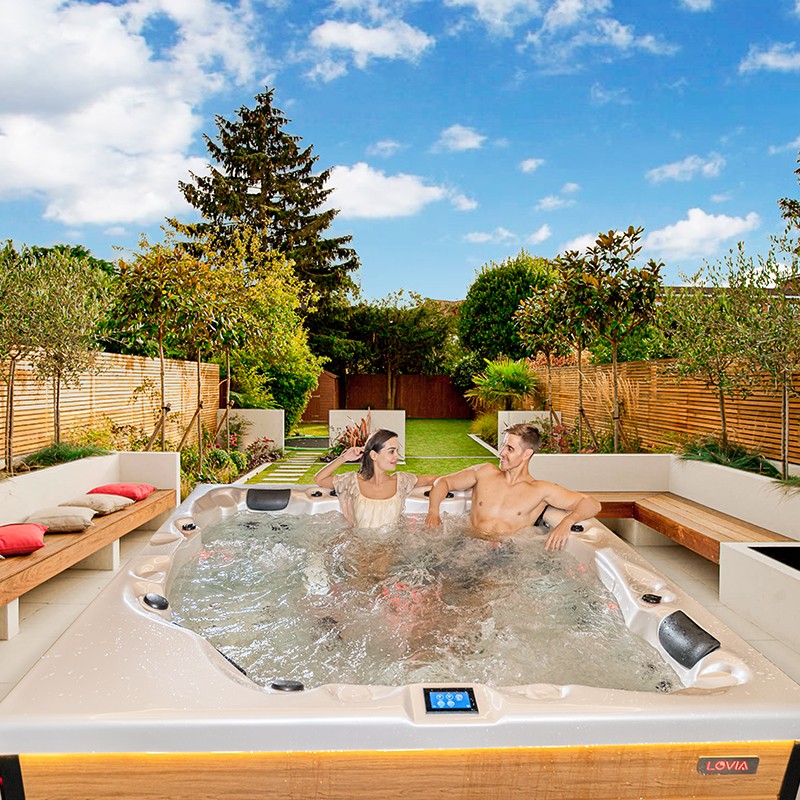
Change the water regularly—don't rely solely on adding sanitizer
As an outdoor swim spa hot tub combo is used over time, sweat, sebum, cosmetics, and environmental contaminants gradually accumulate. These substances not only affect water clarity but also increase the load on the sanitization system.
Consequently, water quality management cannot rely merely on the continuous addition of sanitizer. You should drain, clean, and refill the spa regularly based on factors such as the number of users, frequency of use, water temperature, and changes in water quality. For residential outdoor swim spas, you can establish a water-change schedule based on the manufacturer's recommendations; however, if there is a noticeable odor, persistent foaming, difficulty stabilizing water quality, or an abnormally rapid rate of filter contamination, deep cleaning and a water change should be considered.
Commercial outdoor swim spas experience higher usage rates; therefore, stricter water-change and maintenance plans should be established in accordance with local health regulations and actual water quality data.
Showering before use is one of the simplest and most effective measures
No matter how advanced the spa equipment is, it cannot fully substitute for good user hygiene habits. The human body is a major source of water contaminants; sweat, sebum, cosmetics, and dirt from the skin's surface all end up in the water.
Therefore, showering before entering the outdoor swim spa hot tub combo helps reduce the introduction of contaminants into the water. The CDC recommends showering before entering a pool or hot tub to minimize the amount of bodily impurities introduced into the water.
Additionally, urinating in the outdoor swim spa is strictly prohibited. While urine is not a direct cause of urinary tract infections, it increases the organic load of the water and depletes some of the sanitizer. This is particularly important in shared spa environments.
Avoid Wearing Wet Swimwear for Extended Periods
The claim that "wearing a wet swimsuit directly causes urinary tract infections" is common but oversimplified. While a wet swimsuit is not the direct cause of such infections, prolonged exposure to a warm, moist environment—combined with the friction of the fabric—can increase local discomfort.
Therefore, after using an outdoor swim spa hot tub combo, it is advisable to shower promptly, remove the wet swimsuit, and change into dry clothing. Individuals prone to urinary discomfort should pay extra attention to personal hygiene and avoid using overly harsh cleansing products.
Maintaining adequate hydration and urinating regularly are also important. Proper hydration supports urine production and normal voiding, helping to reduce the time bacteria remain in the urinary tract. However, fluid intake should be moderate; there is no need to consume excessive amounts of water in a short period.
Manage Water Temperature and Duration of Use
A key feature of outdoor swim spas is the warm or hot water environment; however, higher temperatures do not mean that longer sessions are better. The CDC recommends that hot tub water temperatures should not exceed 104°F (40°C).
Higher temperatures can increase sweating and the risk of dehydration, so users should manage their session duration based on the equipment's guidelines and their own physical condition. If dizziness, heart palpitations, or significant discomfort occur during use, one should immediately exit the water and rest.
For outdoor swim spa hot tub combo manufacturers, the stability of the temperature control system is equally important. Precise temperature control not only affects the user experience but also impacts equipment safety and daily operational management.

Who Should Exercise Extra Caution When Using an Outdoor Swim Spa?
Women are generally more susceptible to urinary tract infections than men because the female urethra is shorter, making it easier for bacteria to enter the urinary system. Consequently, female users should pay closer attention to water quality, personal hygiene, and promptly changing out of wet swimwear after use.
Individuals with a history of recurrent urinary tract infections, urinary system disorders, or abnormal urination should consult a doctor to determine whether high-temperature hydrotherapy is suitable for them. Pregnant women should consult a medical professional before using hot tubs or high-temperature spas, as tolerance for high-temperature environments and safety requirements differ during pregnancy compared to the general adult population.
If symptoms such as painful urination, frequent urination, or an urgent need to urinate occur after using an outdoor swim spa hot tub combo, one should not automatically assume it is a "urinary tract infection caused by the spa." These symptoms could also be related to other issues within the urinary or reproductive systems. Medical attention should be sought immediately if symptoms such as fever, chills, lower back or flank pain, nausea, vomiting, or blood in the urine occur.
From a manufacturer's perspective, how can the hygiene and safety of outdoor swim spas be improved?
For manufacturers of outdoor swim spas, hygiene management should not rely solely on post-purchase maintenance by the consumer; it should also be considered during the product design phase.
First, optimize the water circulation system. Strategically designing the placement of water inlets, filters, circulation pumps, and jets can improve water circulation efficiency and minimize "dead zones" where water stagnates. Second, enhance the ease of maintaining the filtration system so that users can conveniently remove, clean, and replace filters.
Third, auxiliary water treatment systems—such as ozone generators, UV sterilizers, or automatic chemical dosing systems—can be incorporated based on the product's market positioning. While these technologies complement traditional filtration and disinfection methods, they cannot entirely replace the use of free chlorine or bromine, pH control, filtration, and periodic water changes.
Fourth, provide clear maintenance guidelines covering water quality testing methods, recommended ranges for disinfectants and pH, filter cleaning intervals, plumbing cleaning procedures, and advice on water replacement. For commercial outdoor swim spas, a system for recording daily water quality tests and maintenance activities should also be established.
Therefore, an outdoor swim spa hot tub truly suitable for long-term use is defined by more than just numerous massage jets, a powerful swim current, or an attractive appearance; it must also feature a stable circulation and filtration system, a reliable temperature control system, and a design that facilitates easy maintenance of the water treatment components.
Establishing a Simple Hygiene Management Process for Outdoor Swim Spas
Home users can summarize the daily management of an outdoor swim spa into four steps:
First, perform a pre-use check. Shower before entering the spa, then inspect the water surface, the condition of the filters, and the levels of disinfectant and pH. If water quality parameters deviate significantly from the normal range, adjustments should be made before use. Second, control the number of users and the duration of use. Do not urinate in the water or swallow the water; avoid exceeding the equipment's maximum user capacity; and schedule hydrotherapy sessions appropriately based on the water temperature.
Third, clean up promptly after use. Shower and change out of wet swimwear; also, observe the water for abnormalities such as foam, unpleasant odors, or cloudiness.
Fourth, perform regular maintenance. Clean filters, scrub pool walls and jets, inspect circulation pumps and piping, and carry out deep cleaning and water replacement according to the manufacturer's instructions.
If significant contamination events occur—such as vomiting or fecal contamination—normal use must cease. The unit should be drained, cleaned, disinfected, and refilled in accordance with equipment instructions and local health regulations.
FAQ
FAQ: Can using an outdoor swim spa directly cause urinary tract infections (UTIs)?
Generally, no. UTIs are primarily caused by bacteria entering the urethra, and swimming itself has not been proven to generally increase the risk of UTIs. However, improper water quality management in an outdoor swim spa hot tub combo can increase exposure to microorganisms; therefore, proper disinfection, filtration, and cleaning are essential.
FAQ: What should the chlorine level be in an outdoor swim spa?
Following CDC recommendations for hot tubs, free chlorine levels should be at least 3 ppm; if bromine is used for disinfection, the level is typically 4–8 ppm, with pH maintained between 7.0 and 7.8. In practice, you should also refer to the specific manufacturer's requirements for the equipment and local regulations.
FAQ: Does clear-looking water mean the water quality is safe?
No. Water clarity reflects only one aspect of water quality and does not guarantee that microbial control is adequate. Factors such as free chlorine, bromine, pH, filtration systems, circulation systems, and piping hygiene all require comprehensive management.
FAQ: What should I do if I experience frequent or urgent urination after using an outdoor swim spa?
Frequent urination, urgency, and a burning sensation during urination may be linked to a UTI, though other causes are possible. If symptoms persist, seek a professional medical evaluation. Seek medical attention promptly if symptoms are accompanied by fever, lower back pain, blood in the urine, or nausea and vomiting.
FAQ: How can the risk of infection associated with outdoor swim spas be fundamentally reduced?
The core requirement is the establishment of a comprehensive hygiene management system, encompassing appropriate disinfectant concentrations, stable pH levels, effective filtration, adequate water circulation, regular water replacement, and pipeline cleaning, alongside user practices such as showering before entering the water, refraining from urination, promptly changing out of wet swimwear, and maintaining proper hydration. Manufacturers, meanwhile, should focus their product design on aspects such as water circulation pathways, filtration systems, automated water treatment, and ease of maintenance.