


Guide to Your First Partnership with an Outdoor Hot Tub Factory
2026-09-25 15:35What is the key risk buyers often overlook when sourcing from an outdoor hot tub factory for the first time?
From private home gardens to resort hotels, spas, and commercial wellness spaces, outdoor spa hot tubs are evolving from simple leisure products into vital facilities that integrate health management, recreation, and property value enhancement.
However, for clients sourcing outdoor hot tubs for the first time, finding the right factory is no simple task. Buyers new to the industry often encounter similar challenges: a vast number of suppliers but no clear way to identify those with genuine manufacturing capabilities; products that look alike in photos but vary drastically in actual quality; significant price discrepancies without a clear understanding of the manufacturing standards behind them; and samples that perform well, only to see quality inconsistencies arise during mass production.
The root cause of these issues is that an outdoor spa hot tub is not an ordinary consumer good; it is a complex system comprising water circulation, electrical controls, heating, and massage systems, as well as structural components. A complete outdoor spa hot tub involves hundreds of parts and multiple manufacturing stages. Inadequate control at any stage can compromise the end-user experience.
For instance, improper pump power selection leads to weak massage pressure; a flawed filtration system increases the frequency of water maintenance; poor insulation design causes a significant spike in energy consumption during winter; and electrical configurations that fail to meet local standards can hinder export and installation.
Therefore, when looking for an outdoor spa hot tub factory for the first time, buyers should focus not on "which factory offers the lowest price," but rather on "which factory can provide consistent manufacturing capabilities and long-term partnership support."
The professional solution is to establish a comprehensive evaluation system for outdoor spa hot tub factories, assessing them across multiple dimensions: R&D capabilities, production scale, quality management, certifications, supply chain strength, and after-sales support. Only by gaining a deep understanding of a manufacturer's overall strength can buyers minimize procurement risks and establish a stable, reliable supply relationship.
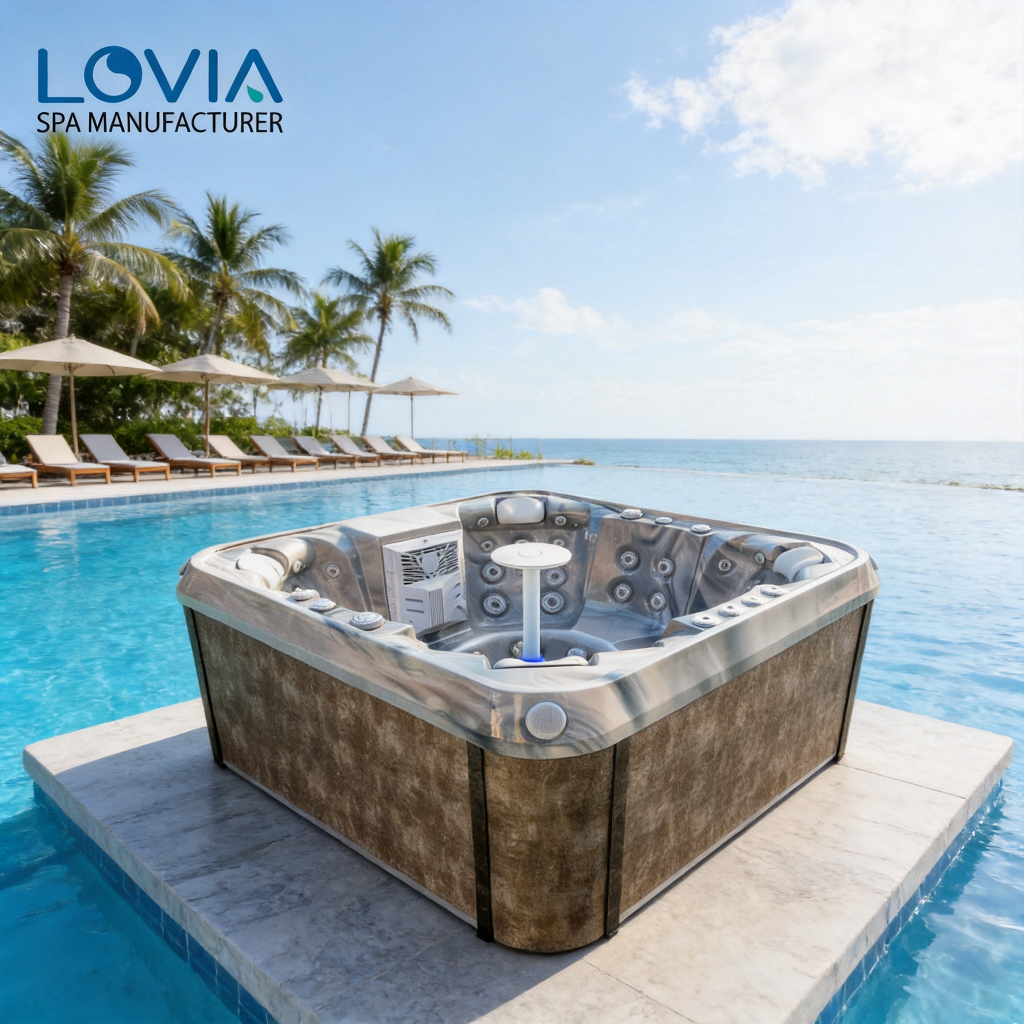
What key aspects should be evaluated when partnering with an outdoor hot tub factory for the first time?
When selecting an outdoor spa hot tub factory, one cannot judge capabilities solely based on website photos or a simple price quote. A truly professional manufacturer requires a comprehensive evaluation across several areas.
1. Evaluate Factory Scale and Production Capacity
Production scale is a key indicator of an outdoor spa tub factory's strength. However, it involves more than just the size of the facility; one must comprehensively assess production equipment, the number of production lines, staffing, and overall capacity.
An established manufacturer typically manages the entire production process in-house rather than relying on external sourcing for assembly.
For instance, the production process for a standard outdoor spa tub might include:
Raw material inspection → Acrylic molding → Product reinforcement → Plumbing layout → Pipe connection → Pump installation → Electrical system installation → Insulation application → Cabinet assembly → Functional testing → Packaging and shipping.
Professional personnel are required at every stage.
If a factory lacks in-house production capabilities and outsources many critical steps, product consistency and delivery reliability may suffer.
LOVIA® has long focused on the R&D and manufacturing of outdoor whirlpool spa hot tubs and swim spas. The company operates a 45,000-square-meter production base with multiple specialized production lines and a comprehensive manufacturing system covering everything from design and production to quality inspection. This large-scale production capability enables the company to meet the needs of residential users, distributors, and commercial projects alike.
2. Assess R&D and Design Capabilities, Not Just the Existing Product Catalog
When selecting an outdoor whirlpool spa hot tub factory for the first time, many buyers focus solely on current models while overlooking the importance of R&D capabilities.
In reality, market demands evolve; during future collaborations, clients may need to adjust product dimensions, functional configurations, or aesthetic designs.
For example:
European clients may prioritize energy efficiency and eco-friendly designs;
North American clients may value large sizes and multiple massage zones;
The Asian market may focus more on space efficiency and smart features.
Manufacturers limited to fixed molds and standard products struggle to adapt to long-term market changes.
Professional outdoor spa tub factories typically employ engineering and R&D teams capable of optimizing products based on client needs—such as adjusting jet layouts, plumbing designs, electrical configurations, and structural aesthetics.
The massage experience provided by an outdoor spa tub depends less on the number of jets and more on water flow design. Simply increasing the number of jets does not necessarily enhance comfort; if water pressure distribution is unbalanced, some jets may lack sufficient power.
Therefore, truly professional manufacturers optimize their products based on ergonomics and hydrodynamics.
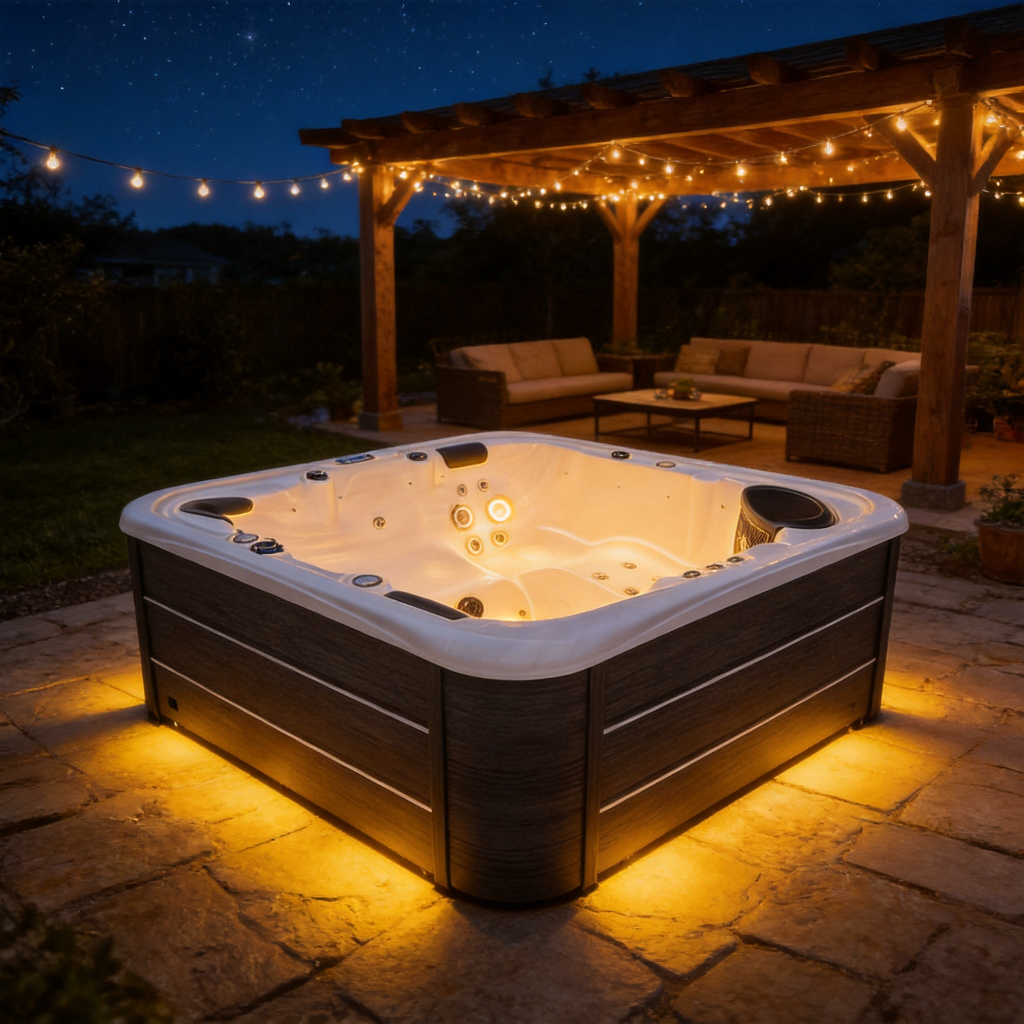
How do you evaluate an outdoor spa tub factory's quality management system?
For first-time collaborations, quality control capability is a key factor to evaluate.
Since outdoor spa hot tubs are constantly exposed to moisture, high temperatures, and outdoor elements, material durability and manufacturing craftsmanship are critical.
Professional outdoor spa tub factories typically establish comprehensive quality management systems, including:
Incoming Quality Control (IQC): Inspecting the quality of core components such as acrylic sheets, pumps, motors, and control systems.
In-Process Quality Control (IPQC): Monitoring critical production parameters, such as plumbing connections, electrical installations, and structural reinforcement.
Outgoing Quality Control (OQC): Conducting comprehensive testing on finished products, including leak tests, heating tests, pump operation tests, and safety inspections.
For instance, high-quality outdoor whirlpool spa hot tubs usually undergo pressure testing to ensure reliable plumbing connections. Some professional factories also conduct extended run-time tests to simulate real-world usage conditions.
LOVIA® implements strict quality management processes throughout production and manages operations in accordance with the ISO9001 quality system; additionally, the company provides support for relevant certifications—such as CE, ETL, SAA, RoHS, and REACH—to meet the requirements of various export markets.
For international buyers, these quality systems help mitigate risks associated with introducing products into target markets.
How can a buyer determine if a price quote for an outdoor spa tub is reasonable during an initial purchase?
Price is always a significant factor in purchasing decisions, but for outdoor whirlpool spa hot tubs, a low price does not necessarily equate to high value for money.
Many factors influence the price of an outdoor spa hot tub, including:
Material costs;
Pump and control system specifications;
Number of massage jets;
Insulation structure;
Manufacturing craftsmanship;
Certification requirements;
Level of customization.
For example, there can be a significant difference in manufacturing costs between a spa tub equipped with standard pumps and basic insulation and one featuring a high-efficiency circulation system, multi-layer insulation design, and an intelligent control system.
Some low-priced products may achieve their price advantage by reducing material thickness, downgrading electrical components, or using standard-grade parts, which can lead to higher maintenance costs over the long term.
Therefore, when initiating a partnership, buyers should focus on "overall value" rather than simply comparing purchase prices.
Professional outdoor whirlpool spa hot tub factories usually provide detailed specification sheets, allowing clients to understand the product differences associated with various price points—including materials, features, testing standards, and after-sales support.
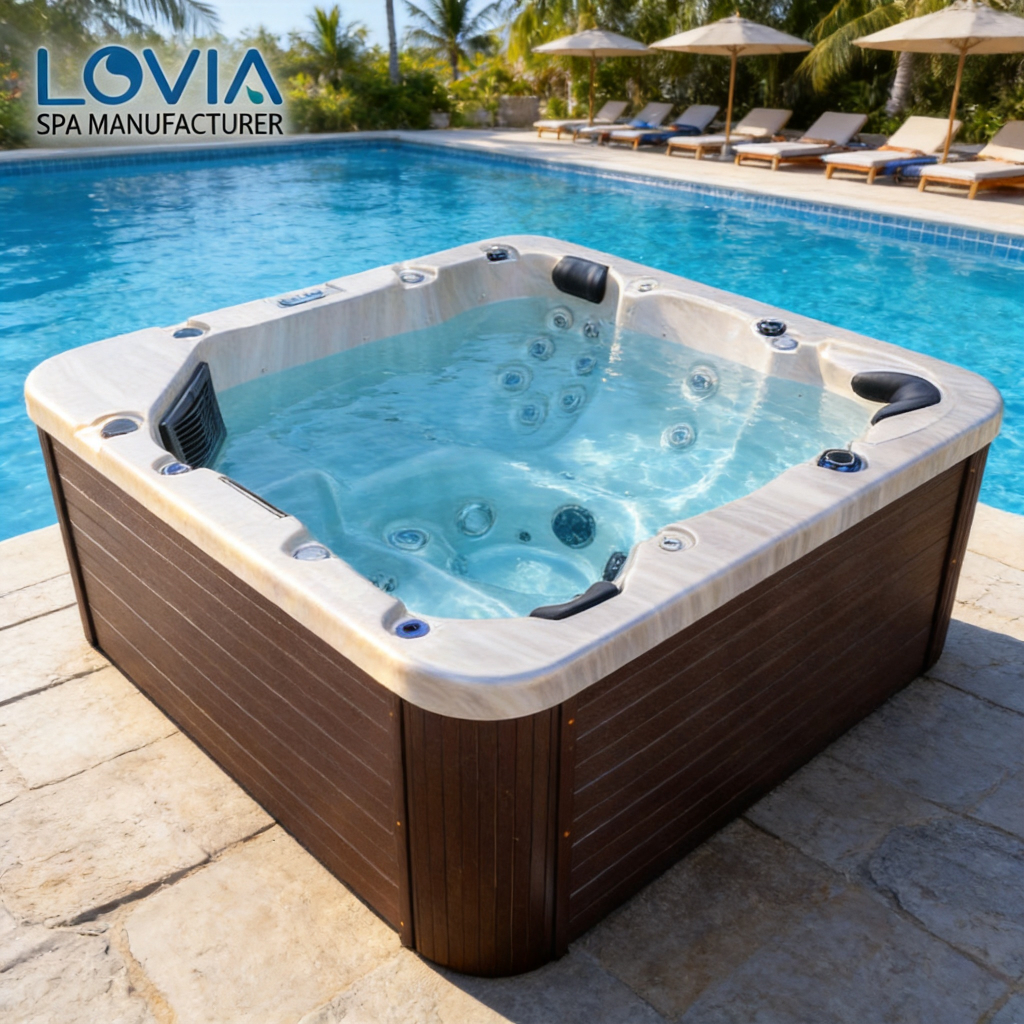
What is the proper workflow for a first-time collaboration with an outdoor spa tub factory?
Establishing a clear collaboration process is crucial for clients partnering with an outdoor whirlpool spa hot tub factory for the first time. Many procurement issues arise not from substandard product quality, but from a lack of clearly defined requirements during the initial communication phase, leading to discrepancies in subsequent design, production, and delivery. Therefore, a professional outdoor spa tub factory typically employs standardized processes to minimize communication costs and maximize project success rates.
The first step is the requirements confirmation phase.
Clients need to clearly outline their market positioning, target customer base, sales channels, and intended usage environment to the factory. For instance, outdoor spa tubs destined for the residential retail market prioritize aesthetic design, user comfort, and price competitiveness; conversely, products intended for hotels, resorts, or commercial spas emphasize continuous operational capability, durability, and ease of maintenance.
Once requirements are clarified, professional manufacturers provide product proposals based on client needs. These include recommendations regarding dimensions, functional configurations, pump selection, jet layouts, control systems, and aesthetic designs. For example, standard residential outdoor whirlpool spa hot tubs typically range from 1800mm x 1800mm to 2300mm x 2300mm, accommodating 2 to 7 people, whereas commercial projects may require larger capacities or even custom designs.
The second stage involves sample or technical confirmation.
For first-time clients placing large orders, it is advisable to confirm product standards through samples or detailed technical documentation. Key aspects to verify during this stage include materials, colors, functional configurations, packaging methods, and testing standards.
Professional factories usually provide CAD drawings, product specifications, electrical parameter details, and installation guides, ensuring the client fully understands the product before production begins.
The third stage is mass production.
Experienced manufacturers formulate production plans based on order volume, managing raw material procurement, production scheduling, and quality control. For international orders, production lead times vary depending on the product model, level of customization, and order quantity. A standard outdoor spa tub order typically takes 30 to 60 days to produce, while complex custom projects may require a longer timeframe.
The fourth stage covers shipment and after-sales support.
Professional manufacturers are responsible not only for production but also for assisting clients with technical issues related to shipping, installation, and product usage. For instance, providing installation videos, maintenance manuals, and parts lists helps customers quickly get the product up and running.
In its collaborations with international clients, LOVIA® prioritizes establishing comprehensive communication workflows—spanning everything from initial needs analysis and product design to production monitoring and after-sales support—to ensure customers have a clear understanding of project progress. This collaborative model suits not only one-off purchases but also distributors and brand clients seeking to establish long-term supply chain partnerships.
What core manufacturing strengths should a professional outdoor spa tub factory possess?
When evaluating whether an outdoor whirlpool spa hot tub factory is a suitable partner for the long term, one must look beyond mere product aesthetics and gain a deep understanding of its core manufacturing capabilities. A truly professional manufacturer typically excels in material control, structural design, system integration, and large-scale production.
First is material control capability.
Outdoor whirlpool spa hot tubs are constantly exposed to the elements, so materials must offer excellent weather resistance, UV resistance, and structural stability. High-quality products generally utilize certified acrylic materials combined with fiberglass-reinforced structures to enhance overall strength.
For example, outdoor environments can experience temperature fluctuations of tens of degrees Celsius; if material stability is lacking, prolonged thermal cycling can lead to surface aging, deformation, or even compromised sealing performance. Consequently, professional factories exercise strict control over material sourcing and processing techniques.
Second is the capability to integrate plumbing and electrical systems.
An outdoor whirlpool spa hot tub is not merely a bathtub but a complete hydrotherapy system. Components such as water pumps, filtration systems, heaters, control panels, and piping layouts must be perfectly matched.
Take the massage system, for instance: an outdoor spa tub might feature between 20 and 80 jets of various types, including rotary, directional, and air-bubble jets. More jets do not necessarily equate to better performance; the configuration must be carefully designed based on pump flow rates, water pressure, and the specific areas of the body being targeted for massage.
Third is thermal insulation technology.
For outdoor spa tubs, energy efficiency directly impacts long-term operating costs for the user. This is particularly critical in colder regions of Europe and North America, where winter usage is frequent; inadequate insulation leads to longer heating times.
Professional manufacturers typically employ multi-layered insulation solutions, covering the base, side panels, and piping. Some high-end products also minimize heat loss through optimized shell structures. Throughout its product development process, LOVIA® consistently focuses on material application, water circulation design, and energy efficiency optimization. By continuously refining manufacturing techniques, the company enhances the stability and user experience of its outdoor spa tubs.
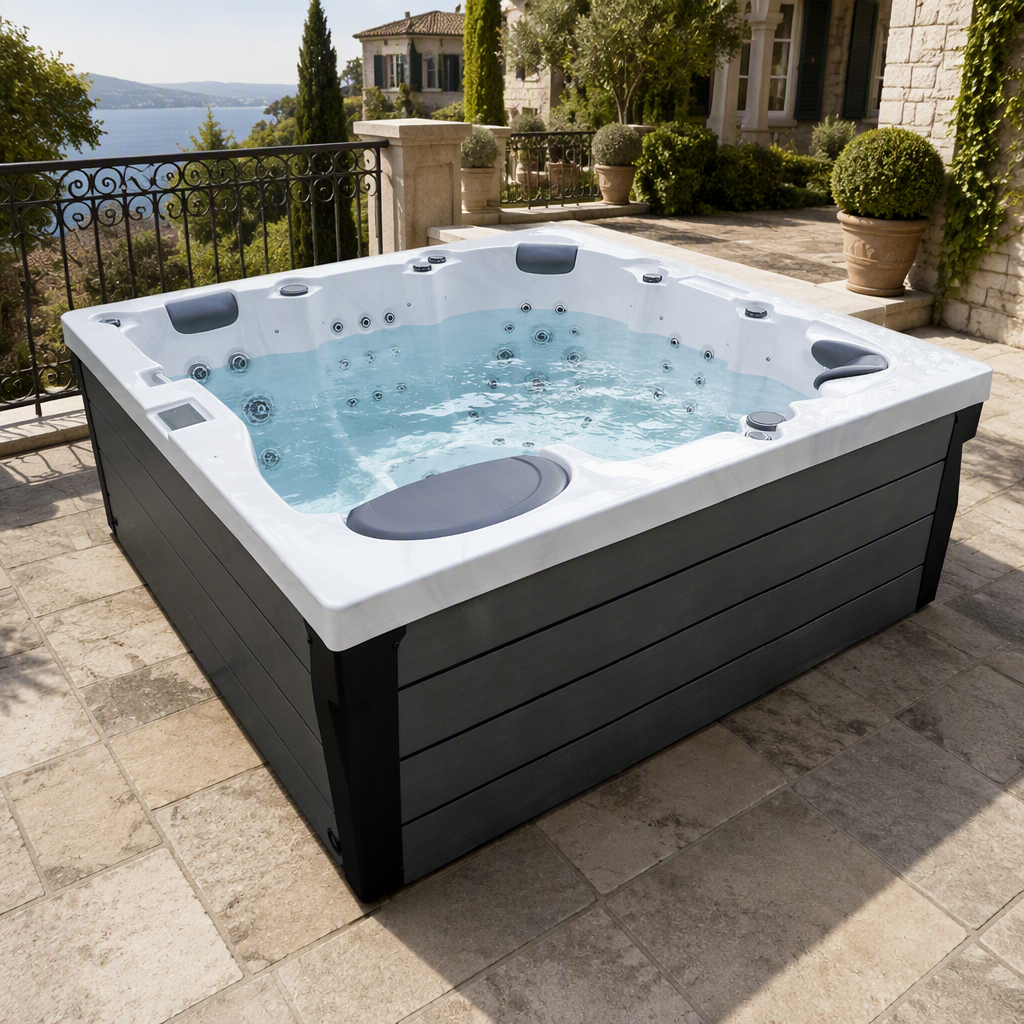
FAQ: Key Considerations When Partnering with an Outdoor Spa Tub Factory for the First Time
Q1: What should be the top priority when partnering with an outdoor spa tub factory for the first time?
When initiating a partnership, it is advisable to focus on the manufacturer's production capacity, R&D capabilities, quality management systems, certifications, and after-sales support. Avoid selecting a supplier based solely on price; since outdoor whirlpool spa hot tubs are designed for long-term use, product stability is far more critical than the initial purchase cost.
Q2: What customization services do outdoor spa tub factories offer?
Professional factories typically offer customization options such as dimensions, colors, functional configurations, massage system designs, and electrical specifications, alongside OEM/ODM services. For commercial projects, specialized designs can be created to meet the specific requirements of hotels, spas, and wellness centers.
Q3: What is the typical production lead time for bulk orders of outdoor spa tubs?
Production lead times vary based on the product model, the level of customization, and the order volume. Standard products usually require 30–60 days for production, while complex custom projects may take longer. Confirming the production schedule with the manufacturer in advance helps in effectively planning sales and project timelines.
Q4: How can I determine if an outdoor whirlpool spa hot tub factory is reliable?
Reliability can be assessed based on several factors: ownership of a dedicated production facility, an in-house R&D team, international certifications, comprehensive quality testing procedures, and the ability to provide long-term after-sales support. Conducting on-site factory visits, inspecting production processes, and reviewing past client projects are also effective ways to evaluate a manufacturer.
Q5: Why is a long-term partnership more valuable than a one-off purchase?
Outdoor whirlpool spa hot tubs represent a product category that evolves over time; distributors and commercial clients often need to continuously optimize their product offerings and replenish inventory. Establishing a long-term partnership with a reliable manufacturer ensures a stable supply chain, faster technical support, and access to product upgrades tailored to market demands.