


FAQs on OEM Outdoor Spa Hot Tub Manufacturing
2026-10-07 15:35FAQs on OEM Outdoor Hot Tub Manufacturing: A Comprehensive Analysis of Production Processes, Quality Control, and Market Applications
Compared to traditional indoor bathtubs, outdoor spa hot tubs must not only meet basic needs—such as comfortable massage functions and constant-temperature soaking—but also withstand harsh outdoor conditions over the long term. These include temperature fluctuations, UV exposure, rain and snow, and equipment wear and tear resulting from prolonged operation. Consequently, for brands, project purchasers, and distributors, selecting a professional and reliable OEM outdoor hot tub factory is crucial for ensuring product quality, controlling after-sales costs, and enhancing market competitiveness.
Currently, an increasing number of enterprises are entering the outdoor spa hot tub market via the OEM model. By partnering with established jacuzzi hot tub outdoor factories, brands can rapidly launch products aligned with their market positioning without investing heavily in production lines.
However, during the actual procurement process, clients often encounter various manufacturing issues, such as opaque product specifications, inconsistent production quality, excessive power consumption, frequent water leaks, and unreliable delivery schedules. These problems not only compromise the user experience but also directly damage brand reputation.
A high-quality outdoor spa hot tub is essentially a comprehensive hydrotherapy system. Its manufacturing process involves multiple stages, including acrylic molding, fiberglass reinforcement, water circulation design, electronic control system development, heating system integration, thermal insulation design, and safety testing.
An excellent OEM outdoor hot tub manufacturer requires not only production capabilities but also robust product development expertise and quality management systems. This article provides a detailed analysis of common issues in the OEM outdoor spa hot tub manufacturing process and offers professional insights for purchasers, drawing on industry experience and practical technical specifications.
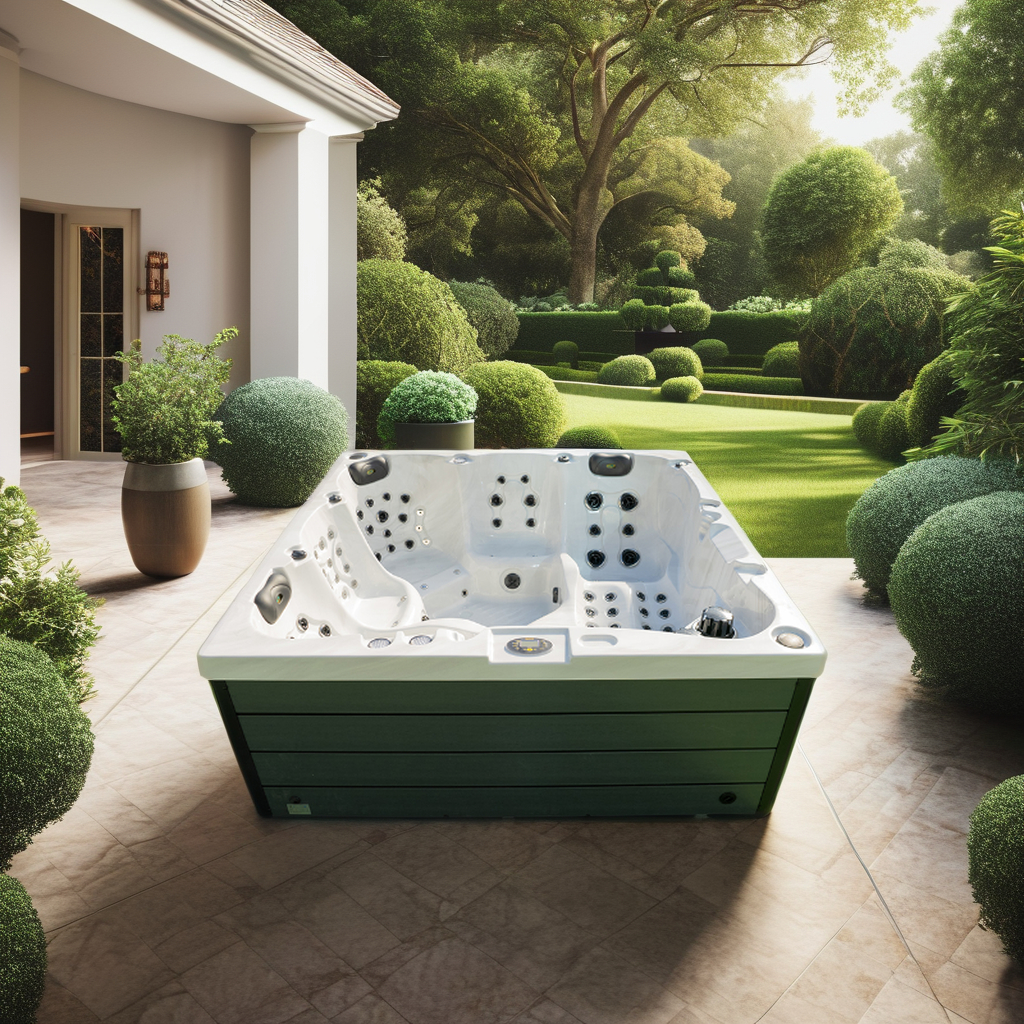
Why is the market demand for OEM outdoor hot tubs growing?
Simply put, OEM outdoor hot tubs are products designed, manufactured, and supplied by specialized factories to meet the specific requirements of a brand. Brands can customize product aesthetics, functional configurations, dimensions, color schemes, and branding elements based on their market positioning, while the factory handles the actual manufacturing.
In recent years, the outdoor hot tub market has experienced significant growth, driven primarily by consumers placing greater value on outdoor living spaces and an increasing demand from hotels, homestays, and vacation resorts for unique, experiential amenities. High-end residential projects often feature outdoor hot tubs as key elements of courtyards, terraces, or pool areas, while commercial clients seek to enhance project value by incorporating spa and hydrotherapy features.
Compared to standard bathtubs, outdoor spa hot tubs offer several distinct characteristics. First, they feature independent heating systems that maintain water temperature within a comfortable range for the human body—typically between 37°C and 40°C. Second, they are equipped with circulation and filtration systems to ensure continuous water cleanliness. Third, through various combinations of massage jets, they provide targeted hydro-massage for areas such as the shoulders, lower back, and legs.
For purchasers of OEM outdoor hot tubs, the primary advantage of the OEM model is the reduction of R&D and production costs. Establishing a complete production line requires significant investment in thermoforming equipment, molds, and testing machinery, as well as a large team of technical personnel. Building a factory from scratch entails not only high capital expenditure but also the need to accumulate manufacturing expertise over time. Partnering with an established outdoor hot tub manufacturer, therefore, enables a faster time-to-market.
Why is there such a significant difference in power consumption among outdoor hot tubs?
Energy consumption is a primary concern for users after purchasing a jacuzzi hot tub outdoor. Many consumers believe that power consumption depends mainly on heating power; however, factors such as insulation design, the operating environment, and the control system all influence the final energy usage.
Generally, the heating system power for jacuzzi hot tub outdoors ranges from 2 kW to 6 kW, and voltage standards vary by market. For instance, some regions use a 220V power supply, while products for the North American market may utilize a 240V electrical system. Higher heating power results in faster temperature increases, but if insulation is poor, the rate of heat loss also rises.
Professional-grade OEM outdoor hot tubs typically feature a multi-layer insulation design, including:
•Shell insulation layer;
•Base thermal insulation layer;
•Piping insulation layer;
•Protective outer shell structure.
High-quality products often use polyurethane foam for insulation; its low thermal conductivity effectively minimizes heat loss.
For example, in an ambient temperature of 10°C to 15°C, a well-insulated outdoor spa hot tub maintaining a water temperature of 38°C does not require the heating system to run continuously at high load. In contrast, products with poor insulation may require frequent activation of the heating equipment, thereby increasing daily operating costs.
Consequently, when developing products, outdoor spa hot tub factories must design different versions tailored to the specific environments of their target markets. If products are sold in cold regions—such as areas where winter temperatures drop below 0°C—the insulation thickness and pipeline protection design must be enhanced; otherwise, the user experience may be compromised.
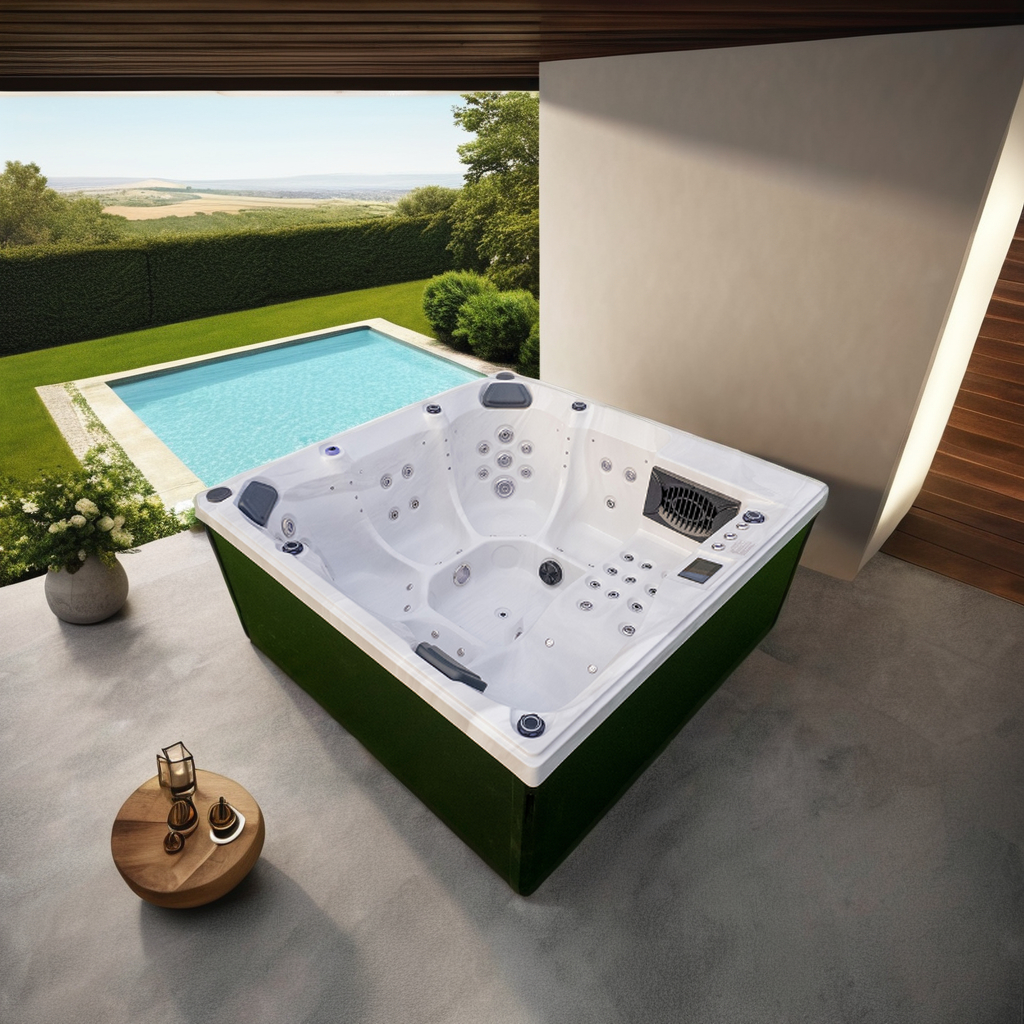
Does a higher number of jets in an outdoor hot tub guarantee a better massage experience?
This is a very common question when sourcing OEM jacuzzi hot tub outdoors. Many clients assume that a higher jet count equates to a higher-end product. In reality, however, the massage quality depends not just on the number of jets, but also on jet layout, pump power, water flow design, and ergonomic structure.
For instance, a hot tub with 80 jets does not necessarily offer a better experience than one with 40 high-quality jets. If pump pressure is insufficient, activating a large number of jets simultaneously can cause the pressure at individual jets to drop, thereby diminishing the massage effect.
Typically, pump power varies based on the hot tub's size; compact models might feature 1.5 HP to 2 HP pumps, whereas large commercial models may utilize a combination of multiple pumps rated at 3 HP or higher.
Professional OEM manufacturers design jet configurations based on the tub's capacity, seating arrangement, and specific body zones for massage.
For example:
The lumbar region is suited for concentrated massage jets;
The shoulder and neck areas require gentler water flow;
The leg area benefits from strong, circulating water flow.
A well-engineered hydraulic design is far more important than simply increasing the number of jets.
What are the most common quality issues in OEM outdoor hot tub manufacturing?
In actual production, common issues with outdoor hot tubs generally fall into a few categories:
First, water leakage. Leaks are usually associated with pipeline connections, pump interfaces, jet seals, or installation workmanship. Top-tier manufacturers conduct pressure tests after assembly to check the plumbing system for any seepage.
Second, control system malfunctions. Modern outdoor spa hot tubs typically feature smart control systems to manage functions such as pumps, heating, lighting, and filtration. If the electronic control system lacks adequate protection, it is prone to failure in humid environments.
Third, insufficient heating efficiency. Some products use low-quality heating elements, resulting in slow heating speeds or significant temperature fluctuations. A reliable heating system should include temperature sensors and automatic protection features.
Fourth, shell aging. Jacuzzi hot tub outdoors are constantly exposed to sunlight; if standard materials are used, issues such as discoloration and surface cracking may occur after a few years. Therefore, products intended for outdoor use require UV-resistant materials.
These issues demonstrate that OEM manufacturing for outdoor spa hot tubs is not merely a simple assembly process, but a comprehensive engineering undertaking involving materials, structural design, and electrical and hydraulic systems.
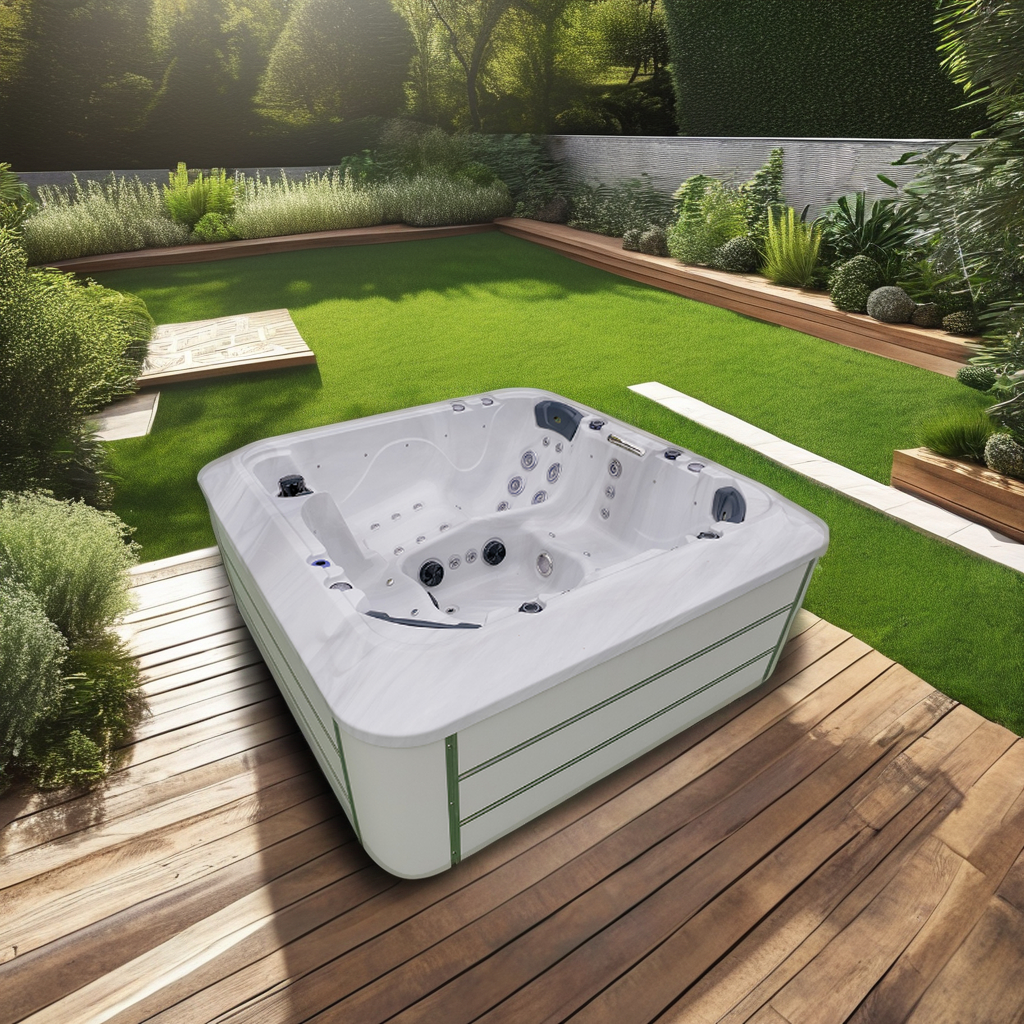
How can brands mitigate procurement risks when sourcing OEM outdoor hot tubs?
For brands, minimizing procurement risk begins with the initial communication phase.
First, clearly define the product positioning. For instance, the target market—whether residential users, hotel projects, or high-end commercial installations—will dictate different requirements for product specifications.
Second, confirm technical parameters, including:
•Product dimensions;
•Water capacity;
•Seating capacity;
•Number of pumps;
•Heating power;
•Voltage standards;
•Insulation method;
•Material specifications.
For example, a six-person outdoor hot tub might have a capacity of 1,200 to 1,500 liters; without an efficient heating and circulation system, the time users must wait for the water to heat up would increase significantly.
Third, establish quality acceptance standards. OEM partnerships involve more than just purchasing products; they represent long-term supply relationships. Both parties should agree in advance on material standards, testing procedures, packaging requirements, and after-sales support protocols.
Established outdoor hot tub manufacturers typically offer services such as sample validation, mass production, quality inspection reports, and ongoing technical support—all of which are crucial for long-term brand operations.
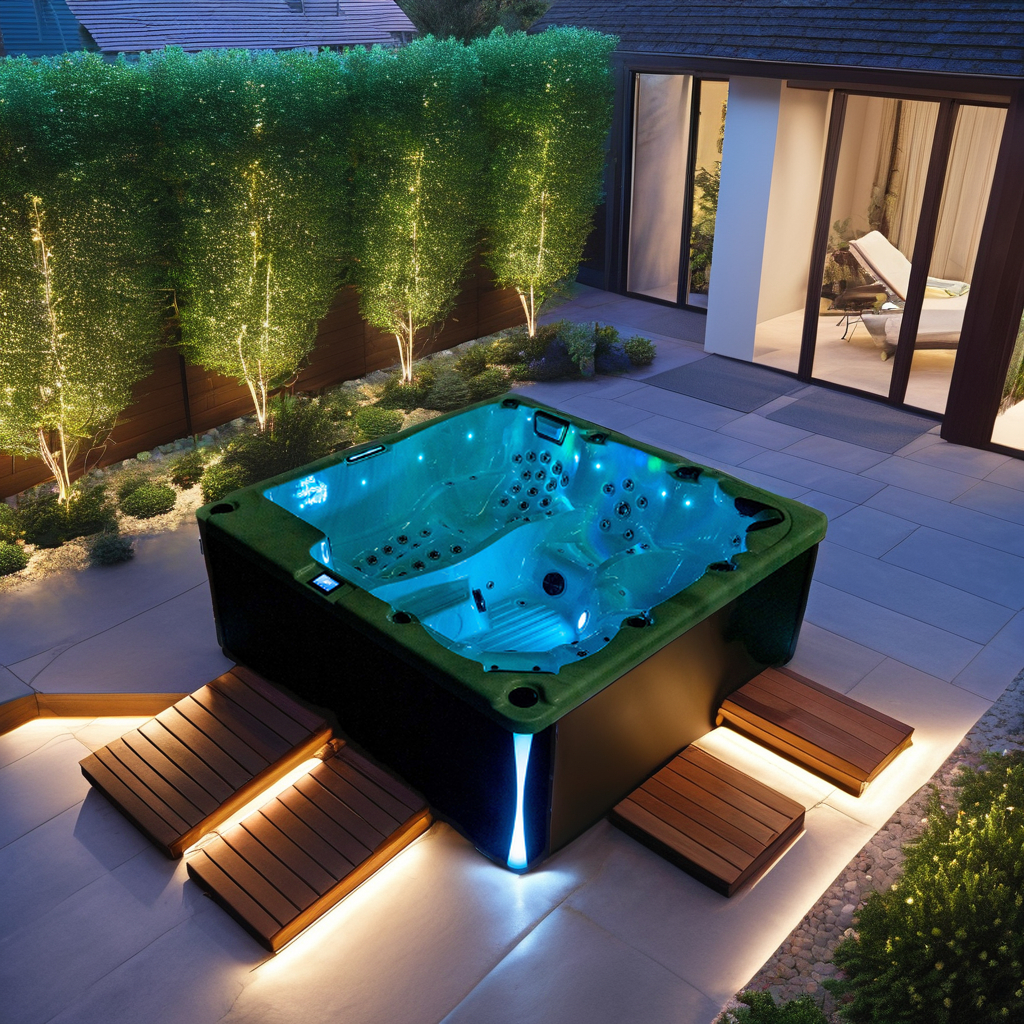
OEM Outdoor Hot Tub Manufacturing: Frequently Asked Questions (FAQ)
Q1: What is the minimum order quantity (MOQ) for OEM outdoor hot tubs?
Requirements vary by manufacturer. Some factories support small-batch customization—starting at 10 or 20 units—while others cater to large brands with higher volume orders. Specifics depend on the product model, the level of customization, and production scheduling.
Q2: What is the typical lifespan of an outdoor spa hot tub?
Under normal circumstances, a high-quality jacuzzi hot tub outdoor typically has a lifespan of 8 to 15 years, depending on material quality, frequency of use, maintenance practices, and the installation environment.
Q3: Can outdoor spa hot tubs be used in winter?
Yes, but the configuration must be selected based on the local climate. In regions with low temperatures, enhanced insulation is required, and measures must be taken to ensure freeze protection for the plumbing and compliance of the electrical system with local standards.