


Can You Get Electrocuted in a Spa Whirlpool Tub?
2026-05-28 15:30When people first encounter—or plan to purchase—a spa whirlpool tub, a very common yet critically important question often comes to mind: Can you get electrocuted while using one?
After all, a spa whirlpool tub involves the simultaneous interplay of three highly sensitive elements: water, electricity, and direct human contact. Many people worry that the presence of electrical components—such as water pumps, motors, and control systems—within the tub might pose a threat to user safety.
In reality, provided one properly understands the structure, safety design principles, and operational prerequisites of a spa jacuzzi tub, it is possible to arrive at a clear, rational, and professional answer to this question.
This article will systematically address the question, "Can you get electrocuted in a spa whirlpool tub?" by examining it from multiple perspectives, including electrical principles, safety design, structural isolation, and usage guidelines.
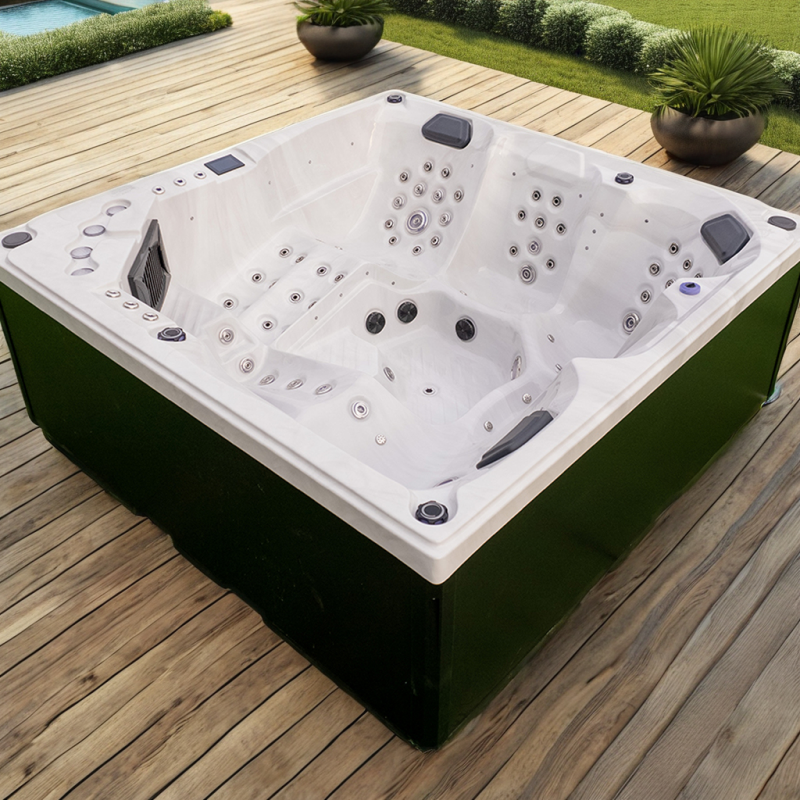
Why Do Spa Whirlpool Tubs Evoke Fears of Electrocution?
The primary reason many people worry about getting electrocuted in a spa whirlpool tub stems from several intuitive factors:
•The interior of the spa whirlpool tub requires electrical power to operate.
•The operating environment remains constantly damp or wet.
•The risk of electrical conduction is amplified when the human body is submerged in water.
When combined, these factors easily lead to the intuitive conclusion that "Water + Electricity = Danger." However, without taking into account the specialized design logic behind spa whirlpool tubs, this conclusion is often incomplete.
Does Electrical Current Actually Come into Contact with the Water Inside a Spa Whirlpool Tub?
This is the pivotal question in determining whether there is a risk of electrocution. Under normal operating conditions, the electrical current within a spa whirlpool tub does *not* come into direct contact with the water itself.
One of the fundamental design principles of a spa jacuzzi tub is the complete separation of electricity and water. This principle is manifested in the following ways:
•The motors and water pumps feature sealed, watertight enclosures.
•Electrical components are physically isolated from the water circulation system.
•The control system does not come into direct contact with the water.
In other words, the water that users come into contact with is merely water flow propelled by mechanical force; it is not electrically charged water.
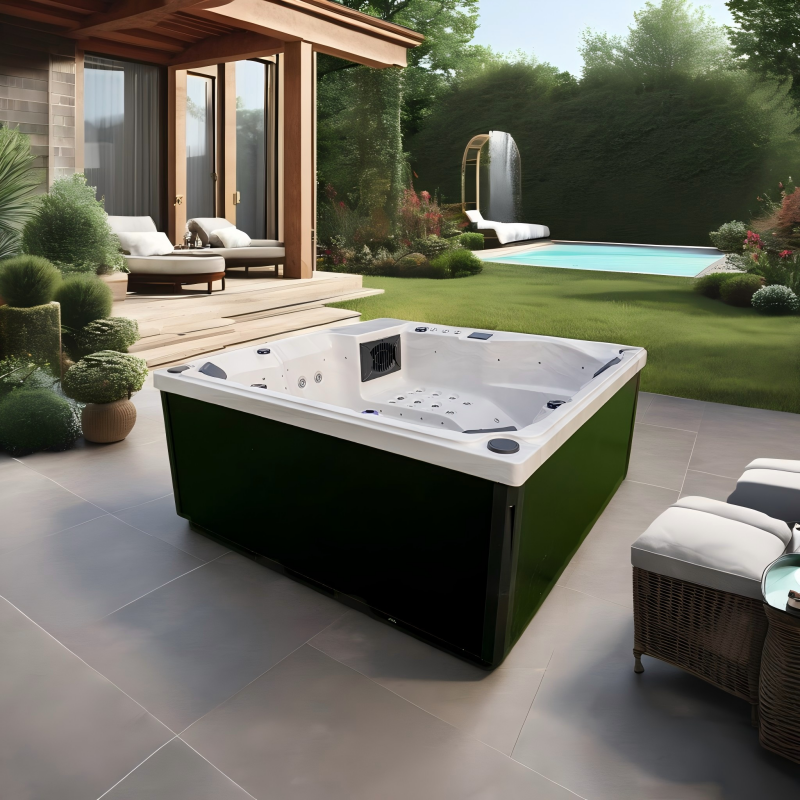
Where Are the Core Electrical Components of a Spa Whirlpool Tub Located?
In a standard spa or whirlpool bathtub, the electrical system primarily consists of:
•The motor driving the water pump
•The control panel and control module
•The heating system (if equipped)
These components are typically installed:
•On the exterior of the bathtub shell
•Within a sealed equipment compartment
•At a position situated above the water line
Through this structural design, the spa bathtub effectively prevents direct contact between the water and any live electrical components.
Can the jets in a spa jacuzzi bathtub conduct electricity?
This is a common point of misunderstanding for many users.
The jets in a spa bathtub are not themselves electrically powered; their function is to:
•Guide the flow of water
•Mix air into the stream
•Adjust the direction of the spray
The jets transmit water pressure and air pressure, not electrical current. Even with water circulating around the jets, no electrical current pathway is formed.
Therefore, from a structural design perspective, a spa bathtub does not possess any design pathway through which electricity could be conducted via the jets.
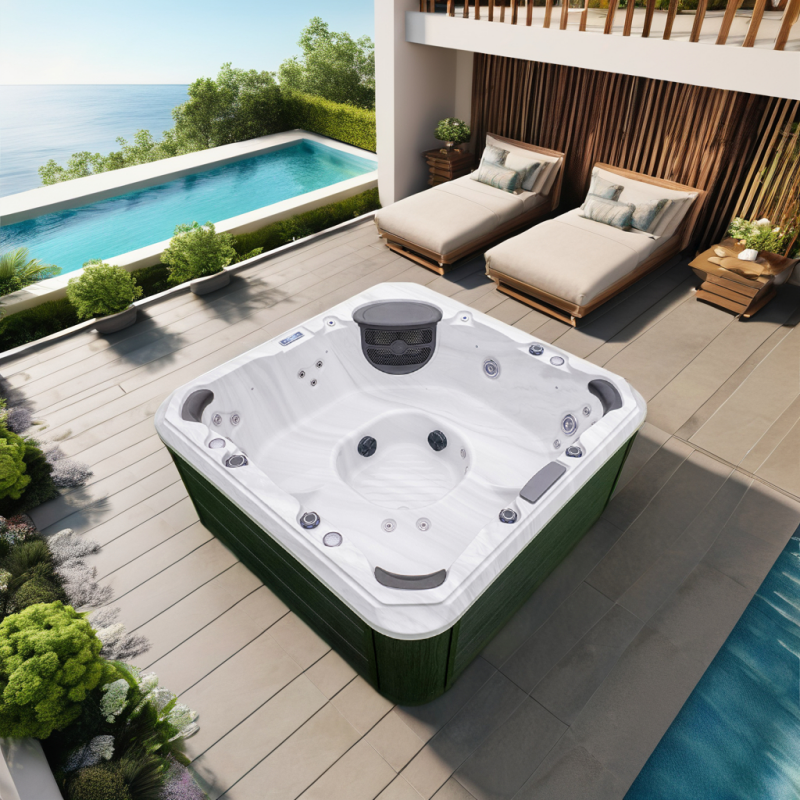
How, then, is the motor able to operate while the tub is filled with water?
The key lies in this fact: the motor itself does not operate *within* the water.
Spa bathtubs utilize:
•An external water pump
•Sealed shaft seals
•Indirect power transmission
The motor's power is transmitted mechanically to the water pump's impeller, driving the water circulation. This design approach is highly mature in industrial equipment and is widely applied in other water-related devices.
Do spa jacuzzi tubs feature specific safety designs to prevent electric shock?
Yes—and this constitutes a core element of spa bathtub design.
Common safety design principles include:
•Grounding protection
•Electrical isolation
•Leakage protection mechanisms
•Specific water-resistance (IP) ratings
These measures share a single objective: to minimize the risk of electric shock to the greatest extent possible, even in the event of an abnormal situation.
Are there specific requirements regarding the power supply environment for a spa jacuzzi tub?
Yes, and fulfilling these requirements is a crucial prerequisite for ensuring safety.
Spa jacuzzi tubs typically require:
•A dedicated electrical circuit
•A stable voltage supply
•A grounding system that complies with safety standards
These requirements should not be viewed as "unnecessary hassles," but rather as the fundamental conditions necessary to ensure the long-term, safe operation of the spa bathtub.
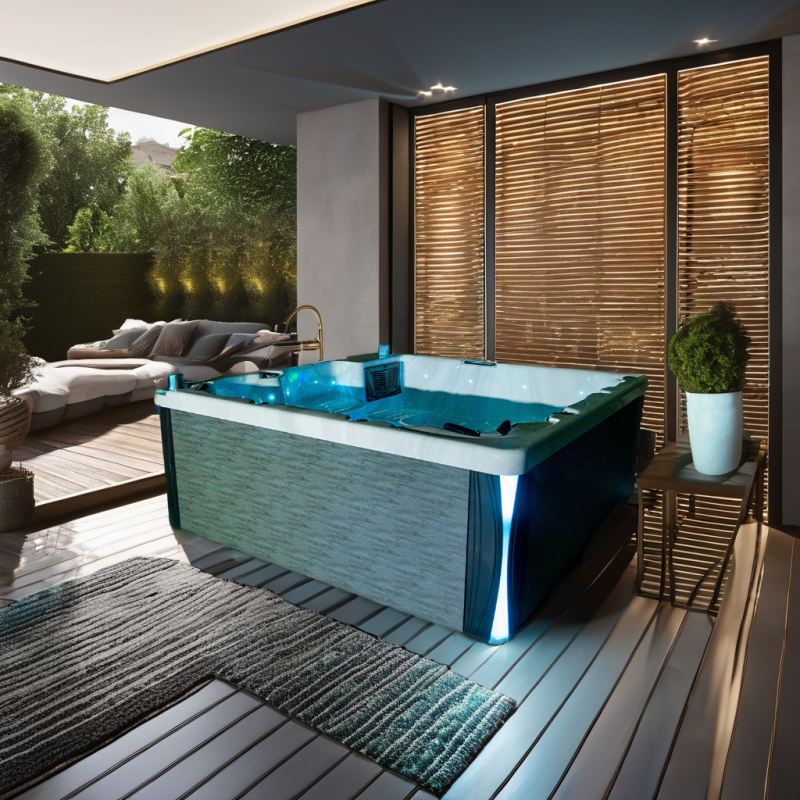
If water were to enter the bathtub's electrical system, would it result in an electric shock?
This is a logically valid concern. However, at the design level, spa hot tubs have already anticipated such extreme scenarios:
•The electrical compartment features a waterproof structure.
•Seals prevent the ingress of moisture and water vapor.
•Electrical components are not directly exposed.
As long as the spa hot tub is installed and operated under normal conditions, the likelihood of water entering the electrical system is extremely low.
Is the control panel on a spa hot tub safe?
The control panels on spa hot tubs typically feature:
•Low-voltage control.
•A waterproof panel design.
•Sealed buttons or touch-sensitive interfaces.
The operating voltage of the control panel is significantly lower than the hazardous voltage range; therefore, even when operated in a wet environment, it poses no direct risk of electric shock to the user.
LOVIA® outdoor spa hot tubs are equipped with the internationally renowned Balboa intelligent control system, ensuring overall operation that is more stable, safe, and efficient. Users can easily adjust water temperature, lighting, massage modes, and operating status, providing an intelligent and seamless user experience.
The units support multiple power specifications—including 220V, 380V, and 110V—allowing for flexible adaptation to the installation requirements of different countries and regions, making them widely suitable for the global market.
What actions during use might increase safety risks?
Although spa hot tubs incorporate multiple safety features in their design, improper usage can still create potential hazards, such as:
•Unauthorized modification of the electrical circuitry.
•Using an incompatible power supply.
•Energizing the unit for testing before installation is fully complete.
•Disregarding basic electrical safety codes.
These issues do not stem from the design of the spa hot tub itself, but rather from improper human operation.
Are spa hot tubs suitable for long-term use?
From a safety perspective, provided the following conditions are met:
•Correct installation.
•Compliance with power supply regulations.
•Regular maintenance.
Spa jacuzzi tubs can be used safely and reliably over the long term. Their safety design is not merely a temporary workaround, but rather a comprehensive engineering system built upon the fundamental premise of "long-term use in a water-filled environment."
Why are spa jacuzzi tubs not classified as "high-risk electric shock devices"?
Taken as a whole, spa hot tubs are not classified as high-risk electric shock devices for the following reasons:
•Physical isolation between the electrical system and the water.
•Utilization of low-voltage control systems.
•Multi-layered protective design.
•Clearly defined usage guidelines.
As long as the unit is used in accordance with its intended design—specifically, for normal soaking and bathing—there is no risk of electric shock caused by the device itself.
So, can you actually get electrocuted in a spa jacuzzi tub?
Provided the following conditions are met, the answer is a definitive: No.
•The spa jacuzzi tub features a proper structural design.
•The electrical system has been installed in accordance with safety standards.
•The operating environment meets basic safety requirements.
One of the primary design objectives of a spa jacuzzi tub is to maximize user safety within an environment where water and electricity coexist.