


Are Acrylic Hot Bathtubs Prone to Deformation?
2026-01-16 15:30Acrylic hot water bathtubs, due to their stylish appearance, lightweight nature, good heat retention, and ease of cleaning, have become one of the most common bathtub materials in modern family bathrooms, hotel suites, and guesthouse spaces.
However, many consumers have a question: Are acrylic hot water bathtubs prone to deformation?
The answer is: They are not prone to deformation.
High-quality acrylic hot water bathtubs undergo multiple layers of reinforcement and structural support design during the manufacturing process. As long as they are used under normal temperature and reasonable load-bearing conditions, it is difficult for them to deform, collapse, or crack.
This article will analyze in depth why acrylic hot water bathtubs are not prone to deformation from multiple perspectives, including material structure, load-bearing capacity, reinforcement methods, usage environment, installation details, and maintenance methods.

Does the Material Structure of Acrylic Hot Water Bathtubs Easily Lead to Deformation?
To determine whether an acrylic hot water bathtub is prone to deformation, it is essential to understand its material composition.
1. PMMA (Acrylic Sheet) Itself Has Good Rigidity
High-quality acrylic uses PMMA (Polymethyl Methacrylate) sheet.
It possesses the following natural properties:
• High structural stability
• Good flexural strength
• Good heat resistance
• Not easily shrinking or deforming
• Does not yellow or crack with long-term use
Therefore, it is very easy for acrylic sheets to maintain their shape in hot water environments at room temperature.
2. Hot tubs use a fiberglass/resin reinforcement layer (FRP)
The inner FRP reinforcement is the core source of strength for acrylic hot tubs.
FRP has the following characteristics:
• High compressive strength
• High load-bearing capacity
• Not easily affected by thermal expansion and contraction
• Moisture-proof and corrosion-resistant
• Good toughness, able to absorb pressure without deformation
The addition of FRP makes acrylic hot tubs several times stronger than single-layer plastic bathtubs.
3. Multi-layered Structure for Composite Stability
Most high-end acrylic hot tubs employ a structure consisting of:
Acrylic surface layer + fiberglass/resin layer + bottom support structure
This sandwich-like structure ensures the overall stability of the tub even after long-term use, preventing deformation from hot water or the weight of a person.
Therefore, from a material perspective, acrylic hot tubs inherently possess strong structural stability.
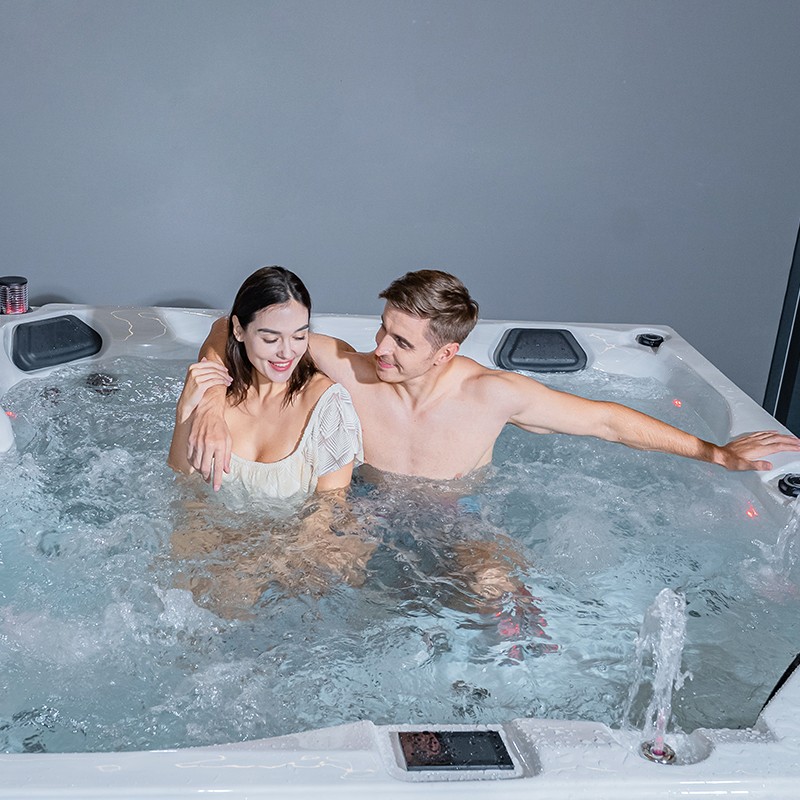
Is the load-bearing capacity of an acrylic hot tub sufficient?
Many users worry:
"Acrylic hot tubs are so light, won't they be able to support the weight of a person?"
In fact—there's no need to worry.
1. Standard acrylic bathtubs can support 200–400 kg or more
This weight includes:
• Human weight
• Weight of water
• Pressure changes during bathing
High-quality acrylic hot tubs undergo load-bearing tests before leaving the factory. As long as the installation method is correct, safety and stability are fully guaranteed.
2. A reinforced base is the core of load-bearing capacity
The bottom of a bathtub typically features:
• Stainless steel base
• Metal frame
• Reinforced support legs
These distribute weight evenly across the floor, preventing concentration at a single point of stress, thus reducing the bathtub's resistance to deformation.
3. The load-bearing capacity is further supported by the wall and floor structure
The bathtub's load-bearing capacity relies not only on its own structure but also often on:
• Leveling mortar at the bottom
• Surrounding perimeter walls
• The disc-shaped bottom support for freestanding bathtubs
These further reduce the risk of bathtub deformation.
Will hot water cause an acrylic hot tub to deform?
Many users worry:
"Will the bathtub soften and deform after heating with hot water?"
1. Acrylic's heat resistance reaches approximately 80°C
Household hot water typically:
• Tap water: 50°C–60°C
• Instantaneous electric water heater: 40°C–55°C
• Bathtub heating system: 38°C–42°C
These temperatures are far below acrylic's softening temperature, therefore it will not cause the bathtub to deform.
2. The FRP reinforcement layer can withstand additional thermal expansion and contraction
FRP itself has high temperature resistance and can insulate against heat from the back, preventing stress changes on the acrylic surface.
3. Heating has minimal impact on the bathtub
Prolonged soaking in hot water will not affect:
• Bathtub shape
• Surface smoothness
• Structural strength
Therefore, a hot water environment will not cause the bathtub to deform.
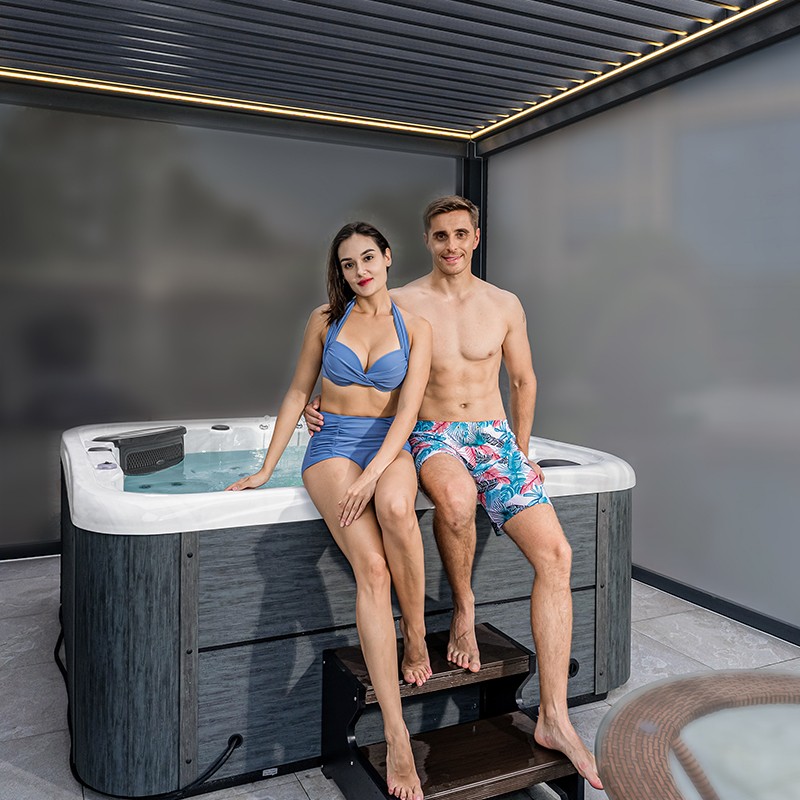
What incorrect usage methods might cause acrylic hot tubs to deform?
Although acrylic hot tubs are not easily deformed, improper operation can still subject them to abnormal pressure.
The following are situations that may lead to deformation (but can be avoided):
1. Uneven Installation
An uneven surface or lack of proper support can cause stress concentration at certain points, potentially leading to slight deformation.
2. Overloading
While the tub has strong load-bearing capacity, placing:
• Heavy objects
• Large storage devices
• Stacked tools
can cause excessive localized stress.
3. Prolonged Exposure to Sunlight
If left outdoors in strong ultraviolet light for extended periods without protection, acrylic may age, increasing the likelihood of deformation.
4. Use of Strong Corrosive Chemicals
For example:
• Industrial acids and alkalis
• Undiluted bleach
• Strong solvent cleaners (acetone, etc.) These can severely damage the surface, causing it to lose its original strength.
However, these are extreme cases.
Under normal use, acrylic hot tubs are unlikely to deform.
How to determine if an acrylic hot tub is high-quality and resistant to deformation?
When choosing an acrylic hot tub, you can judge its quality from the following aspects:
1. Sheet Thickness
The acrylic layer thickness of a high-quality bathtub is typically:
3–5mm or higher
Thin sheets are prone to denting, and high-quality bathtubs would not use thin sheet materials.
2. Uniformity of the FRP Reinforcement Layer
The back coating should be:
• Thick
• Firmly adhered
• No hollow areas
• No cracks
This is crucial for the bathtub's strength.
3. Solid Bottom Support Structure
High-end bathtubs usually have stainless steel supports or high-strength frame structures to ensure load-bearing capacity.
4. Brand Manufacturing Capabilities
Reputable brands have more mature molding experience and stable processes, resulting in products with stronger resistance to deformation.
How to Install Correctly to Prevent Acrylic Hot Tub Deformation?
Improper installation is one of the main causes of bathtub deformation.
The following installation details should be noted:
1. Ensure the floor is level.
2. Adjust the support feet evenly to ensure even weight distribution.
3. Support all stress points according to the instructions.
4. Avoid leaving excessive unsupported space.
5. If necessary, add a cement mortar support layer at the bottom.
6. Leave appropriate expansion gaps around the perimeter.
If installed correctly, the bathtub will almost never deform later.
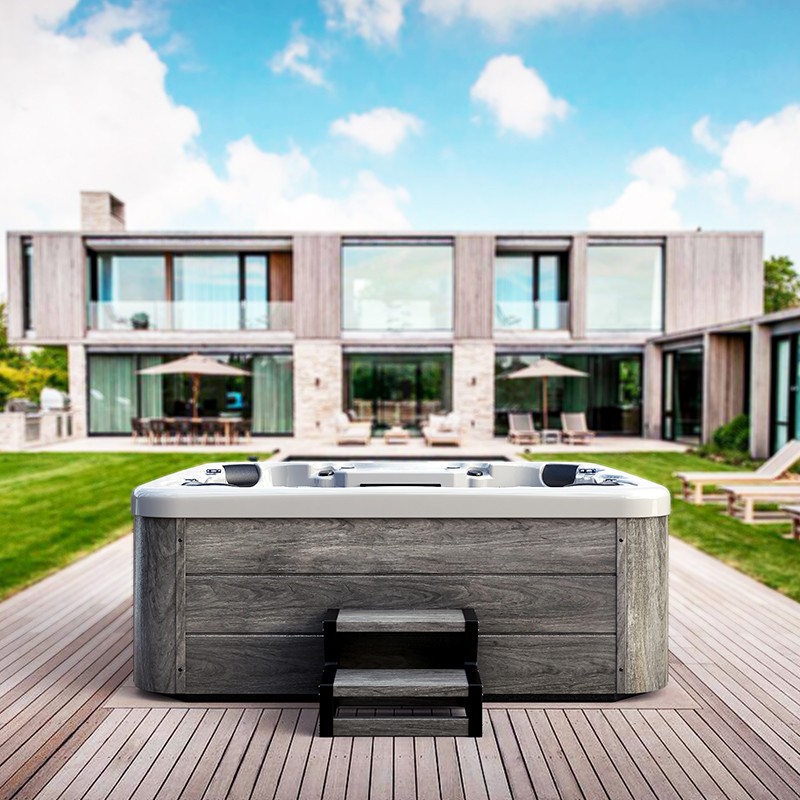
Will maintenance of an acrylic hot tub affect deformation?
Proper maintenance will not change the shape, but it will maintain the material's stability.
Proper maintenance includes:
• Regular cleaning with a neutral detergent
• Avoid impacts from heavy objects
• Do not scratch with steel wool
• Avoid using strong corrosive cleaners
• Keep the bathtub surface dry
While these methods will not directly cause the bathtub to deform, they will maintain the long-term stability of the bathtub structure.
Why are acrylic hot tubs widely considered "not easily deformed"?
In summary, the reasons why acrylic hot tubs are not easily deformed include:
1. The material itself has high stability.
2. Multi-layered structure increases strength.
3. The bottom frame provides excellent support.
4. High heat resistance; hot water will not affect it.
5. Mature modern manufacturing process.
6. The FRP reinforcement layer has extremely high compressive strength.
Therefore, as long as high-quality products are chosen, installed correctly, and used normally, acrylic hot tubs will basically not deform.