


Acrylic Hot Bathtub Liner and Shell: What's the Difference?
2026-04-25 15:30When purchasing or learning about acrylic spa hot bathtubs, many people will hear the technical terms "lining" and "shell." On the surface, they both seem to be components of an acrylic hot bathtub, but in reality, they differ significantly in function, structural location, material requirements, and impact on the user experience.
If you can't correctly distinguish between the lining and shell of an acrylic hot bathtub, it's easy to make misunderstandings when purchasing, maintaining, or judging its quality.
This article will systematically explain the essential differences between the lining and shell of an acrylic hot bathtub from a professional perspective, helping you fully understand the different roles of these two key structures in an acrylic spa hot tub.
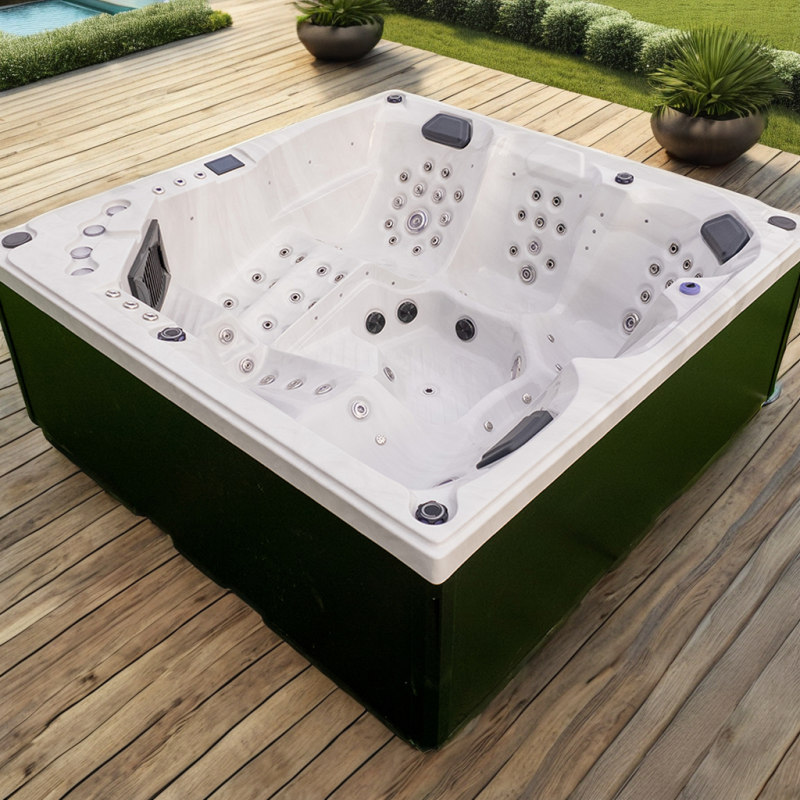
What is the lining of an acrylic spa hot tub?
What specifically does the lining of an acrylic hot bathtub refer to?
The lining of an acrylic hot bathtub typically refers to the inner molded layer that comes into direct contact with water and the user's body.
It constitutes the following components of an acrylic hot tub:
• Bottom
• Seat
• Backrest
• Curved inner wall
In other words, the layer you see, touch, and sit on when using an acrylic hot tub is the lining.
Why is acrylic commonly used for hot tub linings?
Acrylic is widely used in acrylic hot tub linings primarily because it possesses the following characteristics:
• Smooth surface, comfortable to the touch
• Good moldability, allowing for the creation of complex ergonomic curves
• High water resistance, suitable for prolonged contact with hot water
• Relatively easy to clean
Therefore, the lining in acrylic spa hot tubs leans more towards the user experience layer and the core functional layer.
What is the outer shell of an acrylic hot tub?
What role does the outer shell play in an acrylic hot tub?
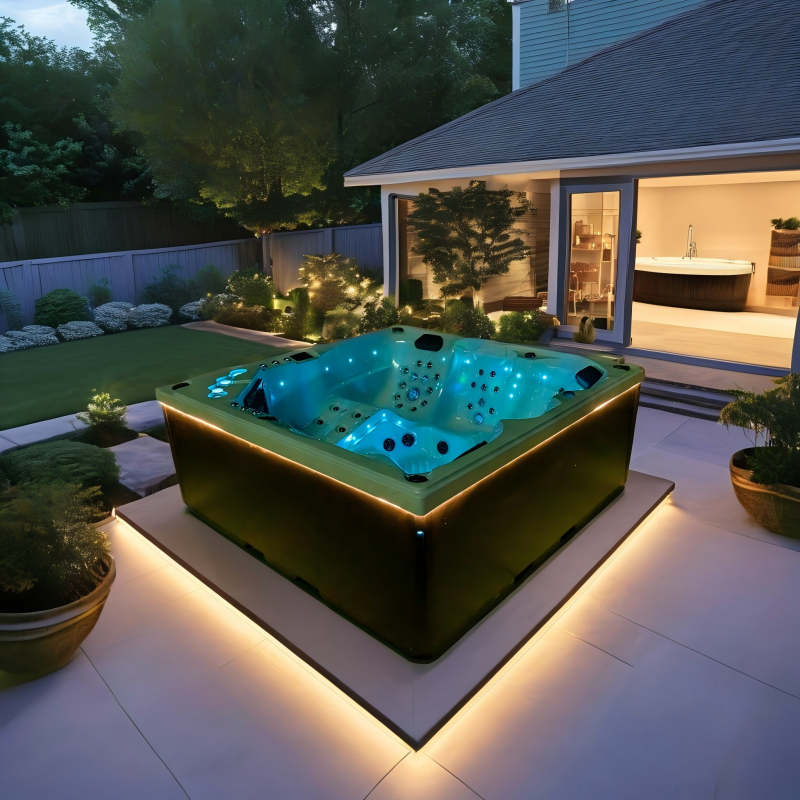
The outer shell of an acrylic spa hot tub refers to the protective component located on the outermost layer of the tub, covering the internal structure.
The outer shell of an acrylic hot tub typically doesn't directly contact water or the human body, but rather serves the following functions:
• Protect the internal structure
• Conceal equipment and piping
• Provide an overall aesthetic outline
• Enhance structural stability
It can be understood that the lining is responsible for "use," while the outer shell is responsible for "coverage and protection."
Is the outer shell of an acrylic hot tub always made of acrylic?
Not necessarily.
While some acrylic hot tub shells may use acrylic or composite panels, the choice of material for the outer shell is more flexible, focusing on:
• Strength
• Impact resistance
• Weather resistance
• Structural stability
Therefore, the outer shell is more of a structural and protective layer than a comfort layer.
What is the biggest difference between the lining and outer shell of an acrylic hot tub?
Here are the most fundamental differences between the two:
• Acrylic Hot Bathtub Liner:
o Core Function
o Directly in contact with water and the human body
o Determines comfort, feel, and internal design
• Acrylic Hot Bathtub Shell:
o Structure and protective layer
o Not directly involved in use
o Determines overall stability and aesthetic integrity
Which has a greater impact on the user experience?
From the user's perspective, the liner has a more direct impact on the experience.
For example:
• Seating comfort
• Surface smoothness
• Reasonable internal curves
The shell, on the other hand, primarily affects long-term reliability and safety.
What are the structural characteristics of acrylic hot bathtub liners?
Are liner lines usually molded in one piece?
Yes, in most cases, acrylic hot bathtub liners are manufactured using a one-piece thermoforming method to ensure:
• Continuous internal structure
• Smooth curved surfaces
• Reduced seams
This is why the design and molding process of the liner are crucial to the quality of acrylic hot bathtubs.
Is the thickness of the acrylic hot bathtub liner important?
Very important. The thickness of the inner lining directly affects:
• Structural strength
• Resistance to deformation
• Service life
However, it's important to note that a thicker lining isn't always better; it must be properly matched to the overall supporting structure.
Does the acrylic spa hot tub outer shell bear weight?
Generally, the outer shell is not the primary load-bearing structure.
The weight of an acrylic hot tub mainly comes from:
• Internal support structure
• Bottom foundation
• Reinforcing frame
The outer shell primarily serves to cover and stabilize, rather than directly bearing the weight of water and the user.

Can the acrylic hot tub outer shell be disassembled?
In many designs, the outer shell is removable to allow for:
• Equipment maintenance
• Piping maintenance
• Cleaning
This is a crucial aspect of the outer shell's structural design.
Why shouldn't the inner lining and outer shell of an acrylic hot tub be confused?
Conflating the inner lining and outer shell of an acrylic spa hot tub can easily lead to the following misunderstandings:
• Mistakenly believing that the outer shell material determines comfort
• Ignoring the core role of the inner lining in the user experience
• Incorrectly judging the key aspects of product quality
In reality, these two parts play completely different functional roles.
Which part should you focus on when purchasing an acrylic hot tub?
From a professional perspective, you should evaluate the following separately:
• Inner lining: Focus on molding quality, surface treatment, and ergonomic design
• Outer shell: Focus on structural stability, protective capabilities, and ease of maintenance
Only when both are in harmony can the overall performance of the acrylic spa hot tub be reliable.
What are the differences in maintenance between the inner lining and outer shell of an acrylic hot tub?
The key points for maintaining the inner lining of an acrylic hot tub are usually:
• Surface cleaning
• Preventing scratches
• Maintaining a smooth finish
Since the inner lining is in constant contact with water and the human body, its condition directly affects the user experience.
Maintenance of acrylic hot tub shells focuses primarily on:
• Moisture protection
• Impact protection
• Structural integrity
Damage to the shell can indirectly affect the safety of the internal system.
Is there a structural fit between the acrylic hot tub liner and shell?
Are they independent?
Not entirely independent.
The acrylic hot tub liner and shell typically work together through:
• Support frame
• Fixing points
• Buffer structure
to ensure overall stability.
Will an improperly designed acrylic hot tub shell affect the liner?
Yes.
An improperly designed bathtub shell structure may lead to:
• Uneven stress on the liner
• Increased risk of deformation
• Shortened lifespan
Therefore, the shell is not an optional component.
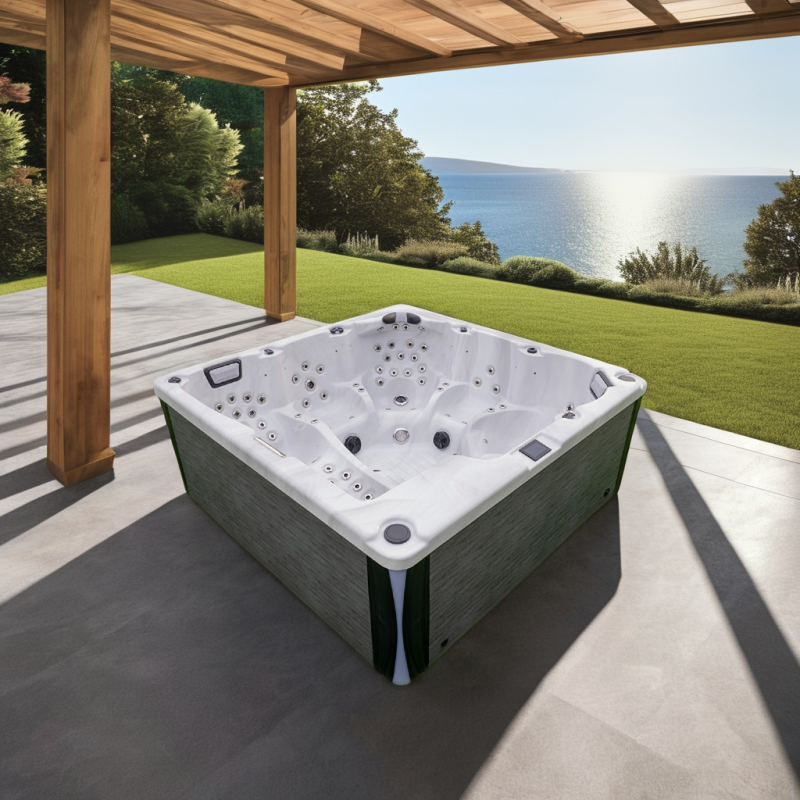
Is the acrylic hot tub liner the core of the acrylic hot tub?
It can be understood this way.
The inner lining determines the functionality and user experience of an acrylic hot tub:
• User experience
• Functional layout
• Direct feel
The outer shell, on the other hand, is the protective system that serves this core function.
A well-structured outer shell provides a stable and long-term environment for the acrylic spa hot tub.
What makes Lovia Spa products stand out in terms of quality?
Lovia Spa focuses on delivering high quality spa hot tub and swim spa tub products by integrating premium materials and advanced manufacturing techniques. As a trusted manufacturer, we use well-known components and strict quality control systems to ensure durability and performance. Our company aims to provide buyers with reliable products that are suitable for both residential and commercial applications, making us a preferred supplier for wholesale customers seeking dependable quality and long-term value.