



- Home
- >
News

Advantages of whirlpool bathtubs: 1. Powerful hydromassage function 2. Provide full body relaxation experience 3. Improve sleep quality 4. Versatility and personalized experience 5. Health therapy effect Disadvantages of the whirlpool bathtub: 1. Expensive and high investment cost 2. Difficult to maintain and clean 3. Loud noise, affecting the bathing experience 4. Large space occupied and high installation requirements 5. Possible safety hazards
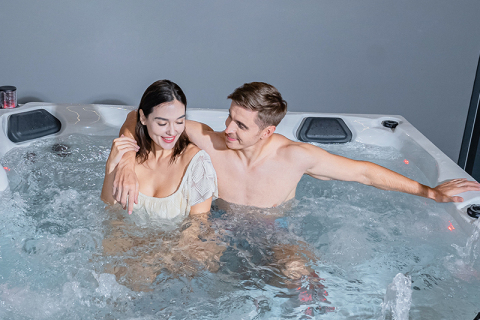
Outdoor whirlpool tubs usually have multiple water flow intensity settings. In high-intensity mode, the speed and pressure of the water flow are large, so the water flow noise generated is relatively large. If a lower water flow intensity is selected during use, the sound of the water flow hitting the bathtub and the air mixing will also be reduced accordingly.
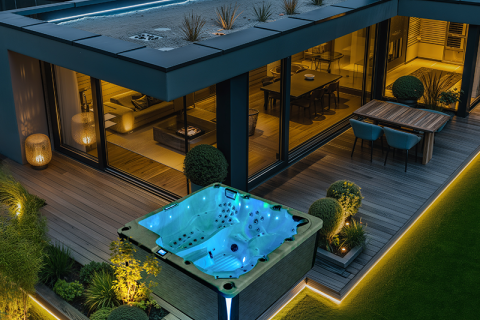
Differences between Jacuzzi Tub and Whirlpool Tub: 1. Differences in design and function 2. Differences in technical details 3. Differences in user experience 4. Differences in maintenance and upkeep 5. Differences in price and market positioning
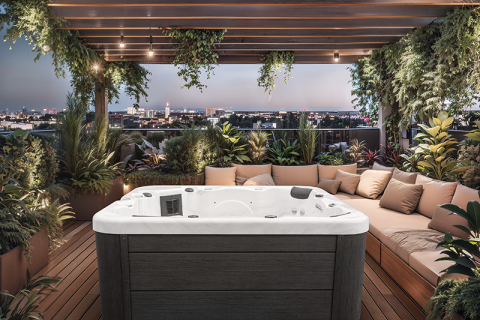
Advantages of outdoor jacuzzi bathtubs: Provide relaxation and comfort Benefits health Family entertainment and social center Increase property value Provide outdoor experience Disadvantages of outdoor jacuzzi bathtubs: Complexity of maintenance and upkeep Energy consumption issues High installation cost Affected by weather Noise issues Occupied space
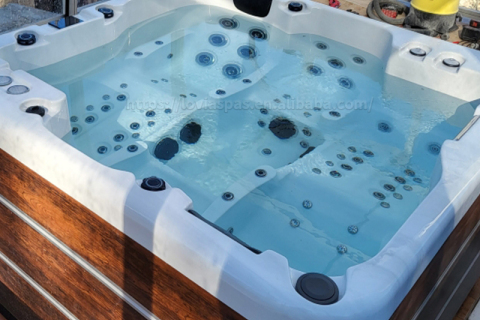
the inner walls and plumbing systems of a whirlpool bathtub are made of specific materials. Although these materials have a certain degree of durability, they may still be corroded to varying degrees when exposed to strong oxidants. The sodium hypochlorite in bleach can react chemically with materials such as plastic and rubber, causing the materials to age, become brittle, or even crack.
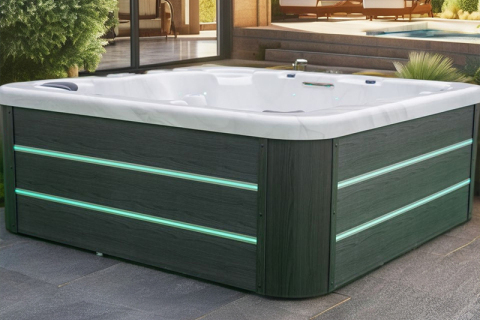
The water pumps, nozzles and pipe systems of whirlpool bathtubs are mostly made of materials such as plastic, rubber and stainless steel. Epsom salt solutions contain magnesium ions and sulfate ions, which may corrode these materials under certain conditions.

If you use the whirlpool tub for 30 minutes each time, the power consumption of the heater is about 1 kWh. Adding the power consumption of the water pump, the total power consumption is about 1.375 to 1.925 kWh.
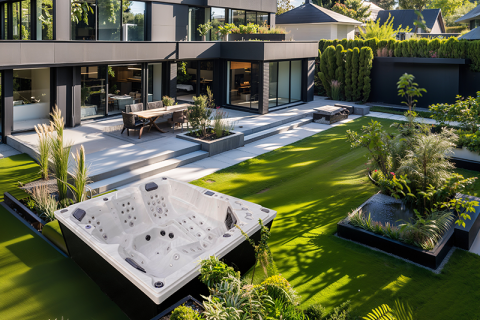
For most home outdoor whirlpool tubs, experts generally recommend draining and refilling every three months. This time frame is suitable for a bathtub with normal frequency of use, which can effectively maintain healthy water quality and prevent bacterial growth.
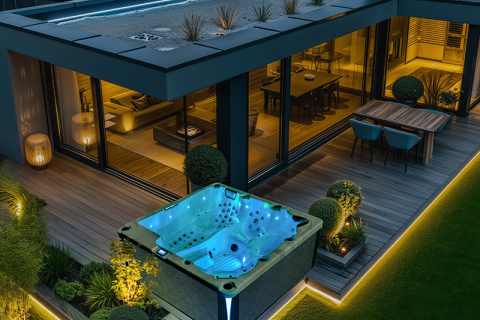
Compared with ordinary bathtubs, the most significant feature of a whirlpool bathtub is its unique massage function, which is mainly composed of internal water pumps, nozzles, piping systems, etc. These features directly affect the appearance and design of a whirlpool tub, setting it apart from regular bathtubs.
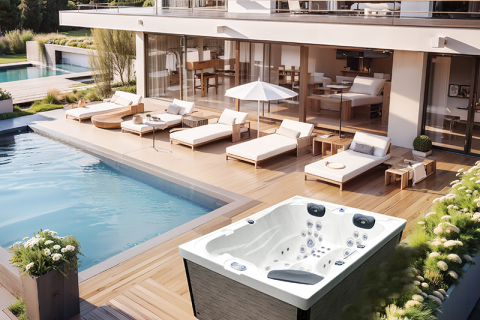
A whirlpool bathtub is a bathtub that produces a whirlpool effect by jetting water. It circulates the water in the bathtub to multiple nozzles through a built-in water pump system, and then sprays it out at high pressure to produce a powerful water flow.
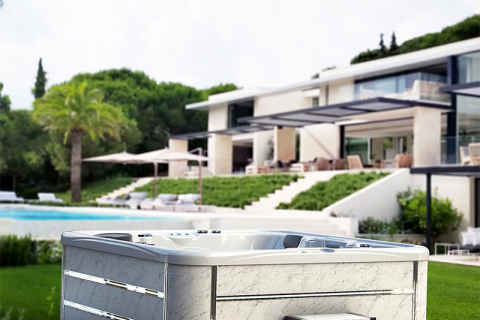
The jets of a whirlpool bathtub are usually located in different parts of the bathtub, covering the main parts of the body, such as the back, waist and legs. The jet function is driven by a water pump, and the water flows out of the jets at high speed, forming a water flow impact similar to massage.

Whirlpool tubs typically hold 50 to 150 gallons (about 190 to 570 liters) of water, depending on size. Small whirlpool tubs are more suitable for family bathrooms and are usually about 60 inches long, 30 inches wide, and 18 inches deep, with a capacity of between 50 and 70 gallons.