


Will Muriatic Acid Clean an Acrylic Spa Hot Tub?
2026-03-27 15:30When cleaning a bathtub, different chemical cleaning agents can yield vastly different results. Faced with stubborn limescale, sediment, or mineral spots, some consumers might wonder: "Can I use muriatic acid to quickly dissolve this grime?"
Hydrochloric acid (also known as muriatic acid) is a strong acid commonly used for industrial descaling, swimming pool maintenance, and the removal of heavy mineral deposits. However, when the subject turns to acrylic spa hot tubs, the question of whether using muriatic acid is safe or feasible becomes a matter that requires extreme caution.
To avoid damaging the tub's structure and to ensure safe usage, this article will provide a comprehensive explanation covering:
✔ Whether muriatic acid is suitable for acrylic materials
✔ The dangers associated with using muriatic acid
✔ Why acrylic materials should not come into contact with strong acids
✔ How to properly clean an acrylic spa hot tub
✔ How to remove limescale or stains without damaging the surface
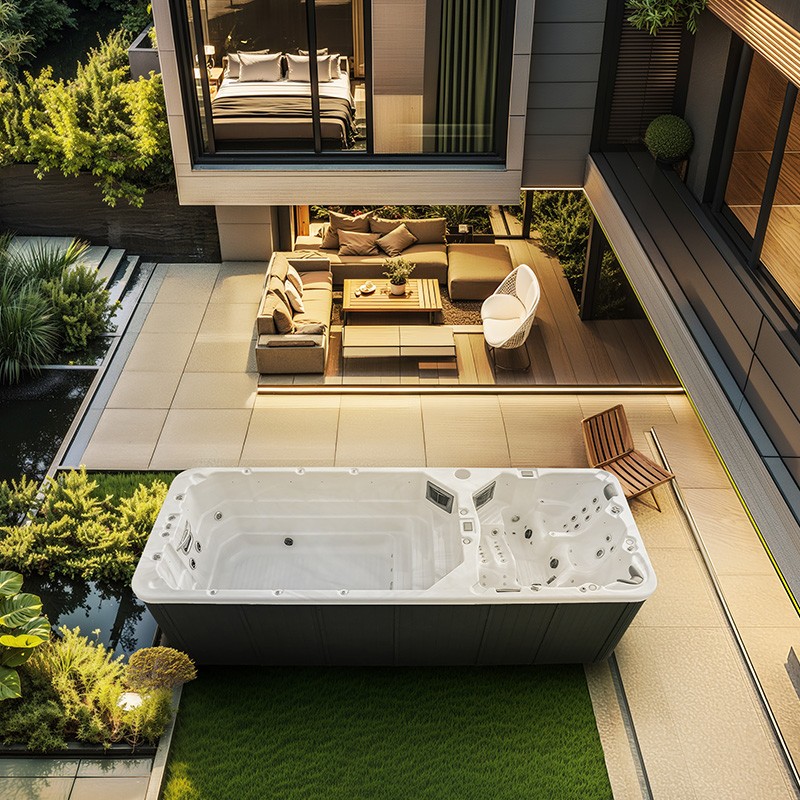
Can Muriatic Acid Clean an Acrylic Spa Hot Tub? Is It Safe?
No, muriatic acid should not be used to clean an acrylic spa hot tub.
Muriatic acid at any concentration—including so-called "diluted muriatic acid" or "heavy-duty acidic bathroom cleaners"—
is unsuitable, unsafe, and not recommended for use on acrylic spa hot tubs.
The reason is crystal clear:
Acrylic material (PMMA) is not resistant to strong acids; muriatic acid will cause chemical corrosion, resulting in a loss of luster, softening of the material, and even cracking.
Next, let's break down this destructive mechanism from a scientific perspective.
Why Can't Muriatic Acid Be Used on Acrylic Spa Hot Tubs? What Damage Does It Cause?
To fully grasp the risks involved, we need to understand the chemical reactions and physical damage that occur between muriatic acid and acrylic.
1. Acrylic Undergoes Chemical Corrosion When Exposed to Muriatic Acid
Acrylic (PMMA) is a polymer material that is highly sensitive to strong acids.
Muriatic acid disrupts its molecular chain structure, leading to the following material degradation:
•Surface corrosion
•Material softening
•Formation of micro-cracks
•Discoloration and clouding
This type of damage is typically irreversible.
2. Hydrochloric Acid Damages the Smooth, Non-Porous Surface of Acrylic
One of the primary advantages of an acrylic spa hot tub is its:
✔ Smooth finish
✔ Non-porous structure
✔ Water-resistant nature
✔ Ease of cleaning
Corrosion caused by hydrochloric acid roughens the surface, destroying its original non-porous structure.
This leads to:
•Increased accumulation of dirt and grime
•A higher risk of bacterial growth
•Greater difficulty in cleaning
•A loss of surface luster
This will significantly reduce both the lifespan and the overall enjoyment of the acrylic spa hot tub.
3. Strong Acids Can Cause "Stress Whitening" on Acrylic Surfaces
When acrylic is subjected to chemical corrosion, a phenomenon known as "stress whitening" occurs. This manifests as hazy, smoke-like streaks on the surface, compromising its aesthetic appeal.
This type of damage is irreversible and can only be remedied through professional polishing or the replacement of affected components.
4. Hydrochloric Acid May Corrode Internal Metal Components and Fittings
Even if you intend only to wipe down the surface, hydrochloric acid can seep into the interior of the hot tub, causing:
•Corrosion of screws and fasteners
•Damage to the metal components of the heating element
•Deterioration of rubber seals within the plumbing system
•Brittleness or deformation of jet nozzles and fittings
This compromises the proper functioning of the acrylic spa hot tub and may even lead to water leaks or electrical safety hazards.
5. Hydrochloric Acid Fumes Can Also Damage Acrylic
Even without direct contact, the acidic fumes emitted by hydrochloric acid are potent enough to damage the acrylic surface, causing it to become cloudy and rough.
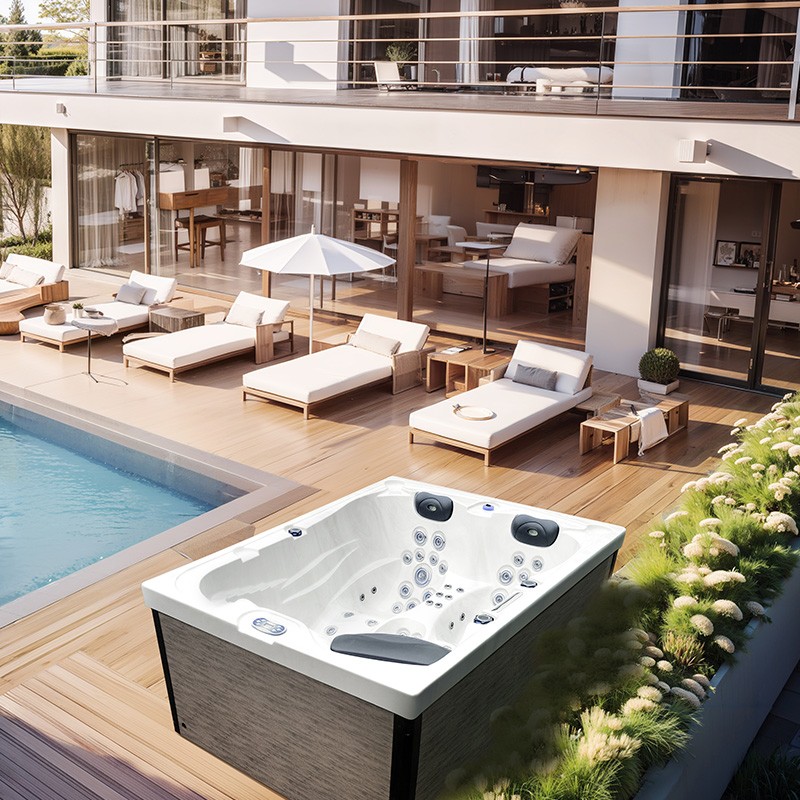
What are the long-term consequences of accidentally using hydrochloric acid on an acrylic spa hot tub?
Many of the "damaging effects" do not appear immediately; instead, they manifest gradually over the course of several days or weeks:
✔ The surface begins to look dull and hazy
A loss of luster is the most common symptom, and it cannot be remedied through ordinary cleaning methods.
✔ Fine cracks (micro-cracks or "crazing") begin to appear
These cracks trap dirt and grime, making the hot tub increasingly difficult to clean.
✔ Deformation occurs around the jet nozzles
The plastic material of the jet nozzles may expand or become brittle due to exposure to strong acids.
✔ Plumbing seals deteriorate, potentially leading to chronic leaks
✔ The acrylic surface becomes increasingly prone to dirt accumulation
Once the surface becomes rough, dirt adheres to it more easily—creating a vicious cycle of grime buildup.
In short:
Hydrochloric acid is not a cleaning agent; rather, it is a hazardous substance capable of rapidly destroying the structural integrity of acrylic spa hot tubs.
Why do some people mistakenly believe that hydrochloric acid is suitable for cleaning acrylic spa hot tubs?
The reason is not that hydrochloric acid is actually suitable, but rather:
1. Hydrochloric acid does indeed dissolve limescale quickly
Strong acids can easily remove:
•Calcium carbonate limescale
•Hard water deposits
•Rust
However, these properties do not mean that it is safe for acrylic surfaces.
2. Some traditional bathroom materials can withstand hydrochloric acid
Such as:
✔ Ceramic tiles
✔ Enamel-coated steel bathtubs
✔ Ceramic basins
These materials are acid-resistant, leading people to the mistaken belief that "all bathtubs can be cleaned with hydrochloric acid."
3. Some acid-based cleaners on the market fail to specify material restrictions
This leads users to mistakenly apply them to acrylic spa hot tubs.
To reiterate:
Dissolving dirt ≠ Suitable for cleaning acrylic spa hot tubs.
Since hydrochloric acid cannot be used, how should stains in an acrylic spa hot tub be cleaned?
You can effectively clean an acrylic spa hot tub without using strong acids; there are safer and gentler methods available.
How do you perform routine daily cleaning?
Use:
•Warm water
•A mild, pH-neutral detergent
•A soft cloth or sponge
These are sufficient to handle most stains.
How should stubborn stains be removed?
If soap scum, grease, or limescale deposits appear on the surface, you can use:
✔ White vinegar (a weak acid)
✔ Baking soda (a mild abrasive)
✔ Cleaners specifically designed for acrylic
White vinegar is one of the safest ways to treat limescale and will not damage the acrylic.
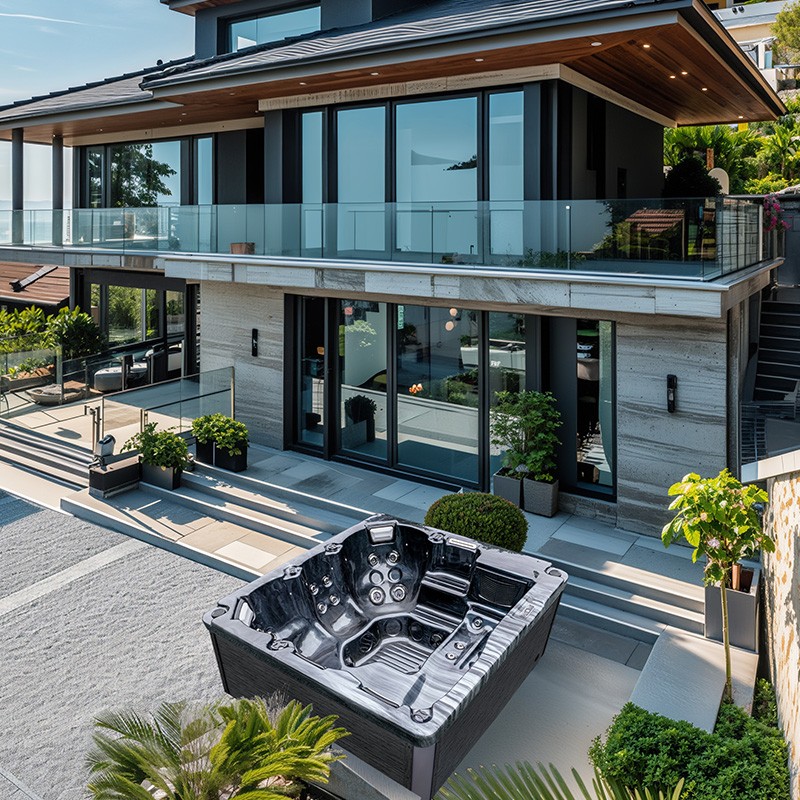
How do you clean the jets and plumbing?
Use:
•Warm water
•A plumbing cleaner specifically designed for acrylic spa hot tubs
•Diluted bleach (follow the instructions)
Note: Bleach can be used, but it must be heavily diluted and should not remain in contact with the surface for extended periods.
In contrast, hydrochloric acid is a strong acid and must never be used.
How do you perform a deep descaling? Since hydrochloric acid is off-limits, are there any alternatives?
Yes, the following methods are completely safe for acrylic:
1. The White Vinegar and Warm Water Soak Method
Suitable for light to moderate limescale buildup.
2. Acrylic-Safe Descalers
Products specifically developed for acrylic spa hot tubs are available on the market.
3. Citric Acid Solution (Food-Grade)
A mild acid that does not damage acrylic surfaces; it is highly effective against mineral scale buildup.
4. Professional Acrylic Polish
Restores shine and removes minor scratches.
None of these methods require hydrochloric acid, and they are far safer and more effective than using it.
Can Hydrochloric Acid Be Used If Diluted? Is It Safe?
Many people ask:
“If I dilute hydrochloric acid to a very low concentration, can I then use it on my acrylic spa hot tub?”
The answer remains:
❌ No.
Even at extremely low concentrations, hydrochloric acid will:
•Damage the acrylic surface coating
•Corrode nozzle components
•Damage metal fittings
•Release harmful fumes
Hydrochloric acid—at any concentration—must never be used on an acrylic spa hot tub.
Are There Any Bathtub Materials That Can Be Cleaned with Hydrochloric Acid?
To avoid confusion, we have listed the materials that can be cleaned with hydrochloric acid below:
✔ Ceramic
✔ Porcelain Tile
✔ Enamel-Coated Steel
However:
❌ Acrylic
❌ Fiberglass
❌ Certain Types of Engineered Stone
❌ Composite Plastics
None of these materials should ever be cleaned with hydrochloric acid.
Is the Damage Caused by Hydrochloric Acid to Acrylic Spa Hot Tubs Reversible?
In most cases:
❌ The damage is irreversible.
While it is possible to mitigate some of the damage through:
•Polishing
•Waxing
•Surface coating repair
Please note that:
•Cracks cannot be repaired
•Structural damage is irreversible
•Discoloration and corrosion are irreversible
Therefore, the best approach is to—
Avoid using hydrochloric acid in the first place, rather than attempting to repair the damage later.
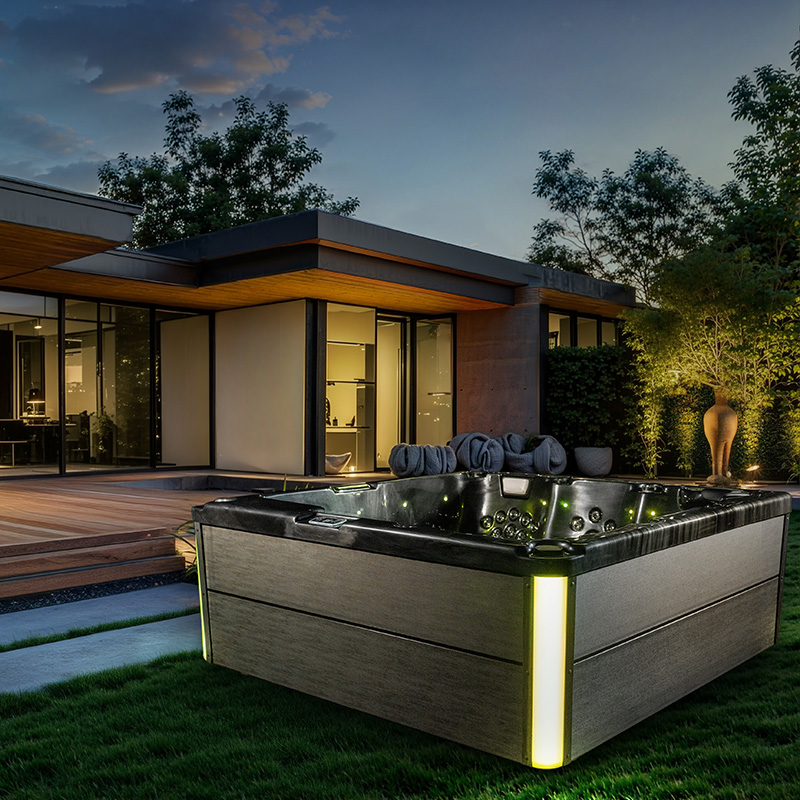
Can Hydrochloric Acid Be Used to Clean an Acrylic Spa Hot Tub?
❌ Hydrochloric acid must never be used to clean an acrylic spa hot tub.
Reasons include:
•It corrodes acrylic surfaces.
•It damages nozzles, plumbing, and metal components.
•It causes discoloration, cracking, and surface roughness.
•It results in irreversible damage.
•Steam can also cause corrosion.
Alternatives:
✔ White vinegar
✔ Citric acid
✔ Baking soda
✔ Mild detergents
✔ Specialized acrylic cleaners
These methods are both safe and effective, fully capable of meeting both daily maintenance and deep-cleaning requirements.
How Does LOVIA SPA Manage Large-Scale Swim Spa Production?
LOVIA SPA manages swim spa production through standardized manufacturing processes and an efficient factory layout. The expansive production area allows multiple swim spa models to be manufactured simultaneously without compromising quality. Buyers placing bulk or wholesale swim spa orders benefit from stable lead times and predictable delivery schedules.