


Why is water hardness important for outdoor whirlpool hot tubs?
2026-08-19 15:35Outdoor whirlpool spa hot tubs were leisure gear mainly for hotels and wellness centers. But, nowadays, with people getting more and more health-conscious and the trend of a home spa is on the rise, outdoor whirlpool spa hot tubs are getting a second life at family patios or villa terraces. With the increase of health, spa massage, and entertainment space requirements among customers, an enormous amount of potential users are now paying a lot of attention to massage functions, smart controls, energy efficiency, and also to how nice hot tubs look.
However, after a couple of years, many whirlpool spa hot tub users find out that there was a long-term but usually unnoticed issue that caused their hot tubs not to work the way they should.
The problem is water hardness.
After buying an outdoor whirlpool hot tub, some people do what is told in instruction manuals such as adding disinfectant, cleaning the filter, and water level changes, but they are not getting rid of the whirlpool hot tub running abnormalities. The heating becomes slower and slower, the massage jet water flow diminishes, there are white deposits on the pool cover, filter keeps clogging, and water is always slightly cloudy and does not clear up for quite a period of time. While they might guess that they are dealing with low quality equipment, they overlook one fact: quite a large portion of these issues is because of a wrong level of water hardness.
The thing is, that outdoor whirlpool hot tubs operate under different conditions compared to our regular bathtubs at home. For the majority of them, the water is hot for long periods of time and they are continuously pumped through water filters and massage heads. In fact, they are all quite small devices except for some large spa hot tubs which are 5000 liters plus in capacity. The whole idea is water circulating through different parts and minerals such as calcium and magnesium ions are being deposited on the internal parts. The equipment becomes scale-free only if the water hardness is right. On a higher level, it means scaling, efficiency drops, etc. If water is not mineral enough, you are likely to get water erosion and it will start to eat away metal elements like a fire.
Therefore, when talking about outdoor whirlpool hot tubs, water hardness should be seen through the eyes of a maintenance problem or a design solution. When you get in touch with a professional company selling hot tubs, they already consider the possible water types your region and the company provides you with filtration system or a pump or even suggests a maintenance regime for you that would support your water environment. Getting water hardness right is the first step towards the longevity without breakdowns of the outdoor whirlpool spa hot tub.
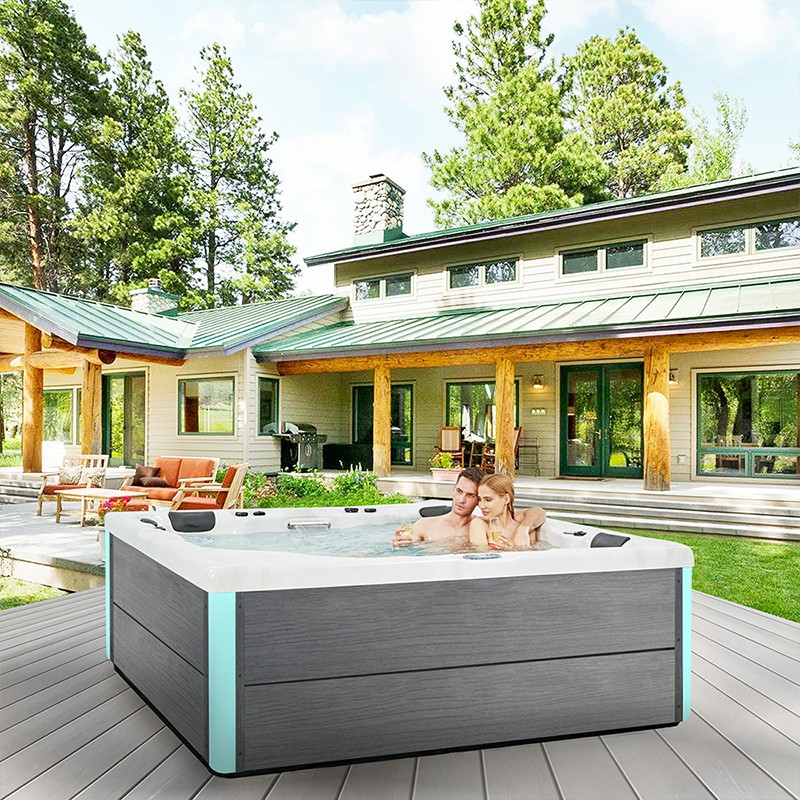
What is a normal water hardness level for outdoor whirlpool hot tubs?
Water hardness in outdoor whirlpool spa hot tubs is primarily determined by the amount of calcium (Ca²⁺) and magnesium (Mg²⁺) ions and is measured by means of total dissolved minerals in water. Hardness level is usually shown in ppm (parts per million) units and can be interpreted almost like mg/L. The two values are usually nearly the same though there might be minor fluctuations.
It is a general knowledge that harder water simply means more dissolved calcium and magnesium, and soft water implies fewer minerals. In some areas, for example, water hardness can be very significantly higher than that of regular city water because water has been slowly filtered through different rock strata over the years and thus has picked up a significant amount of dissolved minerals.
Outdoor whirlpool spa hot tubs require good water balance but that doesn't mean the water has to be soft. Rather the mineral content should not get higher than what the equipment can handle. The spa equipment industry usually sets a target range of 150-250 ppm for mineral content of the water. However there can be regional factors like water quality, design and type of spa equipment and manufacturing standards that may differ so the owners are recommended to check the specifications of their particular hot tub.
If water hardness surpasses 300 ppm or even reaches 400 ppm, there is a high probability that mineral deposits will start forming inside the components of your whirlpool spa hot tub and eventually block up your system. On the other hand, if hardness drops below 100 ppm, water stability drops while corrosion risk increases. Hence, it is important to understand about water hardness as it is a fundamental part of any proper maintenance regime for outdoor hot tubs.
Why does water hardness matter for outdoor whirlpool spa hot tubs?
Quite a number of buyers think clean, clear, and fragranceless water is the only way to go. In fact, water conditions in a whirlpool spa hot tub have to be regulated and maintained on a much stricter level than in ordinary bath and shower water because a hot tub contains a huge quantity of water, which is continuously heated, pumped, and massaged which results in constant exposure of pipe parts and internal equipment to the minerals.
The heater is perhaps the first area where you should be aware of the consequences of water hardness. The heater is one of the most important parts of the whirlpool hot tub and most domestic spa units today come with a 2kW to 6kW heating system. Electric heating elements are used to heat the water from 35℃ up to 40℃. If calcium and magnesium levels are very high in the water, it will be very difficult to clean calcium carbonate scale which will develop over time on the surface of the heating element, a situation known as limescale.
The major consequence of limescale is reduced heat transfer efficiency. Given that limescale is quite a poor conductor, the amount of heat dissipated in the water element is very slow leading to an extension of the heater's running time needed for the water to come up to the desired temperature. Therefore, the outdoor whirlpool spa hot tub which was used to a short heating time would find itself slower to heat up and higher in electricity consumption over time if the element is constantly covered up by the hard scale. In fact, a hotel or spa resort having such hot tub will not just have a higher water heating bill but also have a higher power bill as they may not be able to close early.
The second point is that the hardness of water also greatly influences the working performance of the massaging system of the whirlpool spa hot tub. Most of the hot tubs outside today have been designed with multiple jets that, when the water pumped out by the pump pressurizes the jet through a nozzle, create a sort of massaging effect. For instance, a higher-quality model with a very large jet count, say 40, 60, or even more can offer such a massage and each is made a unique massaging jet thanks to a sophisticated water circuit design that guarantees consistent output pressure.
If the water has very high hardness, it is likely for the mineral deposits to find a way into the pipe system, the jets, and the distributing mechanism of the massage water. This is why you may begin finding that the flow of water from one of the jets decreases a lot or the intensity of the massage varies when the whirlpool spa hot tub is filled with users. Oftentimes, the issue is not the motor being insufficient in providing the water flow but it might be that the internal components of the water system have become obstructed by deposits of calcium or magnesium.
Moreover, the hardness of water has a strong correlation and influence on the general stability of the water in the whirlpool hot tub as well. When the hardness level is high, it can lead to more alkaline conditions which in return reduce the effectiveness of disinfectants that work better in slightly acidic environments. This makes it even more likely for scaling to occur. Therefore, if a person just keeps on adding chlorine or something other disinfectant regularly without also caring about how high or low hardness is, chances are he keeps on having to make a lot of adjustments and still ends up with a very unstable overall water condition.
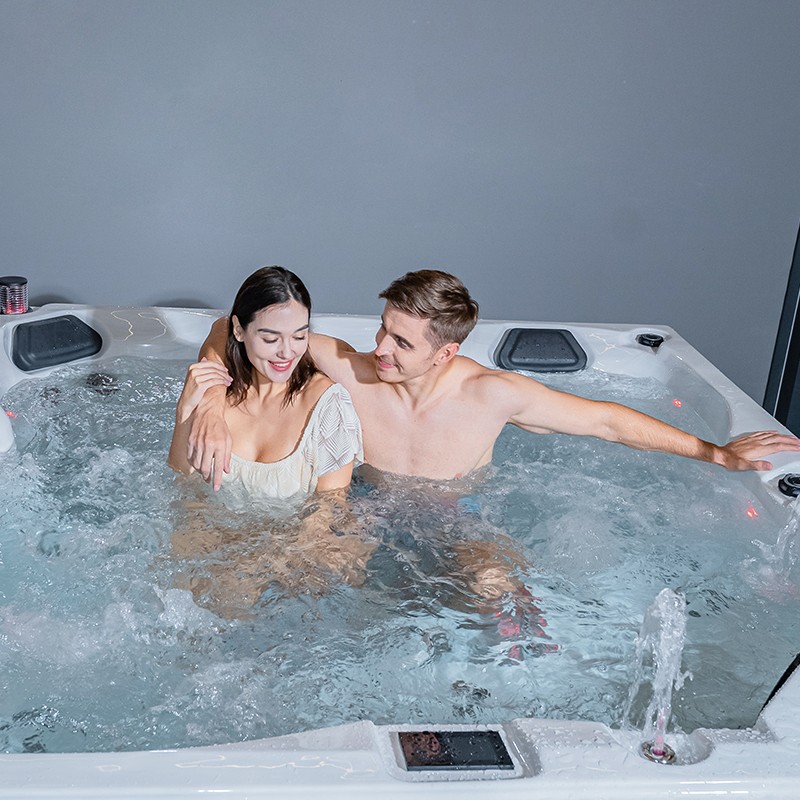
What can the result be if the hardness levels in your whirlpool hot tub are too high?
Too high hardness is one of the most serious challenges faced in outdoor whirlpool spa hot tub maintenance. As it is natural in most places to have tap water or well ground water be very mineral rich, especially calcium and magnesium ions, it can happen that at the time of the hot tub filling the calcium and magnesium are already in the water at very high levels.
The obvious and immediate effect is scaling, which in most cases is white to grey white and can be found on heater, pipes, nozzles, and on the areas near the inside tub wall of the whirlpool hot tub. However, even small scale is something you want to get eliminated because over time, this accumulation of scale will reduce the efficiency of running of the various components in the hot tub.
Scaling up on your heating system increases energy demand to produce same heat which ultimately lowers down its efficiency and the heater needs a little more time to heat up the water. The water pump, on the other hand, and the massaging system may be hit pretty hard as sediment can get trapped and cause abrasion on the impeller leading to the reduction of its efficiency in providing adequate water flow or pressure. For the filtration part, the excess mineral particles can really be a heavy load for the filter resulting in the more frequent replacement or cleaning of the filter cartridge.
Other than the physical effects, the high hardness water of the whirlpool spa hot tub may really affect the user experience. A high content of mineral particles makes the water look a bit cloudy, feel kind of rough against skin, and sometimes even give your skin an unpleasant prickly sensation. To the person who is after an ideal spa experience, this will be one of the most negative features of an otherwise quite comfortable outdoor whirlpool spa hot tub.
What are the dangers of having very low water hardness in outdoor whirlpool hot tubs?
Yes, high-hardness water tends to create limescale problems, but that doesn't mean the softer the water the better. On the contrary, extremely soft water can be a problem too for outdoor hot tubs.
Water with low levels of calcium and magnesium can actually get more corrosive. Then it can start eating away the metal parts of your whirlpool spa hot tub equipment such as heater housing, connectors, and parts of pump structure.
Also, when water is low in hardness it might be harder to achieve a stable water chemistry. An outdoor whirlpool spa hot tub has to keep its chemical levels right for the whole time period. If water is too soft, pH fluctuation would be more significant and maintenance would be a bit harder for the users.
A good reason is that professional water treatment is not merely about cutting down minerals, but it is about finding a water balance that is suitable for the equipment to function.
What is the way of checking hardness of water in an outdoor whirlpool spa hot tub?
It is a simple task to check out if the water hardness in an outdoor whirlpool spa hot tub is low by testing it. One can do it at home in various ways.
The most commonly used water testing kit is the strip. It's cheap, easy to handle, you can get immediate result of your water hardness which is perfect to carry about in the family test kit.
Precision lovers can have the pleasure of the titration set. It gives more exact numbers of hardness in case they want higher quality standards of their spa water.
Recently, the use of electronic water testing devices has been popularizing among high-end outdoor whirlpool spa hot tub owners. Some smart testing devices have the capability to read pH, total hardness, temperature, and disinfectant level at the same time, which is a great feature for managing spa water effectively.
Normally, it is a good idea to check the hardness of your water at home outdoor whirlpool spa hot tub monthly, if your place belongs to the soft water region or it is a hot tub that's used quite often it is better to test it more regularly.
How to handle hardness in outdoor whirlpool spa hot tub water?
Possibly different ways of solving hardness problems.
Apart from that, adding a partial volume of softened water might be the right option for a very highly mineralized situation. For example, when the filling of an outdoor whirlpool hot tub for the first time is done, using softened water according to local water chemistry will allow the reduction of mineral content right from the source.
Secondly, employing spa water treatment chemicals professionally would help as they can tackle the issues from calcium and magnesium ions thus scale formation is minimized. It is important to strictly refer to the recommendations given by the whirlpool spa hot tub manufacturers when one uses any kind of chemical products, so that there is no harm done to the equipment materials.
Metal parts that are left behind in the internal workings of your whirlpool spa hot tub after cleaning the water is just a few of the reasons why it is extremely important to have pipe cleaning service regularly. The water chemistry is not the only thing we change when getting our whirlpool spa hot tub ready again. Previous scale build up might have found its way into the piping of the hot tub.
In the event that the water is not very hard, we should supplement the hardness by introducing calcium. It is common practice within the maintenance of professional pools to have the level of hardness and other parameters checked by laboratory tests before the decision is made as to what conditioner to use. This is the only correct way of making changes.
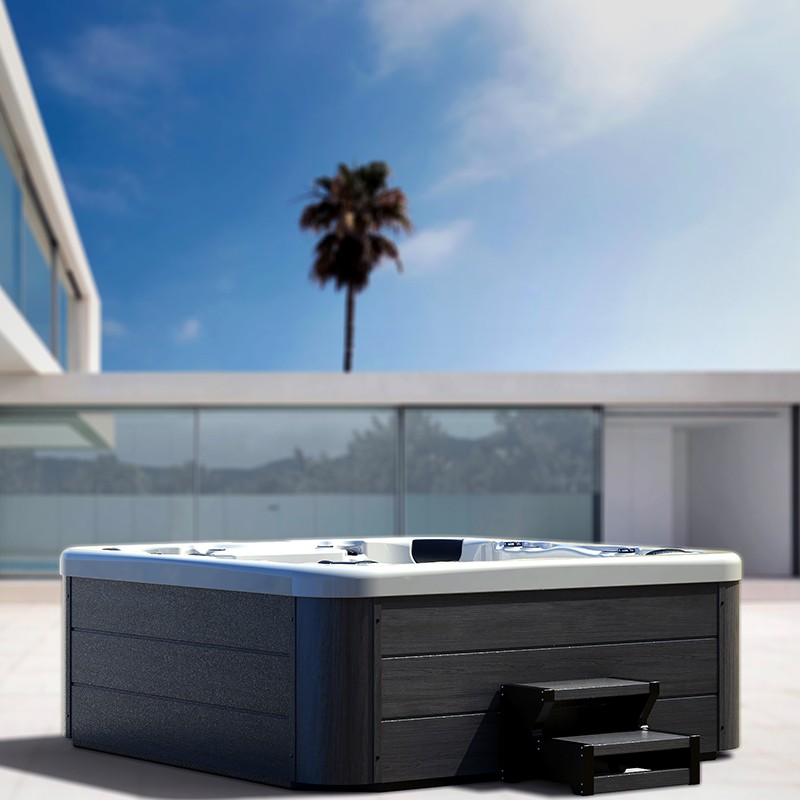
How do outdoor whirlpool hot tub manufacturers help users solve water quality problems?
High-quality outdoor whirlpool spa hot tub manufacturers don't just focus on product appearance and functionality; they consider water quality management from a holistic system perspective.
For example, professional manufacturers typically optimize water circulation designs to ensure water passes thoroughly through the filtration system, minimizing dead zones. They also enhance the equipment's adaptability to different water quality environments by using corrosion-resistant materials.
Some high-end outdoor whirlpool spa hot tub products are equipped with more advanced filtration technologies, such as high-flow filtration systems, ozone disinfection systems, and UV water treatment technology, to reduce the accumulation of contaminants in the water.
For OEM/ODM outdoor whirlpool spa hot tub projects, manufacturers also need to adjust product solutions according to different market environments. For example, in areas with high water hardness, stronger filtration capabilities, easier maintenance designs, and more durable water system components are required.
Therefore, when choosing an outdoor whirlpool hot tub supplier, users should not only focus on product price but also on the manufacturer's expertise in water treatment systems and long-term maintenance solutions.
What are the ways that long-term, stable water quality management of outdoor hot tub can be achieved?
Outdoor whirlpool hot tub water quality stability is achieved by developing a regular maintenance process as opposed to tackling problems only after they occur.
As a part of the daily operation, the user should consistently test water quality parameters, such as, but not limited to, hardness, pH, alkalinity, and disinfection level. At the same time, the filter needs the periodic cleaning according to the operating frequency, and some portion of the water should be periodically replaced for the prevention of mineral accumulation throughout the time.
Homeowners can set themselves up for success by developing routine weekly check-ups as well as doing a maintenance clean-up once a month. On the other hand, in a commercial hotel or resort context where whirlpool hot tub is used by multiple guests throughout the day every day, a more rigid maintenance protocol must be drafted that is based on the number of daily users and hours of operation.
Picking up the right water source is also a big point that the users can and should look after. Some water sources which look clean and pure on the surface might still contain high amounts of dissolved minerals like iron, calcium, and magnesium among others that will result in hardness and eventual scaling if such water is repeatedly filled in an outdoor whirlpool hot tub over time.
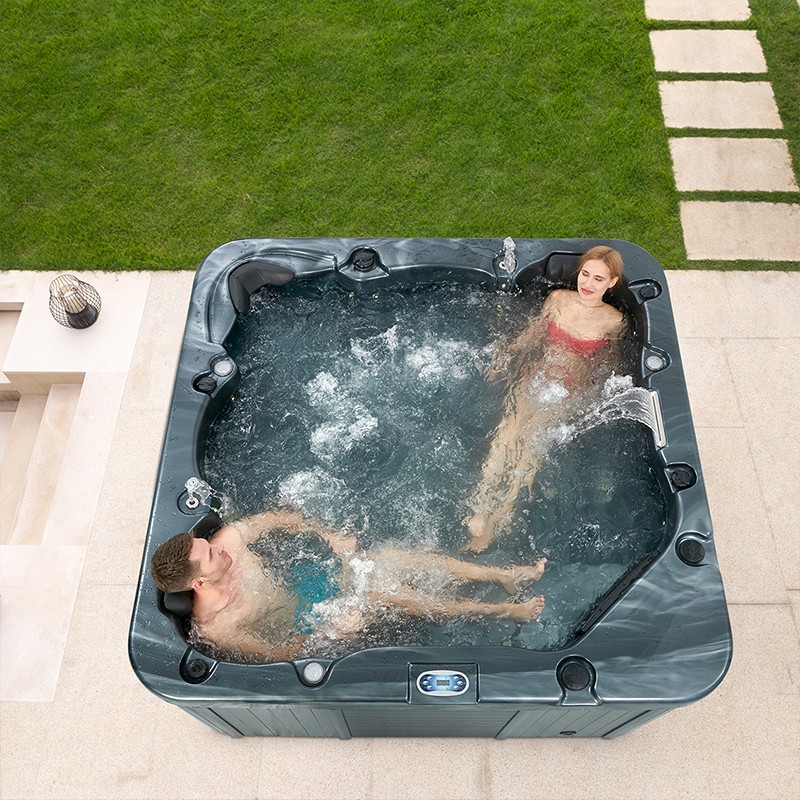
FAQ: Common Questions about Water Hardness in Outdoor Hot Tubs
1. What should the water hardness of an outdoor whirlpool spa hot tub be?
It is generally recommended to control it at around 150ppm to 250ppm, but the specific range needs to be adjusted based on local water quality conditions and the manufacturer's recommendations.
2. Is scale buildup in outdoor whirlpool spa hot tubs always caused by excessive hardness?
In most cases, it is related to high hardness, but water temperature, pH value, and alkalinity also affect scale formation, so a comprehensive assessment is needed.
3. Can a regular water softener be used to treat the water in an outdoor whirlpool spa hot tub?
In some cases, yes, but adjustments need to be made based on the water softening level to avoid corrosion caused by excessively soft water.
4. How often should the water hardness of an outdoor whirlpool hot tub be tested?
For home users, it is recommended to test at least once a month. For environments with high-frequency use, more frequent testing is recommended.
5. Will water hardness affect the massage effect of an outdoor whirlpool spa hot tub?
Yes. Excessive hardness can cause deposits to form in the nozzles, water channels, and inside the pump, thus reducing the pressure of the massage water flow.