


Why Does My Outdoor Spa Hot Tub’s Sidewall Feel Like Sandpaper?
2026-07-13 15:30For many new jacuzzi outdoor spa hot tub owners, the initial months of use are often ideal, characterized by clear water, smooth surfaces, and a comfortable massage experience. However, over time, some users notice a common yet easily overlooked issue: when touching the sidewalls, seats, or waterline area, the once-smooth acrylic surface feels rough—sometimes even like sandpaper—with a distinct grittiness or the sensation of tiny particles adhering to the surface.
Upon encountering this, many users initially suspect a defect in the whirlpool hot tub shell or assume the acrylic surface is aging, wearing down, or delaminating. In reality, this "sandpaper feel" is rarely caused by the tub material itself; instead, it is usually the result of accumulated calcium scale. This is particularly common in areas with hard water, where minerals like calcium and magnesium precipitate as water temperatures rise. These minerals adhere to the inner walls, jets, waterline, heater, and circulation piping, eventually forming a hard, rough mineral layer—the primary culprit behind that sandpaper-like texture.
According to water treatment industry data, tap water hardness in many regions worldwide typically ranges from 100 to 300 mg/L (measured as calcium carbonate), with some hard-water areas exceeding 400 mg/L. When water is maintained at high temperatures (36°C to 40°C) for extended periods and subjected to constant evaporation, mineral concentrations rise, making outdoor whirlpool hot tubs particularly prone to significant calcium buildup. Inadequate water maintenance—such as consistently high pH levels, unbalanced total alkalinity, or infrequent water changes—can further accelerate the rate of calcium scaling.
So, why does the whirlpool hot tub surface develop this sandpaper-like texture? How does calcium scale form? Aside from calcium deposits, what other factors might cause the inner walls to become rough? And how should this issue be properly addressed and prevented? This article provides a comprehensive analysis of these issues to help outdoor hot tub owners maintain their equipment effectively, keeping the tub smooth and clean while extending its service life.
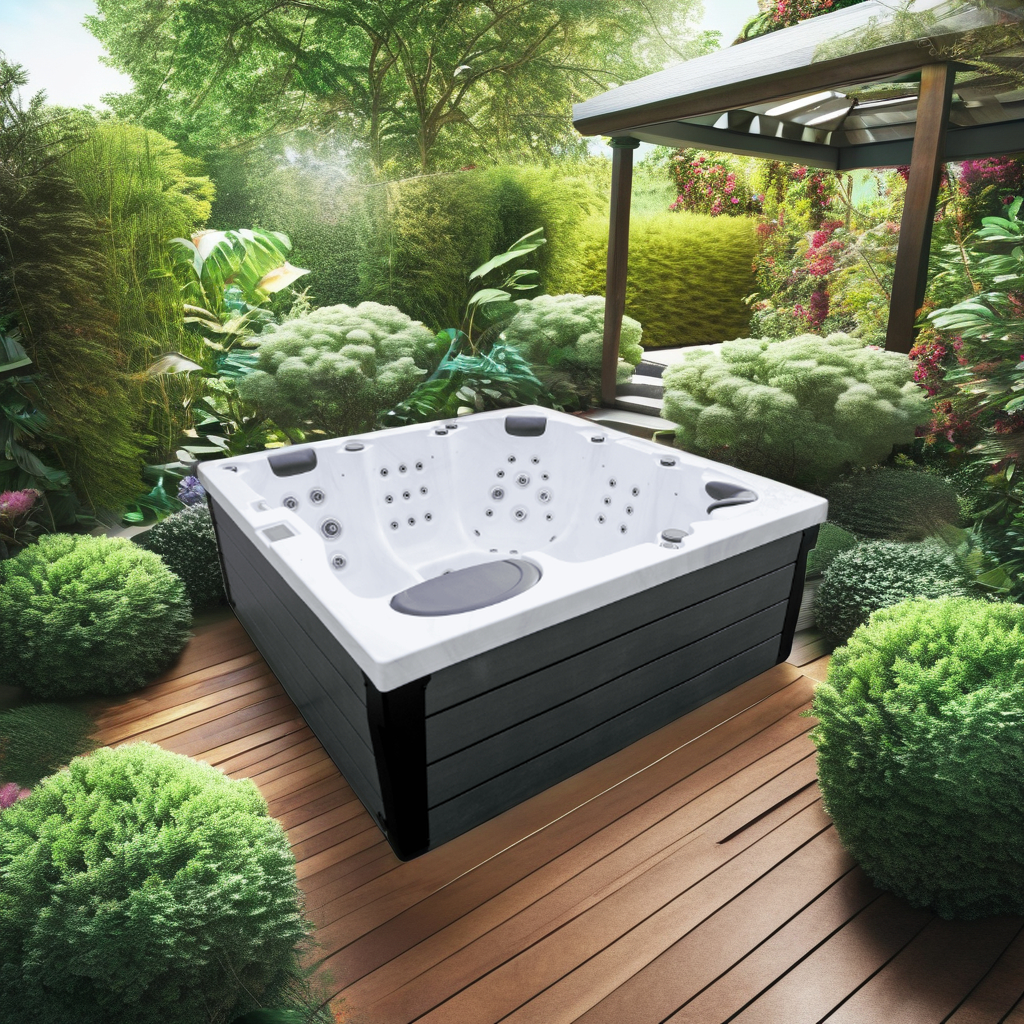
Why do the sidewalls of jacuzzi outdoor spa hot tubs sometimes feel like sandpaper?
Users often first notice the rough surface of their outdoor whirlpool hot tub while cleaning it or preparing for a soak. Sliding a palm down from the waterline reveals a distinct, fine, and uniform granular texture—a stark contrast to the smooth surface present when the tub was new. This sensation usually arises not from physical damage to the acrylic material, but from a layer of tiny yet hard mineral deposits firmly adhering to the surface.
Under normal conditions, calcium and magnesium ions in the water remain dissolved and do not form deposits. However, jacuzzi outdoor spa hot tubs are high-temperature circulating systems; water temperatures are consistently maintained at levels comfortable for bathing, and high heat reduces the solubility of minerals like calcium carbonate. As the water is repeatedly heated and evaporates, mineral concentrations rise; once the saturation point is exceeded, calcium ions precipitate out and gradually adhere to the tub's interior walls, jets, heater, and circulation system components.
This process is very similar to how limescale forms inside a kettle. However, because outdoor whirlpool hot tubs operate continuously at high, constant temperatures, calcium deposits accumulate more rapidly and over a wider area. As these mineral particles build up, the sidewalls take on a rough, sandpaper-like texture.
It is worth noting that in the early stages of formation, these calcium deposits are often invisible to the naked eye but easily detected by touch. Consequently, many users find that the tub "looks clean but feels rough"—a classic sign of early-stage calcium scaling.
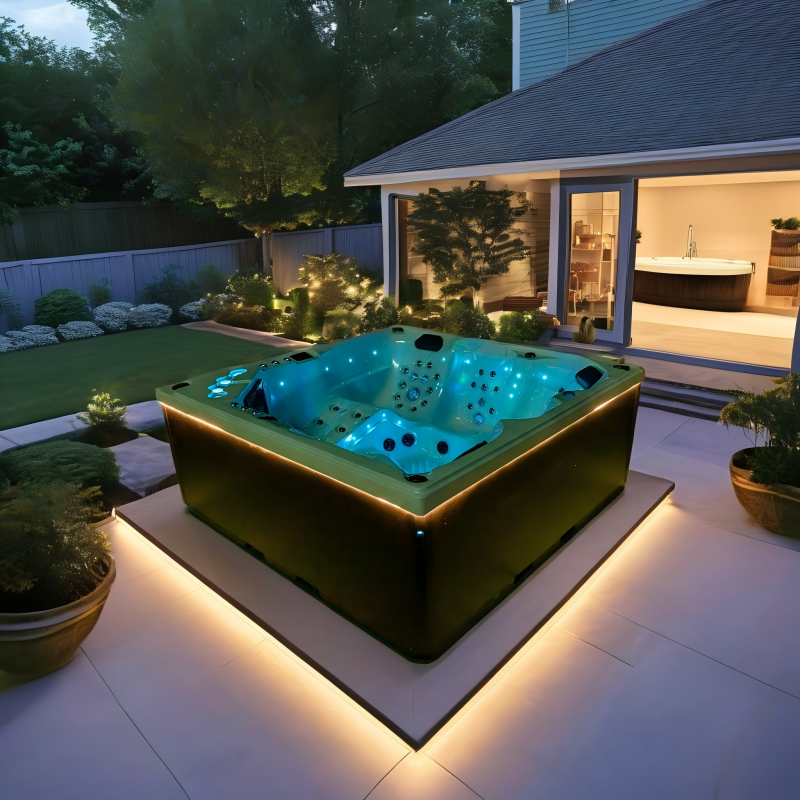
Why is calcium the primary cause of the "sandpaper" feel in jacuzzi outdoor spa hot tubs?
Among the various factors that can cause roughness on the interior walls of a jacuzzi outdoor spa hot tub, calcium deposits are undoubtedly the most common and typical culprit. This is linked not only to local water quality but also to the specific operating characteristics of the spa hot tub itself.
First, jacuzzi outdoor spa hot tubs operate at high temperatures almost year-round, and high heat is a key factor promoting calcium precipitation. Based on chemical principles, the solubility of calcium carbonate decreases as temperatures rise; as the water is continuously heated, minerals originally dissolved in the water tend to transform into solid deposits that adhere to equipment surfaces.
Secondly, jacuzzi outdoor spa hot tubs are subject to constant evaporation. While water evaporates, the minerals within it do not; they remain in the water, causing the concentration of calcium ions to rise steadily. If users simply top up the water without performing a complete water change at the recommended intervals, mineral levels will accumulate, accelerating the rate of scale formation.
Furthermore, many users overlook the importance of water balance. For instance, when the pH level consistently exceeds 7.8 and total alkalinity remains high, calcium carbonate is more likely to precipitate out of the water and form scale. The Pool & Hot Tub Alliance (PHTA) recommends maintaining pH levels between 7.2 and 7.8 and total alkalinity between 80 and 120 ppm for spas and outdoor whirlpool hot tubs, while calcium hardness is generally recommended to be kept between 150 and 250 ppm (specific figures should be verified against the equipment manufacturer's recommendations). If these parameters remain outside the optimal range for extended periods, the risk of calcium deposits increases significantly.
It is worth noting that once calcium scale forms, it does not detach on its own; instead, it continues to attract more minerals and tiny particles, causing the deposit layer to thicken over time. As time passes, the surface becomes increasingly rough, eventually developing a texture akin to sandpaper.
Apart from calcium deposits, what other factors can cause the surface of an outdoor hot tub to become rough?
While calcium is the primary culprit, it is not the only one. In actual use, other factors can also cause an outdoor whirlpool hot tub to lose its original smooth feel; therefore, the specific cause should be accurately identified before attempting to address the issue.
1. Mixed Deposits of Scale and Minerals
In addition to calcium, minerals such as magnesium, iron, and manganese present in the water can also contribute to deposit formation. If the local water supply has a high mineral content, these elements can combine with calcium to form a more complex scale layer. This not only makes the surface rough but can also lead to the appearance of yellow, brown, or grayish-white spots. Such deposits are typically harder than pure calcium scale and are more difficult to remove.
2. Biofilm Accumulation
If a jacuzzi outdoor spa hot tub is not properly maintained over the long term, bacteria within the circulation system can form a biofilm that gradually adheres to the areas near the waterline and sidewalls. Although biofilm feels different to the touch than calcium scale, it can create a similar rough texture when mixed with mineral deposits. Therefore, if you encounter rough areas accompanied by a slimy feel or an unpleasant odor, you should consider the possibility of biofilm contamination.
3. Improper Cleaning Methods
To remove stains quickly, some users repeatedly scrub their jacuzzi outdoor spa hot tubs with steel wool, metal brushes, or highly abrasive cleaning tools. While the surface may appear clean in the short term, this practice actually damages the protective layer of the acrylic, leaving behind numerous tiny scratches. These scratches not only dull the finish but also make it easier for calcium scale and stains to accumulate, further exacerbating the "sandpaper-like" texture.
4. Aging of the Acrylic Surface
For jacuzzi outdoor spa hot tubs that have been in use for over a decade, prolonged exposure to UV rays, harsh acidic or alkaline cleaners, and improper maintenance can cause the acrylic surface to age and lose its original smoothness. However, this scenario is relatively rare and is usually accompanied by other signs of aging—such as discoloration or a loss of luster—rather than just a rough texture.
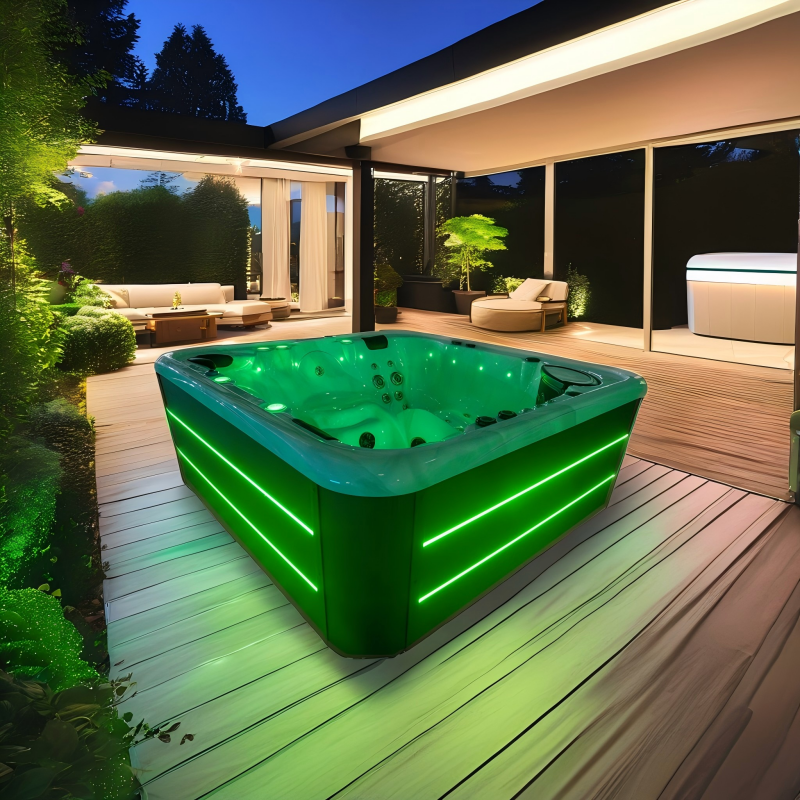
How can you determine if the roughness on your outdoor hot tub surface is caused by calcium scale or another issue?
Many users notice the surface becoming rough but are unsure if calcium scale is the culprit. In reality, you can make a preliminary assessment using a few simple methods:
If the roughness is concentrated near the waterline, around the jets, and near the heater, and the surface shows a thin white or grayish-white layer that produces a small amount of powder when gently scraped with a fingernail, it is highly likely to be calcium deposits.
If the rough area feels slimy or sticky, or emits an unpleasant odor, it is more likely due to biofilm or organic contaminants.
If the roughness is uniform across the entire tub surface and tiny scratches are visible, consider whether improper cleaning tools were used in the past.
Additionally, you can test the water quality parameters. If calcium hardness, pH levels, and total alkalinity are all significantly high, the likelihood of calcium scale formation increases substantially.
How do you remove calcium deposits from an outdoor whirlpool hot tub?
Upon discovering calcium scale, many users' first instinct is to scrub vigorously; however, this method is often inefficient and risks damaging the tub's surface. The correct approach follows the principle of "soften and remove."
First, drain the water from the whirlpool hot tub and spray a descaler designed for acrylic surfaces—or a specialized spa cleaner—onto the affected areas. Allow it to sit for a while so the solution can fully dissolve the mineral deposits. For thicker scale, you can extend the treatment time, but avoid using highly acidic cleaners not certified for acrylic, as they can damage the material.
Next, gently wipe the area with a soft sponge, microfiber cloth, or non-abrasive cleaning pad; most light-to-moderate scale deposits can be easily removed this way. If residue remains, repeat the process rather than attempting to scrape it off with steel wool or a blade.
Components such as jets, filters, and heaters should also be descaled. If necessary, remove the jets and soak them to ensure internal mineral deposits do not impede water pressure.
After cleaning, refill the tub with fresh water and rebalance the water chemistry to prevent new scale from forming quickly.
How can you prevent the whirlpool hot tub surface from developing a "sandpaper-like" texture again?
Establishing a sound prevention strategy is far more important than repeatedly removing scale. For outdoor whirlpool hot tub owners, controlling water quality is the key to preventing calcium deposits.
It is recommended to test the water weekly—checking pH, total alkalinity, and calcium hardness—and adjust the chemistry accordingly. In areas with hard water, consider installing a water softening system or using anti-scaling products designed for outdoor whirlpool hot tubs to reduce the risk of mineral precipitation.
Additionally, change the water regularly based on usage frequency. For a typical household jacuzzi outdoor spa hot tub, a complete water change every 3 to 4 months is recommended. If the tub sees heavy use or high traffic, shorten the interval between changes to prevent continuous mineral accumulation.
Finally, whenever you change the water, clean the interior walls, jets, waterline, and filters to remove any minor deposits that have just begun to form. Calcium scale is easiest to remove during the early stages of formation; once it accumulates over time, not only does cleaning become more difficult, but it can also impair heater efficiency and disrupt the circulation system.
For jacuzzi outdoor spa hot tubs that will be out of use for extended periods, proper shutdown maintenance is essential. This prevents residual water from evaporating and leaving behind heavy mineral deposits, which would create cleaning challenges for future use.
What other effects do calcium deposits have on outdoor whirlpool hot tubs?
Many users believe calcium scale merely affects the texture and appearance of the tub, but its impact on the entire system goes far beyond that.
First, calcium scale reduces heating efficiency. When mineral deposits adhere to the heating element, they form an insulating layer; this forces the heater to consume more electricity to reach the set temperature, thereby increasing operating costs.
Second, scale buildup in jets and circulation piping can gradually narrow water channels, leading to reduced jet pressure and a weaker massage effect; in severe cases, it can even cause circulation system failures.
The filtration system is also affected. Once mineral deposits enter the filter cartridge, they reduce filtration efficiency, increase the load on the water pump, and accelerate equipment wear and tear.
Furthermore, rough surfaces are more prone to harboring bacteria, biofilms, and organic contaminants, complicating future maintenance. Therefore, controlling calcium deposits in a timely manner not only preserves the hot tub's aesthetic appeal but also lowers maintenance costs and extends the equipment's lifespan.
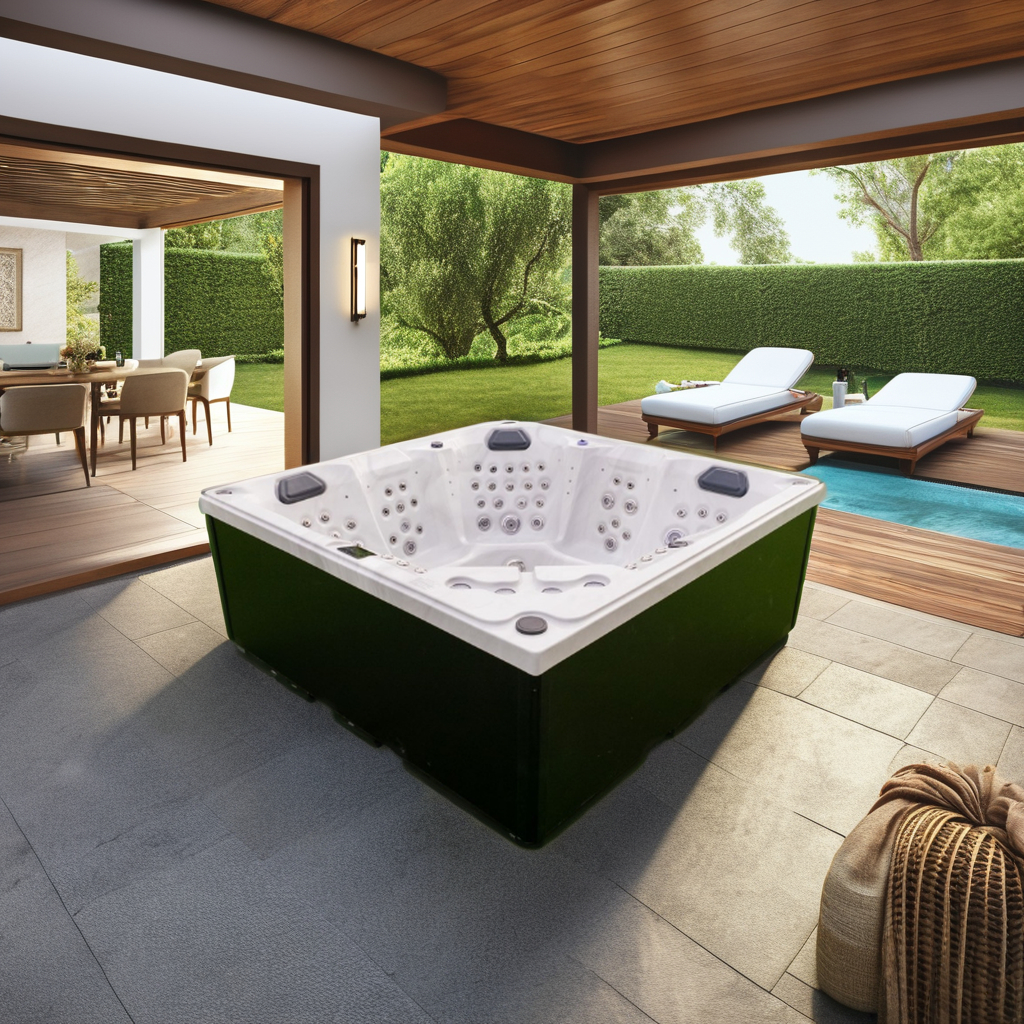
FAQ (Frequently Asked Questions)
Why does the jacuzzi outdoor spa hot tub feel like sandpaper to the touch, even though it looks clean?
This is a classic sign of early-stage calcium deposition. Mineral particles may have adhered evenly to the acrylic surface but remain thin enough to be invisible to the naked eye, yet the roughness is clearly perceptible to the touch.
Will calcium scale in an outdoor whirlpool hot tub disappear on its own?
No. Calcium scale consists of mineral deposits; once formed, it generally does not dissolve on its own. Instead, it tends to attract more minerals and dirt, causing the deposit layer to thicken over time. Consequently, cleaning with products specifically designed for jacuzzi outdoor spa hot tubs is required.
Can I use steel wool to quickly remove calcium scale from a jacuzzi outdoor spa hot tub?
This is not recommended. While steel wool can remove some deposits, it tends to scratch the acrylic surface, leaving behind numerous fine scratches that make it easier for calcium scale and stains to adhere later on, thereby making maintenance more difficult.
How often should the calcium hardness of a jacuzzi outdoor spa hot tub be checked?
It is recommended to test water quality parameters—including pH, total alkalinity, and calcium hardness—on a weekly basis. If you live in an area with hard water or use the whirlpool hot tub frequently, you may want to increase the testing frequency and adjust the water chemistry promptly based on the results.
How can the "sandpaper-like texture" on an outdoor whirlpool hot tub be fundamentally prevented?
Maintaining proper calcium hardness, keeping pH and total alkalinity stable, regularly changing the water, promptly cleaning the waterline and interior walls, using anti-scaling products designed for outdoor whirlpool hot tubs, and avoiding highly abrasive cleaning tools are effective ways to minimize calcium deposits and keep the tub's surface smooth.