


Why do I experience burning pain when urinating after using a swim spa tub?
2026-05-07 15:30Some people experience a confusing, even uncomfortable, sensation when urinating after using a swim spa tub.
This experience is not uncommon, but because the symptoms often occur in the private area, many people are reluctant to mention it, easily overlook it, or simply attribute it to "occasional discomfort."
In fact, burning pain when urinating after a swim spa tub is not without cause. It is often closely related to the water environment, chemical disinfectants, the contact between skin and mucous membranes, and post-swimming habits. A systematic analysis from multiple perspectives is needed to correctly understand this issue.

What does the burning sensation after using a swim spa tub usually mean?
The burning sensation during urination is essentially a stimulating response, not a single phenomenon.
This stimulating effect can occur in the following areas:
• Urethral opening
• Urethral mucosa
• Urinary tract inlet area
The use of a swim spa tub can affect these sensitive areas at multiple points.
Why does chlorine in the swim spa tub water irritate the urinary system?
This is one of the most often overlooked, yet extremely crucial, reasons.
What is the role of chlorine in a swim spa tub?
To maintain water hygiene, swim spa tubs typically use chlorine disinfection to inhibit microbial growth. This practice is very common in the water treatment industry, but it also means:
• The water contains a certain concentration of chemical disinfectants.
• These components come into direct contact with the skin and mucous membranes.
Why is the urinary tract more susceptible to chlorine irritation?
Compared to normal skin, the area surrounding the urinary tract has the following characteristics:
• Thinner and more sensitive skin and mucous membranes.
• A relatively weak protective barrier.
• Lower tolerance to chemical irritants.
Therefore, when the body is immersed in a swim spa tub for an extended period, the chlorine in the water can irritate the entrance area of the urinary tract, leading to a burning sensation during urination.

Why is burning more likely to occur if you don't rinse thoroughly after swimming?
Chlorine residue is an underestimated problem.
After swimming or spa treatments, if you don't wash your body promptly and thoroughly:
• Chlorine may remain on the skin and mucous membranes.
• It's especially prone to lingering in the intimate, moist areas.
These residues, when in contact with urine during urination, can amplify irritation and make burning more pronounced.
Insufficient washing amplifies the irritation response.
This is why many people experience significant discomfort during their first urination after a swim spa tub, with symptoms gradually lessening afterward—the irritant is gradually washed away or diluted.
Why does wearing a wet, tight-fitting swimsuit worsen discomfort?
This is another very important but often overlooked factor.
Wet swimsuits provide an ideal environment for bacteria.
Whether in a swim spa tub or other aquatic environments, as long as:
• the swimsuit remains wet for an extended period
• and fits snugly against the intimate area
it can create a warm, moist, and poorly ventilated microenvironment, which is ideal for bacterial growth.
How do bacteria affect the urinary system?
When bacteria proliferate in the genital area:
• They may approach or even enter the urethra.
• The urination process further irritates the already irritated area, causing burning or itching.
Therefore, a wet swimsuit is not neutral; it is a significant contributing factor to discomfort after swimming spa treatments.
Why is this burning sensation often more pronounced after swimming spa treatments?
The result of multiple factors
In the context of swimming spa tub use, the following factors often coexist:
• Chemical irritation from chlorine
• Prolonged immersion in water
• High humidity in the genital area
• Failure to change into dry clothing immediately after swimming
When these factors combine, the sensitivity of the urinary tract inlet area significantly increases, making burning sensations during urination more likely.
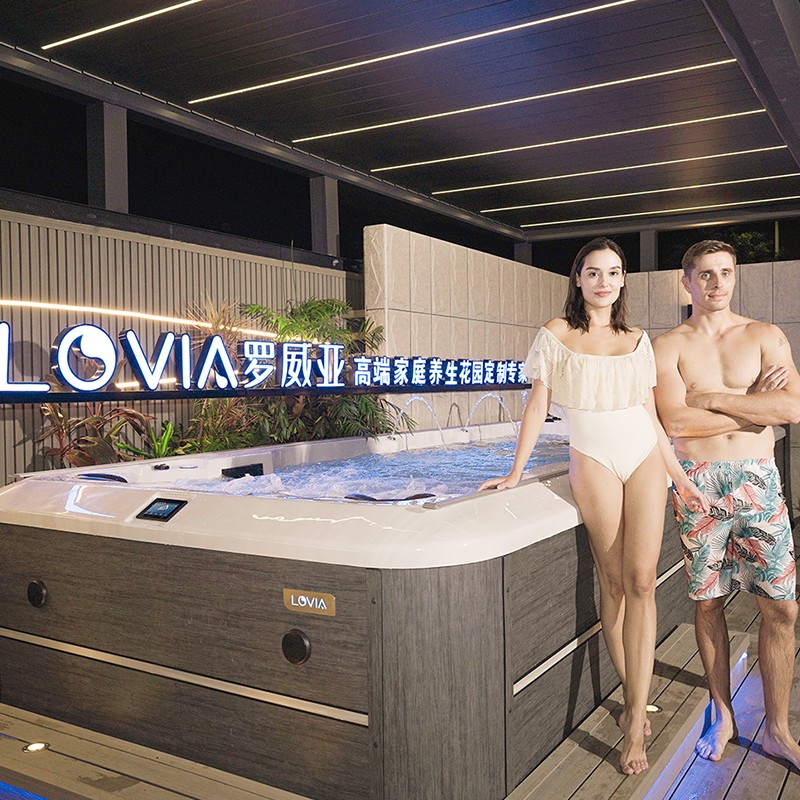
Does the water temperature of the swim spa tub indirectly affect this discomfort?
Warm water accelerates skin reactions.
Swim spa tubs typically use warm or slightly warm water, which itself:
• Promotes the opening of skin pores
• Enhances the skin's reaction to external substances.
In this state, chlorine and other irritants are more likely to act on sensitive areas, making discomfort more pronounced.
Why are some people more prone to burning sensations after swimming spas?
Individual sensitivity differences cannot be ignored.
Different people react differently to the swim spa tub environment, which is related to the following factors:
• Skin and mucous membrane sensitivity
• The protective ability of intimate areas
• Tolerance to chemical disinfectants
Therefore, some people hardly notice any abnormalities, while others are more likely to experience burning sensations during urination.
Does longer use of a swim spa tub increase the risk of burning sensations?
Exposure time is one of the important variables.
Logically, the longer the time spent in a swim spa tub:
• The longer the contact time with chlorinated water
• The more opportunities for skin and mucous membrane irritation.
This does not mean that the duration of a swim spa experience is "problematic," but rather that the cumulative effect of irritation needs to be taken seriously.
Why is this discomfort often "transient"?
Irritation response is not the same as structural damage.
It's important to emphasize that most burning sensations during urination after a swim spa tub are:
• More of an irritation reaction
• Related to short-term environmental factors
• Not a long-term or irreversible change
As the body returns to normal and the irritant subsides, the discomfort usually lessens or disappears.
How to understand the relationship between swim spa tubs and urinary tract discomfort in principle?
The key is "contact," not "infection."
Contrary to the serious problems many people worry about, burning sensations during urination caused by swim spa tubs are more due to:
• Chemical irritation
• A humid environment
• Local microecological imbalance
rather than a single, direct, serious problem. This is why improving post-swim hygiene and changing habits often leads to a significant improvement in the experience.
Why can't we simply ignore the burning sensation after a swim spa?
Because it's a signal from your body
While this discomfort is usually not serious, it still means:
• Irritation at the entrance to the urinary tract
• There's room for improvement in your current use or care methods
Understanding this signal correctly helps you continue using the swim spa tub more comfortably and with greater peace of mind.

Does this mean the swim spa tub is "unsafe"?
The answer is no.
Distinguishing between the equipment itself and post-use care issues
As a spa and exercise device, the safety of the swim spa tub depends on:
• Water quality management
• Proper use
• Personal cleaning and care after use
Attributing the burning sensation after a swim spa entirely to the equipment itself is an oversimplification.
How does Lovia Spa ensure product reliability for long-term use?
Lovia Spa focuses on durability by combining high-quality materials with advanced manufacturing techniques. Each spa hot tub and swim spa tub is designed to perform reliably over time, even in demanding environments. As a responsible manufacturer, our company prioritizes product longevity, helping customers reduce maintenance costs and improve user satisfaction after purchasing.