


What Production Equipment Does an Outdoor Hot Tub Factory Need?
2026-08-29 15:30Amidst the rapid growth of the outdoor spa industry, a long-standing issue has emerged: not all companies selling outdoor spa hot tubs possess the genuine capability to manufacture high-quality products. While some suppliers can provide product images, quotes, and sales services, they may operate merely as simple assembly plants or rely entirely on outsourcing for production. When faced with orders for dozens or hundreds of units—or long-term annual partnerships—such companies often struggle with insufficient production capacity, delayed deliveries, inconsistent quality, and difficulties with after-sales maintenance.
An outdoor spa hot tub is neither an ordinary piece of furniture nor a simple plastic container. It is, in fact, a comprehensive piece of spa equipment integrating composite material processing, water circulation systems, electrical controls, thermal insulation technology, smart control systems, and safety testing. A standard outdoor spa hot tub comprises multiple core components, including an acrylic shell, a reinforced structural layer, water pumps, heaters, filtration systems, jet systems, control panels, LED lighting, and waterproof electrical systems. Inadequate control at any stage of production can compromise the end-user experience.
For instance, manufacturers lacking specialized vacuum-forming equipment may produce shells with uneven thickness; a lack of standardized plumbing testing equipment can lead to leakage issues after prolonged use; and the absence of electrical testing protocols can pose certification and safety risks when exporting to European and American markets. While these issues appear to be matters of product quality, they actually reflect deficiencies in the factory's manufacturing equipment and production systems.
Therefore, when selecting a supplier, global buyers should look beyond price and aesthetics to evaluate whether the factory possesses a comprehensive production equipment system. A truly competitive outdoor spa hot tub factory utilizes specialized equipment to manage the entire process—from raw material processing, product molding, structural reinforcement, and system installation to final testing and packaging.
As a brand dedicated to the R&D and manufacturing of outdoor spa equipment, LOVIA® has long focused on building robust production systems for products such as outdoor spa hot tubs and swim spas. Through large-scale production bases, specialized manufacturing equipment, and standardized quality control processes, LOVIA® ensures a reliable supply of outdoor spa hot tubs for customers worldwide.

Why must an outdoor spa hot tub factory possess specialized production equipment?
When many consumers first learn about outdoor spa hot tub manufacturing, they often assume the process simply involves installing pumps, connecting plumbing, and finishing the exterior. In reality, the professional manufacturing process is far more complex than imagined.
Transforming raw materials into a finished outdoor spa hot tub involves multiple stages, including acrylic sheet processing, vacuum thermoforming, structural reinforcement, surface finishing, plumbing installation, electrical wiring, functional testing, and packaging for transport. Each stage requires specific machinery, and the quality of this equipment directly determines production efficiency and product reliability.
For instance, during the fabrication of the hot tub shell, the acrylic material must be heated precisely before being vacuum-formed into complex, curved structures. Without stable, large-scale thermoforming equipment, the resulting tubs may suffer from dimensional inaccuracies, insufficient edge thickness, or inadequate structural strength.
Regarding the hydrotherapy system, a high-end outdoor spa hot tub may feature dozens of massage jets, each requiring a specific plumbing configuration. Relying solely on manual labor is not only inefficient but also prone to errors in jet placement, which can compromise water flow performance. Consequently, modern factories employ CNC machining equipment to enhance manufacturing precision.
Furthermore, because outdoor spa hot tubs are exposed to the elements, factors such as weather resistance, waterproofing, and thermal insulation are critical. Professional manufacturers utilize specialized equipment—such as structural reinforcement systems, insulation filling machinery, and testing apparatus—to ensure their products can withstand diverse climatic conditions.
Thus, a truly sophisticated outdoor spa hot tub factory is defined not merely by the possession of a production facility, but by the establishment of a comprehensive machinery infrastructure.
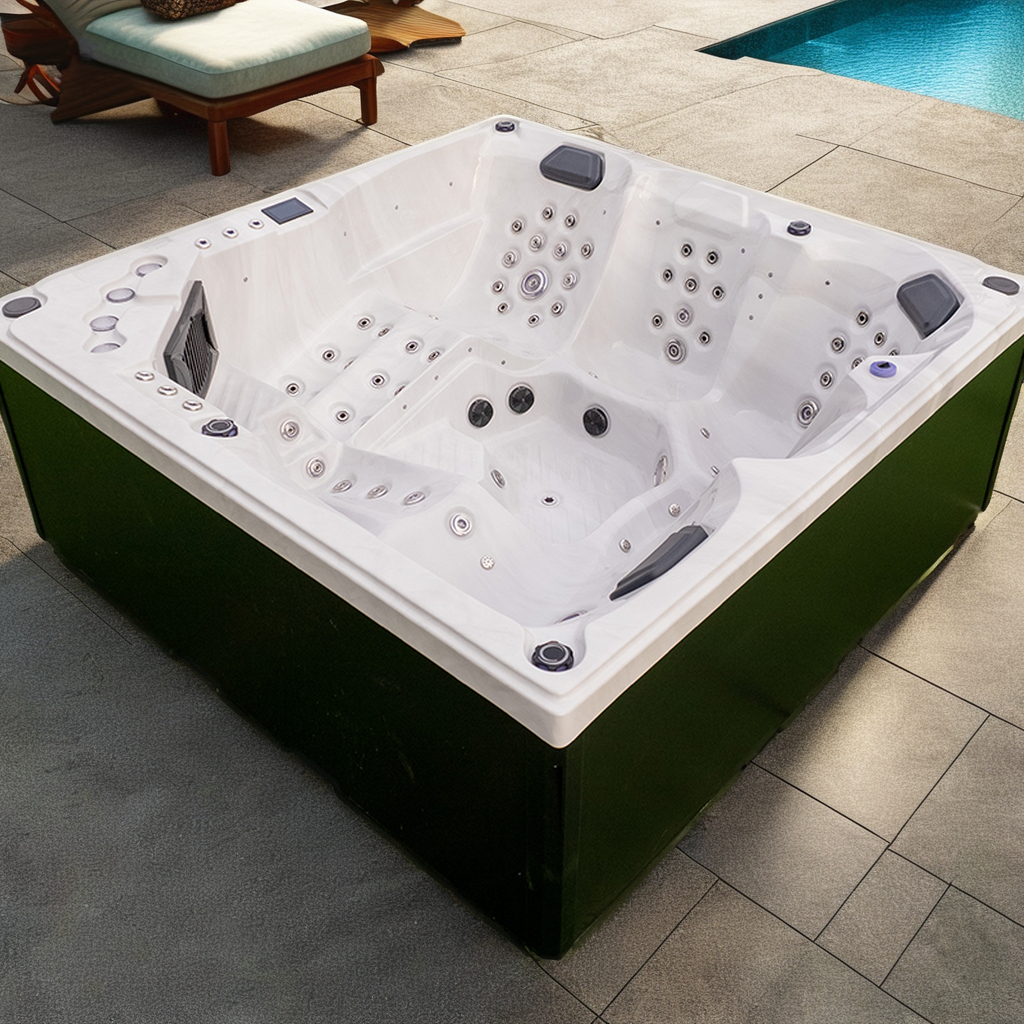
What are the core production machines in an outdoor spa hot tub factory?
I. Acrylic Sheet Heating Equipment: Determining Product Aesthetics and Foundational Quality
Acrylic is currently one of the most common materials used for the main body of outdoor spa hot tubs. Compared to standard plastics, acrylic offers superior gloss, weather resistance, and surface texture, meeting the high-end aesthetic demands of both residential and commercial markets.
However, as a thermoplastic material, acrylic requires precise heating before it can be molded. Therefore, professional factories typically equip themselves with large-scale heating ovens or infrared heating systems. The primary function of the heating equipment is to bring the acrylic sheet to a temperature suitable for forming while ensuring uniform heat distribution across the entire sheet. Inaccurate temperature control can lead to excessive softening in some areas while other areas fail to meet forming requirements, ultimately resulting in inconsistent product thickness.
In the industry, the thickness of acrylic sheets for outdoor spa hot tubs typically ranges from 3mm to 8mm, selected based on product dimensions, structural design, and load-bearing requirements. Large manufacturers utilize automatic temperature control systems to effectively minimize human error and enhance consistency in mass production.
For factories producing outdoor spa hot tubs for export, stable material forming capabilities are crucial; overseas clients often place large-volume orders, and significant discrepancies between batches can directly impact brand sales and the user experience.
II. Vacuum Thermoforming Machines: Core Equipment in outdoor spa hot tub Manufacturing
Vacuum thermoforming equipment is one of the most critical pieces of machinery in the entire outdoor spa hot tub production process.
This is because the internal structure of an outdoor spa hot tub is rarely a simple flat surface; rather, it is ergonomically designed to include features such as:
•Seated massage zones;
•Reclining massage zones;
•Leg relaxation zones;
•Armrest areas;
•Jet installation zones.
These complex, contoured structures are created using molds and the vacuum thermoforming process.
The basic workflow of vacuum thermoforming equipment involves: first heating and softening the acrylic sheet, then draping it over a specialized mold; using vacuum pressure to conform the material to the mold's shape; and finally, cooling it to set the structure.
Automated thermoforming equipment offers distinct advantages over manual processing methods:
First, it ensures dimensional consistency. In mass production, products of the same model must be highly uniform; otherwise, errors can easily arise during the subsequent installation of plumbing and electrical systems.
Second, it boosts production efficiency. A single large-scale thermoforming machine can continuously produce multiple units, significantly increasing the factory's output capacity.
Third, it reduces material waste. Precise control over the forming process helps maximize raw material utilization.
For manufacturers producing hundreds or even thousands of outdoor spa hot tubs per month, achieving stable, large-scale production would be difficult without sophisticated thermoforming equipment. LOVIA® currently possesses a comprehensive production equipment system. Through standardized manufacturing processes, the company ensures that various models of spa hot tubs and swim spas are produced to uniform standards, thereby meeting overseas market demands for product consistency and supply stability.
III. Fiberglass Reinforcement Equipment: Determining Long-Term Load-Bearing Capacity
After the acrylic shell is formed, the outdoor spa hot tub requires structural reinforcement. During actual use, the tub must withstand the weight of the water and users, as well as structural stress caused by temperature fluctuations. A single layer of acrylic material is insufficient to ensure long-term stability; therefore, established manufacturers typically employ FRP (Fiber-Reinforced Plastic) technology to reinforce the bottom and back of the tub.
A standard residential outdoor spa hot tub can weigh between 800 kg and 1,500 kg when filled with water, while large commercial spa hot tubs or outdoor swim spas can weigh several tons. Consequently, structural strength directly impacts the product's lifespan.
Professional outdoor spa hot tub factories typically require specific fiberglass reinforcement equipment, including:
•Fiberglass cutting equipment;
•Resin mixing equipment;
•Spraying equipment;
•Curing equipment;
•Thickness inspection equipment.
Among these, spraying equipment is primarily used to apply resin and fiberglass evenly to the back of the acrylic shell, creating a more stable composite structure.
If manufacturers rely on low-cost manual coating methods, the reinforcement layer often suffers from uneven thickness. Insufficient reinforcement material in certain areas can lead to deformation under long-term stress, while an improper resin ratio in other areas can compromise the product's toughness. Therefore, established manufacturers utilize mechanized production to ensure the quality of the reinforcement layer.
LOVIA® prioritizes structural stability in its manufacturing process, utilizing standardized reinforcement techniques to enhance product durability. This ensures the hot tubs can withstand diverse environmental conditions, including cold, high-temperature, and high-humidity regions.
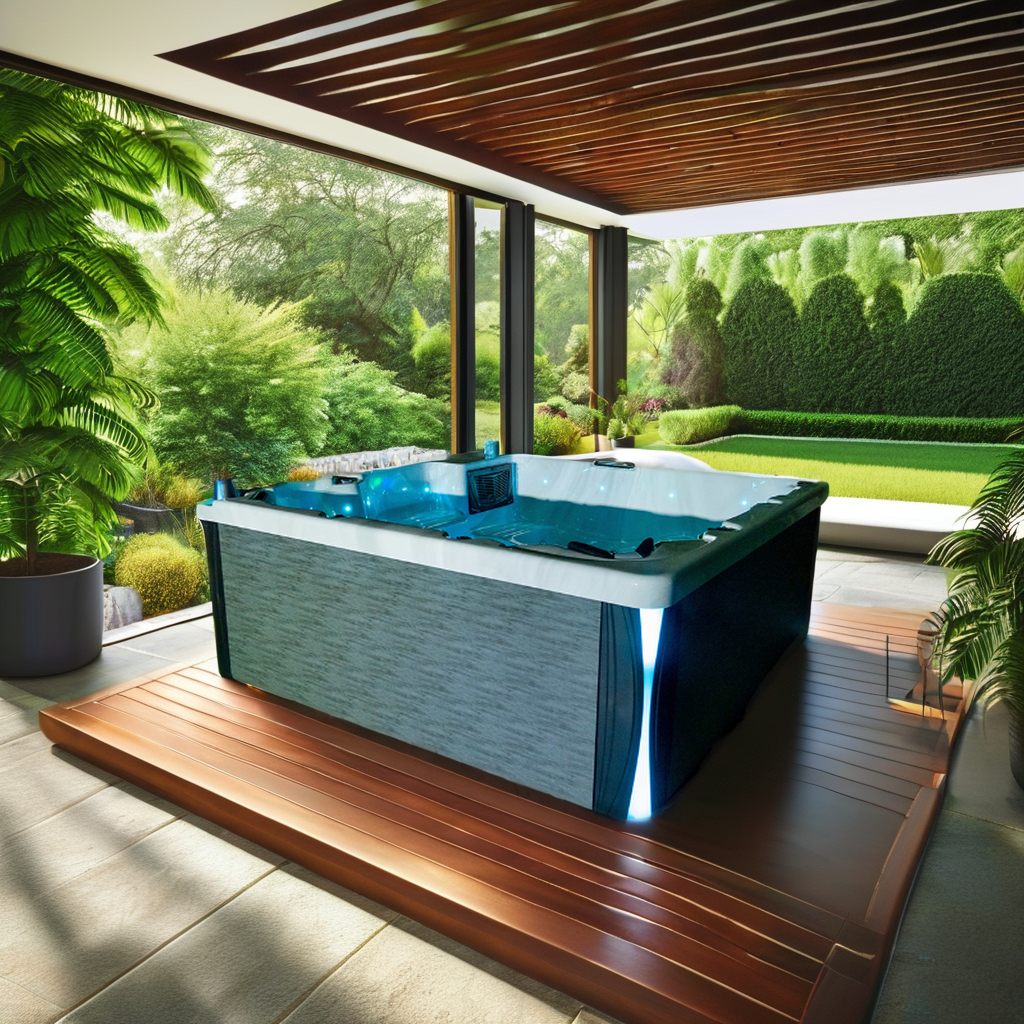
CNC Machining Equipment: Enhancing Production Precision
I. Why Do Outdoor Spa Hot Tubs Require CNC Machining?
Many people assume that outdoor spa hot tubs rely primarily on manual assembly, leading them to underestimate the importance of automated machining equipment. In reality, however, as product features continue to expand, modern outdoor spa hot tubs have evolved into highly integrated systems.
Mid-to-high-end outdoor spa hot tubs typically feature multiple massage jets, water circulation ports, filtration inlets, control panels, and lighting systems. The placement of these components must be precise; otherwise, overall performance could be compromised.
For instance, the positioning of massage jets directly affects water flow direction and massage efficacy. A deviation of even a few millimeters can result in insecure jet installation or even create a risk of future leaks.
Consequently, professional outdoor spa hot tub manufacturers typically utilize CNC machining equipment to ensure precise hole cutting.
CNC equipment is primarily used for:
•Machining jet installation holes;
•Machining water pipe connections;
•Machining drainage holes;
•Machining control panel mounting locations;
•Machining structural connection holes.
Compared to traditional manual drilling methods, CNC machining offers superior consistency.
For example, when producing 100 units of the same hot tub model, manual processing might result in slight variations between units; in contrast, CNC equipment operates according to a standardized program, ensuring a high level of uniformity across all products.
This is crucial for export markets, as overseas brands typically require a stable, high-volume supply; significant variations between product batches can lead to increased after-sales costs.
Water System Machining and Testing Equipment: Ensuring Stable Core Functionality
The defining characteristic that distinguishes an outdoor spa hot tub from a standard bathtub is its comprehensive hydrotherapy circulation system.
Hydrotherapy performance relies on:
•Water pumps providing power;
•Jets generating massage water flow;
•Filtration systems maintaining water quality;
•Heating systems maintaining a constant temperature.
Therefore, the water system is a critical component of the outdoor spa hot tub manufacturing process.
I. Water System Installation Equipment
Professional factories typically require the following equipment:
•PVC pipe cutting equipment;
•Pipe connection equipment;
•Automatic adhesive mixing equipment;
•Water pressure testing equipment.
The internal piping structure of an outdoor spa hot tub is complex, requiring connections across multiple jets and functional zones. For example, a large spa hot tub might feature 30, 50, or even over 90 massage jets, necessitating the proper distribution of water flow pressure across different areas. If the water circuit design is flawed, the following issues may arise:
•Insufficient pressure at some nozzles;
•Reduced water circulation efficiency;
•Increased water pump noise;
•Operational problems developing over time.
Therefore, professional manufacturers must conduct water circuit testing during the production phase.
The testing process typically includes:
First, pressure testing the piping to ensure there are no leaks at connection points;
Second, testing the water pump's operating status to verify proper water circulation;
Third, inspecting the filtration system to ensure circulation efficiency meets design specifications.
During the production of its outdoor spa hot tubs, LOVIA® employs standardized testing procedures to minimize usage risks, ensuring the products meet the stability requirements of both residential and commercial customers.
Electrical Testing Equipment: Ensuring Safe Operation
Modern outdoor spa hot tubs offer more than just massage functions; they integrate smart controls, constant-temperature heating, LED lighting, and remote control capabilities, making the electrical system a critical component of the manufacturing process.
Due to exposure to rain, humidity, and temperature fluctuations, the electrical safety requirements for outdoor spa hot tubs are generally stricter than those for standard indoor appliances.
Professional factories require the following equipment:
•High-voltage testers;
•Grounding testers;
•Leakage detection equipment;
•Electronic control function test benches;
•Burn-in (aging) test equipment.
These devices are used to verify:
•Correct circuit connections;
•Effective leakage protection;
•Heating system stability;
•Proper control panel operation;
•Smooth water pump startup.
outdoor spa hot tubs destined for European and American markets must also comply with regional safety standards. For instance, the European market typically focuses on CE requirements, while the US market places greater emphasis on certifications such as ETL.
Smaller suppliers, lacking professional testing equipment, often rely on simple power-on tests, which fail to detect potential issues comprehensively. In contrast, established manufacturers conduct multiple tests before shipment, mitigating after-sales risks at the source.
Insulation Processing Equipment: Impacting Energy Efficiency
Beyond massage functionality, consumers are increasingly concerned about energy consumption when purchasing outdoor spa hot tubs. Especially in Europe and North America, where winter temperatures are low, inadequate insulation in the equipment can lead to:
•longer heating times;
•increased power consumption;
•higher operating costs for the user.
Consequently, professional outdoor spa hot tub manufacturers need to be equipped with insulation processing machinery.
Common insulation methods include:
•full-body polyurethane (PU) foam injection;
•localized insulation structures;
•combinations of multi-layer insulation materials.
The primary function of insulation equipment is to ensure uniform material filling and prevent the formation of voids.
A high-quality insulation structure minimizes heat loss and enhances operational efficiency.
For instance, an outdoor spa hot tub with a capacity of approximately 1,000 liters—if well-insulated and operated at a constant temperature—may consume significantly less energy than a standard model with poor insulation.
Therefore, for long-term users, insulation performance impacts not only the user experience but also ongoing operating costs.
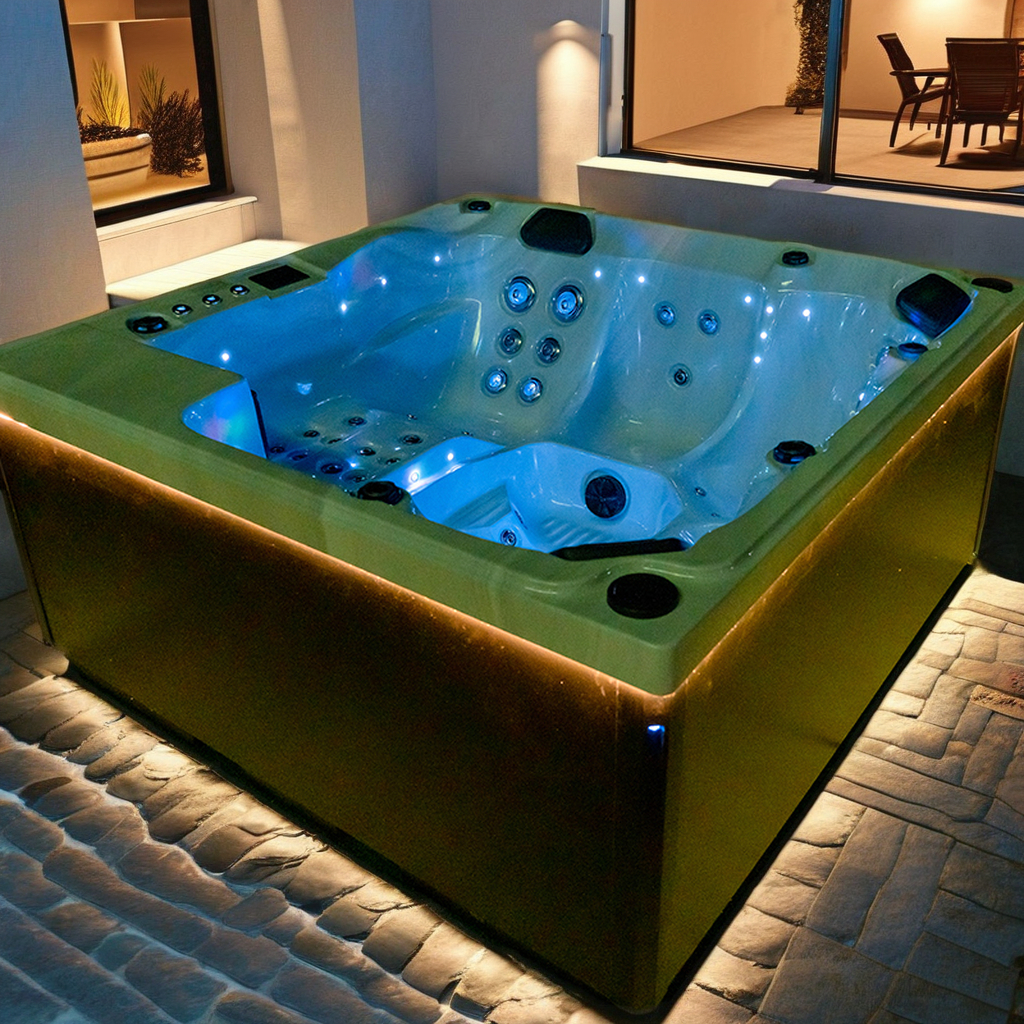
FAQ: Common Questions About outdoor spa hot tub Manufacturing Equipment
Q1: What is the most important piece of equipment for manufacturing outdoor spa hot tubs?
A: Vacuum thermoforming equipment is typically one of the most critical components, as it determines the dimensional accuracy, surface quality, and mass-production consistency of the hot tub's main structure.
Q2: What equipment must an outdoor spa hot tub factory possess?
A: A professional spa hot tub factory typically requires acrylic heating equipment, vacuum thermoforming machines, FRP (fiberglass) reinforcement equipment, CNC machining equipment, plumbing/leakage testing equipment, electrical testing equipment, insulation processing equipment, and packaging equipment.
Q3: Why is CNC equipment necessary for outdoor spa hot tubs?
A: Modern outdoor spa hot tubs feature numerous jets and complex plumbing layouts; CNC equipment enhances machining precision and minimizes human error.
Q4: Does LOVIA® support OEM/ODM production for outdoor spa hot tubs?
A: Yes. LOVIA® offers product customization based on client requirements, including aesthetics, dimensions, functional configurations, and branding solutions.
Q5: Why should buyers inspect the manufacturing equipment at an outdoor spa hot tub factory?
A: Manufacturing equipment directly impacts product quality, delivery capabilities, and long-term supply stability. For overseas bulk buyers, partnering with a manufacturer that possesses a comprehensive production system helps mitigate business risks.