


What is the role of calcium chloride in jacuzzi hot tub outdoors?
2026-10-02 15:30Driven by the growth of the "backyard economy," outdoor leisure lifestyles, and the demand for high-end residential amenities, jacuzzi hot tub outdoors (including outdoor spas and patio spa tubs) are becoming essential features for an increasing number of households, hotels, guesthouses, and wellness facilities. Unlike traditional bathtubs, outdoor hottubs offer features such as constant-temperature soaking and hydro-massage; however, because they operate in high-temperature, recirculating, and open-air environments, they place higher demands on water quality management.
During routine maintenance, many jacuzzi hot tub outdoor owners focus heavily on sanitizers, pH adjusters, and filtration systems while overlooking a critical parameter: calcium hardness. In reality, calcium hardness directly influences whether the water is corrosive or prone to scale formation, as well as the lifespan of core components like heating systems, jets, and pumps. Calcium chloride (CaCl₂) is a key water treatment agent used to increase calcium ion concentration and adjust calcium hardness levels.
It is important to clarify that calcium chloride is not a sanitizer for outdoor hottubs; it cannot replace chlorine, bromine, ozone, or UV sterilization systems. Its primary function is to improve the water's mineral balance, keeping the water in a more stable and safe condition, thereby reducing equipment wear and tear and enhancing the soaking experience.
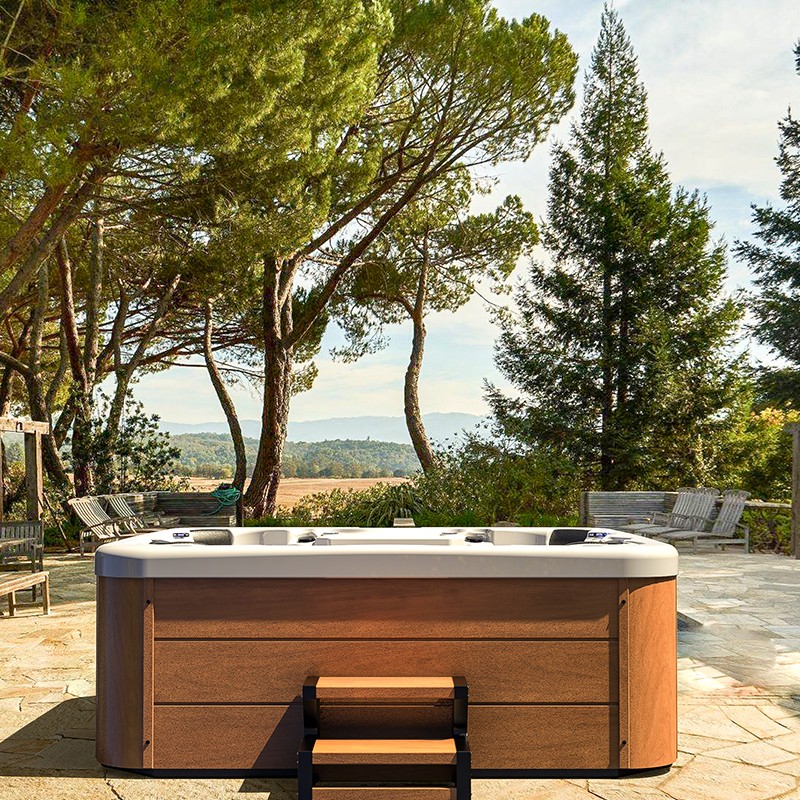
Why is it necessary to control calcium hardness in outdoor hottubs?
The main difference between a hot water tub outdoor and a standard swimming pool lies in the nature of the water circulation system: hot tubs are characterized by low water volume, high temperatures, and high usage frequency. A typical residential jacuzzi hot tub outdoor holds between 800 and 2,000 liters of water, whereas large commercial spa tubs may exceed 3,000 liters. Due to the smaller volume of water, any changes in chemical parameters are significantly amplified.
For instance, adding a small amount of chemical adjuster to a 50,000-liter swimming pool might result in negligible changes to water quality; however, in a 1,000-liter outdoor hot tub, the same dosage could rapidly alter water parameters. Consequently, water quality maintenance for outdoor hottubs requires greater precision and cannot simply follow standard swimming pool management practices.
Furthermore, outdoor hottubs are typically maintained at temperatures ranging from 37°C to 40°C. High-temperature environments accelerate mineral deposition, chemical reactions, and the aging of equipment materials. If the water lacks sufficient calcium, it can become highly corrosive; conversely, excessive calcium levels lead to scale buildup. Therefore, maintaining appropriate calcium hardness is fundamental to the long-term, stable operation of outdoor hottubs.
Calcium hardness generally refers to the concentration of calcium and magnesium ions in the water, typically measured in ppm (mg/L). For most residential jacuzzi hot tub outdoors, the recommended calcium hardness range is 150–250 ppm; this range strikes a balance between minimizing corrosion risks and preventing severe scaling. However, as specifications vary based on hot tub brands, water sources, and equipment materials, users should always consult the manufacturer's recommendations.
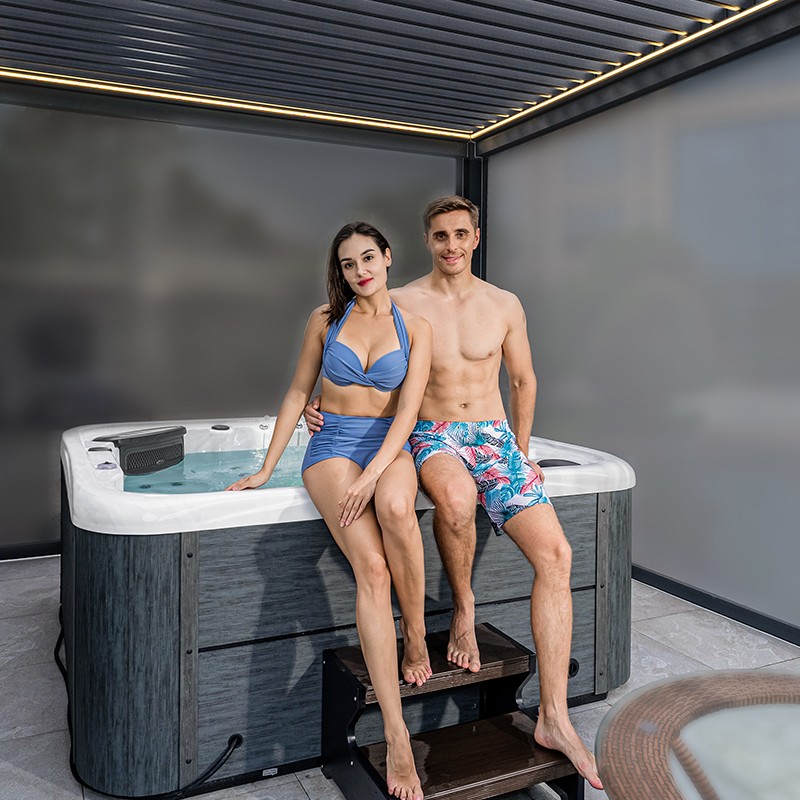
The Primary Role of Calcium Chloride in Outdoor Hot Tubs
When added to water, calcium chloride dissolves rapidly, releasing calcium ions:
CaCl₂ → Ca²⁺ + 2Cl⁻
The released Ca²⁺ ions increase the water's calcium hardness, stabilizing its chemical balance. Calcium chloride serves several key functions in jacuzzi hot tub outdoors:
1. Preventing corrosion of hot tub equipment caused by low-calcium water
This is one of the primary functions of calcium chloride.
If calcium hardness is too low, the water becomes "too soft." While soft water does not rapidly produce scale, its lack of minerals can cause it to corrode equipment materials. Prolonged exposure to low-calcium water can damage internal structures, heaters, metal jets, pump components, and plumbing connections.
Heating systems are particularly vulnerable, as they operate at high temperatures for extended periods and are highly sensitive to water quality. Persistently corrosive water can oxidize metal surfaces and compromise equipment reliability.
For example, consider a 1,500-liter hot water tub outdoor with a measured calcium hardness of only 40–60 ppm—well below the target range of 150–250 ppm. The water is clearly too soft and requires adjustment using calcium chloride. Increasing the calcium ion concentration reduces the water's corrosiveness toward equipment materials. Therefore, the purpose of adding calcium chloride is not simply to "make the water hard," but to bring the water into a balanced state suitable for the equipment's operation.
2. Reducing foam and improving the outdoor hot tub experience
Many users encounter a common issue when using outdoor hottubs: the appearance of excessive foam on the water surface after turning on the massage jets.
Foam formation stems from a complex mix of factors, including human sweat, sebum, residues from skincare products and toiletries, and inefficient filtration systems. Additionally, low calcium hardness can increase the likelihood of foaming.
This is because soft water—which has a low mineral content—is less stable and more susceptible to the effects of organic contaminants. The presence of calcium ions helps improve water characteristics, thereby mitigating the foaming problem to some extent.
However, it is important to note that calcium chloride is not a specialized defoamer. If a hot water tub outdoor suffers from persistent, severe foaming, simply adding calcium chloride will not solve the root cause; one must also inspect the filtration system, cleaning frequency, and usage habits.
3. Helping maintain stable water quality in outdoor hottubs
A healthy water quality system for an outdoor hot tub requires monitoring several key parameters:
•pH level: Generally recommended to be maintained between 7.2 and 7.8;
•Total Alkalinity (TA): Helps stabilize pH fluctuations;
•Sanitizer concentration: Controls bacteria and microorganisms;
•Calcium hardness: Manages the risk of corrosion and scale buildup.
These parameters do not exist in isolation. For instance, many users find that pH levels are within the normal range, yet the equipment still suffers from corrosion or scale issues—often because calcium hardness has not been properly managed.
Therefore, water treatment for hot water tub outdoors should not rely solely on sanitizers; instead, a comprehensive water chemistry management system should be established. Calcium chloride plays a vital role in maintaining the stability of this system.
Water Quality Management Pain Points in the Outdoor Hot Tub Industry
As the outdoor hot bath market continues to expand, more and more consumers are paying attention to equipment functions, such as the number of massage functions, insulation layer design, smart control, and appearance. However, water quality maintenance remains a critical factor influencing user satisfaction during actual use.
Challenge 1: Prioritizing equipment purchase over water quality maintenance
Many consumers invest heavily in upgrading their outdoor hottubs upon purchase but overlook the costs associated with long-term maintenance. Some users believe that simply adding sanitizer regularly prevents water-related issues.
In reality, a hot water tub outdoor is a dynamic water treatment system. Sanitizers address microbial concerns but cannot resolve every aspect of water quality. If calcium hardness is insufficient, the water may be damaging the equipment even if it appears clear.
The solution is to establish a routine testing habit. Upon the initial fill, basic parameters such as pH, total alkalinity, and calcium hardness should be tested, followed by adjustments based on the results.
Pain Point 2: Significant regional variations in water sources
Mineral content in tap water varies greatly by region.
For example:
In soft-water areas, the source water may have a calcium hardness below 50 ppm; once added to the hot tub, such water might require calcium supplementation.
In hard-water areas, levels may exceed 300 ppm; adding calcium chloride in this scenario could actually increase the risk of scale formation.
Therefore, calcium chloride is not a mandatory additive for every jacuzzi hot tub outdoor but rather an auxiliary product used for precise adjustments based on water quality test results.
Pain Point 3: Users often mistakenly believe "harder is better"
Some users believe that harder water offers better protection for the equipment—a common misconception.
In fact, both excessively low and excessively high calcium hardness levels cause problems:
When calcium hardness is too low:
•Water becomes more corrosive;
•Metal components are susceptible to damage;
•Equipment lifespan may be reduced.
When calcium hardness is too high:
•Scale formation is likely;
•Deposits may accumulate on heater surfaces;
•Jets and plumbing lines may be affected;
•Heating efficiency may drop.
Thus, the key to managing jacuzzi hot tub outdoor water quality is not aiming for maximum hardness, but maintaining levels within an appropriate range.
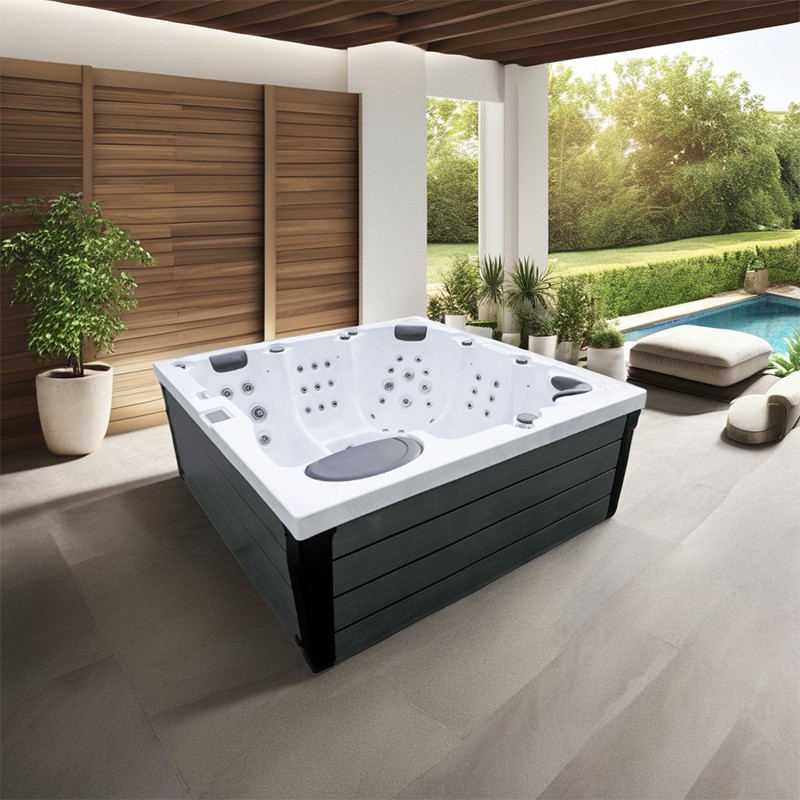
How do you correctly add calcium chloride to a jacuzzi hot tub outdoor?
Proper use of calcium chloride requires following a "test—calculate—add—retest" process.
First, measure the current calcium hardness. Users can employ test strips, liquid reagents, or digital water quality testers. Most water testing devices on the market can measure parameters such as pH, total alkalinity, and calcium hardness.
Next, calculate the required amount of calcium chloride based on the current readings.
Example:
For a jacuzzi hot tub outdoor with a capacity of 1,200 liters, the current calcium hardness is 80 ppm, and the goal is to raise it to 180 ppm.
Required increase:
180 ppm - 80 ppm = 100 ppm
Then, calculate the specific amount to add based on the concentration and instructions of the calcium chloride product you purchased.
Calcium chloride products vary in purity and brand, resulting in different levels of effectiveness; therefore, you cannot simply add a fixed weight.
Recommendations during the addition process:
1.Turn on the circulation system to keep the water flowing;
2.Add the calcium chloride in batches;
3.Avoid dumping a large amount in all at once;
4.Retest after the water has fully circulated.
Calcium chloride releases heat as it dissolves; adding a large amount in one spot can cause a localized temperature spike and affect the uniformity of the water quality.
Common mistakes to avoid when using calcium chloride
First, treating calcium chloride as a sanitizer.
This is the most common mistake. Calcium chloride does not kill bacteria and cannot replace chlorine, bromine, or ozone systems.
Second, adding it without testing first.
Outdoor hottubs and water sources vary; adding it blindly can lead to excessively high calcium hardness.
Third, focusing only on water quality while neglecting equipment maintenance.
Water quality management and equipment maintenance should go hand in hand. For example, even if calcium hardness is within the normal range, you still need to regularly clean the filter, change the circulating water, and inspect the heating system.

Frequently Asked Questions about Calcium Chloride in Outdoor Hot Tubs
Q1: What is the main function of calcium chloride in outdoor hottubs?
A: Calcium chloride is primarily used to increase calcium hardness, improve the mineral balance of the water, and reduce the risk of equipment corrosion caused by low-hardness water.
Q2: Is it mandatory to add calcium chloride to a hot water tub outdoor?
A: Not necessarily. If the calcium hardness of your local water source is already within a reasonable range, no additional calcium chloride is needed. Decisions on whether to use it should be based on test results.
Q3: Can calcium chloride replace sanitizers in a jacuzzi hot tub outdoor?
A: No. Calcium chloride does not have sanitizing properties; its only function is to adjust water hardness.
Q4: What is the ideal calcium hardness level for a jacuzzi hot tub outdoor?
A: For most residential hot water tub outdoors, it is recommended to maintain levels between approximately 150 and 250 ppm; however, the specific value should be adjusted based on equipment specifications, water source conditions, and the usage environment.
Q5: What should be done if too much calcium chloride is added to a hot water tub outdoor?
A: If the calcium hardness is too high, it generally needs to be lowered—such as by partially replacing the water or adjusting the water source—rather than by adding more chemicals.