


What does an acrylic spa hot tub feel like?
2026-03-07 15:30When choosing a spa hot tub, besides size, material, and durability, another crucial but often overlooked factor is its feel. A spa hot tub is a product that comes into direct contact with the body, and tactile comfort directly impacts the quality of the bathing experience.
Therefore, understanding the differences in feel between different materials is essential for choosing the right tub.
Acrylic spa hot tubs are widely popular due to their smooth, gentle, and delicate feel. But what exactly are the characteristics of their feel? Why does acrylic feel softer? How does it differ from other materials such as fiberglass, enamel steel, and resin tubs? These are questions that prospective bathtub buyers are eager to know.
This article will provide an in-depth analysis of the feel of acrylic hot tubs from a professional material analysis, structural characteristics, and ergonomic tactile perspective, helping you fully understand its tactile experience and why it has become a mainstream choice in the spa industry.
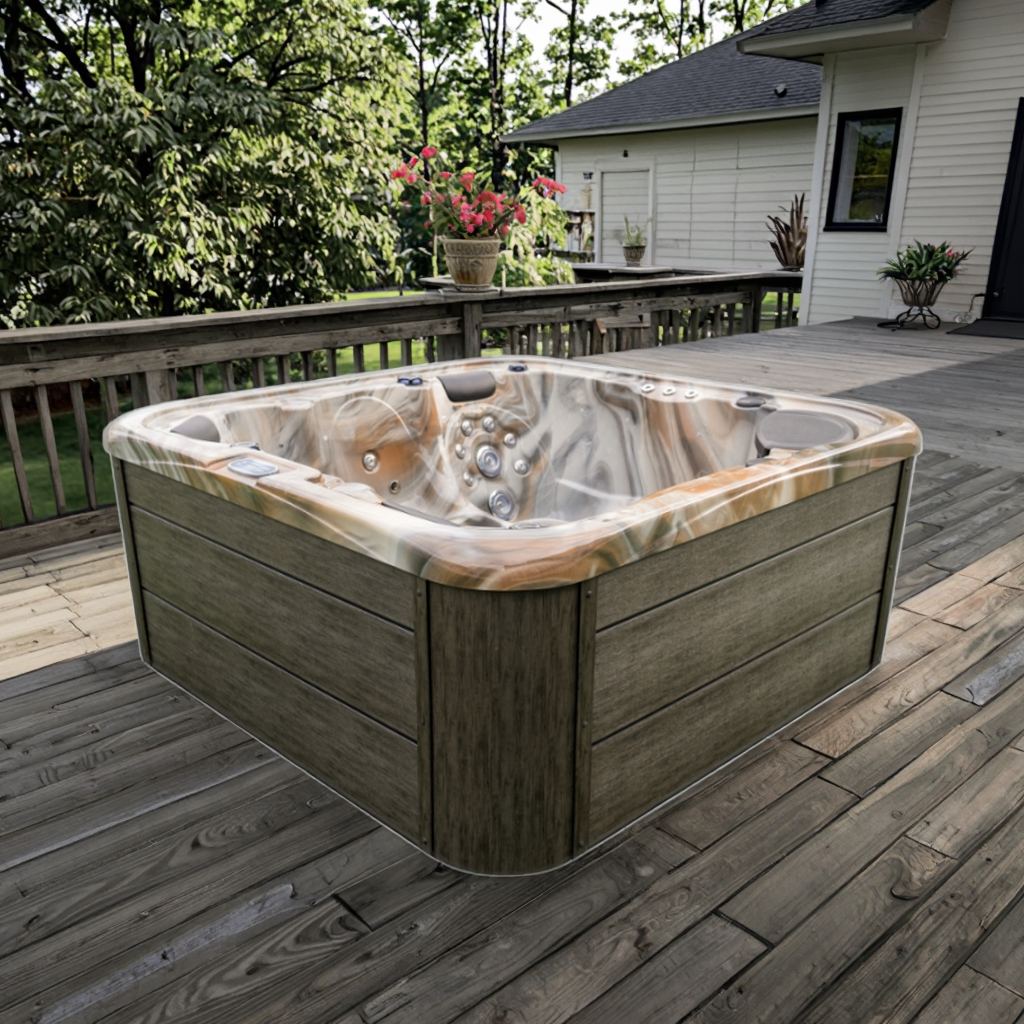
What are the main characteristics of the feel of an acrylic hot tub?
The most prominent tactile characteristics of acrylic spa hot tubs include:
1. Smooth and delicate surface
Acrylic is a high-molecular-weight plastic material with a naturally smooth surface structure. High-quality sanitary-grade acrylic sheets, after polishing, have a very high degree of surface flatness, without any roughness or graininess.
The tactile experience is characterized by:
• Smooth finger movement
• Uniform and delicate surface
• No cold or prickly feeling
• Comfortable and soft
This is the most intuitive feeling for most users.
2. Warm and smooth touch, not cold
Unlike steel or ceramic materials, acrylic itself has slight heat retention properties, so the surface temperature is not very cold before hot water is added.
This means:
• No skin irritation when touched in winter
• A soft feeling when lying in the tub
• Comfortable skin contact even during long baths
This warm and smooth feel is one of the important reasons why acrylic spa hot tubs are so appealing.
3. Soft and Skin-Friendly Surface
Acrylic is inherently flexible, resulting in a soft, non-rigid, hard, and cold surface. It feels "just the right firmness" and adheres well to the skin.
4. Not Slippery or Cold
Good friction ensures safety during use. It prevents slipperiness and instability during bathing, giving users greater peace of mind.
5. Stable Feel, Doesn't Become Rough Over Time
High-quality acrylic has a very stable molecular structure. Unlike resin, fiberglass, or enamel, its surface won't become rough or develop pits over time.
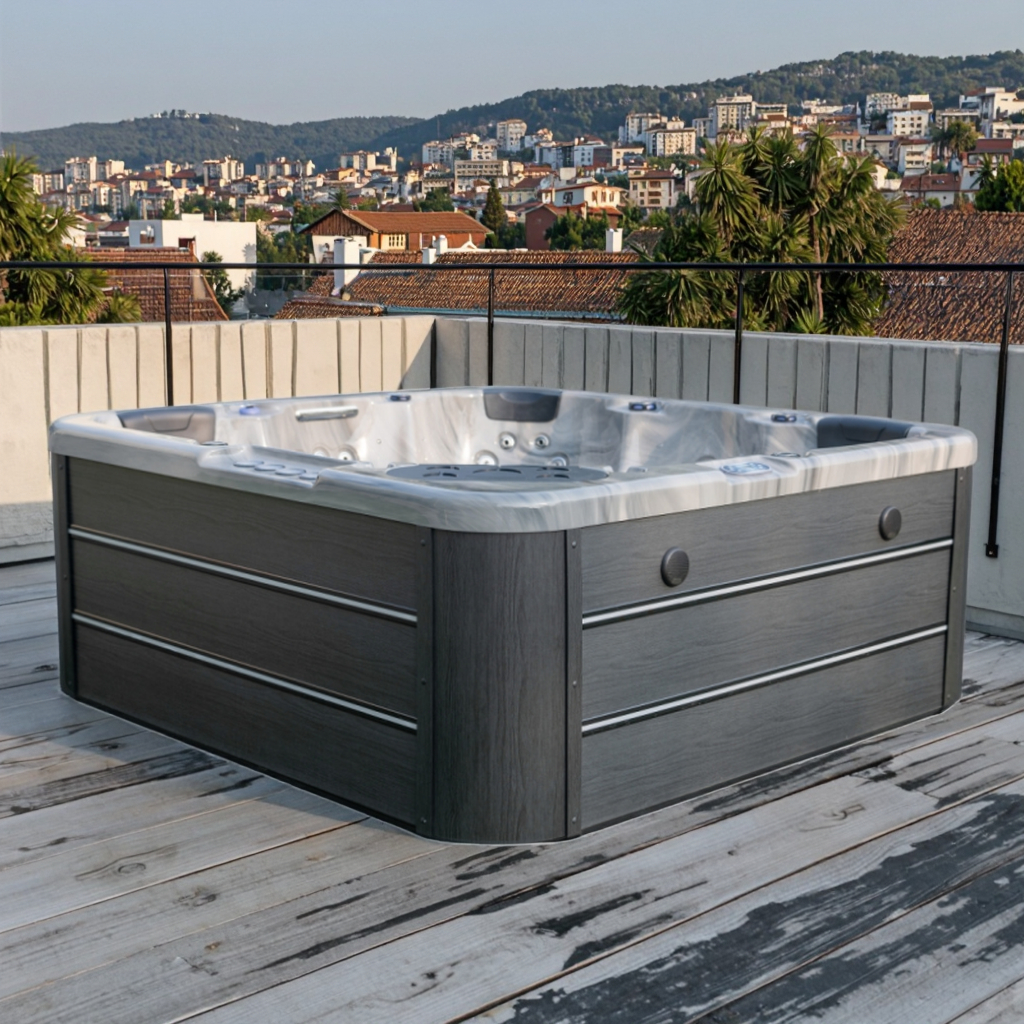
Why is the feel of an acrylic hot tub more comfortable than other materials?
This is a crucial question. The reasons behind the feel are closely related to material properties, manufacturing processes, and surface structure.
1. Highly Dense Acrylic Surface Structure
The acrylic surface is composed of highly dense PMMA (polymethyl methacrylate), with a uniform molecular structure, resulting in a naturally smooth surface.
Acrylic's material properties result in:
• Uniform touch
• No grainy texture
• No burr-like feel
• A more skin-friendly feel
Fiberglass materials, due to the need for gel-coating, lose this density over long-term use.
2. Acrylic maintains surface gloss and temperature stability
Acrylic has excellent thermal stability. The first feeling upon touching it is not the icy coldness of cold metal or cold ceramic, but rather:
• Gentle
• Comfortable
• Easy to adhere to the skin
This temperature advantage is particularly noticeable in spa hot tub environments.
3. Hygienic acrylic has antibacterial properties, resulting in a healthier feel
Its non-porous surface makes it:
• Does not attract dirt
• Does not breed bacteria
• Does not produce mold
This not only improves hygiene but also keeps the touch clean and fresh.
4. Acrylic sheets have a certain degree of flexibility and a softer touch
Compared to the hard feel of metal or ceramic, acrylic is slightly softer, making it more comfortable to touch.
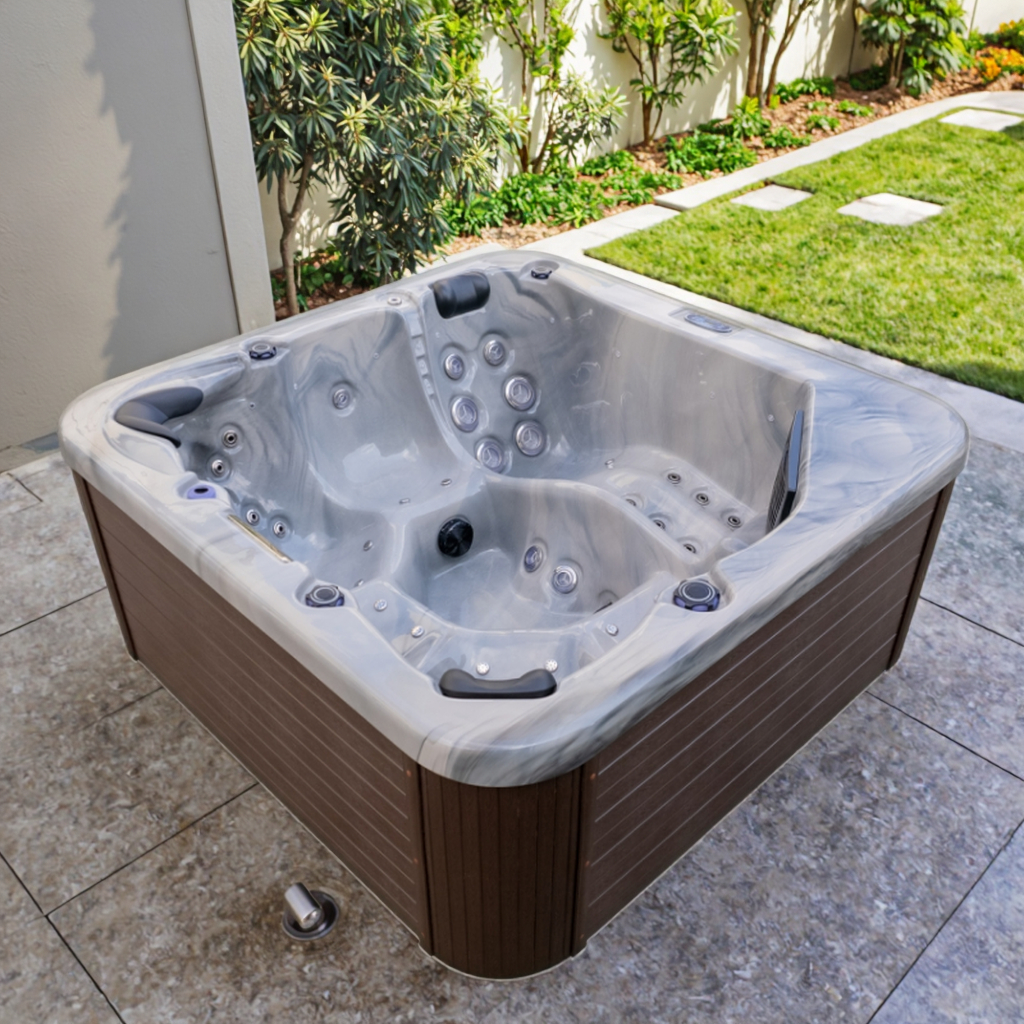
Does the feel of an acrylic hot tub change with temperature and humidity?
The answer is: No, it doesn't change significantly.
This is one of acrylic's greatest advantages. Whether you are in:
• Low temperatures in winter
• High humidity in a bathroom
• Hot water impact
• Rapid cooling of cold water
The feel of the acrylic surface remains stable.
1. A gentle feel in both hot and cold environments
With temperature changes, acrylic will not experience:
• Shock-absorbing cold touch
• Burning sensation
• Surface hardening and brittleness
Making the bathing experience more comfortable.
2. High humidity does not affect the feel
Even after prolonged immersion in a humid environment, the acrylic surface remains smooth and will not develop watermarks or roughness.
3. Acrylic doesn't become rough over time
Aging is unavoidable for some traditional materials, but acrylic surfaces can maintain a smooth, new look for many years.
Is an acrylic hot tub better to the touch than a fiberglass bathtub?
The answer is: significantly better.
Reasons include:
1. Acrylic surface is smoother
Fiberglass bathtubs rely on a gel coat as a surface layer, which is prone to:
• becoming rough
• developing fuzz
• fading and losing gloss. Acrylic, on the other hand, maintains a stable feel.
2. Acrylic doesn't feel rough or grainy
The fiberglass surface layer may peel off over time, making the feel inconsistent.
3. Acrylic is gentler and doesn't cause cold touch irritation
Fiberglass bathtubs have a cooler feel, while acrylic spa hot tubs are noticeably warmer to the touch.
How does the feel of an acrylic hot tub compare to an enamel-coated steel bathtub?
Characteristics of the feel of an enamel steel bathtub:
• Extremely cold
• High surface hardness
• A "hard-on-hard" feel upon contact
Advantages of the feel of an acrylic spa hot tub:
• Gentle and soft
• Non-metallic feel, more natural
• More suitable for long soaks
• Does not experience drastic temperature changes with water temperature
Therefore, acrylic is significantly superior in terms of human comfort.
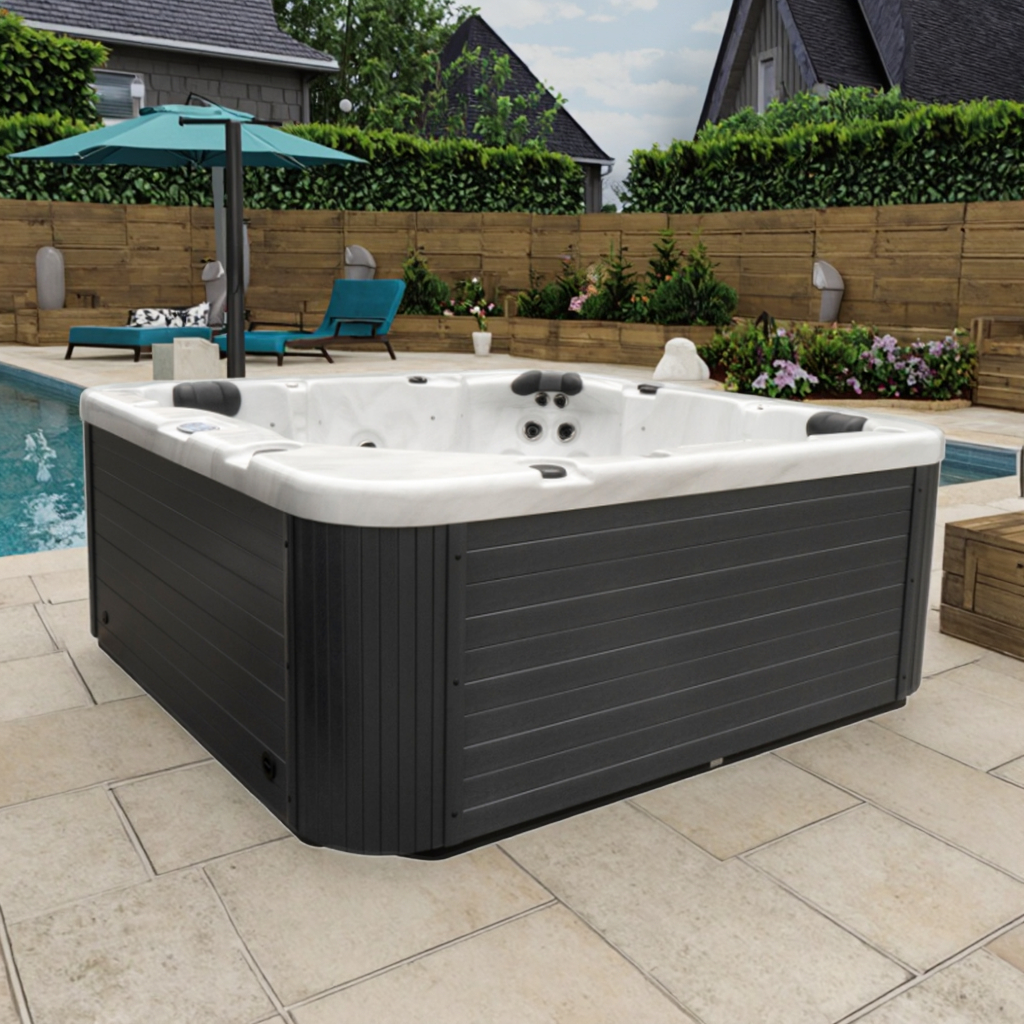
Is the soft feel of an acrylic hot tub due to its material thickness?
While thickness has some influence, the main reason lies in the molecular structure of the material itself and the surface treatment.
Main factors affecting the feel:
1. The gloss and smoothness of the acrylic surface
2. The warm and smooth characteristics of PMMA material
3. The material's inherent micro-elasticity
4. High-temperature stability
Thickness increases overall structural strength, but the feel comes more from the chemical properties of the material.
Is the surface feel of an acrylic hot tub easy to maintain?
The answer is: Very easy to maintain.
The reasons include:
1. Non-porous surface, non-absorbent
The surface does not absorb grease, soap, or limescale, thus the feel does not easily deteriorate.
2. Easy to clean, no abrasive cleaners required
Gentle cleaning is sufficient to maintain a smooth feel.
3. No roughness due to aging
Unlike resin or fiberglass gel-coat, it does not become rough.
4. High scratch resistance
Minor scratches will not significantly affect the feel.
What does an acrylic hot tub feel like?
The feel of an acrylic spa hot tub:
• Smooth and delicate
• Warm and soft
• Comfortable against the skin
• Not cold
• High stability
• Does not become rough over time
• Suitable for long baths
Compared to fiberglass, enamel steel, and resin, acrylic spa hot tubs outperform others in terms of feel. Not only is it soft to the touch, but it also remains stable under temperature fluctuations and prolonged use, making it one of the most recognized comfortable materials in the spa industry.