


What causes the pH level to rise in outdoor spa hot tub water?
2026-08-10 15:30As outdoor lifestyles and family health consumption concepts mature, outdoor spa hot tubs as a facility are steadily entering more houses, courtyard spaces, hotel resorts, high-end homestays, and commercial spa projects.
Outdoor whirlpool hot tubs have more than just massage, spa, and relaxation features compared to a regular bath. They are symbols of the change to the lifestyle that is more convenient and healthy. However, many people and operators in fact, after using them, run into one very commonly asked question: maintaining the water quality of the outdoor spa hot tub over a long time period seems very difficult with especially pH, a common problem, always going up.
Few users of outdoor whirlpool hot tubs, in fact, observe that pH is adjusted initially to be between 7.2 and 7.6 after the new water change and in a few days’ span, the test results gradually go up to 7.8, 8.0, or even higher levels.
To bring down the pH level, one can only keep adding a pH-lowering agent that does not, however, really address the problem at all since after an interval, it will be necessary to repeat the adjustment. This "adjustment-rise-adjustment" cycle not only affects maintenance expenditure, but it is also not pleasing to a user.
Raising of pH is just one of the factors that have to do with chemical change and is actually the result of a combination of elements, including water quality itself, water treatment, temperature environment, human usage habits, equipment operation, and water quality factors for outdoor hot tub manufacturers, distributors, and end-users that should understand this complexity to avoid short-term fixes.
In reality, outdoor spa hot tubs have quite a lot fewer differences compared to standard swimming pools. Outdoor spa hot tubs generally consist of smaller water volumes, say about 800-2000 liters, and their temperature is most often kept between 37℃ and 40℃. Moreover, they are installed with a lot of massage nozzles, water pumps, etc., air systems. These are a few factors that cause the hot tub to have a quicker water recycling as well. The higher air exchange and the increased chemical activity, on top of that, result in the fact that pH varies much more noticeably from the starting value.
Recognizing what causes pH of the water in outdoor spa hot tubs to go up scientifically and figuring out good maintenance routines is essential not only for preserving equipment's life but also for reducing costs and making your users happy.
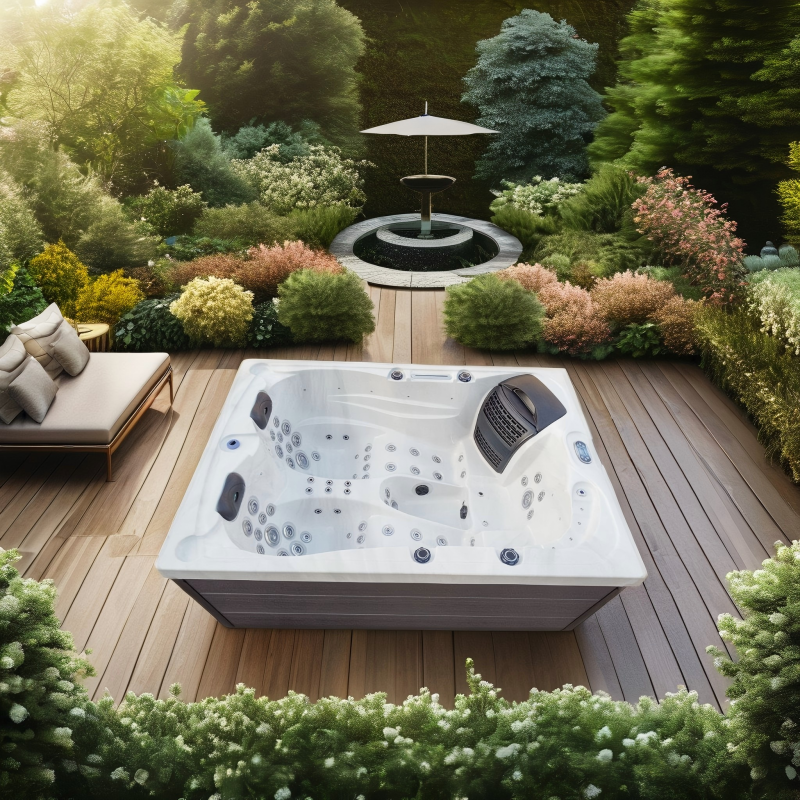
Why do you need pH control in an outdoor spa hot tub?
pH is a water quality parameter that determines whether water is acid or a base, which is measured by using a pH scale that goes from 0 to 14. Water that measures a pH =7 is considered to be neutral while less than 7 is acid, greater than 7 is basic in nature.
An outdoor spa hot tub, the ideal pH range for the majority of the time, a professional suggestion, is 7.2 - 7.8.
The water quality in this range would be comfortable as well as suitable for human skin, disinfectants to work efficiently and to protect the equipment simultaneously.
A consistently low pH of an outdoor spa hot tub, for example below, 7.0 results in more acidic water that gets corroded easily causing damage to the metal parts, pump assemblies and also the heating system The water could additionally irritate the skin and eyes as a result of its acidity if it was used for bathing purposes.
In contrast when the pH is above 7.8 at all times, a variety of other problems may occur. One of them is the effectiveness of some disinfectants goes down and sterilization gets less effective and as a result users must use more disinfectant. Besides that, water that is too alkaline can precipitate scale formation, more specifically at higher temperature it's the time when calcium deposition is accelerated a lot and the scale adheres to the heater, pipes, and water massaging nozzles thus, affecting the outdoor whirlpool hot tub operations normal.
Overall, it is clear that keeping pH stable is not only about clear water. It is about the performance of equipment and the maintenance of its lifespan for an outdoor spa hot tub system.
The Main Reasons for Increased pH in Outdoor Hot Bath Water
1. High Total Alkalinity Leading to Continuously Rising pH
In outdoor hot bath water quality management, total alkalinity (TA) is one of the key factors affecting pH stability. Many users only focus on pH test results, neglecting the important role of TA.
Total alkalinity can be understood as the water's ability to resist pH changes. When TA is within a reasonable range, the water quality is relatively stable; however, if TA is too high, the content of carbonates and bicarbonates in the water increases, easily leading to a continuous upward change in pH.
Generally, it is recommended that the TA for outdoor hot baths be maintained between 80-120 ppm. If TA exceeds 150 ppm, users will usually find:
• Difficulty in lowering pH;
• Easy for pH to rise again after adjustment;
• Accelerated scale formation;
• Increased disinfectant consumption.
One of the main reasons for excessively high TA is the water source. The mineral content of tap water varies greatly from region to region, and some hard water areas contain a high proportion of carbonates and calcium and magnesium ions. If this water is added directly to an outdoor spa hot tub without prior testing, the initial water quality may already be highly alkaline.
Furthermore, long-term replenishment can also lead to a cumulative increase in total alkalinity. Because outdoor whirlpool hot tubs have limited water capacity, users frequently need to replenish water lost through evaporation. If the replenished water itself is highly alkaline, after multiple circulations, the overall water quality will gradually become unbalanced.
Therefore, when a recurring increase in pH is observed, it's not enough to simply lower the pH; total alkalinity should also be tested. If the total alkalinity (TA) is not properly controlled, simply lowering the pH often only provides a short-term effect.
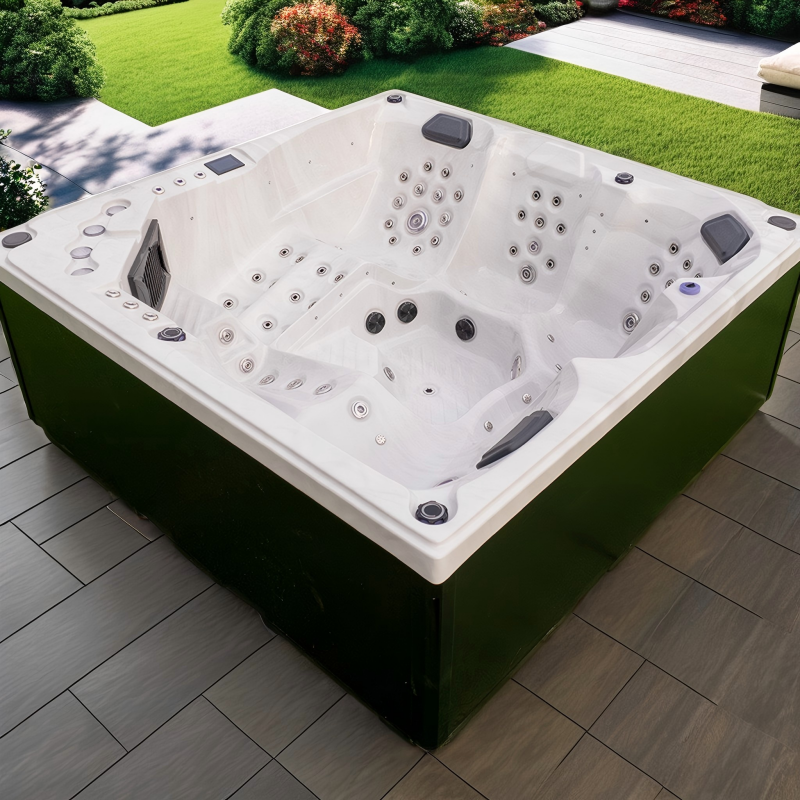
Why do high temperatures and massage functions cause an increase in the pH of an outdoor hot tub?
Frequently, the highest temperature setting of an outdoor spa hot tub is one of its most distinctive features. Compared to regular swimming pools that usually keep their temps lower, an outdoor spa hot tub needs water at about 35℃-40℃ to provide comfortable massaging effects.
Prolonged exposure to elevated temperatures results in more gas exchange between the water and the air. The main reason a decrease in pH is seen during or after such conditions is due to the release of carbon dioxide (CO₂).'
Persistent presence of water carbonation system leads to pH imbalance. Once the carbon dioxide is released, the water goes from being acidic to neutral which causes it to get less acidic and the pH level will increase.
The whirlpool hot tub with massage facility has even a greater influence on pH because they allow the water to mix with air more effectively. Most modern outdoor whirlpool hot tubs are fitted with multiple massage jets, water circulating pump, and the aeration system. The massage function when turned on, allows massive amount of air into the water, which increases the area of the surface where the air and water meet, leading to greater carbon dioxide removal.
Hence, it is quite common for users to notice that the pH of the water has jumped a lot the next day after a session with the massage function. This does not necessarily reflect issues with the equipment itself, merely a natural transformation caused by water and air exposure at high temperatures.
For that reason, water testing needs to be conducted on a more regular basis, especially after the tub has been used frequently. pH fluctuation can be minimized by controlling total alkalinity, proper scheduling of filtration time, and improving the water treatment system.
How does the condition of the water impact the pH of the outdoor hot tub?
A fact that many spa hot tub owners overlook is the importance of quality of water they add to the tub as it influences the level and nature of the maintenance they have to carry out later!
Water varies greatly in quality between different places. Some regions have only soft water that is low in minerals and so it's easier to control the water quality. Other water sources contain higher levels of calcium, magnesium, and carbonates which makes the water hard.
Hard water added into a spa hot tub is expected to produce a couple of problems:
First of all, total alkalinity of the water increases, which makes pH level more likely to keep going up.
Secondly, calcium hardness increases, thereby making scaling problems more frequently.
If a tub is kept running at heat for an extended time (over 72 hours) and has calcium hardness in the range between 300-400 ppm continuously, then chances are it will become very difficult to remove scaling even when a water softener is used.
The scale formation can happen in a lot of different places. The following places are particularly vulnerable to deposits:
• Surface of heating element.
• Internal parts of the circulating pump.
• Tubular pipes in circulation.
• Massage jet.
Therefore, to make life easier, professional outdoor hot tub manufacturers usually suggest testing water not only for pH but also for total alkalinity and calcium hardness at the moment you refill the tub water. In the case of a region having hard water, you can reduce the burden of the maintenance by carrying out filtration, water softening, or even the use of a specialized water treatment process.
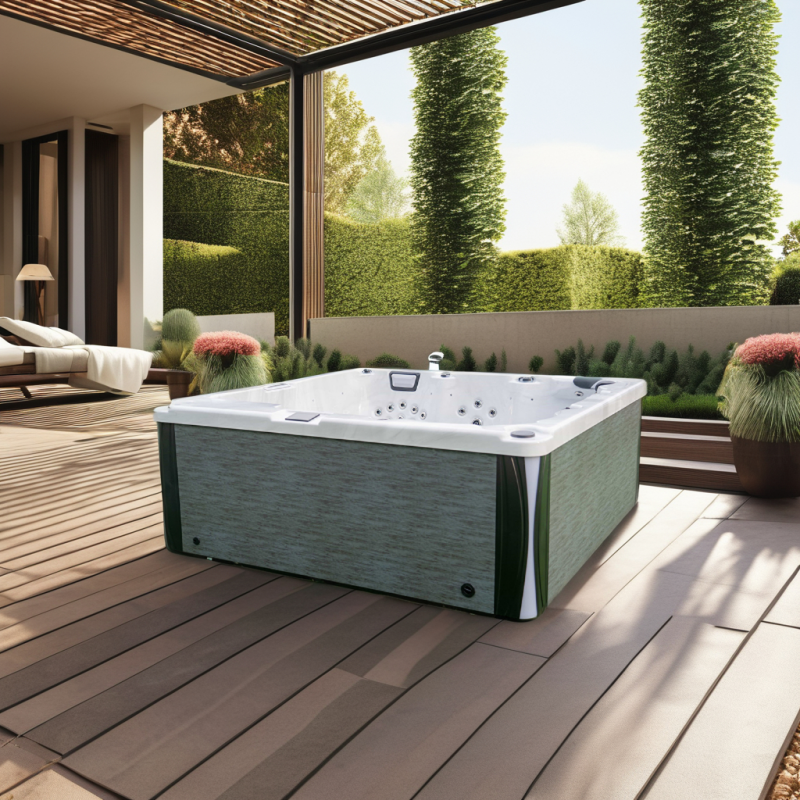
Why does human use cause pH changes in outdoor whirlpool hot tubs?
The core value of outdoor spa hot tubs is providing a comfortable spa experience, but human factors are also a significant contributor to water quality.
When a person enters an outdoor whirlpool hot tub, they introduce various organic substances, including sweat, skin oils, sunscreen, skincare products, and other residues. These substances not only increase the pollution load on the water but also alter the water's chemical balance.
This is especially noticeable when multiple people are using the tub. For example, in an outdoor spa hot tub designed for 4-6 people, if used continuously by multiple people in a short period, a large amount of organic matter will enter the water, leading to:
• Rapid depletion of disinfectants;
• Decreased water quality stability;
• Significant pH fluctuations.
Commercial outdoor spa hot tubs, such as those in hotels, resorts, and spas, require even stricter water quality management due to their higher usage frequency.
Methods to reduce the impact of human contaminants include:
• Simple body cleaning before use;
• Avoiding large amounts of skincare products entering the water;
• Increasing filtration time according to the number of users;
• Regularly changing a portion of the water.
Good usage habits can significantly reduce the difficulty of maintaining outdoor whirlpool hot tub water quality.
Do disinfectants and water treatment methods cause an increase in the pH of an outdoor hot tub?
Outdoor whirlpool hot tubs typically require disinfection systems to maintain water quality safety. Common methods include chlorination, bromine disinfection, ozone systems, and UV-assisted sterilization systems.
Different disinfection methods have different effects on pH. For example, some chlorine-based disinfectants may increase water alkalinity over long-term use. If users only focus on disinfection effectiveness and ignore changes in pH and total alkalinity, water quality imbalance may occur.
Furthermore, excessive disinfectant usage can also alter the aquatic chemistry.
Therefore, outdoor hot tub water treatment should not only focus on "sterilization" but should comprehensively manage:
• pH value;
• Total alkalinity;
• Disinfectant concentration;
• Water circulation time;
• Filtration efficiency.
A mature water quality maintenance system requires these parameters to be kept in dynamic balance.
Why and how to solve elevated pH in outdoor spa hot tubs?
Outdoor spa hot tubs can't get rid of excess acid by themselves as other chemical treatments would. So it's essential to figure out why pH gets out of the balance instead of relying on pH adjusting agents only.
First of all, you should know your water well.
• What is the pH level?
• What is the total alkalinity?
• What is the calcium hardness?
• What are the disinfectant levels?
You only know which steps to take when you figure out why pH changes are taking place.
Then there is the total alkalinity. pH levels are influenced by TA (total alkalinity). Therefore, the first step should be to fix the imbalance of total alkalinity rather than adding pH adjusters.
Thirdly, use your spa features wisely because the massage jets create a lot more aeration, which raises the level of the dissolved gases that affect pH. If you run a high intensity program over an extended time, you will probably get a much higher pH level.
Then, your system filters need to do their job properly for a long enough time so that all the dirt and debris get washed out. If this doesn't happen, the chemical load on the water gets heavier, and the water has a harder time staying clean and clear.
You can't get a spa without doing water refresh regularly. It's a natural process of the water cycle. So after 3-4 months, depending on the use, you should replace the water completely. The same goes for commercial spas with frequent user traffic; the cleaning regimen is probably going to be a bit more demanding compared to the home spas.
What's the role of an outdoor hot tub manufacturer in helping consumers tackle water quality issues?
Certain outdoor hot tub manufacturers can guarantee their users a perfect solution, not only because of the whirlpool hot tub's style, the various types of massage or the sophisticated controls but mainly because of their ability to provide water maintenance support for long-term needs.
Major outdoor hot tub manufacturers focus on water quality by providing the following:
One of them is the water recirculation system enhancement. This improvement is about the design of the piping in such a way that filtration is optimized and dead spots are prevented.
Another thing is that the filtration system installed is of good quality and capable. A good level filter reduces the level of organic impurities and stabilises the water quality.
Also a third of them make available the option of an ozone or Ultraviolet assisted system which not only reduces the use of strong disinfecting agents that are harmful to our environment but also helps the water stay clear at a low level of chemical activity.
And finally, these manufacturers also have available maintenance manuals and guides. The contents of such guides, for instance, can tell you about the interconnections and interdependencies of pH, TA and disinfection instead of just telling you the dosage of product to add.
Also a point for export manufacturers: they need a good comprehensive water care guidance strategy to gain competitive edge.
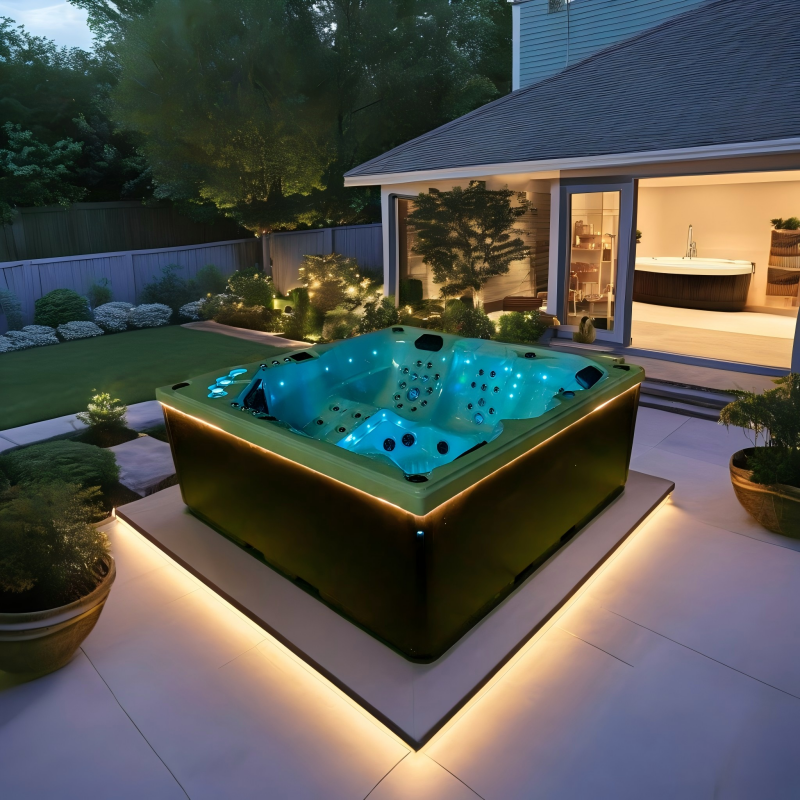
FAQ: Common Questions about pH Increase in Outdoor Hot Tubs
Q1: What is the normal pH range for outdoor spa hot tubs?
It is generally recommended that the pH of an outdoor spa hot tub be maintained between 7.2 and 7.8. This range balances human comfort, disinfection effectiveness, and equipment protection.
Q2: Why does the pH of my outdoor spa hot tub rise again after a few days after I lowered it?
The most common reason is excessively high total alkalinity. If the pH level is not adjusted and only lowered, the water buffering system will still cause the pH to rise again.
Q3: Why does the pH level tend to rise when the massage function of an outdoor hot tub is turned on?
The massage nozzles and air system increase the contact between water and air, accelerating the release of carbon dioxide, thus causing the pH level to rise naturally.
Q4: How often should the pH of an outdoor spa hot tub be tested?
For home users, it is recommended to test 2-3 times per week. If the usage frequency is high, it is recommended to increase the testing frequency. Commercial applications such as hotels and spas may require daily testing.
Q5: Will a persistently high pH level damage an outdoor spa hot tub?
Yes. A consistently high pH level can easily cause scale buildup, affecting the performance of the heater, water pump, and massage nozzles, while also reducing disinfection effectiveness and increasing maintenance costs.