


The Best Materials for Outdoor Hot Tub Shells and Exterior Cabinetry
2026-11-12 15:30With the growing demand for backyard leisure, home spas, and outdoor wellness, outdoor hot tubs have become essential features in residential gardens, hotels, vacation villas, and commercial spa facilities. However, when purchasing an outdoor spa hot tub, consumers and buyers often focus primarily on capacity, the number of jets, heating systems, and aesthetic design—frequently overlooking two critical components that determine the product's lifespan: the material of the shell and the material of the exterior cabinetry.
Outdoor whirlpool spa hot tubs are constantly exposed to challenging conditions, including UV radiation, rainfall, temperature fluctuations, high humidity, and immersion in hot water. Choosing the wrong materials can lead to issues such as shell cracking, surface fading, structural deformation, decay of the cabinetry, or a decline in thermal insulation performance—all of which increase long-term maintenance costs.
So, which materials are best for outdoor spa hot tubs? What are the respective advantages of acrylic, fiberglass, and polyethylene? And how should one choose between natural wood, wood-plastic composites (WPC), PVC, and aluminum alloy?
This article examines material performance, practical applications, cost considerations, and maintenance requirements to help manufacturers, distributors, and consumers identify the most suitable solutions.
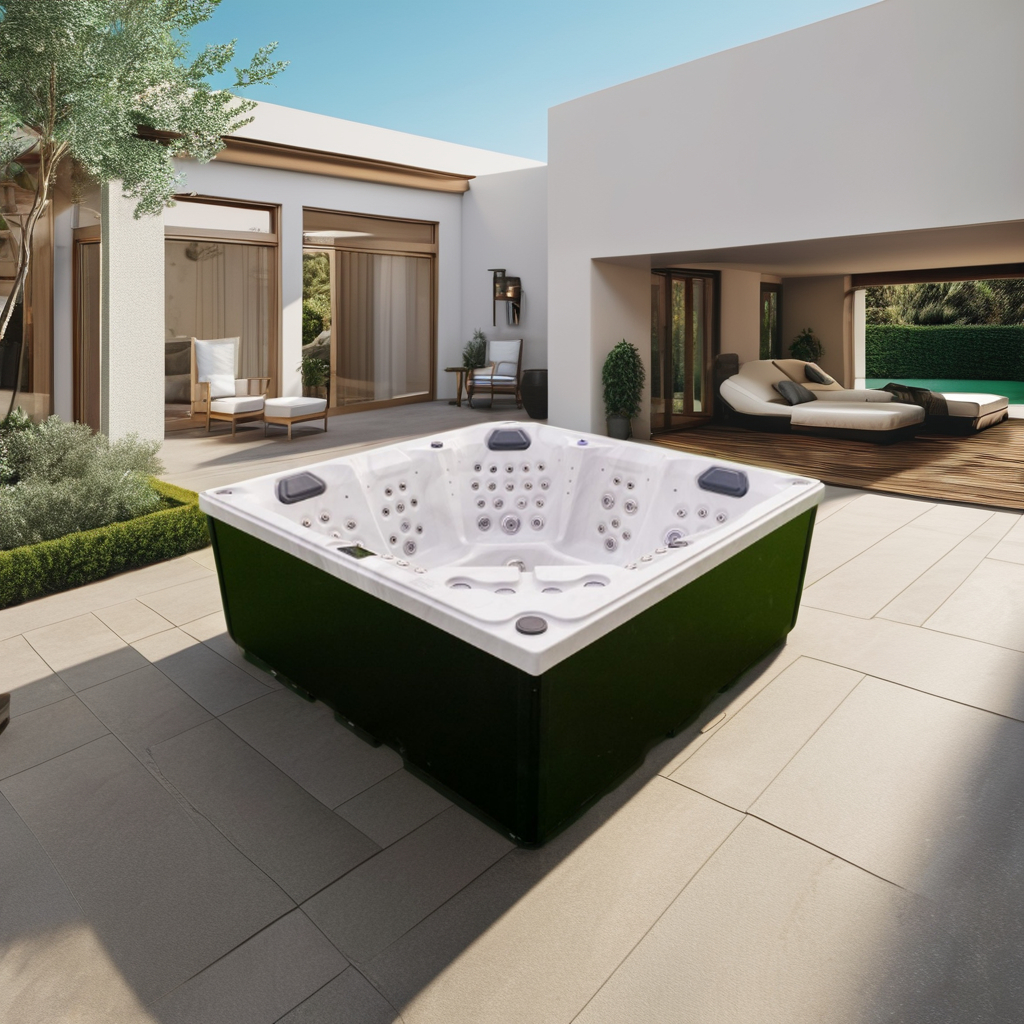
Outdoor Hot Tub Shells: How to Choose Between Three Mainstream Materials?
The shell is the core component of an outdoor spa hot tub; it must withstand the weight of the water, the load of the users, continuous heating, and the effects of water-treatment chemicals. Therefore, material selection must go beyond aesthetics to account for structural strength, heat resistance, weather resistance, and long-term stability.
1. Acrylic: The Preferred Material for Mid-to-High-End Outdoor Hot Tubs
Acrylic—or polymethyl methacrylate (PMMA)—is characterized by a smooth surface, a wide range of colors, high gloss, and ease of cleaning. Through thermoforming, it can be shaped into ergonomic seats, backrests, and complex curved surfaces, making it the material of choice for mid-to-high-end outdoor spa hot tubs.
Acrylic has a typical density of approximately 1.18–1.20 g/cm³ and offers excellent surface weather resistance and aesthetic appeal. However, long-term exposure to intense ultraviolet (UV) radiation, incompatible cleaning agents, or excessive chemicals can still lead to a loss of surface luster, discoloration, or localized damage.
It is important to note that the quality of the acrylic surface layer is not synonymous with the structural integrity of the entire tub. Many outdoor acrylic hot tubs on the market utilize a composite structure, combining an acrylic surface layer with a fiberglass-reinforced plastic (FRP) backing. The acrylic provides the aesthetic finish and the surface that comes into contact with water, while the FRP layer offers the necessary structural support.
Therefore, when purchasing, one should evaluate the quality of the acrylic sheet, the thickness distribution after molding, the craftsmanship of the reinforcement layer, and the design of the base support. For users who prioritize aesthetics, a comfortable experience, and good durability, a composite tub—featuring both acrylic and FRP—is generally the preferred choice.
2. Fiberglass-Reinforced Plastic (FRP): Balancing Strength and Structural Design
FRP is a composite material consisting of resin (commonly unsaturated polyester or vinyl ester resin) and glass fibers. It can serve as the primary structural material for a tub or as a reinforcement layer for an acrylic tub.
The advantage of FRP lies in its versatility; its structural properties can be tailored through fiber layup techniques, resin system selection, and localized reinforcement. This makes it well-suited for large-scale outdoor spa hot tubs, complex curved surfaces, and applications requiring high load-bearing capacity. A well-engineered FRP structure achieves an optimal balance between weight, rigidity, and load-bearing strength.
However, the performance of FRP is highly dependent on the manufacturing process. Issues such as uneven fiber layup, incomplete resin curing, the presence of air bubbles, or poor interlaminar bonding can lead to cracking, delamination, or localized leaks over time. Consequently, buyers should look beyond a smooth surface finish and instead examine the reinforcement in critical load-bearing areas, the quality control standards during manufacturing, and the results of comprehensive product testing.
For mid-to-high-end outdoor spa hot tubs, the combination of an acrylic surface layer and an FRP reinforcement layer offers a well-balanced solution that addresses both aesthetic appeal and structural performance.
3. Polyethylene (PE): An Economical and Practical Choice for Outdoor Hot Tubs
Polyethylene is a common thermoplastic that can be molded into one-piece outdoor whirlpool spa hot tub shells using processes such as rotational molding. Its primary advantages include excellent water resistance, high impact resistance, and durability against a wide range of chemical agents; it is also well-suited for mass production.
Compared to composite shells, the one-piece molded structure of polyethylene reduces the number of production steps, making it an ideal choice for products where practicality, production efficiency, and cost control are priorities. However, polyethylene generally has lower rigidity than many reinforced composite structures. When subjected to hot water and continuous loads over long periods, careful attention must be paid to potential deformation, material creep, and the design of the base support system.
Furthermore, the outdoor weather resistance of standard polyethylene depends on the specific resin grade and the UV-stabilizing additives used. Materials not adequately designed for outdoor use may experience color fading and performance degradation after prolonged exposure to sunlight.
Therefore, when selecting a polyethylene outdoor spa hot tub, it is important to verify the material’s long-term operating temperature limits, UV resistance, and structural stability when the tub is filled with water. You should also request relevant validation data from the manufacturer. While acrylic composite shells are generally superior for products that prioritize a high-end surface finish, polyethylene is a compelling option for those who value practicality and cost-effectiveness.
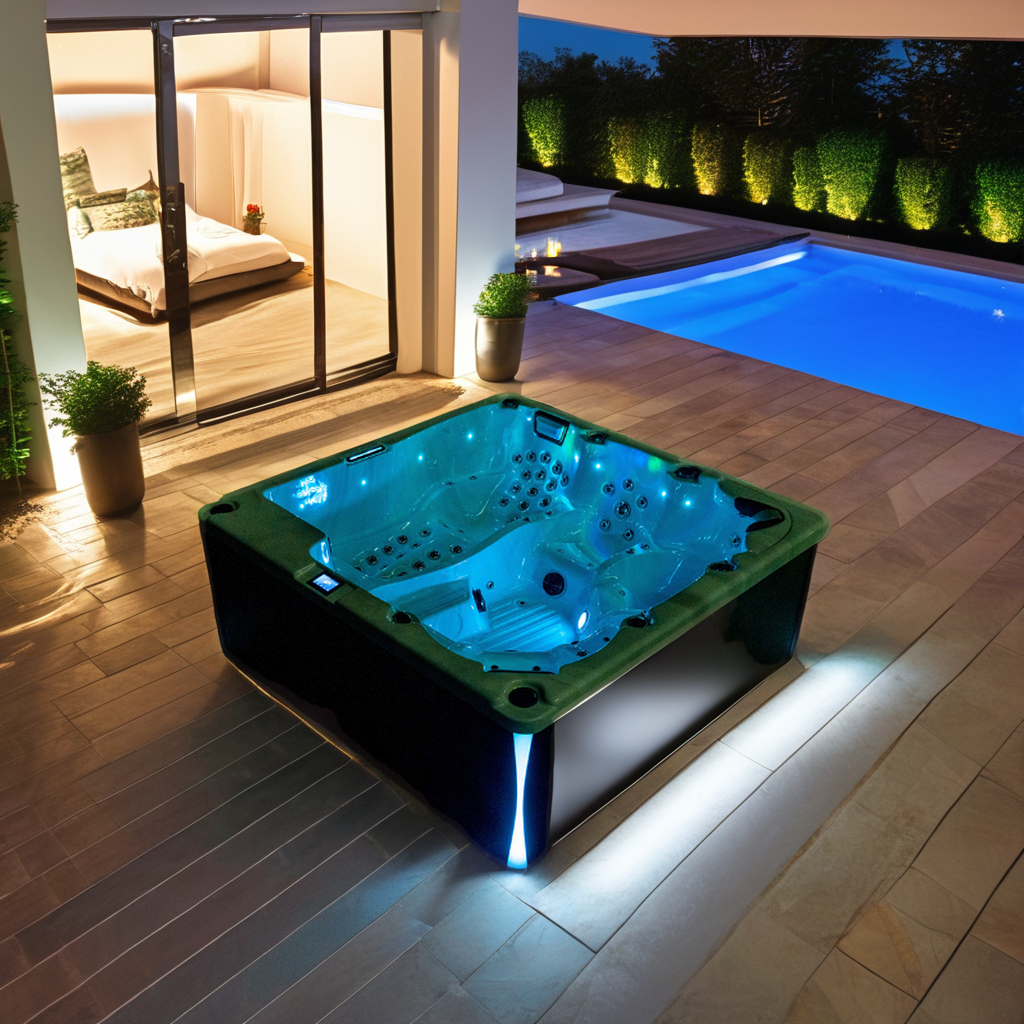
Outdoor Hot Tub Cabinetry: Pros and Cons of Four Common Materials
The exterior cabinetry serves to conceal the internal frame, circulation pumps, plumbing, and other equipment. It also defines the overall aesthetic of the spa hot tub, influences ease of maintenance, and determines how well the unit adapts to its outdoor environment. Cabinetry materials must offer adequate weather resistance, dimensional stability, and mechanical strength, while also being compatible with the internal structure and ventilation design.
1. Natural Wood: A Natural Aesthetic with High Maintenance Requirements
Natural wood offers a warm grain and organic texture, making it an excellent choice for patios, vacation homes, and high-end outdoor spa settings. When properly treated for weather resistance, wood can harmonize beautifully with wooden decking, gardens, and natural landscapes.
However, wood is hygroscopic and sensitive to fluctuations in humidity. If exposed to prolonged rain or inadequate ventilation, it is prone to warping, cracking, mold growth, and decay. Coating degradation, fastener corrosion, and the loosening of connections are common issues for outdoor wooden cabinet panels.
If natural wood is chosen, it is advisable to select wood species and protective coatings suitable for outdoor environments. Additionally, the design should incorporate appropriate gaps between panels, structures that keep the wood off the ground, and ventilation for the back of the panels. Users must also regularly inspect the coatings and connections, in accordance with local climate conditions and the product manufacturer’s instructions.
Consequently, natural wood is better suited for users who prioritize a natural aesthetic and are willing to perform regular maintenance, rather than for those seeking a solution with minimal maintenance requirements.
2. Wood-Plastic Composite (WPC): A Balanced Solution Offering a Wood-Like Appearance with Low Maintenance
Wood-Plastic Composites (WPC) are typically manufactured by blending wood flour or plant fibers with thermoplastic resins—common base materials include polyethylene (PE), polypropylene (PP), and PVC. WPC can mimic the texture of wood while mitigating some of the drawbacks of natural wood, such as susceptibility to decay, moisture absorption, and pest infestations.
For outdoor spa hot tubs, the primary advantages of WPC are its ease of maintenance and wide range of color options; it generally does not require the frequent refinishing or coating maintenance that natural wood demands. As such, it is an ideal choice for residential users, hotels, and resort projects that seek a balance between visual appeal and convenience.
However, WPC is not entirely maintenance-free. Its weather resistance varies depending on the specific formulation, wood flour content, type of resin, and the inclusion of UV-resistant additives. Some products may fade after prolonged exposure to sunlight or undergo thermal deformation in high-temperature environments.
During installation, thermal expansion must be taken into account; adequate expansion gaps should be left to prevent the panels from buckling, cracking, or causing connections to loosen. When purchasing, it is essential to verify that the product is specifically designed for long-term outdoor use, rather than making a decision based solely on its wood-grain appearance or price.
3. PVC Panels: Excellent Moisture Resistance, Ideal for Applications Requiring Efficient Maintenance
PVC cabinet panels offer superior moisture resistance and are not prone to the decay that affects natural wood, making them well-suited for outdoor whirlpool spa hot tubs located in high-humidity environments or areas that require frequent cleaning.
It should be noted, however, that the performance of PVC products can vary significantly. Solid PVC boards and foamed (cellular) PVC boards differ in terms of rigidity, impact resistance, weight, and screw-holding capacity. While some lightweight panels are easy to process, they may not be suitable for large-scale cabinet panels or access doors that require frequent removal.
Consequently, PVC cabinet panels require appropriate thickness, supporting structures, and secure fastening methods—while also accounting for potential thermal deformation when exposed to sunlight. For products where moisture resistance, ease of cleaning, and efficient daily maintenance are priorities, PVC panels designed for outdoor use serve as a practical solution.
4. Aluminum Alloy: A Choice for a Modern Aesthetic and Dimensional Stability
Aluminum alloy cabinet panels offer a strong modern aesthetic, relatively low weight, and excellent dimensional stability, making them well-suited for contemporary architectural styles, high-end garden settings, and commercial spa facilities.
However, aluminum alloy requires proper surface protection. In coastal or salt-rich environments, special attention must be paid to surface treatments, the material of fasteners, and the risk of corrosion caused by contact between dissimilar metals.
Furthermore, because metal has high thermal conductivity, it can create a "thermal bridge" if the panels form a continuous conductive path with the internal structure, leading to increased heat loss. Therefore, when using aluminum alloy panels, it is essential to incorporate thermal insulation and necessary thermal-break measures into the design.
For outdoor whirlpool spa hot tubs where a modern look, high dimensional stability, and low maintenance are desired, aluminum alloy is a valuable option—though factors such as corrosion resistance, thermal insulation, and procurement costs must be carefully weighed.
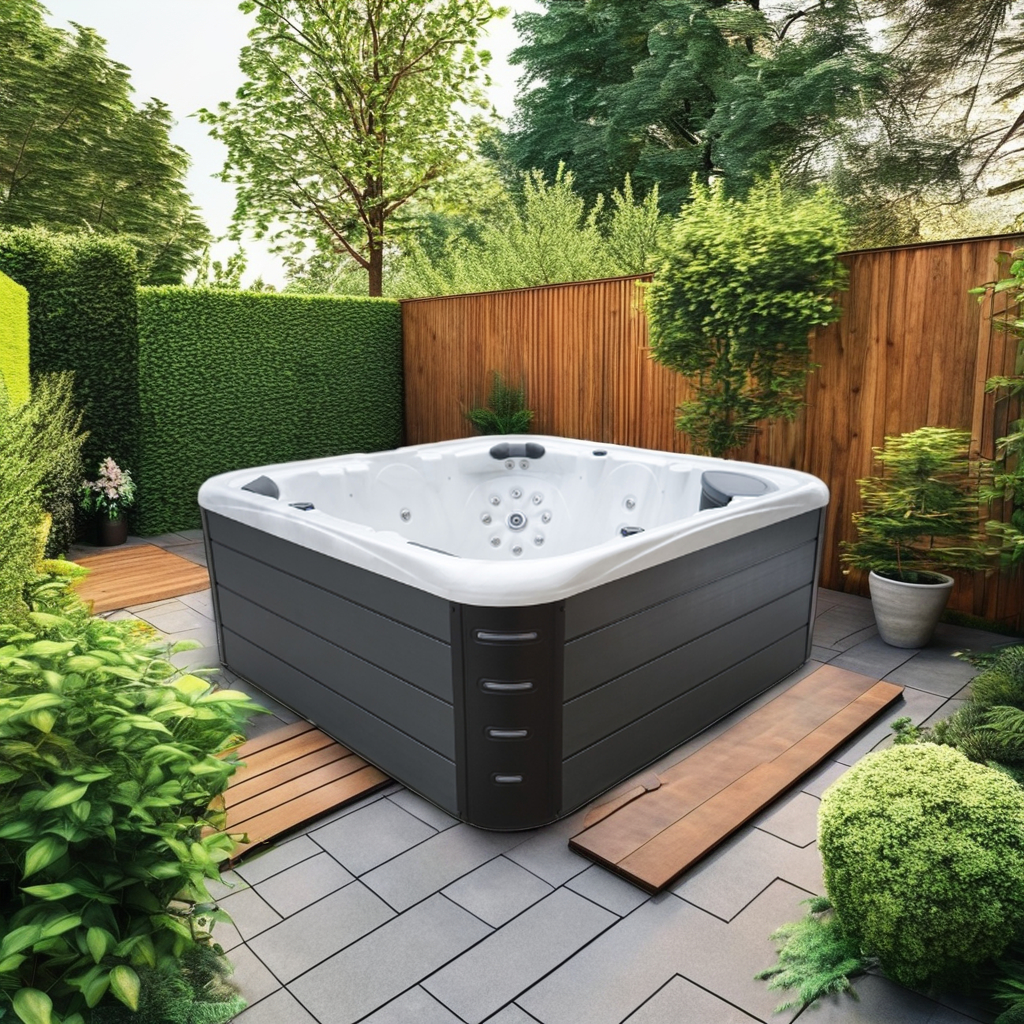
Comparing Common Materials for Outdoor Hot Tubs: How to Quickly Determine the Right Choice?
The table below summarizes the key characteristics of common materials used for spa hot tub shells and cabinet panels, allowing manufacturers, buyers, and consumers to make quick comparisons.
| Material | Application | Main Advantages | Main Limitations | Best Use Case |
| Acrylic | Tub shell surface | Smooth finish, attractive appearance, easy cleaning | Sensitive to unsuitable chemicals and manufacturing defects | Premium hot tubs |
| Fiberglass (FRP) | Shell reinforcement or shell structure | Adjustable strength, structural flexibility | Quality depends on resin and manufacturing process | Composite hot tubs |
| Polyethylene (PE) | Tub shell | Impact resistance, water resistance, cost efficiency | Requires careful control of stiffness and heat deformation | Value-oriented hot tubs |
| Natural Wood | External cabinet panels | Natural texture, premium appearance | Requires moisture protection and regular maintenance | Luxury outdoor settings |
| Wood-Plastic Composite (WPC) | External cabinet panels | Wood-like appearance, relatively low maintenance | May fade or deform depending on formulation | Residential and hospitality use |
| PVC | External cabinet panels | Moisture resistance, easy cleaning | Performance varies by panel type and quality | Low-maintenance applications |
| Aluminum | External cabinet panels | Modern appearance, dimensional stability | Requires corrosion protection and thermal design | Contemporary premium products |
In general, acrylic and fiberglass-reinforced composite shells are well-suited for mid-to-high-end outdoor whirlpool spa hot tubs, while polyethylene is ideal for products where practicality and cost-efficiency are the primary focus. Regarding cabinet panels, natural wood is perfect for projects that emphasize a natural texture; WPC (Wood-Plastic Composite) offers a balance between aesthetics and ease of maintenance; PVC is ideal for environments requiring high moisture resistance; and aluminum alloy is best suited for modern design styles.
It is important to note that no single material excels in every performance category. The most appropriate material selection must always be based on a comprehensive assessment of the product’s market positioning, local climate conditions, structural design, and maintenance requirements.
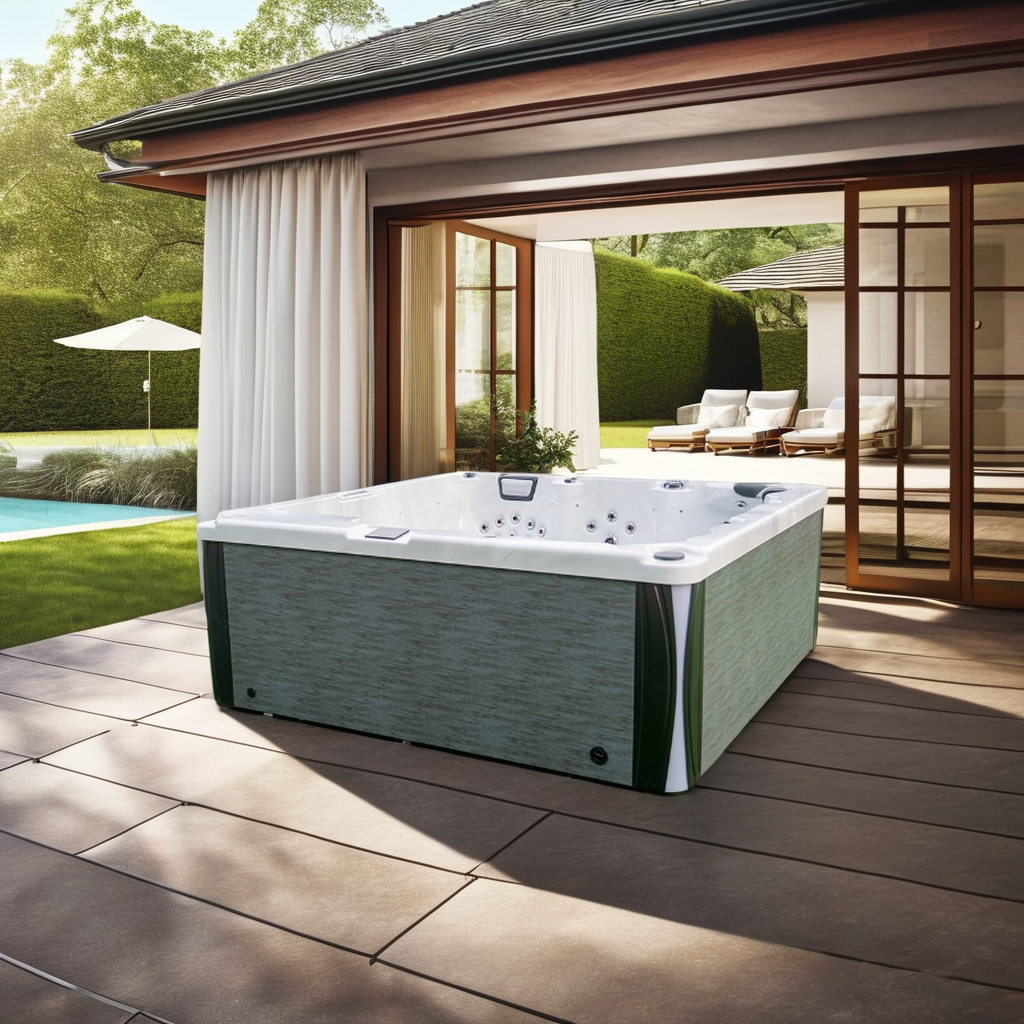
FAQ: Materials for Outdoor Hot Tubs
Q1: Which is better for an outdoor spa hot tub: acrylic or fiberglass?
Acrylic is ideal for achieving a smooth, refined surface finish, while fiberglass is typically used to reinforce the structure. A composite shell combining both materials offers a balance of aesthetic appeal and structural integrity, making it a common choice for mid-to-high-end outdoor whirlpool spa hot tubs.
Q2: Should I choose WPC (Wood-Plastic Composite) or natural wood for the hot tub’s exterior cabinet panels?
If you value natural texture and are willing to perform regular maintenance, natural wood is a good choice. If you prioritize moisture resistance, ease of maintenance, and a consistent appearance, WPC—specifically designed for outdoor weather resistance—is a better option.
Q3: Are PVC cabinet panels suitable for long-term outdoor use?
PVC panels designed for outdoor use can meet many requirements; however, it is essential to verify the specific type of PVC, its impact resistance, thermal deformation characteristics, and installation method. Not all PVC materials are suitable for environments with prolonged sun exposure.
Q4: Do the cabinet panel materials affect the energy consumption of an outdoor hot tub?
They do have some impact, but the overall energy consumption is primarily determined by the total insulation design, the seal of the cover, bottom insulation, plumbing layout, and the operating environment. Insulation performance should be evaluated through testing of the complete unit.
Q5: What are the most important material-related factors to consider when purchasing an outdoor hot tub?
For the shell, focus on surface quality, structural reinforcement, deformation under a full water load, and leakage testing. For the cabinet panels, prioritize outdoor weather resistance, thermal expansion properties, mounting stability, and maintenance requirements. Additionally, verify the scope of the warranty and the quality of after-sales support.