


Should you fill a spa hot tub with hot or cold water?
2026-01-21 15:35When using or filling it for the first time, "Should you fill a whirlpool spa hot tub with hot or cold water?" is a frequently asked yet often misunderstood professional question. Many people intuitively believe that since it's a "hot tub," directly filling it with hot water will reach the ideal temperature faster, saving time and energy.
However, from the perspectives of equipment safety, water quality stability, system lifespan, and user experience, this practice is not recommended and may even pose potential risks.
This article will systematically and thoroughly explain this core question: Why should a whirlpool spa hot tub be filled with cold water first, rather than directly with hot water?
It will also provide a comprehensive analysis from the perspectives of equipment structure, heating logic, water chemical balance, and safety risks, helping you use your whirlpool spa hot tub scientifically and correctly.
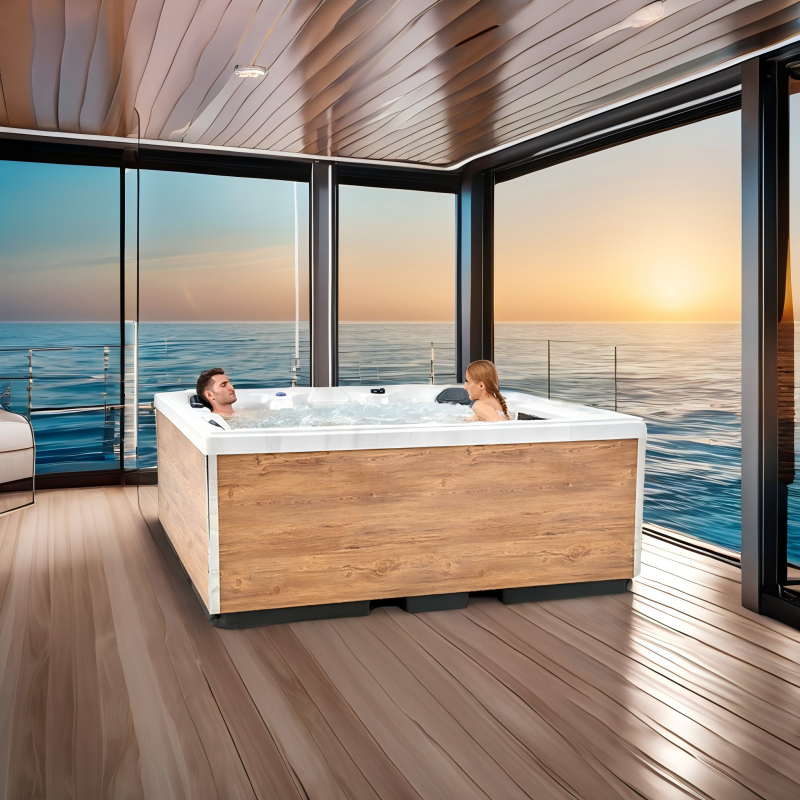
What is the heating principle of a whirlpool spa hot tub?
To answer the question "Should you fill it with hot or cold water?", you must first understand how a whirlpool spa hot tub heats water.
Most spa hot tubs are equipped with a dedicated electric heating system, designed as follows:
• Water flows continuously through a circulation pump
• Water flows through the heater
• A temperature sensor monitors the water temperature in real time
• The control system automatically adjusts according to the set value
This system is designed for ambient or cold water intake conditions. In other words, the heater and sensor in the whirlpool spa hot tub are inherently responsible for heating the cold water to the target temperature.
Why is it not recommended to directly fill a spa hot tub with hot water?
This is one of the most crucial questions in this article.
Directly filling a spa hot tub with hot water poses several risks:
1. Potential damage to the thermal sensor
The temperature sensor in a spa hot tub is usually located near the pipes or heater. If hot water is suddenly injected, it can easily cause:
• Sudden temperature fluctuations in the sensor
• Abnormal readings
• Misjudgments by the control system
Over time, this will affect the whirlpool spa hot tub's accurate temperature control.
2. Unfriendly to Heater and Seals
The internal components of a spa hot tub, including the heating element, pipe connections, and seals, are designed for gradual temperature increases. Directly filling with hot water increases thermal stress on the materials, accelerating aging.
3. Disrupts System Design Logic
A spa hot tub already has heating capabilities. Directly filling with hot water will not make the system more efficient; instead, it may cause the heater to frequently start and stop, affecting overall operational stability.
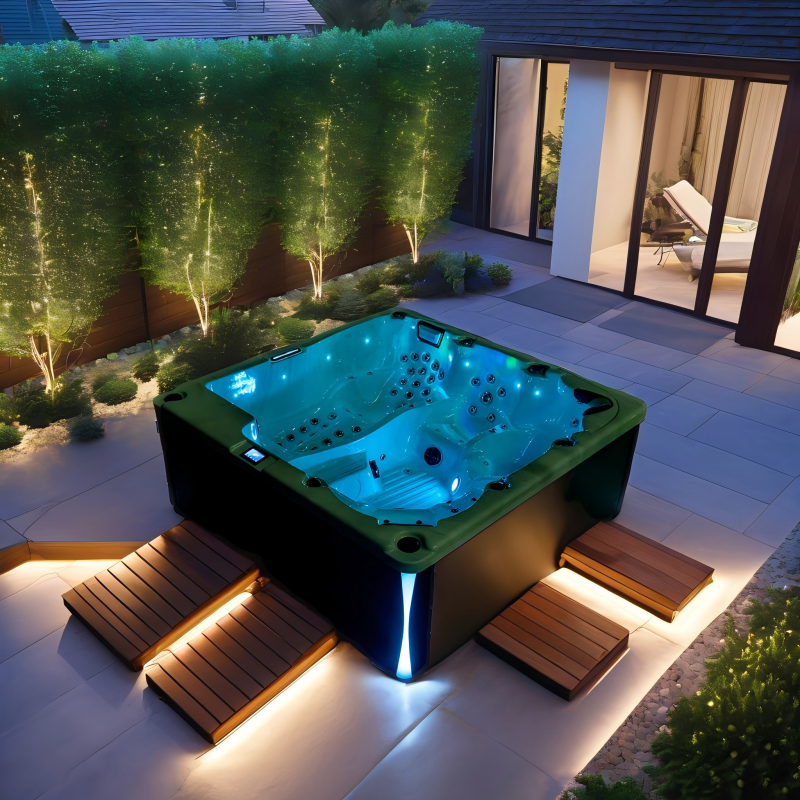
Is filling the whirlpool spa hot tub with cold water really safer?
The answer is: Yes, and this is the more common and safer practice in the industry.
Filling the spa hot tub with cold water has the following advantages:
• Controllable temperature rise
• All components adapt to temperature changes synchronously
• Heating system operates under design conditions
• More uniform water temperature distribution
This is why most spa hot tub manufacturers explicitly recommend: Fill with cold water first, then heat it up using the built-in heater.
Will filling with cold water make the spa hot tub heat up very slowly?
This is a real concern for many users.
Objectively speaking, filling the spa hot tub with cold water does require a certain heating time. However, it's important to clarify that:
• This is the equipment's "normal" heating process.
• The heating rate is within the design range.
• It won't place an extra burden on the system.
In comparison, the potential risks of directly filling with hot water far outweigh the slight time saved.
What is the ideal heating method for a spa hot tub?
From a professional perspective, the ideal process is:
1. Fill the whirlpool spa hot tub with cold or room temperature water.
2. Start the circulation system.
3. Set the target water temperature via the control panel.
4. Allow the heater to automatically and gradually increase the temperature.
This method is not only safe but also beneficial for:
• Uniform water temperature
• System stability
• Extending the whirlpool spa hot tub's lifespan.
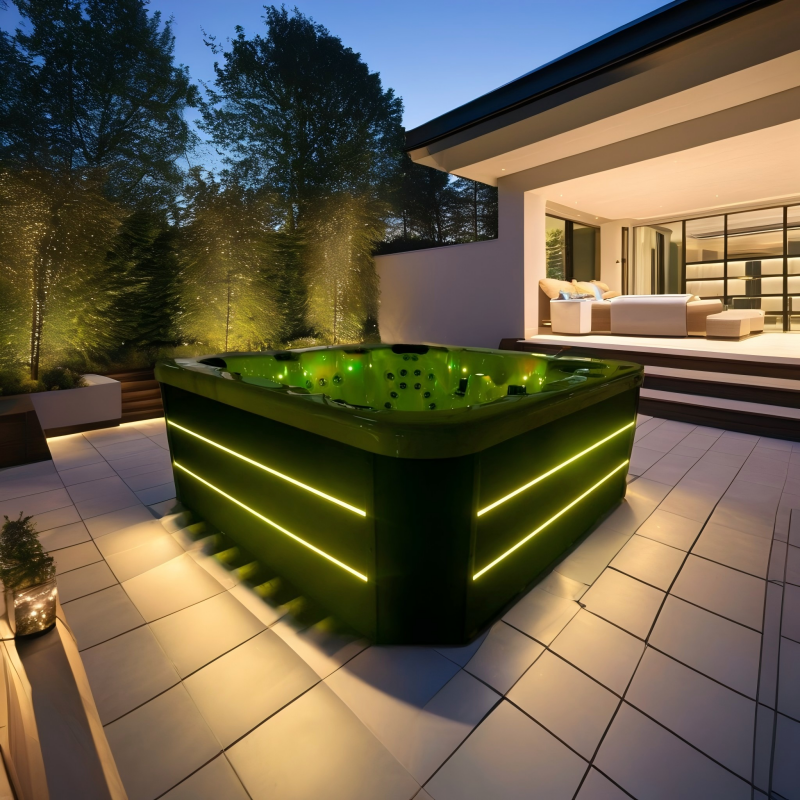
What problems arise from setting the water temperature too high?
Even with correct initial cold water filling, there are still risks if the water temperature is manually set too high later.
Common issues include:
• Overheating
• Dizziness, fatigue
• Abnormal heart rate
• Decreased user experience
Therefore, avoid excessively high water temperatures when using a whirlpool spa hot tub.
What is the safe soaking time in a spa hot tub?
Even at a reasonable water temperature, prolonged continuous soaking is not recommended.
General recommendations:
• Limit each soak to 15–20 minutes
• Take short breaks to rehydrate during the soak
• Adjust the duration according to your own comfort
This allows you to enjoy the relaxing effects of the whirlpool spa hot tub while minimizing the risk of discomfort.
Does the method of filling the water affect the water quality of the spa hot tub?
Yes, the method of filling the water indirectly affects water quality stability.
Directly adding hot water may:
• Change the dissolved gas content in the water
• Affect subsequent chemical balance
• Increase the difficulty of water quality adjustment
Filling the spa hot tub with cold water and then gradually heating it is more conducive to subsequent water quality management.
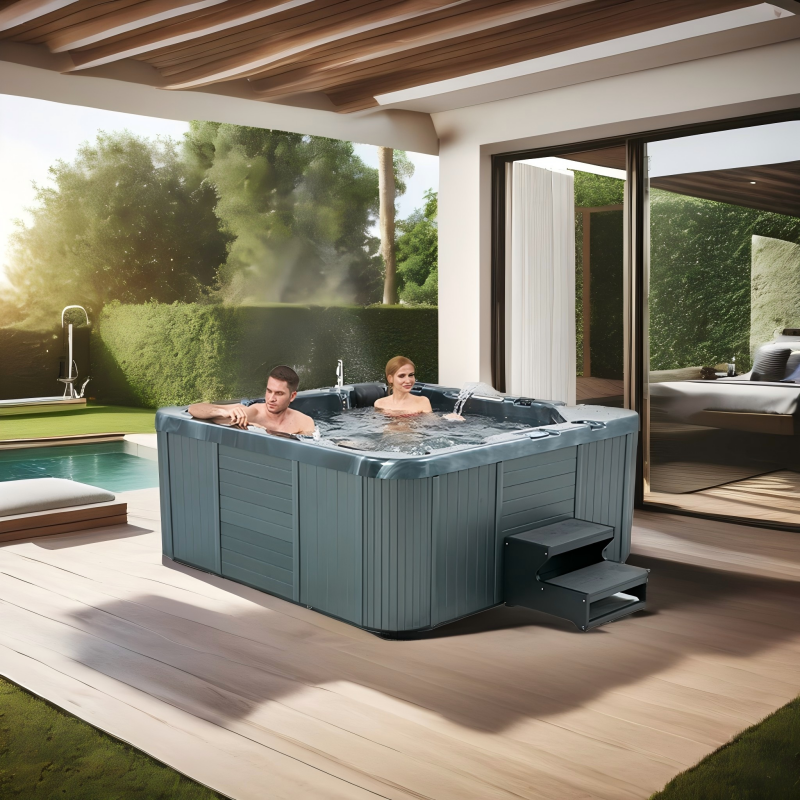
Why is the spa hot tub designed not to require an "external hot water source"?
This is a common misconception among many new users.
The spa hot tub is called a "hot tub" not because it relies on external hot water, but because:
• It has a built-in heating system
• Controllable and continuous heating
• Stable water temperature over a long period
Therefore, directly adding hot water from the outside is not necessary and actually defeats its design purpose.
Does proper water filling help extend the lifespan of the spa hot tub?
The answer is yes.
Consistently filling the spa hot tub with cold water and then letting the system heat it can:
• Reduce thermal shock to components
• Reduce the probability of failure
• Maintain sensor accuracy
• Extend overall lifespan
This is a low-cost but high-return correct usage habit.
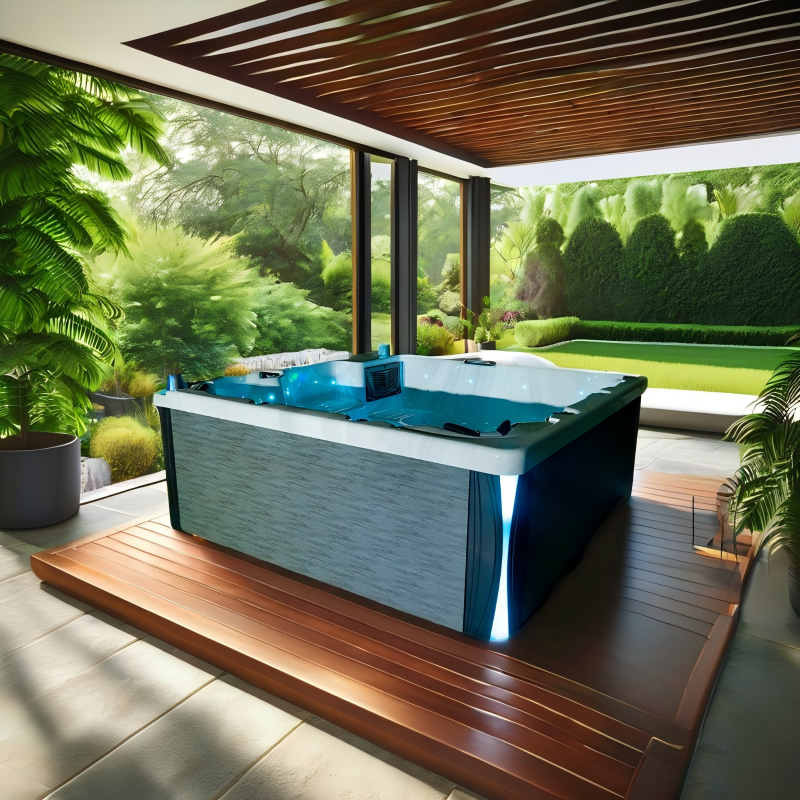
Should the spa hot tub be filled with hot or cold water?
The spa hot tub should be filled with cold water first, and then heated by its own heating system, rather than directly adding hot water.
The benefits of this approach include:
• Protecting the thermal sensor and internal components
• Ensuring stable system operation
• Improving safety
• Facilitating water quality and temperature control
At the same time, it's important to note:
• Never set the water temperature too high
• Limit each soak to 15–20 minutes
• Monitor your body's response
By following these basic principles, the spa hot tub can truly provide comfort, safety, and stability.
What production technologies does LOVIA SPA use to ensure shell durability?
LOVIA SPA uses advanced vacuum molding, multi-layer reinforcement, and Aristech acrylic to ensure each spa shell is strong, weather-resistant, and long-lasting. Our factory conducts structural stress tests to verify stability and durability. This engineering approach guarantees Buyers receive high-quality products suitable for both cold and hot climates.
For Wholesale Purchasing, the consistent shell strength helps reduce warranty claims and maintenance issues.