


OEM Outdoor Spa Hot Tub Jet Customization Options
2026-10-13 15:30For OEM outdoor hot tub buyers, jets are a crucial feature influencing the user experience and market appeal. In the past, buyers often focused primarily on the *number* of jets—such as 40, 50, or even 80. However, as market competition intensifies, simply increasing the jet count is no longer sufficient to create genuine product differentiation. Consumers are now more concerned with: Where are the jets installed? Which body parts do they target? Is the water flow powerful enough? Is the massage experience well-designed for the different seating positions?
Therefore, professional OEM customization for outdoor spa hot tubs focuses not merely on increasing the number of jets, but on the systematic design of jet types and placements based on seating configuration, ergonomics, pump flow rates, plumbing layout, and the target market. For manufacturers, jet customization has evolved from a standard feature into a vital component of product functionality design.
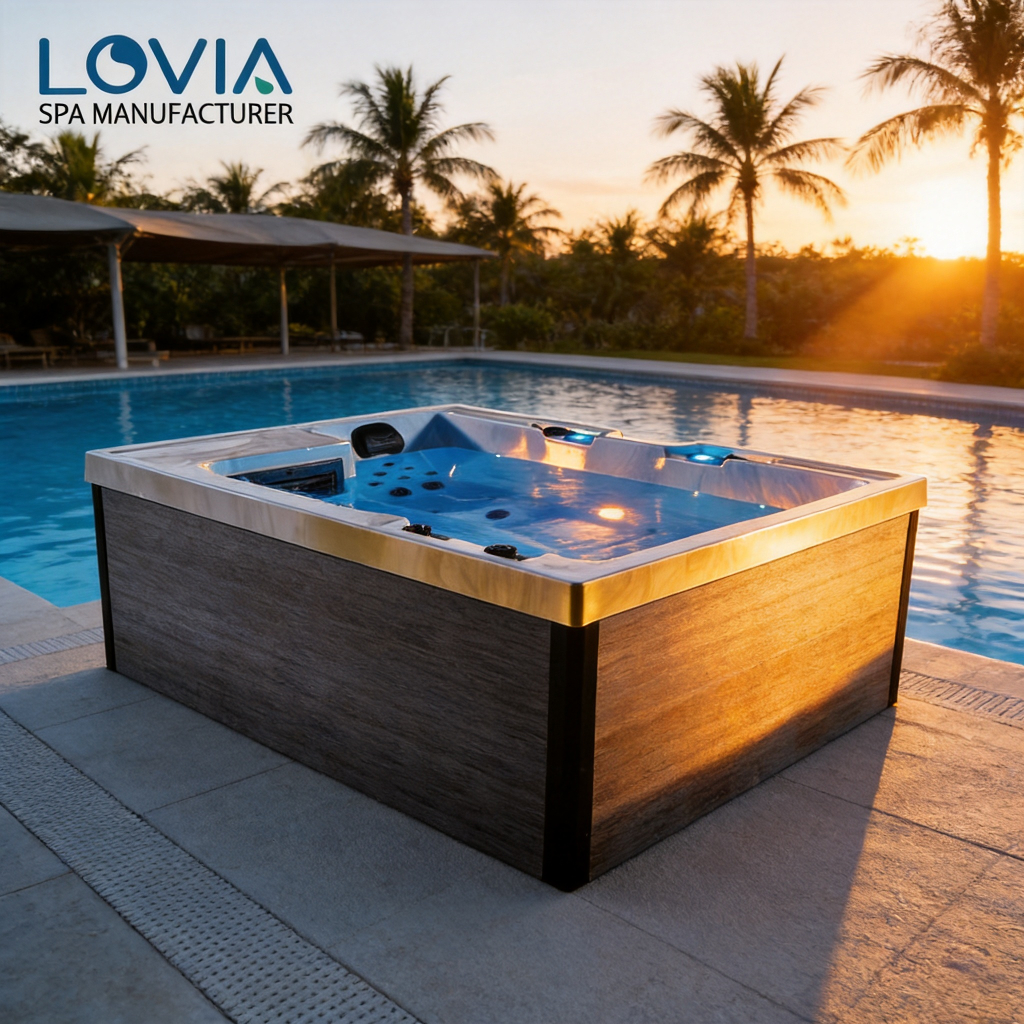
Why are OEM clients increasingly prioritizing jet customization for outdoor hot tubs?
Product homogenization is becoming increasingly apparent in the outdoor spa hot tub market. Different brands may offer 5- or 6-person tubs with similar dimensions, aesthetics, and jet counts. Without distinct functional differences, it is difficult for OEM brands to establish a unique selling proposition.
Jet customization offers a direct path to differentiation. For instance, one model might emphasize shoulder, neck, and lower back massage, while another focuses on the feet and legs; alternatively, a layout could be designed to provide a soothing, full-body massage experience for family users.
Even with the same total of 50 jets, the actual experience can differ vastly depending on the layout: one model might concentrate the main water flow on the shoulders, back, waist, and feet, whereas another might simply distribute the 50 jets evenly across the tub's interior walls.
Consequently, the development logic for OEM outdoor hot tubs should shift from asking "How many jets are needed?" to "What kind of massage experience do users want?"
Jet Type—Not Just Quantity—Is the Most Valuable Aspect to Customize
Different jets produce different water flow patterns, resulting in varied massage effects. Common types include directional jets, rotary jets, dual-rotary jets, and large-format massage jets. Directional jets allow for adjustable water flow, making them ideal for targeting specific areas like the shoulders, back, and lumbar region that require precise massage. Rotating jets create a dynamic flow, which is particularly well-suited for the back and lower back. Large-format nozzles, meanwhile, emphasize broad water coverage.
Consequently, there is no need for a mid-to-high-end OEM outdoor hot tub to use identical nozzles in every position. A mixed configuration can be employed; for instance, a primary massage seat might feature 4–6 directional jets combined with 2–4 rotating jets, supplemented by foot jets depending on the seat's structure.
This type of design often delivers more value than simply adding a large number of standard nozzles.
Shoulders, neck, and lower back are typically the areas of greatest interest to jacuzzi hot tub outdoor users
In practice, the shoulders, back, and lumbar region are the primary targets for massage functions in outdoor spa hot tubs, making them the most valuable areas for OEM customization.
For a primary massage seat, the configuration could include 2–4 shoulder jets, 4–8 back jets, and 2–4 lumbar jets, depending on the seat height. The exact number should be adjusted based on the tub's dimensions, nozzle types, and pump capacity; there is no one-size-fits-all standard.
When designing nozzle placement, it is also essential to consider the seating posture of users of varying heights. If nozzles are positioned too high or too low, they may fail to accurately target the shoulder and back areas, regardless of how many are installed.
Therefore, the correct OEM design sequence is to first determine the seat configuration and user posture, and then establish nozzle placement—rather than starting with the number of nozzles.
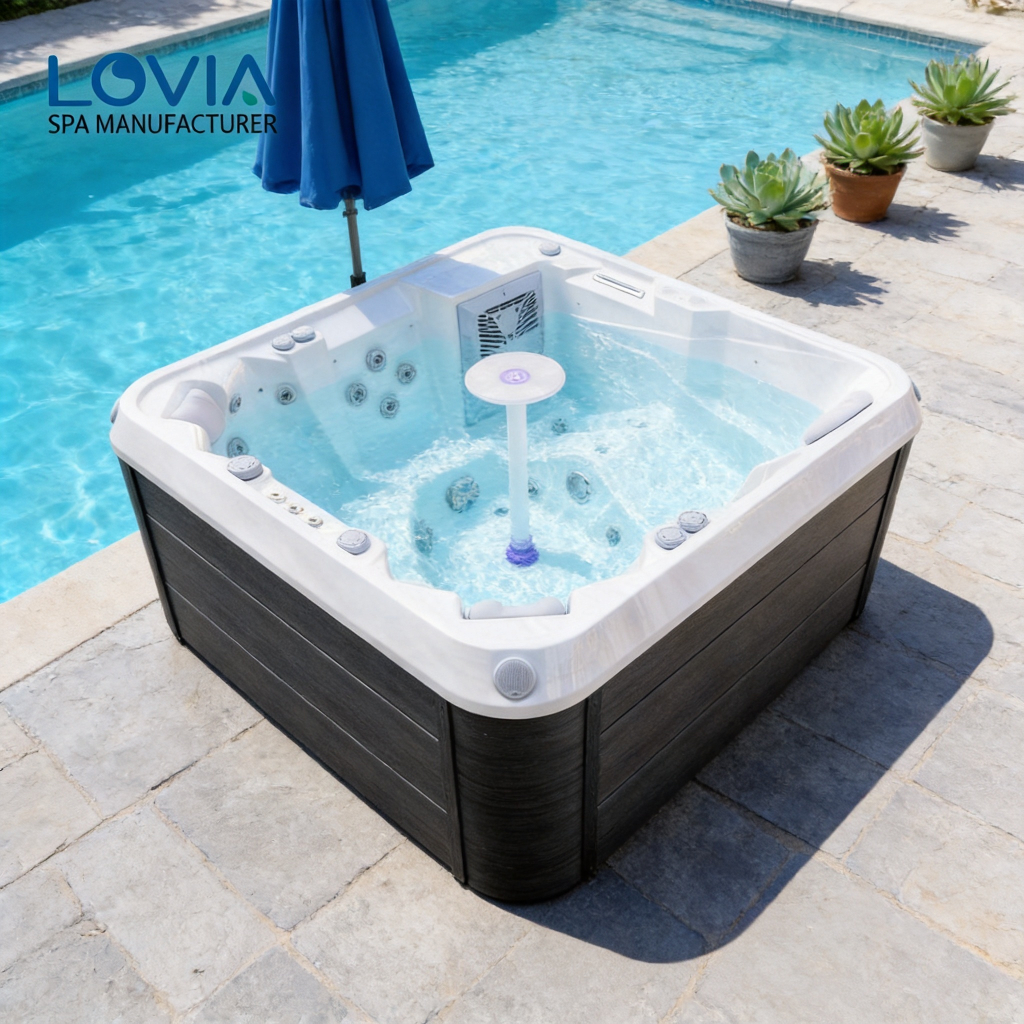
Foot jets are also a highly valuable area for OEM customization
The foot area is easily overlooked, yet foot massage is often a key part of the outdoor spa hot tub experience for consumers.
Standard models can feature 4–8 nozzles in the foot area, with spray directions adjusted according to the footwell space. Mid-to-high-end models can go further by designing a dedicated foot massage zone, utilizing a flow-diversion system to concentrate more water flow on the feet.
Foot massage does not necessarily require a large number of complex jets; the key lies in spray direction and the concentration of water flow. For example, with a well-designed system, 4–8 strategically placed foot jets can offer more practical value than a dozen low-flow nozzles.
More Jets in an Outdoor Hot Tub Isn't Always Better
The idea that "more jets mean a more premium product" is a common misconception in the OEM outdoor hot tub market.
Increasing the number of jets requires greater water flow capacity. If the pumps and plumbing are not upgraded in tandem, you may end up with a high number of jets but insufficient flow at each individual nozzle.
For instance, if a system delivers an effective therapeutic flow of approximately 100 GPM, distributing this across 40 jets yields an average of 2.5 GPM per jet, whereas distributing it across 80 jets results in only about 1.25 GPM per jet. In reality, system performance is also affected by factors such as pipe length, elbows, jet design, and pressure loss; therefore, the final outcome cannot be judged simply by calculating an average.
This demonstrates that when developing OEM outdoor hot tubs, the focus should be on "effective flow" and "logical layout" rather than simply chasing a high jet count.
Entry-level products might feature around 25–40 jets depending on market positioning, while mid-range models could utilize 40–60 jets. High-end products may incorporate a higher number of jets, along with zone control and a variety of jet types. However, these figures serve only as guidelines for product planning rather than as a universal industry standard.
Jet Size Also Impacts the Massage Experience
Beyond quantity and type, jet size is another parameter that OEM clients can customize.
Small jets are typically better suited for targeted flow, such as for the shoulders and lower back; medium-sized jets can be used for the back; and larger jets are ideal for providing a broader massage effect.
Consequently, a high-end OEM outdoor hot tub might employ a combination of jet sizes rather than using a single specification throughout the entire tub.
It is important to note that a larger jet size does not necessarily equate to stronger water flow. The actual massage performance depends on the jet's internal structure, inlet pressure, flow rate, and the matching of the pump system.
Jet Layout Must Be Designed in Conjunction with Pumps and Plumbing
One of the most overlooked aspects of jet customization is the hydraulic system.
Adding even a single jet requires a re-evaluation of water flow distribution. Components such as pumps, manifolds, pipe diameters, pipe lengths, and flow-splitting methods all influence the final flow performance. OEM clients should not simply tell an outdoor hot tub manufacturer, "I want 60 jets," and leave it to the factory to add them arbitrarily. A more rational approach involves simultaneously determining the number of pumps, actual flow rates, jet types, and massage zones.
It is particularly important to note that "HP" (horsepower) alone does not accurately reflect a pump's actual massage performance. Different manufacturers may use different methods to rate HP; therefore, one should focus more on flow rate, pressure, and continuous operation capabilities under actual working conditions.
A professional outdoor hot tub manufacturer should be able to properly match pumps and plumbing to the jet configuration, rather than merely providing an impressive-sounding power figure.
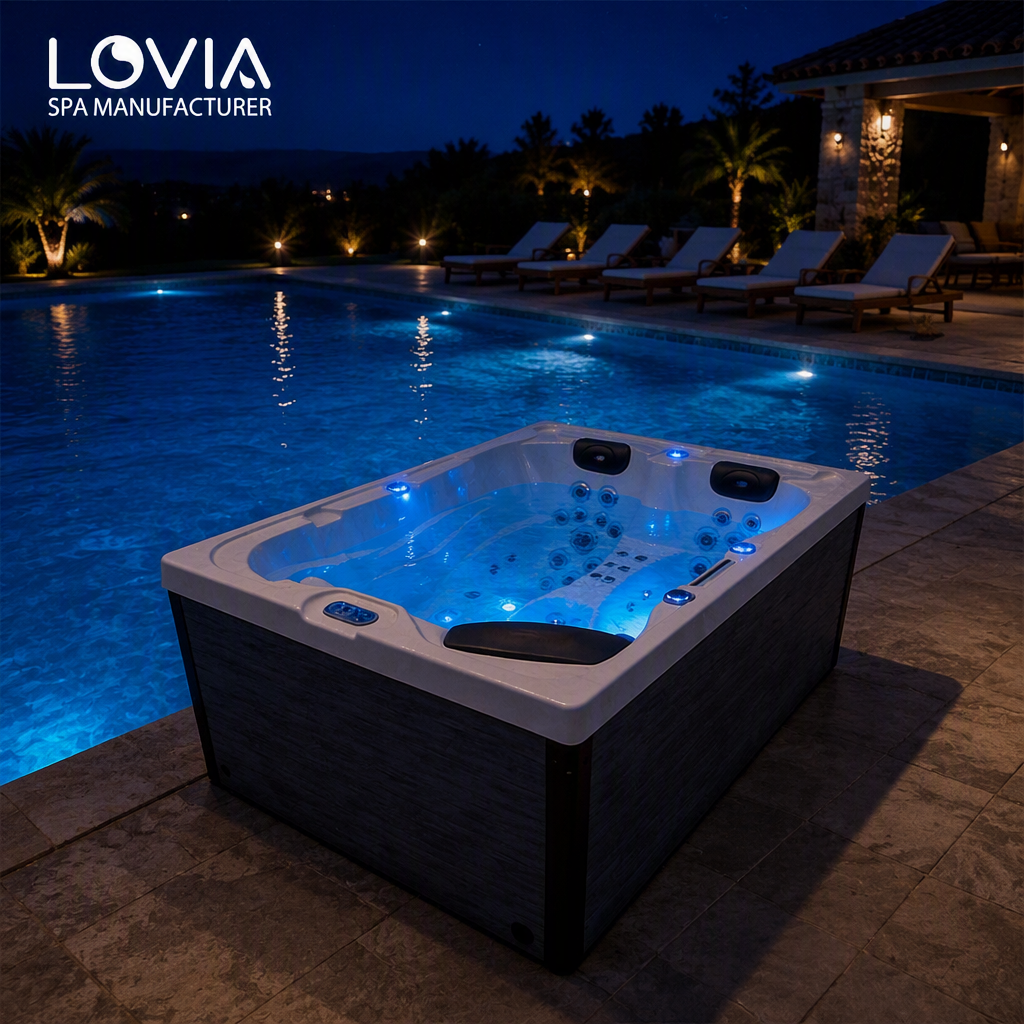
Three Common Pain Points Regarding Jets in OEM Outdoor Hot Tubs
The first pain point is "impressive specifications but mediocre user experience."
Many products boost their advertised specifications by increasing the number of jets without simultaneously optimizing the hydraulic system, resulting in weak water flow from some jets.
The second pain point is "spiraling costs due to added features."
Jets, plumbing, manifolds, pumps, and control systems all incur additional costs. If complex structures are used in every zone, the final product price may exceed what the target market is willing to pay.
The third pain point is "difficulty with future maintenance."
Jets are components that require maintenance over time. If the OEM supplier cannot provide compatible spare parts in the long run, the spa hot tub might remain functional while specific jets become impossible to replace.
Therefore, OEM projects should not focus solely on the initial purchase price but must also consider long-term spare parts availability and maintenance costs.
How can product differentiation be achieved through custom jet configurations?
OEM brands can design different jet layouts based on target markets rather than using the same configuration for every product.
For example, entry-level models can focus on the back, waist, and feet, keeping costs down by using fewer jets; mid-range products can add rotating jets and adjustable directional flow; and high-end products can feature various jet sizes, independent massage zones, and zone-specific controls.
Different product themes can also be established based on positioning—such as "lower back massage," "full-body relaxation," or "foot-focused therapy."
This approach makes the product's value easier for consumers to understand than simply advertising "80 jets," and it helps OEM brands establish distinct product series.
Safety and Compliance Considerations When Customizing Outdoor Hot Tub Jets
While jets are a crucial component of the massage system, they cannot be designed in isolation from the overall water circulation system.
Particular attention must be paid to safety issues—such as suction entrapment—regarding suction inlets, circulation pumps, and piping systems. The PHTA/ANSI framework includes standards covering residential portable spas, hot tubs, suction safety, and suction fitting components (e.g., ANSI/APSP/ICC-6, ANSI/APSP/ICC-7, and ANSI/APSP/ICC-16).
Therefore, when developing products, OEM jacuzzi hot tub outdoor buyers should require suppliers to confirm the safety standards and certification requirements applicable to the target market, rather than focusing solely on the jets themselves.
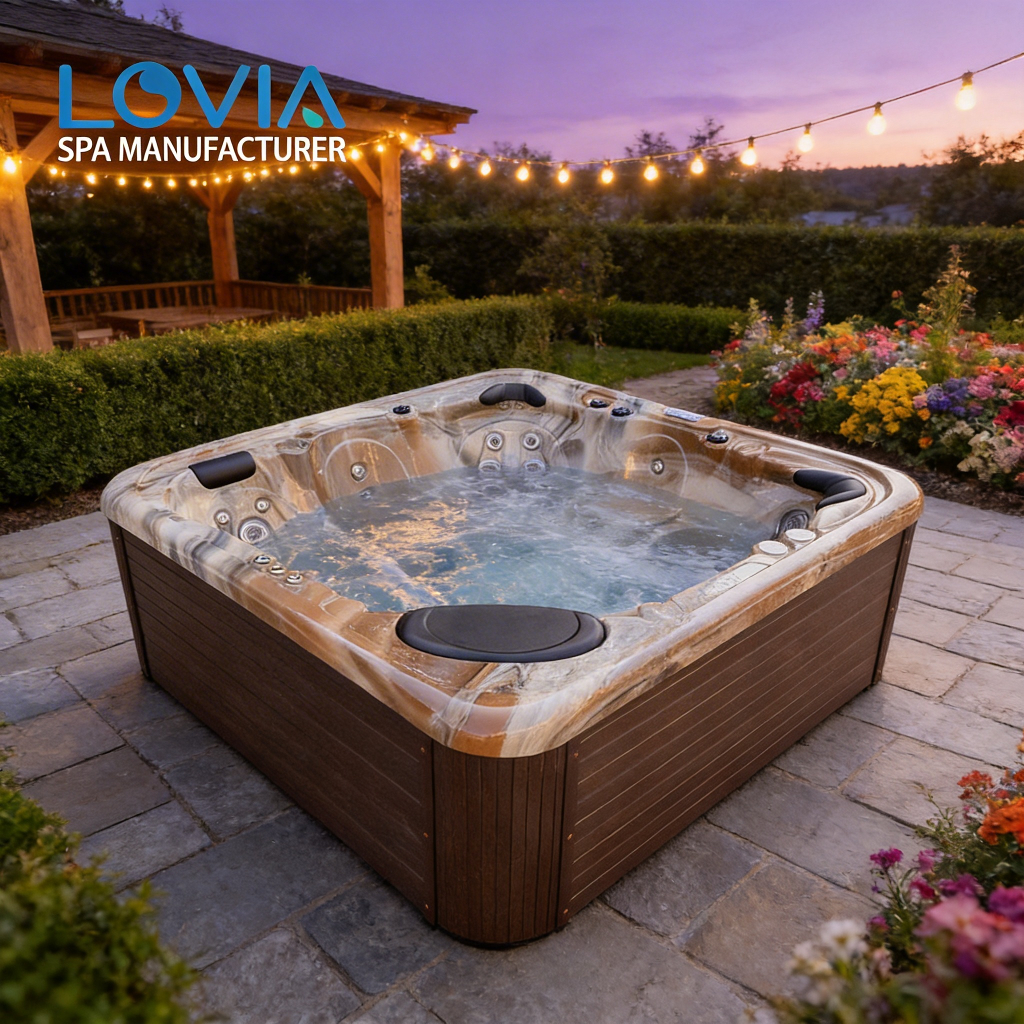
What should be verified when selecting an OEM outdoor hot tub supplier?
Before placing a formal order, buyers should focus on clarifying several key points: What are the total number and types of jets? Which massage zones correspond to each seat? Are there specific designs targeting the shoulders/neck, lower back, and feet? Are the pumps and jets properly matched? Is there independent zone control? Can the jet direction be adjusted? Can the same model of spare parts be supplied in the long term?
If conditions permit, it is best to request a prototype from the supplier for actual testing.
During prototype testing, one should not simply count the jets; instead, sit in each primary seat to check the water flow positioning for the shoulders, back, lower back, and feet, while also observing whether adequate water flow is maintained when different zones are activated simultaneously.
This step is particularly important for mid-to-high-end OEM outdoor hot tubs, as blueprints and specifications cannot fully replicate the actual user experience.
FAQ
1. Can the number of jets in an OEM outdoor hot tub be customized?
Yes. The number of jets can be adjusted based on the tub size, seating capacity, and product positioning. However, increasing the number of jets requires a simultaneous assessment of the pumps and piping; otherwise, insufficient water flow may occur.
2. Which areas of an outdoor spa hot tub are best suited for customized jets?
Typically, the shoulders/neck, back, lower back, and feet. OEM clients can select priority zones based on their target consumers—for example, by developing models that emphasize lower-back massage or enhanced foot massage.
3. Will jet customization significantly increase OEM costs?
Not necessarily. While complex jets, independent plumbing circuits, and larger pumps increase costs, a strategic choice of jet types and layouts allows for significant product differentiation while keeping costs under control.
4. Why is prototype testing for jets necessary for jacuzzi hot tub outdoors?
Because the number and specifications of jets do not fully reflect the actual massage experience. Prototype testing verifies water flow direction, massage intensity, seating layout, and hydraulic balance when multiple zones operate simultaneously.
5. How do you select a professional OEM manufacturer for jacuzzi hot tub outdoors?
Focus on whether the supplier possesses capabilities in jet design, pump matching, plumbing layout, prototype testing, mass production, and spare parts supply. A professional supplier should design the jet system holistically—considering the entire hydraulic setup—rather than simply specifying a quantity of jets.