


How to Insulate an Outdoor Spa Jacuzzi Tub?
2026-04-01 15:35For spa jacuzzi tubs installed in outdoor settings, insulation remains an unavoidable and central topic of concern. Whether due to fluctuating air temperatures, the impact of wind, or temperature differentials between day and night, these environmental factors directly affect the water, shell, and internal systems of the spa tub.
Consequently, the question of "how to insulate an outdoor spa jacuzzi tub" is not merely a matter of a single operational step; rather, it is a systemic issue involving structural design, environmental factors, and usage protocols.
In this article, we will comprehensively deconstruct this topic from a professional perspective to help you develop a clear and accurate understanding of spa insulation.
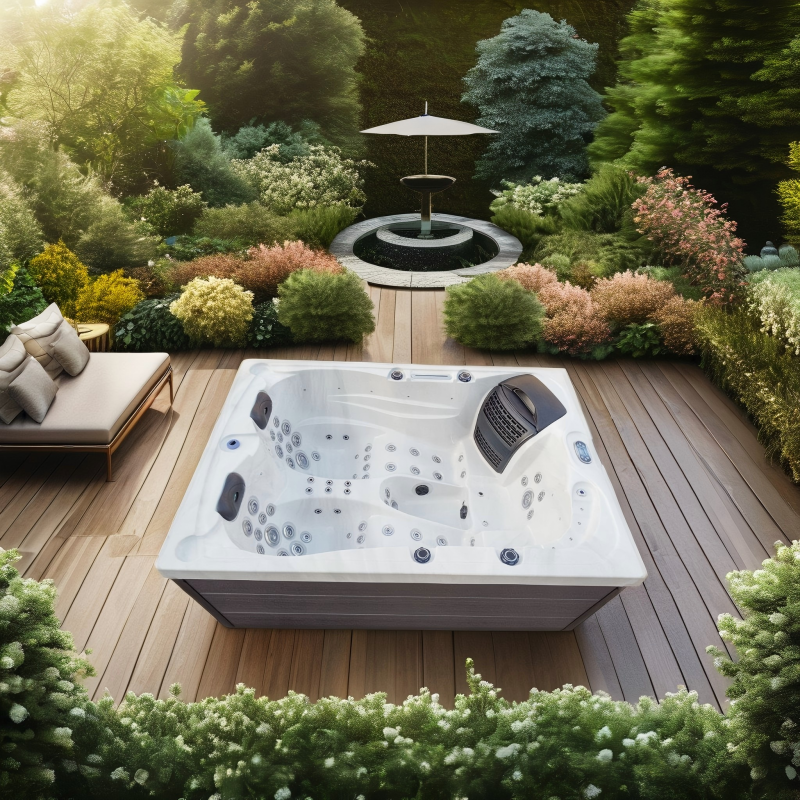
Why Is Insulation Even More Critical for Outdoor Spa Jacuzzi Tubs?
Compared to indoor settings, outdoor spa jacuzzi tubs are constantly exposed to natural elements, a reality that presents them with far more complex challenges regarding heat retention.
The impact of the outdoor environment on a spa jacuzzi tub is primarily manifested in the following ways:
•Greater fluctuations in air temperature
•Wind accelerating the rate of heat loss
•Heat dissipation occurring simultaneously through both the ground and the air
•Significant temperature differentials between day and night
Under these conditions, without systematic insulation measures, the stability of the spa water temperature would be significantly compromised.
From Where Does a Spa Jacuzzi Tub Primarily Lose Heat?
To effectively address the insulation challenges of an outdoor spa jacuzzi tub, one must first clearly identify the specific pathways through which heat is lost.
From the perspective of structural design and physical principles, heat from a spa jacuzzi tub is primarily dissipated through the following channels:
1.Heat exchange occurring at the water's surface where it meets the air
2.Heat conduction from the tub's shell outward into the surrounding environment
3.Heat loss resulting from direct contact between the tub's base and the ground
4.Heat conduction through the internal plumbing lines and equipment compartments
Only by understanding these specific heat-loss pathways can we engage in a targeted and effective discussion on how to properly insulate a spa jacuzzi tub.
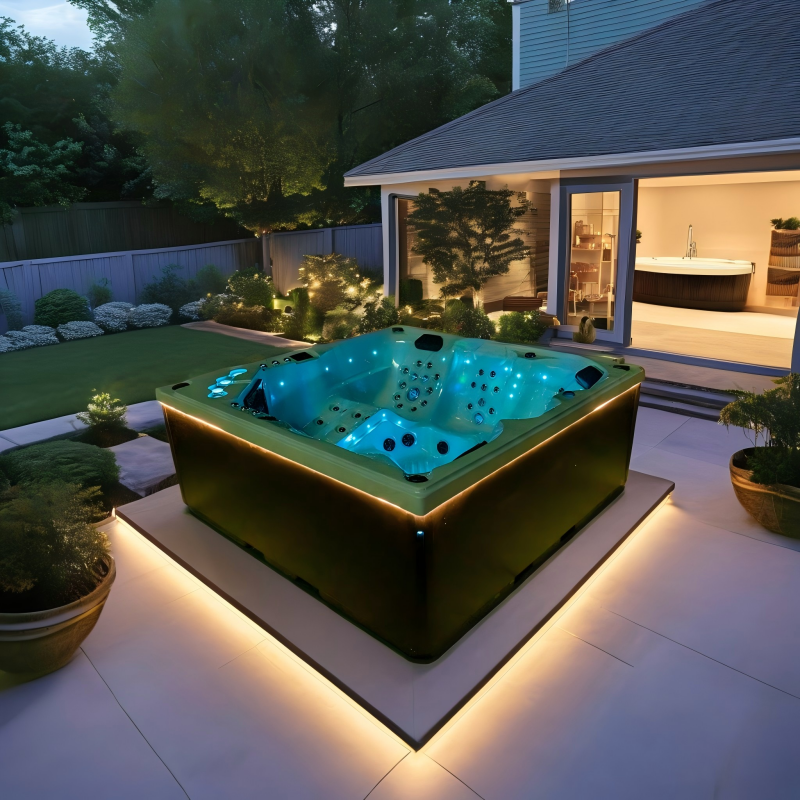
Why Is the Spa Jacuzzi Tub Cover the Key to Insulation?
Among all the components related to thermal insulation, the spa cover is often the most visible—and arguably the most critical—element.
This is because:
•The water surface is the area where heat loss occurs most rapidly.
•Warm air rises; consequently, heat loss is maximized when the water surface is directly exposed.
•A cover directly blocks airflow.
For outdoor spa Jacuzzi tubs, the presence of a cover essentially establishes a thermal barrier between the body of water and the external environment. If this factor is overlooked, the effectiveness of all other insulation measures will be significantly compromised.
What is the logic behind the shell insulation of a spa Jacuzzi tub?
A spa Jacuzzi tub is not a single-layer structure; its shell typically consists of multiple layers. The core logic behind shell insulation lies in:
•Slowing down the outward conduction of internal heat.
•Reducing the direct impact of low external temperatures on the water.
From a professional standpoint, shell insulation is not simply a case of "the thicker, the better"; rather, its effectiveness depends on the thermal conductivity of the materials and the structural integrity of the assembly. A continuous, stable insulation layer is far more effective than merely increasing thickness.
How important is bottom insulation for an outdoor spa Jacuzzi tub?
When discussing spa Jacuzzi insulation, many people tend to overlook the bottom—a critical area.
In reality, heat loss from the bottom of a spa Jacuzzi is often underestimated. This is due to the following factors:
•Ground temperatures are typically lower than the water temperature.
•The contact area is large, resulting in continuous heat conduction.
•Cold air tends to stagnate in the bottom region.
Therefore, the primary function of bottom insulation is to sever the direct thermal conduction pathway between the spa Jacuzzi and the cold ground beneath it.
How does wind affect the insulation of an outdoor spa Jacuzzi?
In an outdoor environment, wind is a significant variable that impacts the insulation performance of a spa Jacuzzi.
The effects of wind on a spa Jacuzzi are primarily manifested in the following ways:
•Accelerating evaporation from the water surface.
•Stripping heat away from the surface of the shell.
•Disrupting local temperature stability.
This explains why the same spa Jacuzzi will exhibit markedly different insulation performance in windless conditions compared to windy conditions.
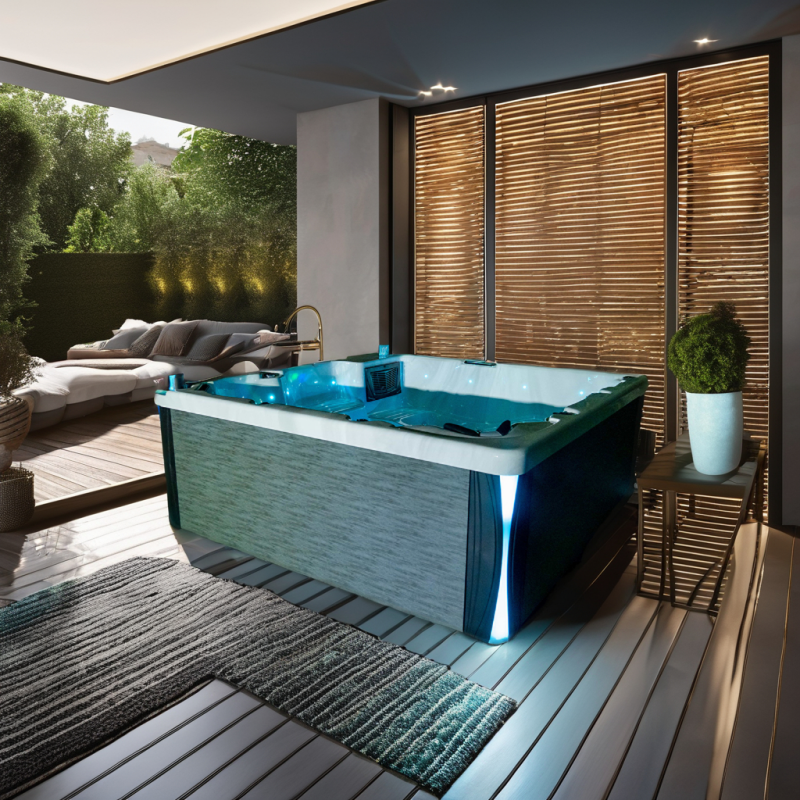
Does the installation location of a spa Jacuzzi affect its insulation?
The answer is a resounding yes.
The specific location where a spa Jacuzzi is installed directly influences its exposure to wind, its sunlight exposure, and the stability of the surrounding ambient temperature. From the perspective of thermal insulation, the ideal installation location should:
•Avoid being fully exposed to direct wind currents
•Be surrounded by some form of environmental shielding or shelter
•Rest upon a stable ground structure
A well-chosen installation site essentially creates a relatively favorable thermal environment for the spa jacuzzi tub.
Does the internal structure of the spa jacuzzi tub contribute to thermal insulation?
Although the primary insulation efforts for a spa jacuzzi tub are concentrated on its exterior, the internal structure also plays a significant role in its overall heat retention capability.
For instance:
•Is the plumbing layout compact and centralized?
•Are the equipment compartments fully enclosed?
•Does the internal cavity allow for uncontrolled hot-and-cold air convection?
These factors all influence the distribution and retention of heat within the spa jacuzzi tub.
Why is "sustained stability" considered more important than "rapid heating"?
In the context of using outdoor spa jacuzzi tubs, many users tend to focus heavily on the speed at which the water heats up, while overlooking the fundamental objective of thermal insulation.
In reality, the core purpose of insulation is not merely to raise the water temperature quickly, but rather to:
•Minimize temperature fluctuations
•Slow down the rate of heat loss
•Maintain thermal stability within the water body
A well-insulated spa jacuzzi tub should exhibit water temperature changes that are gradual, smooth, and controllable.
How does the overall airtightness of a spa jacuzzi tub relate to its thermal insulation?
Airtightness is a subtle yet critical factor influencing the insulation effectiveness of an outdoor spa jacuzzi tub.
If any of the following conditions exist:
•Structural gaps or crevices
•Unsealed equipment compartments
•Loose connections in the shell assembly
Then, even if insulation layers are present, heat will still be continuously carried away by circulating air currents. Therefore, a robust, airtight structural design is an integral component of the overall insulation system—not merely an independent, isolated factor.
Why is thermal insulation not a problem that can be solved by a single measure alone?
Many people hope to completely resolve the insulation challenges of a spa jacuzzi tub by addressing a single "key point"; however, from a professional standpoint, this is an unrealistic expectation.
Insulating a spa jacuzzi tub is a comprehensive systems engineering task involving:
•Water surface management
•Shell thermal insulation
•Base/bottom isolation
•Environmental factors
•Structural integrity
Neglecting any single one of these aspects will compromise the overall effectiveness of the insulation system.
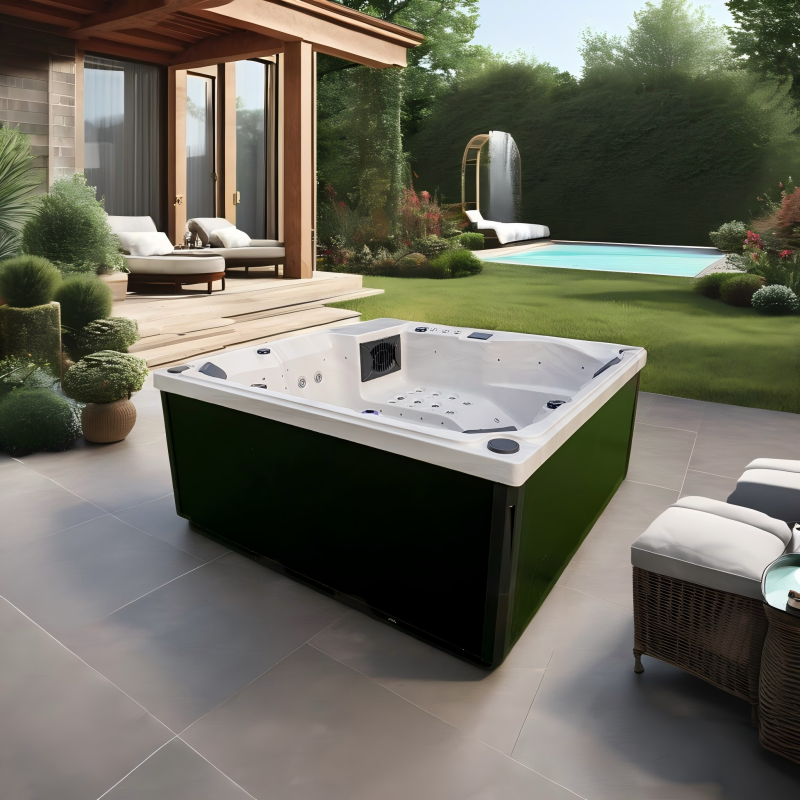
A Proper Understanding of Outdoor Spa Jacuzzi Tub Insulation
Insulating an outdoor spa jacuzzi tub should not be viewed as an optional, add-on procedure, but rather as an intrinsic and essential part of the tub's operational logic. Fundamentally, the purpose of insulation is to:
•Enhance user comfort
•Stabilize the water temperature
•Minimize unnecessary heat loss
When you approach the issue of insulation in a spa whirlpool from a systems perspective, you will discover that it is not complex; rather, it follows a clear and logical framework.