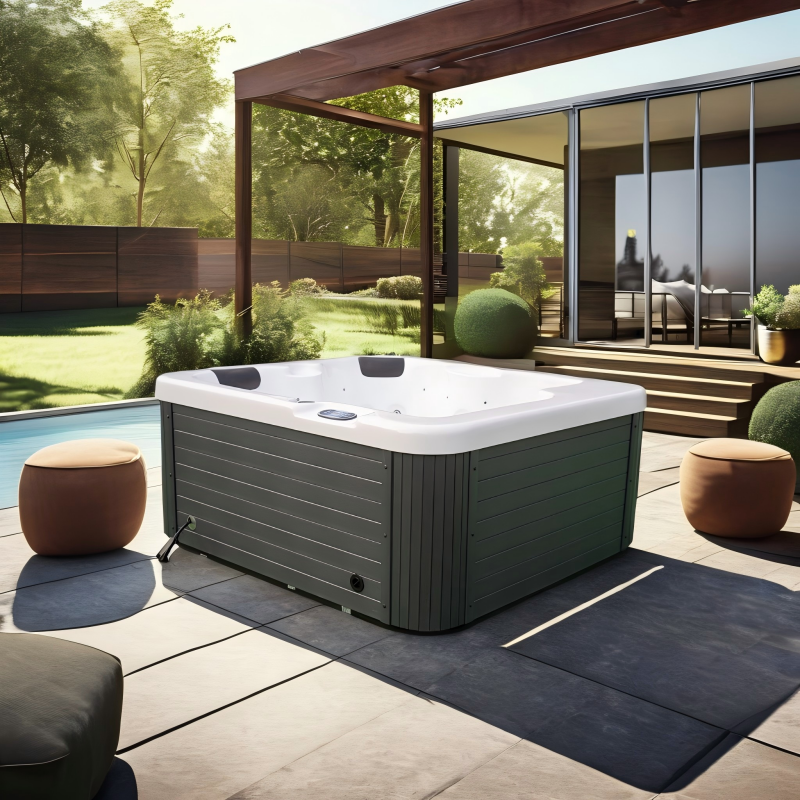


How OEM Outdoor Spa Hot Tub Manufacturing Saves Your Business Costs
2026-08-05 15:35How can LOVIA®'s OEM outdoor hot tub manufacturing reduce your business costs?
The outdoor lifestyle and health consumption concepts are evolving around the world continuously, and the market demand for outdoor spa hot tubs is always increasing. It is estimated from the released data that the spa and hot tub market globally have always been going the same direction, with Europe and the United States, the largest consumers, in fact, but the demand is also rising from Australia, the MiddleEast and parts of Asia. A growing number of manufacturers, importers, project partners, and e-commerce platforms are getting interested in outdoor spa hot tub products and are seeking to take advantage of the trend at hand to gain more market shares.
But for most companies, the profitability factor is not only about the pricing, it's also the total cost of the whole supplying chain. How to cut down purchasing, stocking, R&D, after-sales and supply chain management costs has become the key business competition issue.
Therefore, the OEM (Original Equipment Manufacturing) model has become one of the most popular choices for international buyers in this particular scenario. Contrary to opening their own workshops, companies that pick a reputable OEM maker can have the benefits of both product design, manufacturing, and quality control through this model, as well as product launching being faster and overall production cost being lower by tapping a mature manufacturing system. LOVIA® has long put emphasis on making outdoor spa equipment, thus having the experience and capabilities to supply OEM solutions more effectively and reliably to its partner all over the world via large-scale production, comprehensive supply chain management and constant R&D investment, giving customers more options regarding cutting the overall purchasing costs.
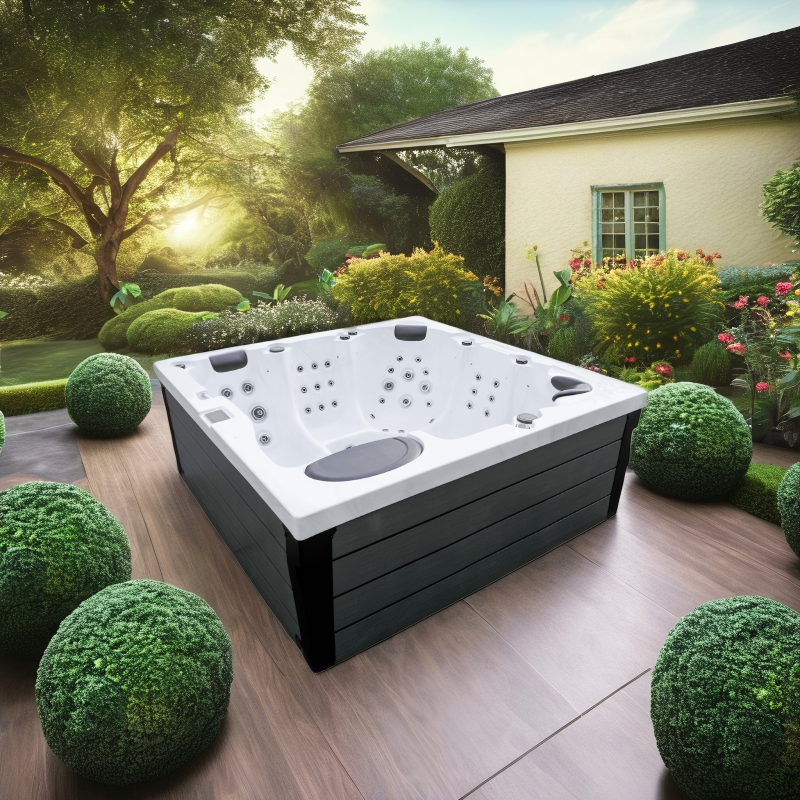
Why is OEM outdoor spa hot tub manufacturing more and more attractive?
Previously, many brands used to have their own plants, equipment and R&D teams to support their efforts and gain competitive advantage in the market. But with the market competition becoming even more intensified, this kind of model will cost companies a lot and have to cope with technological upgrades, people administration, equipment breakdown and inventory pressures.
On the contrary, OEM outdoor spa hot tub manufacturers would do almost everything except marketing, distribution and branding. In fact, for most smaller brands and rapidly growing companies, this model can result in lower fixed costs as well; they have flexible product development and market response as well as being able to reach the market much quickly.
Specially talking of outdoor spa hot tub business where a complete production system includes stages like acrylic vacuumforming, fiberglass reinforcement, pipe installation (electrical systems), insulation, water circulation testing, machine aging testing and quality inspection. Simply setting up a production line would mean a huge capital outlay. But if the factory of OEM production is already mature as a manufacturing system, the customer can be ensured with a stable production and supply without having to make repeated investments again and again.
I. Saving Costs of R&D for Faster Market Launch
R&D is one of those costs that brand operators are most likely to miss out on. The whole development cycle of one outdoor spa hot tub will run through many phases, e. g., structural design, hydro system optimizing and control developing as well as appearance designing, verifying structural design, prototype testing, durability and safety tests, and usability enhancing tests, etc.
Well-established OEM outdoor spa hot tub manufacturers generally have a well-organized, standardized product platform with continuously upgrading products as a result. A major share of current outdoor spa hot tub models on the market are based on a modular design, which allows flexible configuration adjustments to meet different market demands, for example, the two, three, five, or seven-person hot tub capacity, number of massage jets, circulation water system, lighting system and smart control system, as required by clients.
The fact that LOVIA® invests heavily in R&D means that it can support OEM and ODM collaboration based on its well-matured product platform. The client can make choices like a hot tub's outside color, skirting material, nozzle placement, control system, and branding according to their target market. As compared to totally independent development, this method shortens the product launch schedule and at the same time avoids redundant R&D investment.
II. Raw Material Cost Reduction via Large-Scale Procurement
The manufacturing of outdoor spa hot tubs entails usage of many raw materials including acrylic sheets, fiberglass, insulation materials, water pumps, filters, control systems, electric heaters, exterior decorative materials, etc.
Large-scale OEM manufacturers have the advantage of long-term partnerships with a worldwide range of supply chains, which allows a stable and relatively lower procurement cost. Most high-quality outdoor spa hot tubs will be made from weather-resistant acrylic materials combined with the addition of a high-density insulation layer to improve the overall durability and energy efficiency. In addition, major components such as circulated water pumps, massage water pumps and electronic control systems need to be in long-term and stable supply channels.
In view of the larger volume of purchases, established OEM manufacturers are effective at reducing unit procurement costs and at the same time lessening the impact caused by volatile prices of raw materials on product costs via the advantage of economies of scale. As a result, a brand customer can enjoy the benefits of the advantages of the huge supply chain's cost savings without actually having to set up the elaborate procurement system. This would certainly be one of the most attractive OEM advantages which would bring a significant reduction in costs to a brand.
III. Production Efficiency Enhancement and Manufacturing Cost Reduction Per Unit
The manufacturing of outdoor spa hot tubs is moving from mass production toward a more standardized and automated production process. Production processes are becoming more efficient through optimizing manufacturing processes and utilizing more equipment. At the same time, OEM factories can better maintain a product's consistency if they keep the product's manufacturing quality high. In fact, if an OEM factory is capable of keeping both production quality and speed consistently high, then such a manufacturer's product will be highly desirable to the customer.
A well-established manufacturer has generally several production lines that coordinate all the production processes such as forming, reinforcement, piping, electrical wiring, insulation work, etc. and then final testing. Since these processes are fully automated or semi-automated, the manufacturer can deliver a good amount of units in a short time without increasing the per-unit manufacturing cost. This, in fact, would result in lowering the time of delivery by the manufacturer as well as a decrease in the customer's inventory costs in the event that the client is not a stockist.
Taking LOVIA® as an example, the company has a production base of about 45,000 square meters, 12 production lines, and about 1,200 units manufactured per month. This allows them to meet different quantities of customer orders and also provide stability in delivery through their well-standardized processes. This type of manufacturing arrangement is cost-efficient and reduces a client's business risk for late delivery.
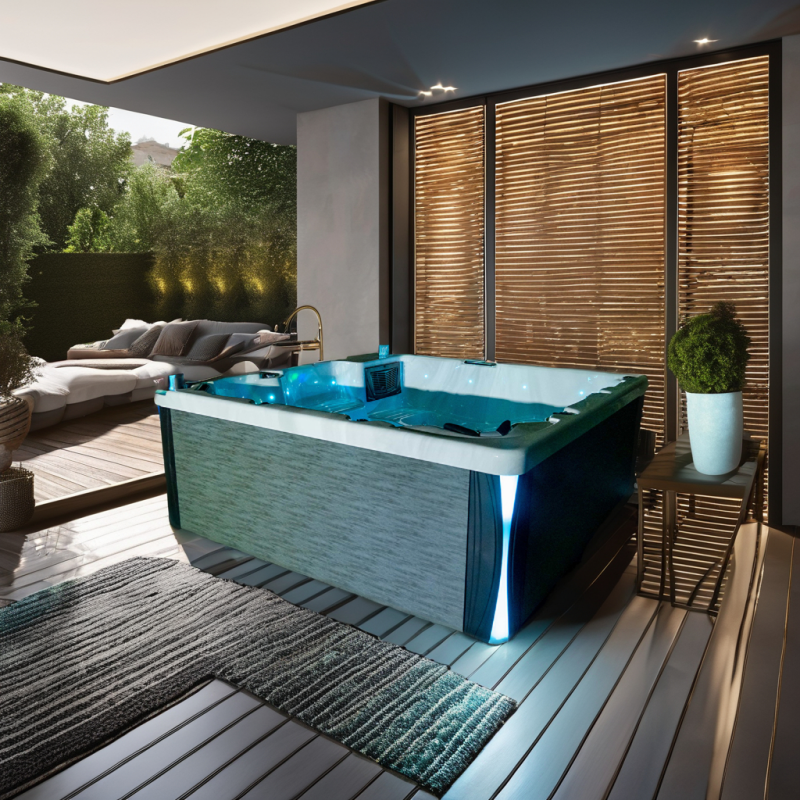
IV. Energy-Saving Features Enable Customers to Lower Their Long-Term Costs
Apart from looking at how much a product initially cost, consumers also consider their long-term expenses when purchasing an outdoor spa hot tub. The operating costs such as electric power consumption, water circulation efficiency and thermal insulation are all factors which contribute to the overall cost.
Today, it is common for OEM spa hot tub manufacturers to incorporate energy-saving features in their products. By improving heat retention, optimizing energy consumption and enhancing heating capabilities, power usage reduction is greatly achieved.
A good number of mid-to-top range hot tubs now come with energy-conserving layers of insulation and materials of high-density insulation foam, allowing them to stay at an even temperature even during cold seasons. Well-thought-out water circulation systems can minimize running periods of the pumps and improve the overall energy efficiency which is beneficial for the end user's monthly electricity bill and the product's competitiveness in the market, respectively.
V. Strengthening Quality Control to Cut Down After-Sale Costs
After-sale cost is a part of company running expenses that is mostly ignored by the manufacturers. Unpredictable and inferior product quality leads to higher repair, spare parts, and transportation costs, not to mention negative brand impact.
On the other hands, well-established OEM spa hot tub manufacturers usually have a comprehensive quality assurance system covering raw material inspection, process monitoring during production and pre-shipment testing. For example, each completed product typically undergoes a prolonged filling test, water circulation system test, electrical safety test and water heating performance test before shipment to make sure the product works smoothly after installation.
LOVIA® applies multi-step quality inspection at each stage of their production and checks if there is any problem with the functioning and seal performance to reduce chances of failure due to transport or during usage. Its solid manufacturing system helps the customers save on the costs of after-sales maintenance at the same time that customer satisfaction gets better.
VI. OEM Model Alleviates Inventory Pressure
Traditionally, when purchasing from suppliers, the brands usually have to order very large quantities in one time to get discount price, but this also causes enormous burden on their inventory.
Famous OEM manufacturers are able to propose much versatile options of cooperation, for instance, producing mixes of various models, making different colors and functionalities customizable, and delivering on a phased basis.
So through this type of cooperation with an OEM supplier, the brand owner is enabled with planning the procurement according to the market sales rhythm thus decreasing inventories, reducing the risk of unsold goods getting back and better utilizing of capital.
Given the fast-paced shifts in market demand, a responsive supply chain management is becoming the primary way for businesses to keep their cost under control, and the OEM mode is just the case.
VII. OEM Enables Brands to Concentrate on Core Value
In most businesses, the only real profit generating activity is being the brand operator, making a sales channel network and doing marketing, etc.
Partnering up with a reliable OEM outdoor spa hot tub manufacturer company the firms would be more likely to put the efforts and resources into their main activities such as market development, brand promotion, digital advertising and, most importantly, building long-term relationships with customers. At the same time, the supplier's new technological breakthroughs and product improvements would be beneficial to the brands' product diversity and thus strengthen their market presence.
Such specialization not only lowers the operating costs but also raises the overall productivity, thus enabling the company to spend more time and efforts in what it is good at.
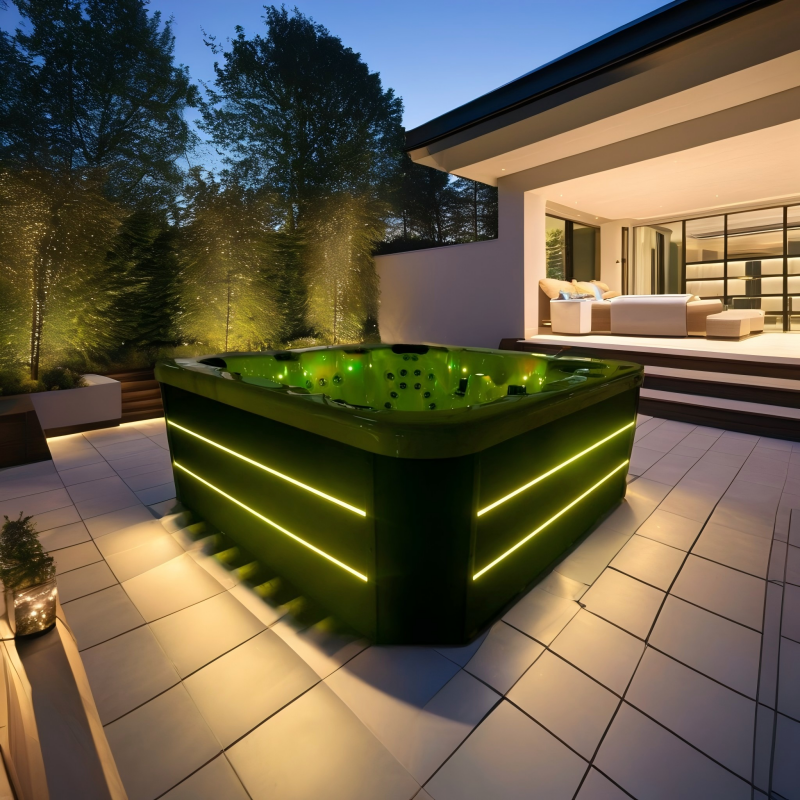
What makes LOVIA® the number-one preferred manufacturer in the world by the OEM clients?
Foreign companies normally expect from an OEM spa hot tub manufacturer more than just low-cost suppliers of goods that is, an ability to create and maintain long-term stable cooperation between their business, suppliers as well as partners is preferred much.
The fact that LOVIA® has been a long-time research, development & manufacturing partner of outdoor spa hot tubs, Swim Spas, and cold therapy equipment and, through that, has built up a highly effective production chain and a world-class international supply chain and also offers OEM & ODM services such as changing of product configuration, brand design of logo, color, packaging, and etc., tailored products for the target market in different countries and regions makes a big difference, besides, constant upgrades in manufacturing automation and standardized management enable a product's homogenity and delivery speed through mass production and, so, the partners are granted an even more secured supply.
For example, manufacturers that are partners of a supplier who knows about technology, the processes, quality assurance systems, has the capability to develop an OEM or ODM solution as well as is experienced internationally can have a better control over procurement in terms of time and price, and they can also reduce the risks that are related to operations and to the service after-sale and thus their competitiveness as a brand in their market place is increased greatly by that means.
FAQ
Q1: Which costs can companies save by manufacturing OEM outdoor spa hot tubs?
OEM eliminates costs of factory construction, equipment procurement, R&D, personnel costs, purchasing materials, warehouse, and aftersale service costs. It helps the business focus on product development, marketing and selling.
Q2: What is the difference between OEM and ODM outdoor spa hot tubs?
OEM products are usually products which are already mature ones and that the company only applies for customization, such as brand, color, package design etc., whereas, with ODM, the manufacturer and the buyer can collaborate and take part in the planning of the product's design, features, and functionality.
Q3: When choosing an OEM outdoor spa hot tub manufacturer, which aspects should be prioritized?
In order for a buyer to be able to benefit maximally from choosing an OEM as he/she will not only get the product at one price but also a partner in a long-term relationship through the product and through the company, he/she should mainly focus on the factory's scale, the company's R&D capabilities, the company's quality assurance system, the presence of the necessary international certificates or authorizations, its export experience, deliveries, etc., rather than on comparing only prices from different companies to buy the same product.
Q4: What role does energy-saving design play for outdoor spa hot tubs?
An energy-saving design helps to save a lot of electricity for the equipment to operate at a lower level of energy consumption for a long time.
In addition, insulation is more efficient in terms of performance resulting in lower operating costs per user, besides, such features make the product more attractive for selling in the market.
Q5: Which types of OEM outdoor spa hot tub clients does LOVIA® suit for?
LOVIA® is able to give OEM and ODM production for different category of companies such as, brand owners, importers, distributors, chain store, hotels, resorts in real estate development, and companies which operate cross-border e-commerce. They also offer flexible solutions for the products in accordance with the market demand and local culture of the customers' country of sale.