


Freestanding Outdoor Hot Tubs: Is Inner Tank Thickness Important?
2026-09-18 15:30For a freestanding hot tub that is used outdoors for extended periods, the inner tank not only stores water but also provides structural support. It must withstand the pressure of tons of water, human loads, and stress from temperature changes, while also enduring UV radiation, rain and snow erosion, and thermal cycling. Therefore, the inner tank thickness is not a simple parameter but a crucial factor determining the durability, safety, insulation performance, and long-term maintenance costs of a freestanding spa hot tub.
Many users frequently ask questions when inquiring about products: Is a thicker or thinner inner tank better for a freestanding spa hot tub? What is the difference between different thicknesses? Is it worth paying a higher purchase cost for a thicker inner tank? These questions actually involve multiple dimensions, including materials science, structural engineering, and product lifespan management. This article will analyze the importance of the inner tank thickness for freestanding outdoor hot tubs from an industry perspective, helping consumers develop a more professional and comprehensive understanding of the selection process.
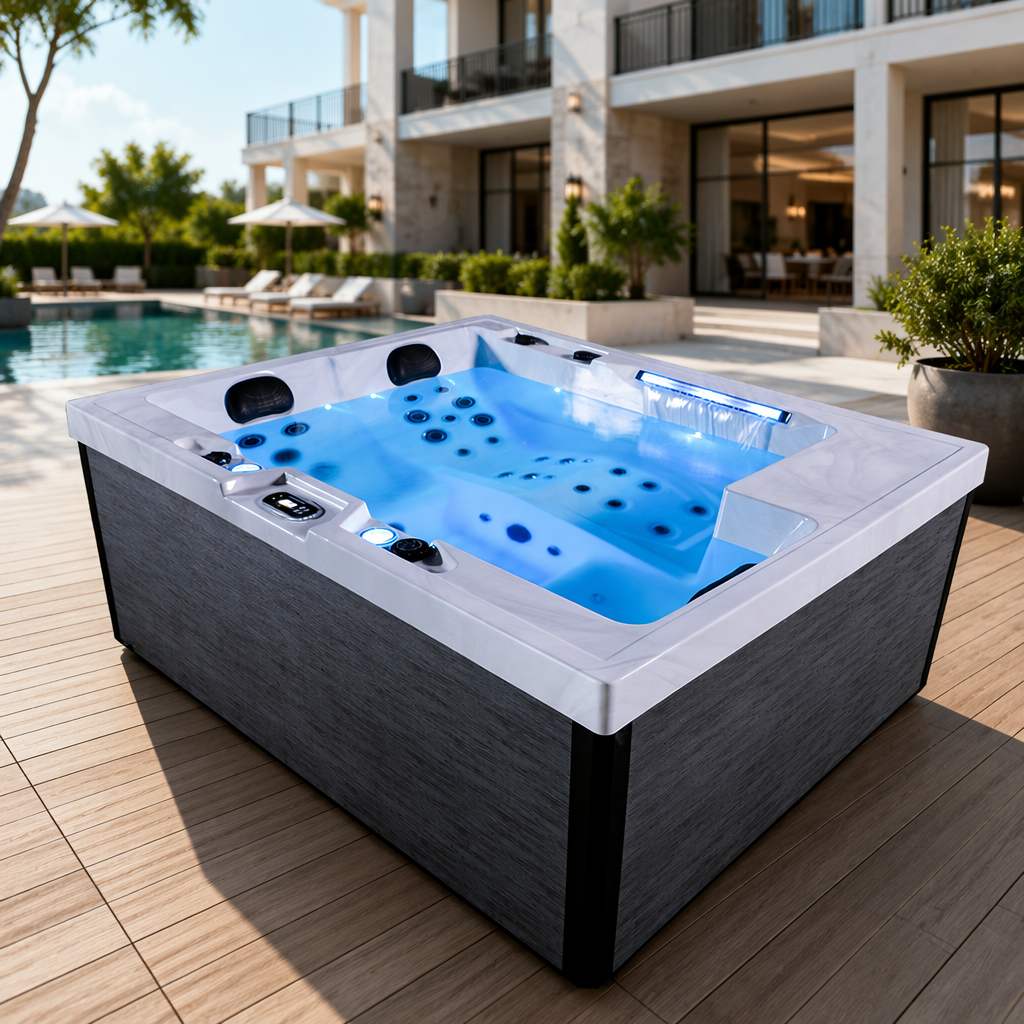
Why is inner tank thickness particularly important for freestanding outdoor hot tubs?
Compared to ordinary indoor bathtubs, outdoor freestanding spa hot tubs face a more complex usage environment, and the pressure their structure withstands far exceeds the imagination of ordinary consumers.
A standard four-person freestanding jacuzzi tub typically holds between 1000 and 1500 liters of water. Assuming 1 liter of water equals approximately 1 kilogram, the weight of the water alone can reach 1000 to 1500 kilograms. When four adults enter the tub simultaneously, the total weight often exceeds 1500 kilograms, and some large six-person freestanding hot tubs even need to withstand a total load exceeding 2500 kilograms over extended periods.
This pressure is not temporary but continuous throughout the entire usage cycle. The inner tank must withstand not only the vertical weight pressure but also the thrust of water from the side walls. If the inner tank is not thick enough, problems such as localized deformation, bottom sinking, bulging of the tub walls, and even the spread of micro-cracks can easily occur during long-term use.
More importantly, outdoor freestanding spa hot tubs are constantly exposed to the natural environment. During the hot summer months, the surface temperature of a bathtub can exceed 60°C; in cold winter regions, the ambient temperature can drop below 0°C. Frequent hot and cold cycles cause the material to expand and contract, accelerating fatigue and aging. In this situation, a thicker inner tank structure can more effectively distribute stress, reduce the risk of material fatigue, and improve overall lifespan.
What are some common materials used for the inner tank of freestanding hot tubs on the market?
Currently, mainstream outdoor freestanding spa hot tubs mainly use acrylic, ABS composite materials, and fiberglass reinforced structures. Acrylic is the most common choice in the high-end market. This material has good gloss, corrosion resistance, and heat insulation properties, while also possessing strong plasticity, thus meeting various ergonomic seating design requirements.
The international high-end SPA industry widely uses American Lucite acrylic sheets, typically between 5mm and 6mm thick. Mid-to-low-end products often use 3mm to 4mm thickness. Some manufacturers, in order to reduce costs, use a thinner acrylic layer combined with an ABS base to form a composite structure. While this reduces production costs, it often results in a difference in long-term durability.
In addition, many high-quality freestanding spa hot tubs add a fiberglass reinforcement layer to the back of the acrylic. This structure further improves overall rigidity and impact resistance, allowing the product to maintain better stability under long-term full load.
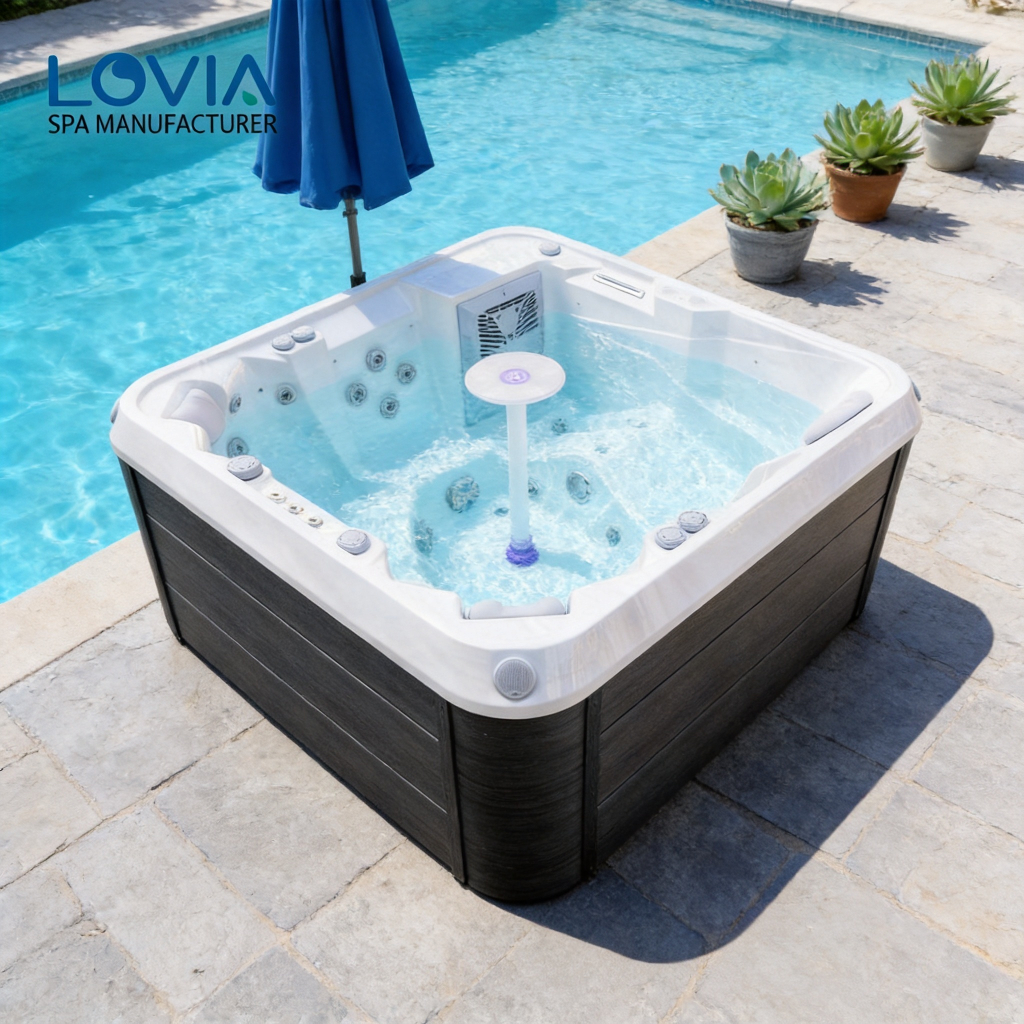
How does the inner tank thickness affect the structural strength of a freestanding jacuzzi tub?
From an engineering perspective, the relationship between thickness and strength is not a simple direct proportionality.
Materials mechanics research shows that the bending stiffness of a sheet material is directly proportional to the cube of its thickness. This means that for every certain increase in thickness, the increase in structural stiffness often far exceeds the increase in the thickness itself.
I. Structural Advantages of Increased Thickness
For example, when the thickness of the acrylic inner tank increases from 3 mm to 6 mm, although the thickness only doubles, the theoretical bending resistance may increase by nearly eight times. Therefore, a thicker inner tank can effectively reduce tub wall deformation and bottom sinking problems.
Industry test data shows that under the same load conditions:
• 3mm acrylic sheets have an average deformation of approximately 7 to 9 mm;
• 5mm acrylic sheets have an average deformation of approximately 3 to 4 mm;
• 6mm acrylic sheets typically have an average deformation of less than 2 mm.
For freestanding jacuzzi tubs that operate continuously with full water, this difference directly affects product stability and lifespan.
II. Fatigue Wear During Long-Term Use
Many structural failures do not stem from a single overload, but from the accumulation of repeated stress over a long period.
Freestanding jacuzzi tubs undergo daily processes of filling, heating, cooling, and draining water. These cycles subject the material to continuous expansion and contraction stress. Over time, thinner inner tanks are more prone to developing microcracks, which can eventually lead to leaks or even structural failure.
Therefore, high-end freestanding hot tub brands typically prioritize thicker sheets to improve the product's long-term fatigue resistance.
III. How Much Does Inner Tank Thickness Affect Insulation Performance?
Consumers purchasing outdoor freestanding jacuzzi tubs generally expect a stable and comfortable hot water experience. Thermal insulation performance directly impacts user comfort and operating costs.
While key factors determining insulation effectiveness include foam layer thickness, insulation cotton quality, and external panel structure, the thickness of the inner tank also plays a crucial role.
According to heat conduction theory, as material thickness increases, the path for heat transfer outwards lengthens, thus reducing the rate of heat loss. Some experimental data show that freestanding hot tubs with a 5mm acrylic inner tank can reduce heat loss by approximately 10% to 15% compared to 3mm products.
This difference is particularly noticeable in winter environments. For example, at an ambient temperature of around 5°C, a thicker-walled freestanding hot tub can maintain the set water temperature for a longer period, reducing the frequency of heating system activation and lowering power consumption.
For commercial projects, this energy-saving advantage further translates into operational cost advantages. In the long run, the energy savings from a thicker inner tank often offset some of the initial purchase cost.
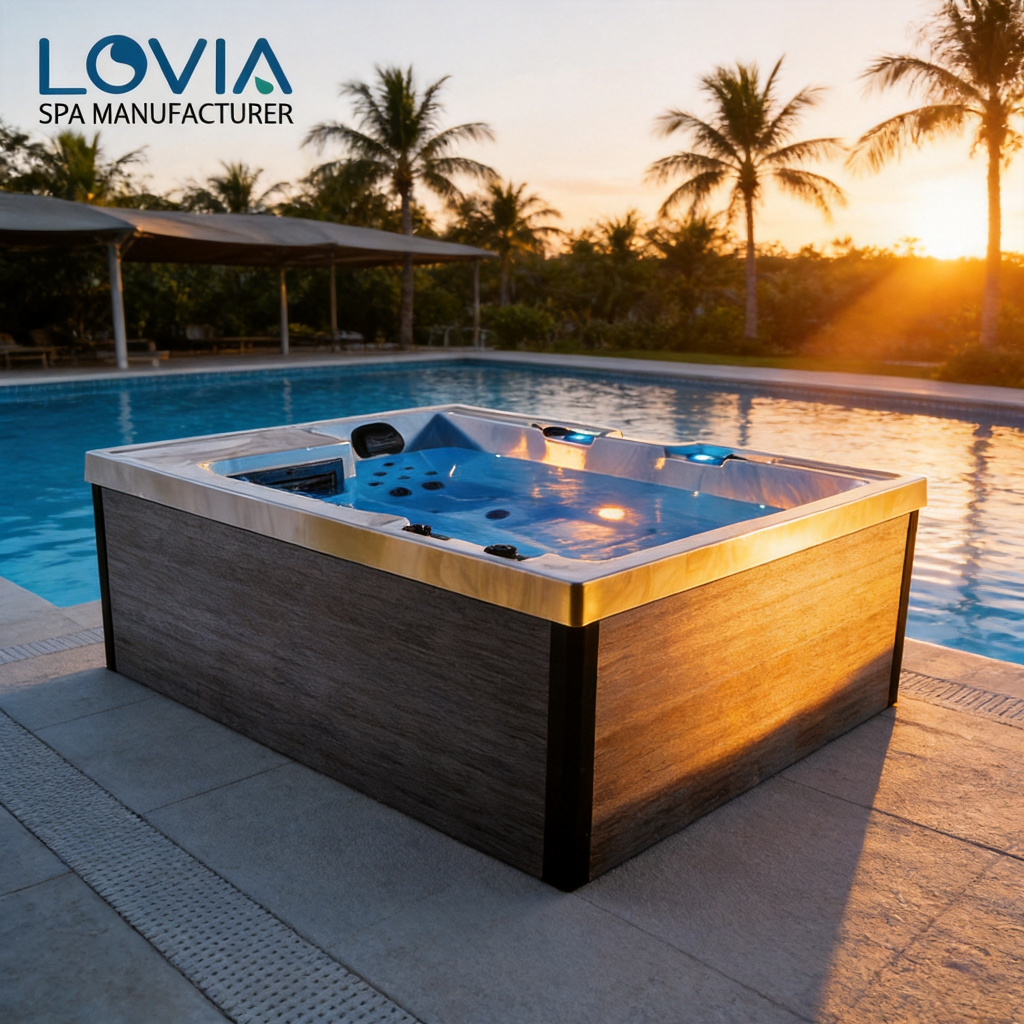
The Relationship Between Inner Tank Thickness and the Lifespan of Freestanding Hot Bathtubs
If structural strength determines whether a freestanding hot bathtub can be used normally, then the thickness of the inner tank largely determines its lifespan.
Industry experience data shows that products with different thicknesses exhibit significant differences in lifespan.
The average lifespan of a standard thin-walled freestanding hot bathtub is typically between 5 and 8 years; medium-thickness products generally reach 8 to 12 years; while freestanding hot bathtubs using high-quality acrylic (5mm or thicker) combined with fiberglass reinforcement generally have a lifespan of over 15 years.
The main reason for this difference is that greater thickness retains more safety margin even after material aging. Even after years of UV exposure and thermal cycling, thick-walled structures can maintain a higher level of strength, while thin-walled products are more prone to structural problems due to material performance degradation.
For consumers, extended lifespan not only means lower replacement costs but also lower maintenance frequency and a more stable user experience.
Why is a thicker inner tank design more necessary for freestanding hot bathtubs in outdoor environments?
Many consumers mistakenly believe that indoor bathtubs and outdoor freestanding spa hot tubs have similar structural requirements. In reality, the environmental pressures they face are completely different.
Ultraviolet radiation in outdoor environments is a significant factor contributing to the aging of plastic materials. Studies show that polymers exposed to sunlight for extended periods may experience a 2% to 5% decrease in mechanical properties annually. After several years, this performance degradation becomes quite significant.
Furthermore, rain, air humidity, salt spray, and diurnal temperature variations all accelerate the aging process. For freestanding jacuzzi tubs designed for long-term outdoor use, insufficient initial thickness can cause the structural strength to rapidly approach safety limits after aging, increasing the risk of damage.
Therefore, professional outdoor freestanding spa hot tub manufacturers often employ thicker acrylic layers and stronger reinforcement structures to ensure their products can withstand long-term outdoor use.
Is thicker always better for freestanding spa hot tubs?
While thickness is important, it doesn't mean the thicker the better.
From a product design perspective, increased thickness leads to increased costs, weight, and manufacturing difficulties. If the thickness exceeds a reasonable range, the performance improvement may be far less than the cost increase.
Currently, the industry generally believes that a 5mm to 6mm acrylic layer is the ideal configuration range for outdoor freestanding spa hot tubs used in homes. If combined with a 6mm to 10mm fiberglass reinforcement layer, the overall structure can meet the needs of most long-term use.
Therefore, consumers should focus on "reasonable thickness" and "overall structural design" when purchasing, rather than simply pursuing the highest possible thickness.
FAQ
What is the appropriate thickness for the inner tank of an outdoor freestanding hot tub?
The industry generally believes that a 5mm to 6mm acrylic inner tank is more suitable for long-term outdoor use. If a fiberglass reinforcement layer is also added, the overall durability and stability will be further improved.
Does the inner tank thickness affect the heat retention of a freestanding jacuzzi tub?
It will have some impact. A thicker inner tank can reduce the rate of heat transfer, thereby reducing heat loss. However, the heat retention performance needs to be evaluated in conjunction with the foaming layer and the overall structure.
Is there a big difference between a 3mm and 5mm inner tank for a freestanding jacuzzi tub?
The difference is quite significant. A 5mm inner tank typically offers significantly better resistance to deformation, fatigue, and overall lifespan than a 3mm tank.
Is a thicker inner tank always more durable in a freestanding spa hot tub?
Assuming the same material quality and manufacturing process, a thicker inner tank generally offers higher structural strength and a longer lifespan, but the material grade and overall structural design must still be considered.
What thickness data should you focus on when buying a freestanding spa hot tub?
It is recommended to focus on the actual thickness of the acrylic layer, the thickness of the fiberglass reinforcement layer, and the overall structural configuration, rather than just the advertised total thickness figure.