


Common Mistakes in Outdoor Hot Tub Purchasing: What Buyers Should Avoid?
2026-08-21 15:35As the outdoor leisure lifestyle continues to develop globally, outdoor whirlpool spa hot tubs have evolved from a luxury item found in a few high-end residences to an increasingly common health and leisure facility in family patios, villas, boutique hotels, resorts, and commercial leisure projects. More and more consumers want to create an outdoor experience area in their homes or commercial spaces that combines relaxation, spa treatments, social interaction, and health management by installing an outdoor spa hot tub.
However, for first-time outdoor whirlpool spa hot tub buyers, choosing the right product is not a simple matter. The market offers a wide variety of outdoor spa hot tubs, with significant differences between brands, configurations, sizes, and manufacturing processes. Without professional judgment during the purchasing process, it's easy to make common mistakes, such as focusing solely on price while ignoring quality, focusing only on appearance while ignoring the internal system, focusing only on the number of massage nozzles while ignoring the actual spa effect, or ignoring the installation environment, which can prevent the equipment from performing at its best.
These mistakes not only affect the user experience later on but may also increase maintenance costs and even shorten the lifespan of the outdoor spa hot tub. For home consumers, a poor purchase can mean incurring high costs without achieving the desired experience; for hotels, guesthouses, and construction projects, it can impact customer satisfaction and project profitability.
Therefore, understanding common purchasing pitfalls and mastering the correct selection methods is crucial before purchasing an Outdoor Hot Tub. A high-quality outdoor hot tub requires not only a good design but also high standards in structure, materials, water circulation, massage systems, energy efficiency, safety standards, and after-sales service.
This article will analyze the most common problems encountered in the outdoor whirlpool spa hot tub purchasing process from a practical purchasing perspective, helping buyers understand how to avoid these mistakes and choose an Outdoor Hot Tub product that better suits their needs.
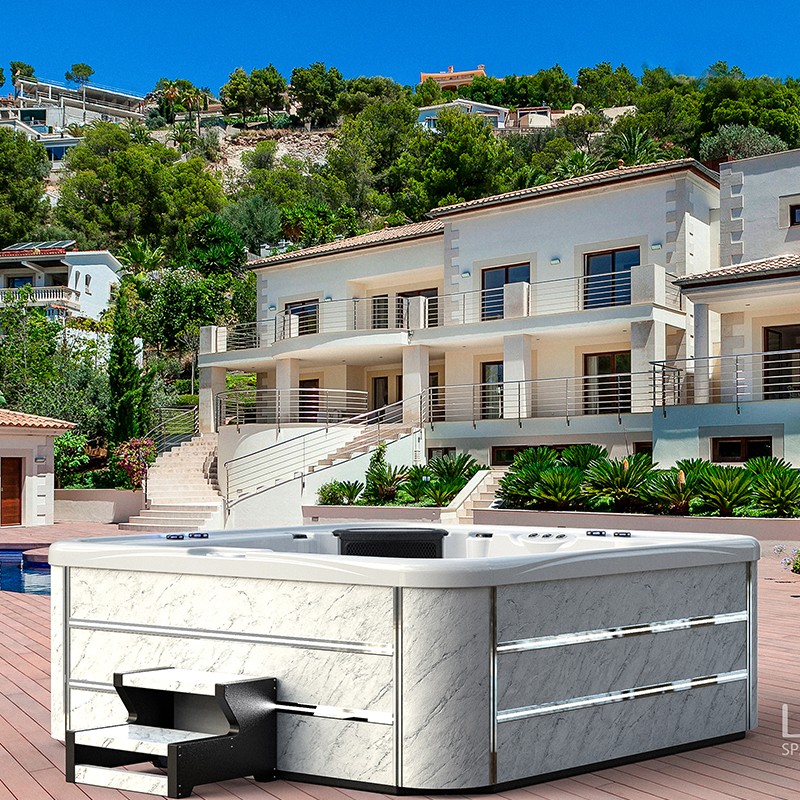
I. Focusing Solely on Purchase Price While Ignoring the Long-Term Value of Outdoor Hot Tubs
Price is often one of the most important factors for buyers when purchasing an Outdoor Hot Tub. Especially for first-time outdoor spa hot tub buyers, it's easy to use the prices quoted by different suppliers as the primary criterion, hoping to purchase a feature-rich product within the lowest budget.
However, outdoor spa hot tubs are not simply household appliances; they are integrated systems encompassing heating, water circulation, filtration, massage, and intelligent control. Therefore, the purchase price is only one part of the overall operating cost and does not fully represent the product's value.
Some low-priced outdoor whirlpool spa hot tubs may have a significant advantage in the initial purchase price, but to reduce production costs, they may use less common materials, simpler insulation, or lower-performance core components. For example, some products may reduce the thickness of the insulation layer, use less efficient heating elements, or employ ordinary water pump systems. While these designs may lower the product's selling price, users may face higher energy consumption, more frequent maintenance, and a shorter lifespan in the long run.
For example, outdoor whirlpool spa hot tubs need to maintain a stable water temperature, especially in areas with low ambient temperatures. If the insulation is inadequate, the heating system needs to operate continuously to replenish heat, potentially leading to significantly increased electricity bills over time. Therefore, some products with lower purchase prices may not have low overall costs after several years of use.
Professional buyers typically focus on the Total Cost of Ownership (TCO) when choosing an Outdoor Hot Tub, including equipment purchase costs, transportation and installation costs, daily electricity consumption, water quality maintenance costs, filter consumable costs, and future repair costs. Rather than simply pursuing the lowest price, it's more important to choose a product with stable performance, easy maintenance, and reasonable long-term operating costs.
Therefore, price should be one factor to consider when purchasing an outdoor whirlpool spa hot tub, not the sole deciding factor. Truly high-value products should offer stable performance, a good user experience, and long-term reliability at a reasonable price.
II. Neglecting Installation Space Leads to Incorrect Outdoor Hot Tub Size Selection
Incorrect size selection is a very common problem in Outdoor Hot Tub purchasing. Many consumers, seeing that large outdoor hot tubs offer more seating and more massage functions, believe that bigger is always better. However, the size of the outdoor spa hot tub must match the actual installation environment; otherwise, it may affect the overall user experience.
First, the available space needs to be considered. Different outdoor environments have completely different size requirements. For example, small urban courtyards typically have limited space. While an overly large outdoor spa hot tub could accommodate more people, it might take up a significant amount of activity area, diminishing the courtyard's original recreational function.
Generally, small outdoor hot tubs for two to three people are more suitable for small courtyards or terraces; medium-sized outdoor whirlpool spa hot tubs for four to six people are suitable for ordinary family courtyards; and large-capacity models for six or more people are appropriate for large villa courtyards or commercial projects.
Secondly, the maintenance space around the equipment needs to be considered. Many buyers only calculate the size of the equipment itself when measuring the installation location, neglecting future maintenance needs. In reality, a certain amount of space usually needs to be reserved around the outdoor whirlpool spa hot tub for equipment inspection, electrical maintenance, filter replacement, and routine cleaning.
For example, a 2200mm x 2200mm outdoor spa hot tub does not necessarily require only about 4.8 square meters of space. The surrounding operating area also needs to be considered during installation, so the overall planned area is usually larger.
Furthermore, size also affects transportation and installation difficulty. Large outdoor whirlpool spa hot tubs are heavier, and if the installation location has narrow passageways, they may not be able to be transported smoothly to the designated area. Therefore, before purchasing, it's necessary to confirm in advance:
Whether the installation location can accommodate the equipment;
Whether the transportation path is wide enough;
Whether the ground has sufficient load-bearing capacity;
Whether power and drainage connections are convenient.
Properly planning the dimensions is a crucial foundation for ensuring the long-term stable use of an outdoor spa hot tub.
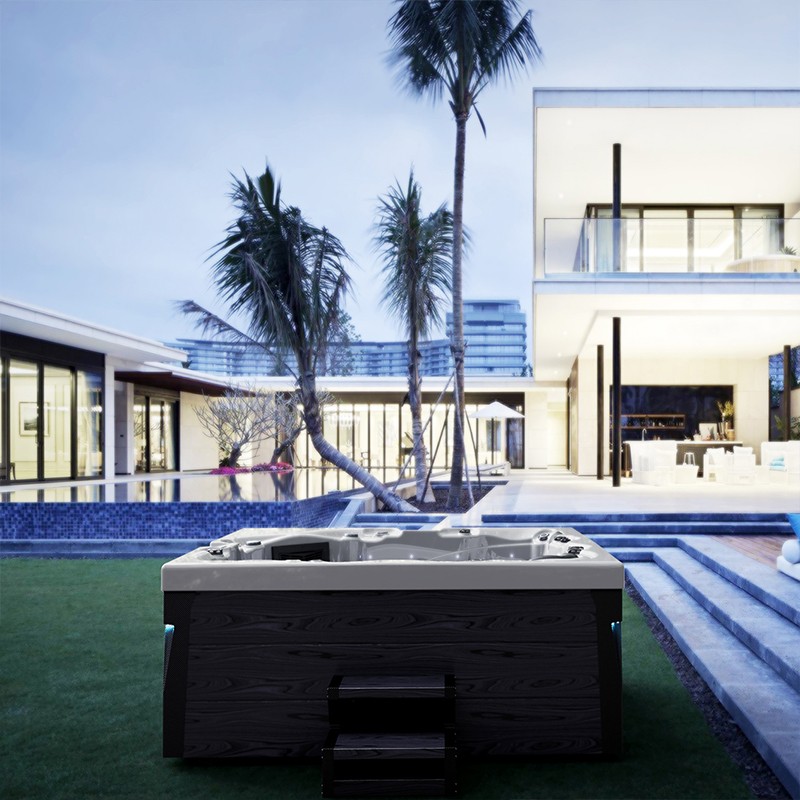
III. Focusing solely on the number of massage nozzles while ignoring true spa performance
Massage function is a key selling point of outdoor whirlpool spa hot tubs, so many buyers pay particular attention to the number of nozzles during procurement. Some suppliers also attract consumers by advertising "dozens or even hundreds of massage nozzles."
However, the number of nozzles does not fully represent the massage effect of an outdoor whirlpool spa hot tub.
The factors that truly determine the massage experience include pump performance, nozzle type, nozzle layout, water pressure, and overall water system design. If an outdoor spa hot tub has a large number of nozzles but the pump power is insufficient, it may not be able to provide enough pressure simultaneously during actual use, ultimately leading to a decrease in the massage effect.
For example, high-quality outdoor whirlpool spa hot tubs are usually designed specifically for different parts of the human body. The neck and shoulder areas typically require concentrated water flow massage to help relieve pressure; the lower back area needs a stable and continuous water flow stimulation; and the leg area requires a wider range of massage coverage.
Therefore, when purchasing an Outdoor Hot Tub, buyers should focus on understanding:
What type of water pump the product uses;
How the massage areas are designed;
Whether different seats have different massage functions;
Whether the water pressure is adjustable.
A truly excellent outdoor whirlpool spa hot tub is not simply about piling on more parts, but about optimizing the overall spa experience based on ergonomics.
IV. Neglecting the Water Quality Management System Leads to Increased Maintenance Pressure
Water quality management is one of the most important factors affecting the user experience during the long-term operation of an outdoor spa hot tub. Many buyers focus on appearance, size, and massage functions when purchasing, but neglect the importance of filtration and disinfection systems.
Because outdoor whirlpool spa hot tubs typically maintain a warm water temperature, the warm water environment is more susceptible to contaminants generated by human use, such as sweat, sebum, skincare product residue, and dust from the air. If the water circulation and filtration system is inadequately designed, problems such as cloudy water, increased odor, and increased cleaning frequency may occur.
High-quality outdoor spa hot tubs typically feature multiple water treatment systems, including:
High-efficiency circulating filtration systems;
Ozone purification systems;
UV-assisted disinfection systems;
Intelligent water quality monitoring systems.
The filtration system determines the efficiency of impurity removal, while the circulating system ensures the water remains consistently uniform.
Some buyers opt for simpler configurations to reduce costs, but after long-term use, they find that frequent water changes and equipment cleaning increase maintenance burdens.
Therefore, when choosing an outdoor spa hot tub, water quality management capabilities should be as important as massage functions. For home users, stable water quality enhances daily comfort; for hotels and commercial projects, it directly impacts customer reviews and operational efficiency.
V. Ignoring the Impact of the Outdoor Environment and Underestimating the Importance of Outdoor Hot Tub Materials and Structure
Many buyers focus on design, massage functions, and price when purchasing outdoor hot tubs, neglecting the fact that these products are installed outdoors and must withstand more complex natural conditions. Unlike indoor bathtubs, outdoor spa hot tubs are constantly exposed to sunlight, rain, temperature fluctuations, and air pollution. Therefore, material quality and structural design directly impact product lifespan.
One of the biggest challenges of outdoor environments is ultraviolet (UV) radiation. Prolonged exposure to sunlight can cause some low-quality outer shell materials to fade, age, and even degrade their surface properties. Therefore, high-quality outdoor spa hot tubs typically use UV-resistant shell materials to improve product stability in long-term outdoor environments.
Besides the shell material, the internal insulation structure is equally important. Outdoor spa hot tubs need to maintain a constant temperature, and changes in the ambient temperature affect the rate of heat loss. Insufficient insulation requires the heating system to be constantly activated to replenish heat, increasing energy consumption and potentially affecting heating efficiency.
For example, in areas with low winter temperatures, if an outdoor spa hot tub lacks effective insulation, users may need to wait longer for the water to reach the set temperature, increasing the operating time and significantly raising long-term operating costs. Therefore, professional manufacturers typically employ multi-layered insulation structures, including high-density foam insulation layers, bottom insulation, and highly airtight insulation covers to reduce heat loss.
Furthermore, the frame structure is another easily overlooked aspect. Because outdoor whirlpool spa hot tubs withstand the weight of water and the pressure of people using them for extended periods, the internal support structure must possess sufficient strength. Some low-quality products may experience structural loosening, increased noise, or decreased stability after prolonged use.
Therefore, when purchasing an outdoor spa hot tub, buyers should not only focus on its "look," but should also delve into the materials used, the insulation method, the reliability of the frame structure, and whether the manufacturer has undergone long-term market validation. A truly high-quality outdoor whirlpool spa hot tub requires a balance between aesthetic design and internal quality.
VI. Failure to consider local climate conditions led to mismatched outdoor hot tub configurations
Different countries and regions have significantly different climates, resulting in distinct requirements for outdoor whirlpool spa hot tub configurations. A model suitable for a warm region may not be appropriate for a cold one; conversely, a product designed for cold environments might involve wasted capacity or unnecessary features in hot, humid areas.
For instance, in regions with cold winters—such as Northern Europe, Canada, and the northern United States—users prioritize insulation performance, freeze protection, and heating efficiency. Winter temperatures in these areas can remain below 0°C for extended periods; if the equipment lacks adequate insulation, maintaining the water temperature becomes significantly more difficult. Therefore, buyers in cold regions should focus on:
Whether the equipment features robust insulation;
Whether the heating system's power output is sufficient for the local environment;
Whether the plumbing includes freeze protection;
Whether the control system operates reliably.
In contrast, users in Southeast Asia, the Middle East, and tropical regions prioritize heat dissipation, water quality stability, and UV resistance. Given the high ambient temperatures and prolonged exposure to heat, material weather resistance and water circulation efficiency are critical.
Additionally, in humid or rainy regions, electrical safety and waterproofing design are paramount. Since outdoor whirlpool spa hot tubs integrate water, electricity, and heating systems, inadequate protective design can compromise safety. Consequently, buyers should clearly communicate the installation details to the supplier, including:
Local average temperatures;
Seasonal climate variations;
Intended installation location;
Frequency of use.
Professional manufacturers typically offer tailored recommendations based on specific market conditions—such as adjusting insulation structures, optimizing control systems, or suggesting models best suited to the local climate.
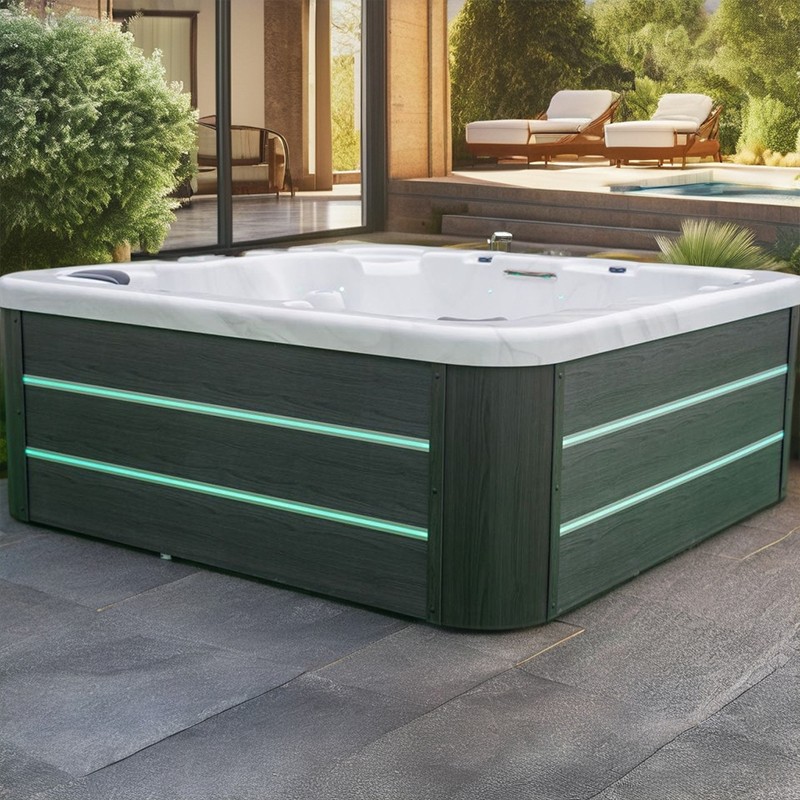
VII. Focusing solely on product images and pricing while overlooking supplier capabilities
While an individual consumer might only be purchasing a single unit, for overseas importers, hotel projects, and bulk purchasers, the choice of supplier is just as critical as the product itself.
In recent years, rising demand for outdoor whirlpool spa hot tubs has led to an influx of suppliers of varying scales. Some companies operate primarily as traders, whereas manufacturers with genuine R&D and production capabilities can offer more consistent product quality and long-term technical support.
Many buyers fall into common pitfalls when selecting a supplier. First, focusing solely on price. While quotes from different suppliers may vary significantly, a low price can mask issues such as inferior materials, downgraded specifications, or inadequate after-sales support. Second, relying only on product images. Attractive photos do not fully reflect manufacturing capabilities; what truly matters is whether the factory possesses mature production processes and a robust quality control system. Third, prioritizing delivery speed while overlooking the potential for long-term partnership.
A reliable outdoor hot tub manufacturer typically possesses the following capabilities:
Stable production capacity to ensure the fulfillment of bulk orders;
Comprehensive quality inspection processes to guarantee consistent equipment performance;
Extensive export experience and an understanding of market requirements in different countries;
Support for OEM and ODM customization to meet diverse project needs;
Provision of technical documentation and after-sales support to assist with installation and usage issues.
For hotels, real estate developers, or overseas brand clients, a supplier is not merely a product provider but a partner throughout the project's implementation. Therefore, conducting a thorough evaluation of the supplier before purchasing outdoor spa hot tubs is crucial.
VIII. Ignoring certification standards, thereby increasing risks in sales and installation
Since outdoor spa hot tubs involve electrical systems, heating systems, and water circulation equipment, safety standards and certification requirements are paramount. Some buyers opt for products lacking full certification to cut procurement costs, a practice that can lead to significant risks down the line.
Safety requirements for outdoor spa hot tubs vary by market. For instance, the European, North American, and Australian markets all have specific regulations regarding electrical safety, material environmental standards, and product testing.
Common certifications include:
CE certification;
ETL certification;
SAA certification;
RoHS certification;
ISO quality management system certification.
These certifications not only signify compliance with market requirements but also reflect the manufacturer's commitment to quality control.
For example, if a hotel project purchases outdoor spa hot tubs for commercial use, product safety impacts not only the equipment's lifespan but also the guest experience and the brand's reputation. Electrical faults, water circulation issues, or safety hazards could result in substantial operational losses.
Therefore, when purchasing, one should not simply ask "What is the price?" but also verify:
Which certifications the product holds;
Whether the certifications are authentic and valid;
Whether the product complies with target market regulations;
Whether relevant technical documentation can be provided.
For professional buyers, certification is not an added cost but a vital safeguard against future risks.
IX. Neglecting After-Sales Service Leads to Long-Term Usage Difficulties
Outdoor whirlpool spa hot tubs are designed for long-term use; therefore, after-sales service capability is a crucial factor that should not be overlooked during the procurement process.
Some buyers focus solely on whether the equipment functions correctly at the time of purchase, failing to consider maintenance needs that may arise years later. For instance, if the control panel malfunctions, the water pump requires replacement, or the filtration system needs repair, a lack of timely spare parts and technical support from the supplier could result in prolonged downtime.
After-sales service is particularly critical for overseas customers. Due to the significant distances involved, minor issues can escalate into unresolved, long-term problems without the backing of a reliable supplier.
Reputable outdoor spa hot tub suppliers typically provide:
Detailed installation instructions;
User and maintenance manuals;
Availability of common spare parts;
Remote technical support;
A responsive after-sales service system.
For commercial clients, after-sales service can even impact project profitability. For example, if an outdoor spa hot tub at a hotel remains out of service for an extended period, it directly affects guest experience and room value.
Therefore, after-sales capability should be prioritized just as highly as product quality when purchasing an outdoor spa hot tub.
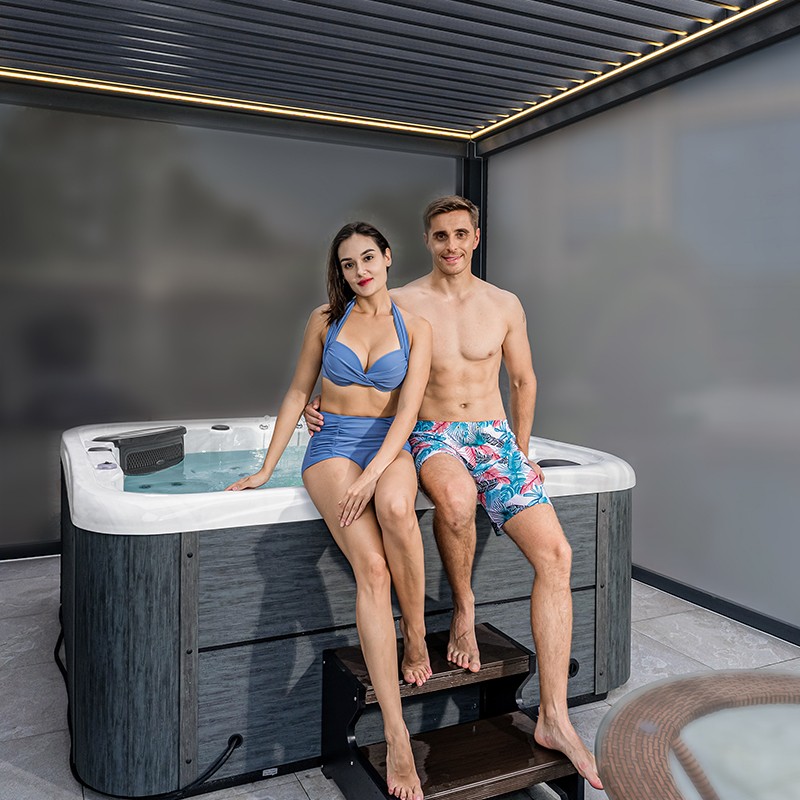
The Right Way to Purchase an Outdoor Hot Tub: From Needs Analysis to Supplier Selection
To avoid the common pitfalls mentioned above, buyers can adopt a systematic approach when evaluating outdoor whirlpool spa hot tubs.
First, clarify the intended use. Different purposes call for different products. For example, residential users typically prioritize comfort and wellness benefits, whereas hotel projects focus more on durability and the ability to withstand high-frequency usage.
Second, determine the installation environment. Before purchasing, measure the available space—including length, width, height, and the clearance required for maintenance access. Also, verify the floor's load-bearing capacity, power supply requirements, and drainage conditions.
Third, define core configuration requirements, including:
Capacity (number of users);
Massage functions;
Water quality management systems;
Smart control features;
Insulation performance.
Fourth, evaluate supplier capabilities. Rather than comparing prices alone, consider a range of factors:
Factory scale;
Manufacturing experience;
Product certifications;
Export track record;
After-sales support.
Fifth, consider long-term operating costs. A high-quality outdoor whirlpool spa hot tub should not only be competitively priced at the time of purchase but also ensure stable, reliable operation for years to come.
By following this procurement process, buyers can minimize the risk of making the wrong choice and maximize the value of their investment.
FAQs About Purchasing Outdoor Hot Tubs
FAQ 1: What are the most common mistakes made when purchasing an outdoor whirlpool spa hot tub?
Common mistakes include focusing solely on price, overlooking size compatibility, overemphasizing the number of jets, ignoring water quality systems, and failing to evaluate the supplier's capabilities. These issues can lead to a poor user experience and increased maintenance costs later on.
FAQ 2: What size outdoor spa hot tub should I choose?
The size should be determined by the available installation space and the number of users. Compact models are suitable for two to three people; four-to-six-person models are generally ideal for families; and larger-capacity products are suitable for hotels or spacious courtyards.
FAQ 3: Does a higher price guarantee better quality?
Price is not the only criterion. While higher-priced products often come with more features, buyers should also consider materials, system design, manufacturing craftsmanship, and after-sales service.
FAQ 4: What are the most important features of an outdoor spa hot tub?
No single feature determines the entire experience. Generally, the heating system, water circulation system, filtration system, pump performance, insulation structure, and safety design are all crucial.
FAQ 5: Why is it important to choose a specialized outdoor hot tub manufacturer?
Specialized manufacturers typically offer stable production capabilities, robust quality control systems, extensive export experience, and reliable after-sales support, all of which help minimize risks associated with both purchasing and long-term use.