


Buying an Outdoor Hot Tub with a Lounger: What Should You Look For?
2026-10-13 15:35As living standards rise, more households are prioritizing the creation of outdoor leisure spaces—such as courtyards, terraces, and balconies. Consequently, outdoor hot tubs featuring lounge seats have become increasingly popular amenities in high-end homes, villas, guesthouses, hotels, and resorts. Unlike traditional outdoor spa hot tubs, the lounge seat design allows the body to maintain a natural, comfortable semi-reclined posture. This not only relieves physical fatigue but also works in tandem with massage jets to provide a comprehensive hydrotherapy experience, driving steady growth in market demand.
However, as the industry expands, the number of brands offering these spa hot tubs has surged, leading to significant variations in materials, massage systems, insulation performance, smart controls, and after-sales service. Consumers often focus on price or aesthetics while overlooking the critical factors that determine the actual user experience and product longevity. This can result in issues such as mediocre massage performance, high energy consumption, difficult maintenance, or premature aging of the unit after just a few years of use.
Therefore, understanding the core specifications and key purchasing criteria is essential before buying an outdoor spa hot tub with a lounge seat. This article provides a comprehensive analysis covering product positioning, materials, ergonomic design, massage systems, insulation and energy efficiency, safety features, installation and maintenance, and after-sales support, helping consumers make informed choices tailored to their needs.
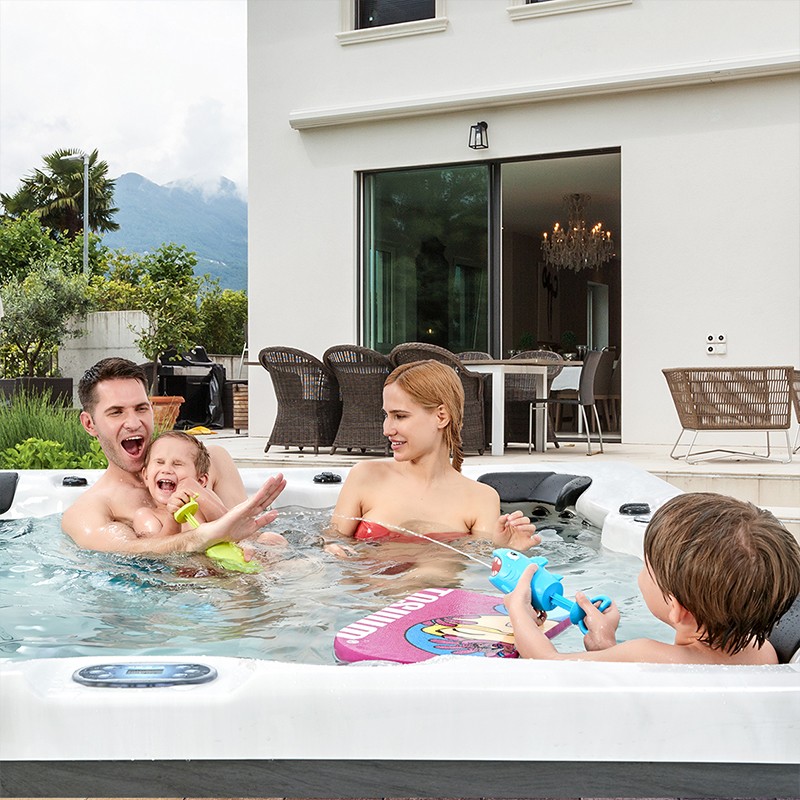
Why are more people choosing outdoor hot tubs with lounge seats?
In recent years, the global SPA and home hydrotherapy market has seen steady growth. Data from various market research firms indicates that the home SPA equipment market has maintained an average annual growth rate of approximately 6% to 8%, with an increasing share of products featuring ergonomic lounge seats. This trend demonstrates that consumers prioritize comfort and wellness experiences over basic soaking functions, leading more people to opt for fully featured outdoor spa hot tubs that include lounge seats.
Compared to standard hot tubs with upright seating, the primary advantage of a model with a lounge seat is that it allows the body to maintain a more natural, relaxed posture. When in a semi-reclined position, the shoulders, back, waist, hips, and legs receive more uniform support; combined with strategically placed massage jets, the water flow covers a wider range of muscle groups, resulting in a superior spa experience. This form of relaxation holds great appeal for office workers who spend long hours at a desk, fitness enthusiasts, and those seeking to improve their sleep quality.
Furthermore, an outdoor spa hot tub featuring a lounge seat can significantly elevate the overall quality of a patio or garden space. Many high-end homestays, boutique hotels, and villa developments now incorporate outdoor spas as a key feature to enhance the guest experience; for homeowners, it represents not merely a piece of leisure equipment, but a reflection of a specific lifestyle.
Clarify Your Actual Needs Before Purchasing an Outdoor Hot Tub
When shopping for an outdoor jacuzzi hot tub with a lounge seat, many consumers focus immediately on brand or price, yet the true deciding factor should be their own specific needs. Only by clearly defining the intended usage scenario can one avoid future issues such as insufficient capacity, wasted features, or a poor user experience.
For instance, if the tub is primarily for a couple, a model designed for three to four people usually suffices, while also offering extra space for greater comfort. If there are many family members or frequent gatherings with friends, a larger model—accommodating five, six, or even more people—would be more appropriate. For commercial settings like homestays or hotels, priorities shift toward equipment durability, continuous operational capability, and long-term maintenance costs, rather than just the initial purchase price.
Additionally, local climate conditions should be taken into account. In regions with cold winters, thermal insulation, heating efficiency, and freeze protection are crucial; conversely, in areas with high temperatures, heavy rainfall, or intense UV exposure, the weather resistance and UV stability of the tub's materials become the primary concerns.
Ergonomic Design Is Crucial for Outdoor Hot Tubs with Lounge Seats
Many consumers mistakenly believe that the mere presence of a lounge seat classifies a spa hot tub as a high-end product; in reality, this is not the case. Truly excellent outdoor hot tubs featuring a lounge seat invest significant time in ergonomic design, rather than simply tacking on a reclined shape.
The first priority is whether the lounge seat's contours align with the body's natural posture. The human body features distinct physiological curves—from the shoulders and waist to the hips and legs. If the lounge seat design is too flat or straight, it can leave the lower back unsupported or cause uneven pressure on the shoulders, leading to fatigue during prolonged soaks. High-quality products typically incorporate multi-section curves based on ergonomic data to distribute body weight evenly, thereby enhancing overall comfort.
Secondly, consider suitability for users of varying heights. Differences in ergonomic sizing exist between Western and Asian brands; some imported spa hot tubs with lounge seats are better suited for taller individuals, whereas certain domestic brands are optimized for Asian consumers. Therefore, whenever possible, it is advisable to test the product in person to ensure proper support for the shoulders, lower back, and legs.
Additionally, the slip-resistant design of the lounge seat surface should not be overlooked. Superior products often feature micro-textured surfaces, anti-slip raised patterns, or designated foot-anchoring zones. These features prevent the user from sliding due to water jet pressure during a massage, further enhancing both safety and comfort.
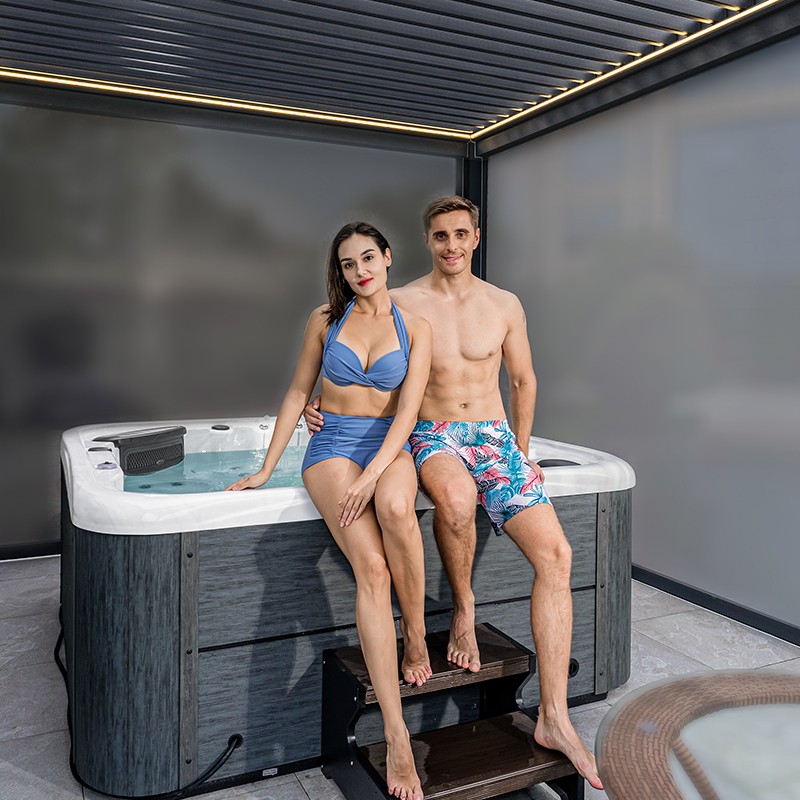
Tub Material Determines Product Lifespan and Long-Term User Experience
For any outdoor jacuzzi hot tub with a lounge seat, the material is a crucial factor influencing its lifespan. Mainstream products on the market today primarily utilize materials such as acrylic, rotomolded plastic, and fiberglass, each with its own unique characteristics.
Acrylic is currently the most widely used material in the mid-to-high-end market. It offers a smooth, refined finish alongside excellent corrosion resistance, UV stability, and heat retention properties. To further enhance structural integrity, many high-quality spa hot tubs reinforce the back of the acrylic shell with multiple layers of fiberglass. This makes the tub body more robust and resistant to cracking or warping, even when subjected to long-term exposure to fluctuating temperatures. Rotomolded materials have gained increasing attention in recent years. Manufactured using a seamless, one-piece molding process, they offer high impact resistance, making them ideal for cold climates or environments involving complex transport conditions. However, compared to high-end acrylic products, rotomolded models often fall slightly short in terms of aesthetic finish and the sophistication of their massage systems.
As for fiberglass, its lower manufacturing cost means it is primarily used in entry-level products. While price is an advantage, long-term outdoor exposure can lead to issues such as aging, fading, or even cracking; consequently, it is better suited for users with limited budgets and lower usage frequency.
More Jets Don't Necessarily Mean a Better Massage
When comparing outdoor hot tubs with loungers across different brands, consumers often encounter marketing claims boasting hundreds of massage jets, leading to the misconception that a higher jet count guarantees a superior massage. In reality, the massage experience is determined by factors such as jet layout, water pressure, pump performance, and jet type, rather than sheer quantity.
A well-designed outdoor hot tub with loungers typically incorporates jets of varying specifications tailored to different parts of the body. For instance, rotating jets in the shoulder and neck area help relieve muscle tension; high-pressure, targeted jets in the lumbar region provide a deep-tissue massage; and high-flow jets for the legs and soles promote blood circulation. This strategic layout is far more effective than simply increasing the number of jets.
Furthermore, features such as adjustable jet angles, variable water intensity, and independent zone control directly impact the user experience. Consumers seeking a premium spa experience should focus on the overall design of the massage system rather than merely comparing technical specifications.
Pumps and Heating Systems Determine Long-Term Quality
The water pump is considered the "heart" of an outdoor hot tub with loungers; it not only powers the massage jets but also dictates the efficiency of the entire circulation and filtration system. Current market offerings typically feature single, dual, or even triple-pump configurations, with different setups suited to varying tub capacities and usage scenarios. Generally speaking, a single-pump or dual-pump system suffices for a household of about four people. However, larger outdoor spa hot tubs—especially those featuring lounge seats and designed for six or more people—benefit from dual-pump or even multi-pump configurations to ensure adequate water pressure across multiple massage zones simultaneously.
Beyond the pumps, the heating system warrants close attention. Outdoor environments often experience significant temperature fluctuations; if a tub has low heating efficiency or poor insulation, energy consumption rises, leading to substantially higher long-term operating costs. Data shows that models featuring full-foam insulation, thickened covers, and high-density thermal barriers can reduce heat loss by approximately 20% to 40% compared to standard insulation designs—with even greater energy savings in colder regions. Consequently, when comparing prices, consumers should factor long-term energy costs into their overall budget rather than focusing solely on the initial purchase price.
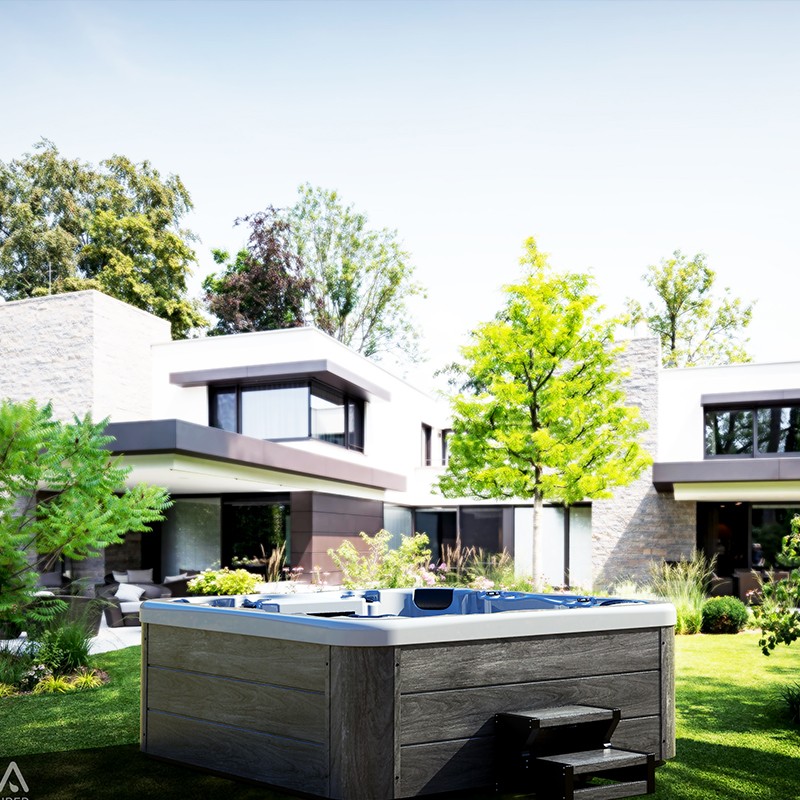
Water Treatment Systems Affect Maintenance and Operating Costs
For long-term ownership of an outdoor hot tub with lounge seats, maintaining water quality is crucial not only for the user experience but also for equipment longevity and maintenance costs. Inadequate filtration systems can lead to issues such as cloudy water, bacterial growth, and pipe scaling, thereby increasing the frequency of water changes and the overall maintenance workload.
Mainstream products typically rely on cartridge filters paired with circulation systems for basic filtration, while many mid-to-high-end models incorporate additional features like ozone sterilization, UV disinfection, or saltwater purification systems. Ozone effectively reduces bacterial counts and lowers the need for chemical disinfectants; UV systems further enhance sterilization efficiency; and saltwater systems soften the water, reducing skin irritation. For home users, selecting a model with a comprehensive water treatment system improves hygiene standards while simultaneously lowering long-term maintenance costs.
Safety Features and Smart Functions Are Also Key Considerations
As outdoor hot tubs with lounge seats involve constant exposure to both water and electricity, safety performance must be a top priority. Consumers should prioritize features such as earth-leakage protection, grounding protection, dry-burn prevention, automatic high-temperature shut-off, non-slip bases, and child safety locks. While these features may often go unnoticed during routine use, they are crucial for ensuring safety in critical situations.
In recent years, an increasing number of brands have introduced smart control systems. Many high-end outdoor jacuzzi hot tubs with loungers support features like Wi-Fi remote control, mobile app-based heating scheduling, automatic water temperature regulation, automated filtration cycles, and equipment fault alerts. For busy users, the ability to start heating the tub before arriving home—allowing them to enjoy a spa experience at a constant temperature immediately upon return—undoubtedly enhances the overall user experience.
Installation Requirements and After-Sales Service Should Not Be Overlooked
Many consumers discover only after purchase that their courtyard or terrace is unsuitable for installing an outdoor hot tub with loungers. In reality, several factors must be verified prior to installation, including the load-bearing capacity of the base platform, power supply configuration, drainage facilities, access routes for delivery, and the unit's dimensions. Once filled with water and occupied by users, a large spa hot tub can weigh over one or even two tons; therefore, the supporting structure must be capable of handling this significant weight.
At the same time, after-sales service is a key indicator of a product's value. A high-quality outdoor jacuzzi hot tub with loungers can typically last for over a decade. Consequently, it is advisable to choose brands with comprehensive after-sales support systems—covering installation guidance, regular maintenance, spare parts availability, and local repair services. Although low-priced products may require a smaller initial investment, the lack of subsequent repair support can lead to higher costs in the long run should issues arise with the control system, water pump, or heater.
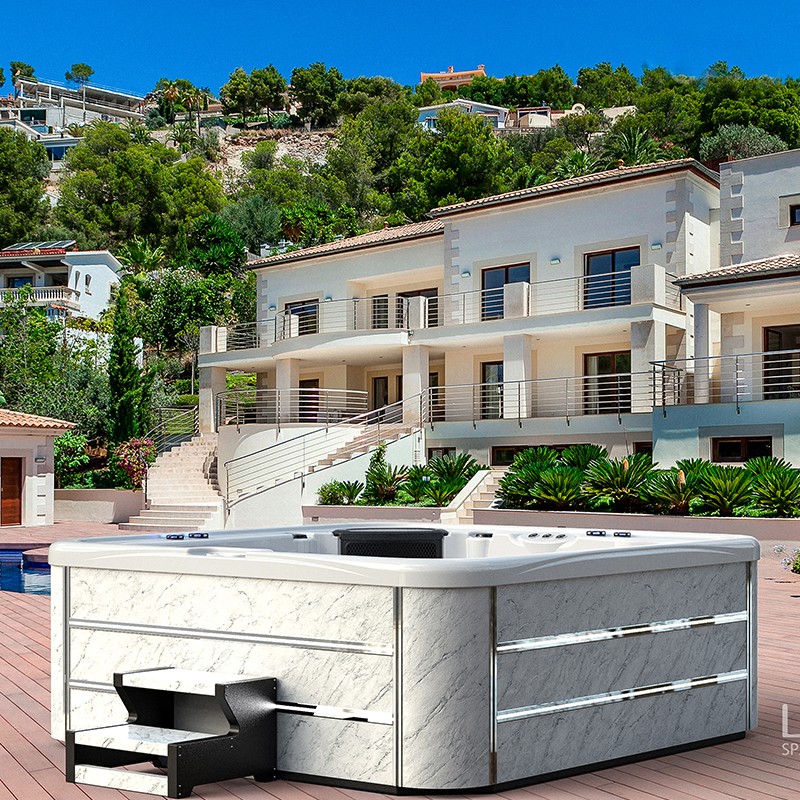
FAQ: Common Questions About Outdoor Hot Tubs with Loungers
Are outdoor hot tubs with loungers suitable for year-round use?
Most mid-to-high-end outdoor hot tubs with loungers feature constant-temperature heating and insulation systems, making them suitable for use throughout the four seasons, provided the installation environment meets the necessary requirements. In winter, using a high-quality thermal cover and maintaining a constant temperature setting can help reduce energy consumption associated with repeated reheating.
How often should the water in an outdoor hot tub with loungers be changed?
With proper daily use and the inclusion of filtration systems and ozone or UV sterilization units, it is generally recommended to replace the entire volume of water every 2 to 4 months. However, if usage is frequent, the tub is shared by multiple people, or water maintenance is inadequate, the water replacement interval should be shortened accordingly.
Do outdoor hot tubs with lounge seats consume a lot of electricity?
Power consumption depends primarily on ambient temperature, insulation performance, frequency of use, and the efficiency of the heating system. Outdoor jacuzzi hot tubs with lounge seats that feature high-efficiency insulation and smart temperature control can effectively reduce long-term energy consumption, making it easier to manage daily operating costs compared to models with poor insulation.
Can I install an outdoor jacuzzi hot tub with lounge seats myself?
Although some products come with installation instructions, the process involves electrical connections, drainage systems, equipment commissioning, and safety checks. Therefore, professional installation is generally recommended to ensure the equipment operates safely and reliably over the long term.
What are the most important factors to consider when buying an outdoor hot tub with lounge seats?
It is advisable to focus on factors such as the ergonomic design of the lounge seats, tub materials, massage jet layout, pump performance, insulation systems, water treatment systems, safety features, and after-sales service. Rather than simply comparing prices or the number of jets, a comprehensive evaluation of these core indicators will help you select a tub that truly suits your needs and offers long-term value.