


- Home
- >
News
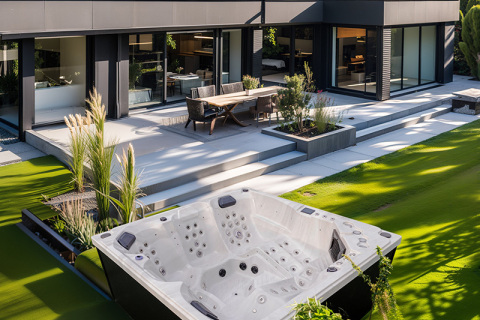
Many spa jacuzzi hot tub jets feature a built-in rotary adjustment function. By rotating the jet, users can: • Adjust the direction of the water flow • Change the spray coverage area • Control the volume of water output for a specific area • Regulate the jet intensity
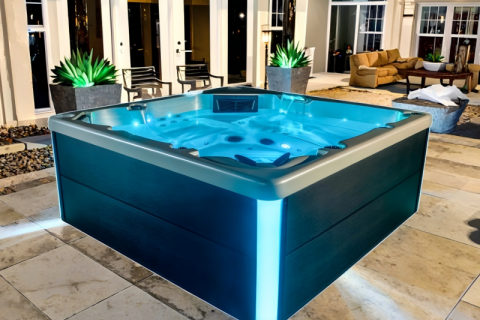
In many cases, a leaking jet in a spa hot tub does not result in water spraying directly outward; instead, the water slowly seeps inward into the insulation layer, making it difficult for users to detect the problem immediately. Eventually, the water will trickle down to the bottom of the unit.
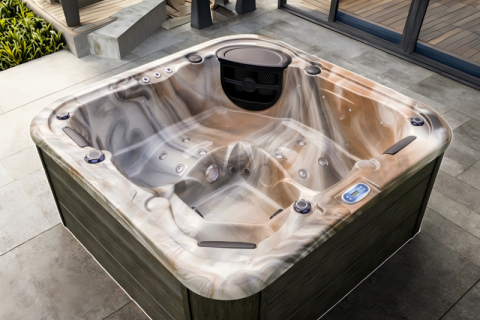
If a spa massage bathtub is not cleaned and managed properly, its internal environment can indeed become a breeding ground for microorganisms—and this is precisely the root cause of public concern.
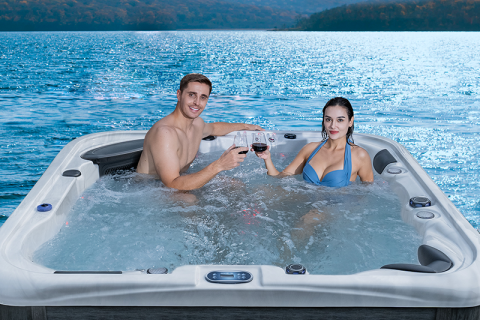
The core logic of cleaning spa massage bathtub pipes can be summarized in four steps: 1. Dissolve deposits 2. Circulate and flush the inner walls of the pipes 3. Release and suspend contaminants 4. Thoroughly drain and rinse clean.
Below is a standard, safe, and controlled procedure. Step 1: Fill the spa massage bathtub with water Step 2: Add bleach according to the instructions Step 3: Activate the jet system Step 4: Turn off the system and let it stand
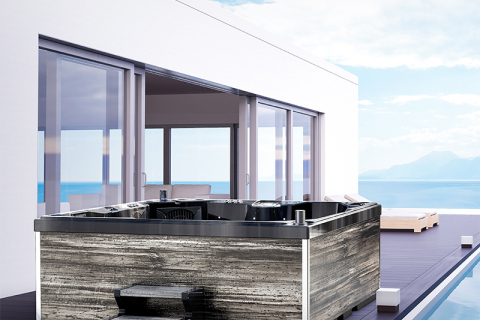
From a structural design perspective, most spa massage bathtub nozzles are replaceable. This is because nozzles are high-frequency used components, constantly exposed to water flow impact, and their design usually considers the feasibility of maintenance and replacement.
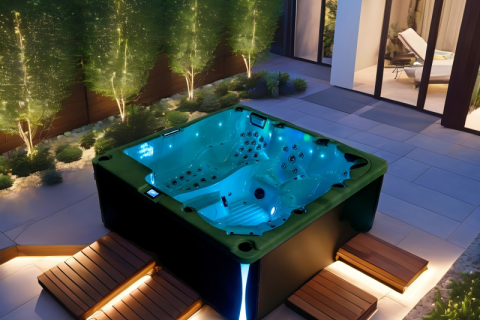
The function of the filtration system is to prevent impurities from entering the nozzles and circulation pipes. If the filter is clogged or not cleaned regularly, impurities will be forced into the nozzle area, causing secondary pollution and clogging.
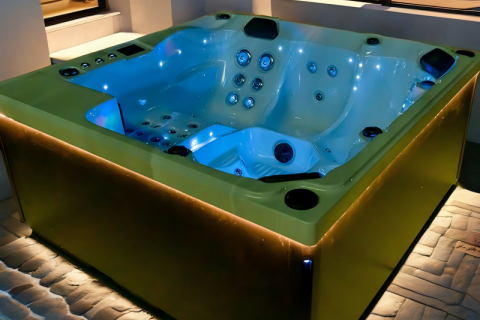
Most 2-4-seater spa massage bathtubs have a capacity of approximately 300-600 liters. To ensure that the vinegar solution fully enters the water circulation system and soaks all jets, fill the bathtub to at least 5 cm above the jets. · For regular cleaning: Use a 1:3 ratio of white vinegar to water. · For heavy cleaning (heavy scale/odor): Increase the ratio to 1:2.

Exhibition Information: We cordially invite you to attend • Exhibition Name: THE 138th CANTON FAIR 2025 • Exhibition Dates: October 23-27, 2025 • Exhibition Location: China Import and Export Fair Exhibition Center (Pazhou, Guangzhou) • Our Booth: Hall 11.1, B43-44
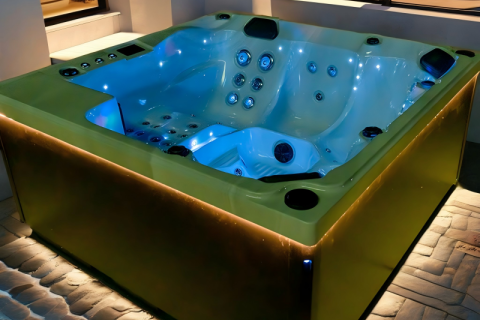
The water temperature in a spa massage bathtub should be adjusted based on the user's needs and safety standards. Generally speaking, a water temperature between 36°C and 38°C is optimal. This temperature range ensures comfort and effectiveness while minimizing health risks.
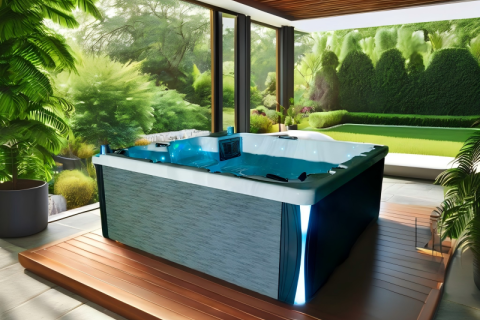
Methods for preventing movement can be categorized into three categories: anti-slip treatment, reinforced support, and shock-absorbing structures. The most basic approach involves placing high-strength rubber anti-slip pads or support blocks at the four corners of the spa massage bathtub base.
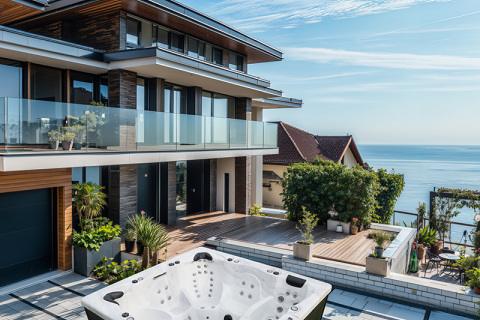
One of the most common water temperature regulator failures is the inability to accurately maintain the water temperature within the set range, causing the spa massage bathtub water temperature to be too high or too low. This is typically caused by the following: • Faulty temperature control sensor • Damaged heating element • Control system malfunction