


How Should Outdoor Spa Hot Tubs Be Stored When Not in Use?
2026-08-13 15:30As a result of trends like development of outdoor leisure living, home backyard economy and health and wellness concepts, outdoor spa hot tubs have gone beyond becoming just a luxury feature in a few elite homes and have found their way into various situations like home backyards, hotel resorts spas, wellness communities etc. People who are increasingly purchasing outdoors hot tubs just want a comfortable and relaxing soak in the warm water with the benefits of water massage and the great effect of being in an outdoor setting. However, the fact is that one of the aspects causing the least concern to users which has a great impact on the user experience remains unnoticed: when not using outdoor spa hot tubs how should they be stored properly?
Many users think that once the installation of an outdoor whirlpool spa hot tub is completed one has to only use it occasionally and that if it's going to be a while, then just shut off the power and close the lid. This however is very far from the truth because this basic method frequently results in problems with the equipment, such as: For instance, in a situation of low temperature during winter season, if the water is left in the pipes of an outdoor whirlpool spa hot tub and freezes after expansion it might put the pressure on the circulation pipes, pumps and heating systems, thus leading to pipe rupture. As a result of leaving the hot tub unused for a long time in a warm, humid climate, retaining it the humidity, bacteria, algae, and mineral deposits quickly proliferate causing water to become pollution, clogging of jets, and inefficient filtration.
Based on experience gained in outdoor spa equipment maintenance in the industry, an outdoor whirlpool spa hot tub of high quality usually has a lifespan ranging from 8 to 15 years, which is dependent on the quality, extent of usage, environmental conditions, and method of maintenance. Nevertheless, when such equipment is stored improperly for long periods of time, the rate of the aging of its main components will greatly raise. For example, due to prolonged exposure of moisture the seals of the circulation pumps may age faster; scale deposits may form inside the heater and thereby impair the heat exchange efficiency; the acrylic inner lining may fade away with prolonged exposure to direct sunlight and the spa hot tub lids if moisture is absorbed they will lose the insulating properties.
Hence, proper storage of outdoor spa hot tubs for house owners helps to lower maintenance expense and prolong equipment life; to commercial users, such as hotels, spa centers, resort villa complexes etc. having an intelligent shutdown, cleaning, and maintenance planning is one of the cornerstones of getting maximum results out of equipment. An outdoor hot tub is more than just a “big bathtub,” it is a complete system consisting of a water circulation, heating, filtration, electrical control system, and insulated housing.
If kept unused for a longer period, it has to be taken care of according to professional equipment standards.
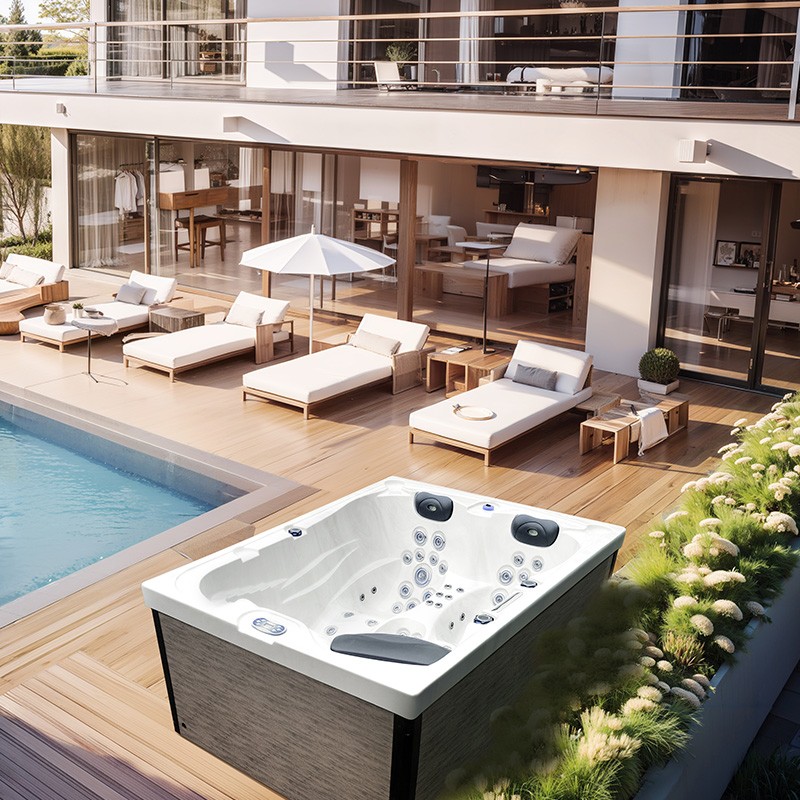
First, determine the shutdown period: Different idle periods correspond to different storage methods
The best way to prepare an outdoor whirlpool spa hot tub for shutdown depends greatly on the duration of the period when it will sit idle. In general, it means that for short-term non-use and long-term sealing of the unit, different kinds of maintenance measures have to be adopted. It's possible to leave most of the water in the equipment and cover it tightly for just a few weeks or a couple of weeks of non-use. But, when you have a few months of non-use or the unit is going to be idle through the entire winter season, you have to apply more detailed methods for preserving the spa hot tub.
Short periods away on the trip, like when a family or individuals go for vacations overseas and health centers get temporarily shut for one to two weeks, these are examples of short-term shutdowns. In such cases, leaving the pump on for an uninterrupted operation will be one the best recommendations. The fact is, contemporary outdoor spa hot tubs are designed to work in a fully functional mode, so, as long as the water remains clear and safe, running the equipment at a lower temperature will make it more stable than turning it completely off. The water temperature can be lowered from the default range of 37°C - 40°C to around 26°C - 30°C, at the same time reducing the frequency of filter operation, which helps cut down on electricity bills.
Between 1 month to 6 months inactive, such as with a seasonal house, a resort hotel that closes during the low season, or a family that reduces whirlpool spa hot tub use in winter to save time and money, a complete set of maintenance tasks should be carried out, including treatment of the water, removing the scale, draining the spa, checking and replacing the protection cover, etc. After just one month, the level of microbial proliferation, scale, and dampness inside will be significantly higher which necessitates the need for thorough cleaning.
Where the usage of the outdoor spa hot tub is unlikely for a period of more than half a year, for example, moving away from a place permanently for years, closing down a business, storing winter stuff in extremely cold areas, etc., it should be handled following special winterization standards, a term used by professionals. This method not only consists of a thorough flushing of the hot tub but also involves taking the pump out, draining it totally, protecting all the electrical parts and outer body of the heat unit, and covering the area with a strong weatherproof cover.
Correct Method for Preparing an Outdoor Hot Tub for Long-term Shutdown
Step 1: Clean the Interior and Pipe System of the Outdoor Hot Tub Thoroughly
Many spa hot tub owners focus only on draining the water but overlook pipe cleaning, which is also very important.
You need to remember that apart from the water holding area (cabinet) of an outdoor whirlpool spa hot tub, there are also hidden areas with piping such as massage nozzle lines, circulation lines, and filter connection pipes.
With constant use, these inner surfaces get coated by residues of oils and skin dead skin cells, sunscreen, bath products, and minerals that have been carried along in the water over the usage periods. These layers of dirt might cause a buildup of biological material in and around your system, which could be a major reason that your whirlpool spa hot tub will have yellowing water, a bad smell, and even affect your water treatment after reactivation.
A well-maintained method is by adding pipe cleaner before water draining, then running the pump system to allow the cleaning agent penetrate the pipes. As a rule, it is recommended that for about one hour circulator to allow cleaner enough time to loosen scale in internal plumbing before finally empty draining of the bath tub.
In the case of commercial spas in the form of hotel or spa outdoor hot tubs, since the number of bather visitors is quite high on different days the chance of human contaminants getting into the hot tub water has risen dramatically.
Step 2. Make Changes to Water Chemistry Parameters to Avoid Contaminations with Residual Water
It is a good practice to check the water chemical conditions before starting empty the outdoor whirlpool spa hot tub because the right water level helps not only prevent the destruction of the hot tub parts but also the cleaning efficiency.
Standard hot tub water chemistry tests are as follows:
pH should be kept within a range from 7.2 to 7.8. When water is too acidic, pH is low that may cause metal corrosion. Meanwhile, when your water gets too basic, that's usually when scale forms calcium carbonate known to us as limescale!
In fact, disinfectants have to be controlled at appropriate levels for your safety. Chlorine treatment is usually maintained at about 1 - 3 ppm, and bromine treatment is around 3- 5ppm. These levels help control bacterial and algae growth after reopening.
Moreover, the total alkalinity is usually maintained at 80-120ppm that plays a major role in keeping pH stable.
Outdoor hot tubs, especially if exposed to environmental factors like sunlight, rainfall, dust, and varying temperatures, require even more attentive water quality control than indoor ones.
Step 3. Completely Dry out the Water from the Outdoor Hot Tub
Water draining out is undoubtedly the vital step in the storage of whirlpool spa hot tubs in the future.
It's a common mistake that people think only turning the spout is sufficient to the task, actually, that's not really the case. Because many areas in the whirlpool spa hot tub like pumps, jets, heaters, filters or small pipes may still have water left in them that can freeze later.
For example:
• Pump of pump circulator;
• Heater;
• Jet pipes;
• Filter;
• Hidden connecting water pipes.
Frozen water that has a tendency to expand could cause water pipe burst as its volume rises to roughly 9 %.
In addition to the fact that such problems have become increasingly common during the winter season, a powerful air pump might also be a suitable solution for the removal of water. Even the smallest quantity of water might be sufficient to apply pressure to the system, damaging the pipes beyond repair.
Professional staff should help with the draining of water from a large spa hot tub with complex piping system in order to achieve a better performance and reduce the risk of breakdown on the day of the opening.

Key components requiring protection during outdoor spa hot tub storage
I. Protect the outdoor spa hot tub's outer shell and acrylic inner tank
Modern outdoor spa hot tubs typically employ a multi-layered composite structure, including an acrylic inner tank, a reinforced fiberglass layer, an ABS base, and a polyurethane insulation layer. These materials have good weather resistance, but long-term exposure to the outdoor environment still requires protection.
During long periods of inactivity, ultraviolet rays from sunlight will accelerate material aging, and dust and rainwater will affect surface cleanliness. Therefore, when not in use, you should:
First, thoroughly clean the inner tank surface;
Second, keep the equipment surface dry;
Third, cover it with a professional protective cover.
It is not recommended to cover it with ordinary plastic sheeting for extended periods, as plastic sheeting can easily prevent internal air circulation, causing condensation and keeping the equipment in a damp environment for a long time.
II. Protecting the Outdoor Hot Tub Insulation Cover
The outdoor whirlpool spa hot tub cover (Spa Cover) is an important component of the equipment.
A high-quality insulation cover not only prevents dust from entering but also reduces heat loss. When not in use for a long time, check:
• Whether the cover absorbs water;
• Whether the outer layer is damaged;
• Whether the sealing edges are intact;
• Whether the foam core is deformed.
If the insulation cover absorbs water for a long time, it will increase weight and reduce insulation effectiveness. Under normal circumstances, a high-quality outdoor whirlpool spa hot tub cover can be used for several years, but regular maintenance is required.
III. Protecting the Filtration and Circulation Systems
The filtration system is an important part of maintaining the water quality of the outdoor whirlpool spa hot tub.
When storing for a long time, the filter element should be removed and cleaned. Filter cartridges are prone to accumulating:
• Dirt;
• Grease;
• Minerals.
If the filter cartridge is stored damp for extended periods, it may develop odors and bacteria.
Recommended procedure:
1. Remove the filter;
2. Rinse with clean water or a specialized cleaner;
3. Allow to air dry completely;
4. Store in a dry environment.
When reactivating an outdoor spa hot tub, install a new filter cartridge or check the condition of the old one.
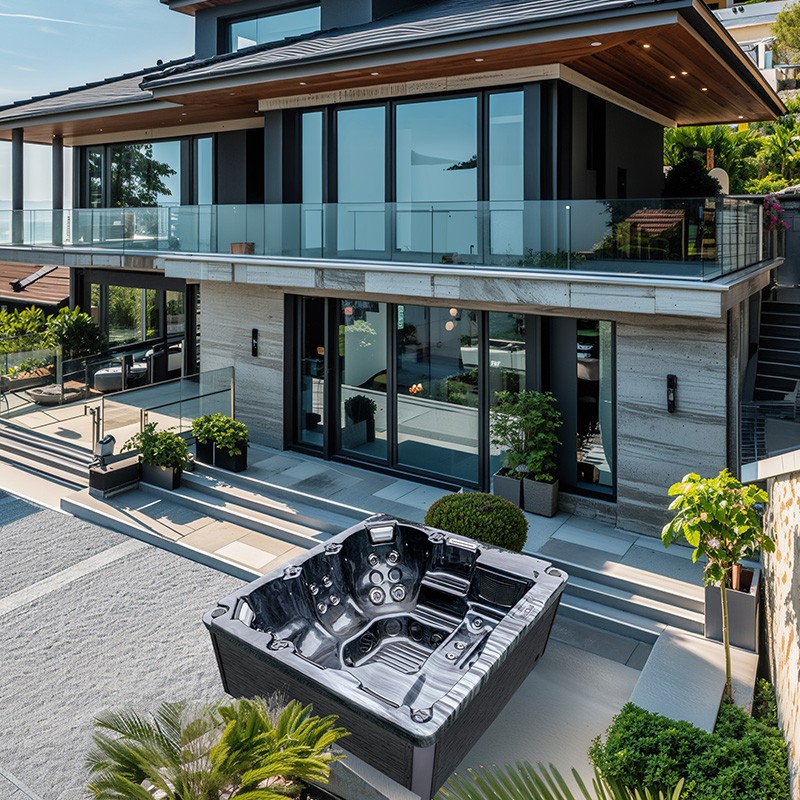
How should outdoor spa hot tubs be stored in different environments?
I. Cold Regions: Focus on preventing freezing damage
In areas where winter temperatures consistently remain below 0°C, the biggest risk to outdoor whirlpool spa hot tubs is freezing and cracking.
Key measures required:
• Drain all water;
• Remove any residual water from the pipes;
• Turn off the water circulation system;
• Ensure proper external insulation.
If the local winter minimum temperature reaches -10°C or even lower, simply draining the water may not be sufficient.
II. High-Temperature Areas: Focus on Preventing Water Pollution and Material Aging
In tropical regions, the main problem with outdoor whirlpool spa hot tubs when not in use for extended periods is not freezing, but rather:
• Rapid bacterial growth;
• Algae growth;
• UV radiation.
Therefore, greater emphasis needs to be placed on:
• Sunshade protection;
• Use of waterproof covers;
• Regular inspections.
III. Humid and Rainy Areas: Focus on Preventing Electrical Moisture Damage
In environments with prolonged rainfall, special attention needs to be paid to:
• Control panel;
• Power interface;
• Electrical control box.
Ensure the protective cover is securely installed and prevent prolonged water accumulation at the bottom of the unit.
What can one do before restarting a whirlpool spa hot tub that is set outside?
A whirlpool spa hot tub located outdoors which was being used infrequently or stored for a relatively long period of time should not be put into operation again right away after filling with water.
If one is ready to restart a hot bath outdoors, one should:
First of all, the physical condition of the device should be examined - one can, for instance, see whether the outer casing is undamaged and whether the cover is in good condition, or, in a word, whether anything from electrical wires to power lines is in place.
Check the system of pipes and valves - this way, it will be possible to see if cracks or leaks are present in any area.
Put the filter back to the right place, and add water up to the required level.
Initiate circulation of the system and verify whether the water pump, nozzles, and heating functions are operating smoothly.
To conclude, set the water qualities parameters again and check the pH value and disinfectant concentration level match usage requirements.
Generally, after being restarted, water will take a few hours to warm up to the preset level. For instance, heating water from the cold state up to approximately 38°C takes some time; exactly how long it will take will ultimately depend on the unit's power, the volume of water, and the surrounding temperature.
Proper storage practices can extend the lifespan of your outdoor spa hot tub
These types of outdoor whirlpool spa hot tubs are big investments, and the right type of regular care directly influences their lifespan regardless of whether they are placed on a private terrace or in a commercial spa hotel.
Possibilities of breakdowns are not always because of a defect, instead, in most cases, improper care during a long period of not being used is the reason.
Main guidelines for a well-performed storage of an outdoor hot bath outdoors can be presented as the following: During short pauses in operation, ensure water circulation and minimal heat level; in case of medium- to long-term idle periods, carry out decontamination, empty out the water, and cover the unit accordingly; for winter storage, do a detailed winterization job.
The growth of outdoor whirlpool spa hot tubs has brought about greater attention to equipment life span, energy saving, and upkeep among users. It is important to select reputable manufacturers with great thermal properties and full post-sale assistance besides acquiring an outdoor whirlpool spa hot tub, at the same time mastering effective storage techniques, in order to maximize the long-term benefits of having such a piece of equipment.
A home user who takes care of an outdoor spa hot tub regularly will have it running smoothly for a long time; on the contrary, hotels, wellness centers, and commercial spas can cut operating expenses to an extent by following rational ways.
FAQ: Frequently Asked Questions on Outdoor Hot Tub Maintenance
1. Should an outdoor spa hot tub be drained if it isn't going to be used for a long time?
It's not necessarily. The draining or not draining is going to be subject to how long your tub is going to remain idle and which climate you live in. If it's for only a few weeks, you just keep it on and lower the temperature; when it is for a period of one month or more, cleaning and draining are suggested. If it is going to be in storage for over six months sealing the whole system is the way to go.
2. What are the precautions for an outdoor whirlpool spa hot tub if you are unable to heat and run it for the winter?
The most critical measure in winter is protecting against freezes. All the sources of humidity inside such as pipes, pump, and filtration system should be totally drained. In those places where the temperature where the equipment is located is lower than freezing almost constantly, the winterization procedure by professionals seems the ideal choice.
3. Does the outdoor whirlpool spa hot tub require any service once it is covered with a winter lid?
Actually yes. The covering is a lid which insulates and it is out there for long periods so the elements, ultraviolet rays, and even the falling moisture from rain are going to wear it down. It is recommended to periodically inspect the lid so the problem of absorbing moisture, warping, or the sealing getting worse are not going to occur.
4. Can outdoor whirlpool spa hot tub use be restored immediately after six months of storage?
No, it is going to be impossible. Before the reopening, the equipment itself, the circulation and water system, the electrical connections, etc., must be checked and the chemical balance of the water will probably need to be restored. A good idea is to let the pump circulate for a while, see everything is okay and only then open the lid to allow people to enjoy.
5. How long proper storage and care can add to life of the outdoor spa hot tub?
In fact, the precise figure is going to be a result of the original quality of the spa hot tub and the surrounding environment. Still, good servicing of the equipment in general will greatly lower the number of breakdowns and a first-rate outdoor hot tub will last quite happily through ten full years or more, which of course, means a lot less maintenance costs. If it comes to hotel spa or any other commercial projects, correct handling through years even may reduce the operational expenditures in substantial manner.