


Are the bubbles in outdoor whirlpool spa tubs bacteria?
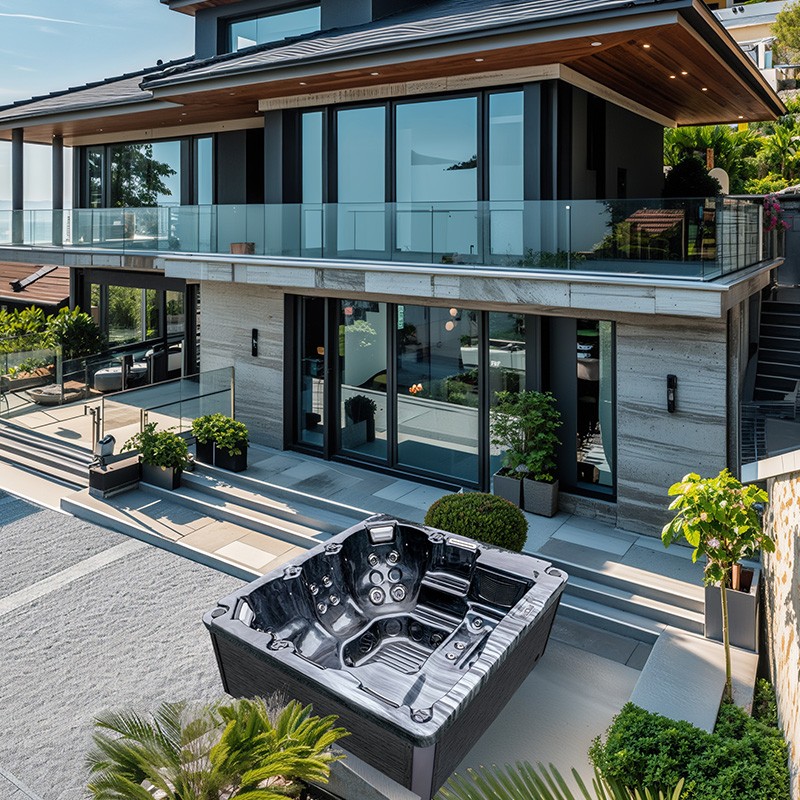
2026-08-12 15:30Outdoor whirlpool spa hot tubs have become quite popular and they can nowadays often be found in the backyard, at a villa, in holiday resorts, etc. Apart from just a comfortable bathing experience, the addition of various features like massaging water jets, filtration & circulation systems, keeping constant pool/spa temperature by means of electrical heater, etc., makes these tubs the perfect place to relax and spa without a single penny on a hotel.
One of the issues that remain important for users over the time of using the tub is water quality. Many of them get worried whether the presence of bubbles in outdoor whirlpool spa hot tub is because of bacteria growth.
When a white, floating and thick foam is seen on the surface of the water, or when the air blowing massage function is triggered causing bubbles, the immediate reaction of some users is to think that water has been contaminated and the presence of microbes is making the water unsafe. Some users even decide to completely replace all the whirlpool spa hot tub water whereas some other add extra disinfectants or just blame the quality of the outdoor whirlpool spa hot tub for such problem. Actually, foam isn't necessarily an indicator of microbial contamination. The main cause for the appearance of the foam is that certain ingredients in water lower the water's surface tension. In fact, the presence of foam can quite possibly be due to natural causes such as skin and body oils, perspiration, lotions, and residues from cleaning products introduced during the use of whirlpool spa hot tub. When these substances react to the air, water movement, and massage function of the hot tubs, they produce long lasting foam.
On the other hand, it is also true that it should not be taken as a matter of no concern whenever a whirlpool spa hot tub produces foams that keep on coming up again and again. If you also notice water getting a hazy appearance, getting a smell, finding that your hot tub's surfaces are now slippery, and even your use of disinfectant has become abnormal in a way, that may also indicate some issues with how the water is being taken care of and that there is a risk of micro organisms growing in the water.
This implies that in order to have a safely operating outdoor whirlpool spa hot tub for a long period of time, foam cause identification and water cleaning method corresponding thereto have to be done effectively.
The basic understanding of the water chemistry underlying the formation of foam is the key for the production, selling and consuming of outdoor whirlpool spa hot tubs. A spa device with high quality must not only feature superior therapeutic massage functions but also structural elegance. It must consider the aspect of maintaining good water quality for periods.
Therefore, it is time to find the real source of the appearance of foam in outdoor whirlpool spa hot tubs, clarify the relationship between bacteria presence and the existence of foam, and give the users professional ways that will be able to guide them and help them create the scientific way to maintenance their whirlpool spa hot tubs properly at their homes.

Is it true that bubbles in an outdoor whirlpool spa hot tub are bacteria?
We begin by explaining two major points. Firstly, the bubbles or foam that one may see in an outdoor whirlpool spa hot tub are not the bacteria themselves and you also will not be able to identify whether or not there are bacteria in that bubble with just your eyes
Foam is just a result of some physical interaction. If the surface of the water is broken by the introduction of air bubbles, then there is formation of foam. This only happens when there are molecules in a liquid that help maintain the physical integrity of a bubble after its surface has been stretched and broken and, thus, allow us to see the shape of bubbles.
One of the reasons why we see many more foams in outdoor hot tubs than in regular bathtub is due to their more complicated working conditions:
Typically, backyard outdoor whirlpool spa hot tub can hold between 800 and 2000 litres of water. Commercial models and resorts' models can hold more than 2000 liters. Since the amount of water is limited, the level of the different contaminants that come from the human body will show up more.
Furthermore, outdoor whirlpool spa hot tubs usually keep the water around 37 degrees Celsius to 40 degrees Celsius and such an ideal temperature also makes for fast degradation of different water contaminants and the growth of microbes at faster rate.
Furthermore, the majority of current outdoor whirlpool spa hot tubs possess several massage nozzles as well as water pumps and aeration system. When the massage function is turned on, a lot of air is pushed into the water. If there is even tiny amount of oils or cosmetic residue is present, then the air coming inside will rapidly transform these substances into something visible to the naked eye which will be foam.
In other words, it should not just be taken as a basis the fact that there are or there are not foams whether the water of an outdoor whirlpool spa hot tub is safe. Instead of that various indicators are involved in the determination of a safe condition which include:
• pH level is within the recommended range of 7.2-7.8;
• total hardness of the water is maintained at 80-120 ppm range;
• disinfectant level is normal;
• the water is clear;
• the water does not smell.
Much like in the case of foams in a hot tub, the determination of whether or not there is a problem with the water requires that one looks into several different indicators in the water and not just only one.

Why do outdoor whirlpool spa hot tubs easily produce foam?
1. Human oils, sweat, and skincare products are the most common causes
The biggest characteristic of outdoor whirlpool spa hot tubs is that people are in direct contact with the water. Therefore, contaminants brought in by the body are one of the main sources of foam.
Human skin naturally contains oils, and daily skincare products, sunscreen, body lotion, and other products also leave residues on the skin. When users enter an outdoor whirlpool spa hot tub, these substances gradually enter the water.
Common sources of contaminants that increase foam include:
• Skin oils;
• Organic matter in sweat;
• Sunscreen products;
• Body lotion;
• Makeup residue;
• Dead skin cells.
These substances themselves do not necessarily mean the presence of dangerous bacteria in the water, but they can become a nutrient source for bacterial and microbial growth. If the filtration and disinfection systems cannot handle them in time, water quality may deteriorate.
For example, in a six-person outdoor whirlpool spa hot tub, the amount of organic matter entering the water can increase significantly in a short period if used by multiple people consecutively. Even if the equipment is equipped with an ozone generator, filtration system, and disinfection function, maintenance is still required based on the actual frequency of use.
Therefore, many professional outdoor whirlpool spa hot tub manufacturers recommend that users rinse their bodies briefly before entering the equipment to reduce the amount of skin care products, sunscreen, and other substances entering the water. This not only reduces foam but also reduces the pressure on the disinfection system.
Do you know why detergent residue will make outdoor hot tubs very foamy?
Frothy water can come from more than just dirt. Body oils, dead skin, and sweat all get into the water, but if you do not clean your swimsuits well before you jump into the whirlpool spa hot tub you may have a big foam problem due to leftover detergent.
Detergent residues clinging onto the fibers of swimsuits, clothing, and towels can also be brought into outdoor whirlpool spa hot tubs and released into the water slowly. Since detergent contains components that generate foam even small trace of it in the water will lead to foam build up.
One of the common mistakes that users make is adding bubble bath to whirlpool spa hot tubs believing that they create a better experience. The surfactants in bubble bath which give the product its foaming and cleaning properties may be too abundant for a spa and will not only lead to foam generation but also will stress filtration equipment.
Hence, the usage of non-specialized products at spas, especially outdoor whirlpool spa hot tubs is not recommended. When taking a bath at the spa, it is recommended to employ an efficient cleaning that leaves behind minimum soap residue.
Might the reason that the foam is created be an imbalance of water in an outdoor hot tub?
Foam is definitely bacteria-free but it might be indicative of some sort of water quality issue. Outdoor hot tub water must be treated so that microbes will be killed or rendered harmless. Some of the ways that can be followed are:
Clorox water purification;
Bromine treatment;
Use ozone to kill germs;
Install UV units that kill germs.
Bacterial proliferation is facilitated in the presence of organic pollutants that are not decomposed timely by chlorine. A lack of cleaning will also result in the formation of bubbles on top of the water.
The following situations suggest that water problems and foam are connected:
One, the foam is gone slow as usual. In reality, foam from air and minor impurities should fade away. If there is no change after shutting down the massaging system of your device, you should look for water analysis reports that you have made available.
Two, the water has an odd smell. When the water is giving off a musty, foul, or pungent smell, it probably means there is a high level organic material.
Three, the water gets murky. Foam increasing while water becomes cloudy will be a sign the filters and the disinfecting system are failing to pick up the impurities.
Four, the tub's walls are sticky to the touch. The likelihood is there’s a biofilm on the pipes or walls that call for thorough cleaning.
So, you see, the appearance of foam does not necessarily point to the existence of bacteria but might be another sign of the quality of water changing.
Why does foam increase abruptly after turning on the massage nozzles of an outdoor hot tub?
Lots of outdoor whirlpool spa hot tub users observe a phenomenon which is quite interesting: the water looks normal when the massage function is off; nevertheless, when all the massage nozzles are running, the surface immediately turns into a sea of foam.
Water comes into physical contact with air in a different way through a massage system thus producing the foam.
Outdoor whirlpool spa hot tubs generally have the following features:
• A high powered massage pump,
• Massage nozzles in multiple directions,
• A system that mixes air,
• A circulation filtration system.
The jet of a massage nozzle puts air into the moving water. The substances in the water such as greases and detergents together with natural organic materials will be the ones that are going to react with a quick formation into the air bubble thus a lot of foam will form when they react with air.
It is worth noting that you are not in contact with contaminated equipment at all. Massage function rather, is just like a magnifying glass for water issues that were already the case before.
On the contrary, an extraordinary and massive amount of foam could mean the accumulation of various water pollutants which will lead you to examine first, the filtration system, and second, water quality.

What measures can you take to fix foam in an outdoor hot tub?
It's really essential when trying to remove foaming of an outdoor whirlpool spa hot tub that we identify the cause and solve it at source, which means that we don't just use defoammers which are only going to get rid of surface foam.
First, one needs to carry out tests on water parameters. One should do the following checks on regular basis:
• Level of pH,
• Total amount of carbonate alkalinity,
• Amount of sanitiser or disinfectant,
• Calcium hardness.
Good maintenance of balanced water chemistry is key in minimizing the creation of foams.
Second, filtration system requires care and attention. Filter is the part that separates grease, dirt, and other organic matter from the water. As time goes by, dirty and clogged filter will not function efficiently anymore.
For home whirlpool spa hot tubs outside, we usually suggest the following:
• Filter cartridge cleaning every 1-2 weeks;
• Filter replacement after 12-24 months depending on how much the whirlpool spa hot tub is used;
Business whirlpool spa hot tubs outside demand much more care and attention due to the fact that they are used more frequently.
Third, thorough cleaning at regular intervals should be carried out. While routine filters mainly target suspended particles, they leave behind fats & grease and biofilms that have built-up on pipes' walls. So, one needs to regularly:
• Use chemical pipe cleaner,
• Discard water,
• Clean interior surfaces;
• Water refilling.
Fourth, one will want to alter the way he or she uses the hot tub and avoid behaviors that contribute to excess foam. Getting rid of body dirt with a quick and simple rinse, using a little of beauty products, not relying on unprofessional products at all, etc. These all can help minimize the occurrence of foam.
How often should outdoor hot tubs be changed and maintained?
Many users believe that as long as disinfectant is added, the water in an outdoor whirlpool spa hot tub can be used indefinitely, but this is not actually the case.
Due to the small water volume in outdoor whirlpool spa hot tubs and the continuous entry of human contaminants, even with filtration and disinfection systems, dissolved substances in the water will gradually accumulate.
For home use, it is generally recommended to:
• Change the water completely every 3-4 months;
• Shorten the water change interval for frequent use;
• Test the water quality 2-3 times per week.
For commercial settings such as hotels and resorts, due to the high frequency of use, a more rigorous maintenance plan may be required.
Regular water changes not only reduce foam but also reduce the risk of pipe contamination and extend the life of the equipment.
FAQ: Frequently Asked Questions about Foam in Outdoor Hot Tubs
Q1: Does foam in an outdoor whirlpool spa hot tub indicate the presence of bacteria?
Not necessarily. Foam is mainly due to substances in the water that reduce surface tension, such as grease, skincare product residue, cleaning agent residue, and organic matter. Microbiological issues should only be investigated when foam is accompanied by an odor, turbidity, or abnormal water quality indicators.
Q2: Why does my Outdoor Hot Tub produce a lot of foam when the massage function is turned on?
Because the massage nozzles increase the amount of air entering the water. When grease, organic matter, or cleaning agent residue is already present in the water, a large amount of air will quickly form foam.
Q3: Can defoamers solve the foam problem in outdoor whirlpool spa hot tubs?
Defoamers only temporarily reduce foam and do not solve the root problem. If contaminants persist, foam will reappear. Therefore, water quality adjustment, filter cleaning, and water changes are necessary.
Q4: How often should outdoor whirlpool spa hot tubs be cleaned?
For home use, it is generally recommended to clean the filter regularly, change the water every 3-4 months, and perform deep cleaning of the pipes as needed.
Q5: Will foam problems affect the lifespan of outdoor whirlpool spa hot tub equipment?
Prolonged foam usually indicates a high level of contaminants in the water. If left untreated, it can increase the burden on the filtration system, leading to more frequent maintenance problems with the pipes, pump, and heating system.