


How Often Does an Outdoor Swim Spa Require Professional Maintenance?
2026-11-14 15:30As the demand for healthy home living and backyard leisure grows, outdoor swim spas have become an increasingly popular alternative to traditional swimming pools and hot tubs. These units integrate counter-current swimming, hydrotherapy, circulation and filtration, temperature control, and water treatment—offering a versatile solution for everything from daily swim training to relaxation and family entertainment.
However, an outdoor swim spa is not a "set-it-and-forget-it" installation. Over time, filters can become clogged, water quality may fluctuate, and components like pumps and heaters may experience performance degradation due to usage frequency, environmental conditions, and general wear and tear. Neglecting regular maintenance can diminish your experience while driving up energy consumption and repair costs.
So, how often should an outdoor swim spa hot tub combo undergo professional maintenance? For most residential users, a professional service visit every 3–6 months is recommended, with at least one comprehensive inspection per year. This should be supplemented by routine daily observation, weekly water quality management, and monthly equipment checks. If the unit sees heavy use, operates year-round, or is located in an environment with extreme temperatures (very cold or very hot) or high dust levels, the interval between professional service visits should be shortened accordingly. Always refer to the manufacturer’s specific guidelines for maintenance schedules.
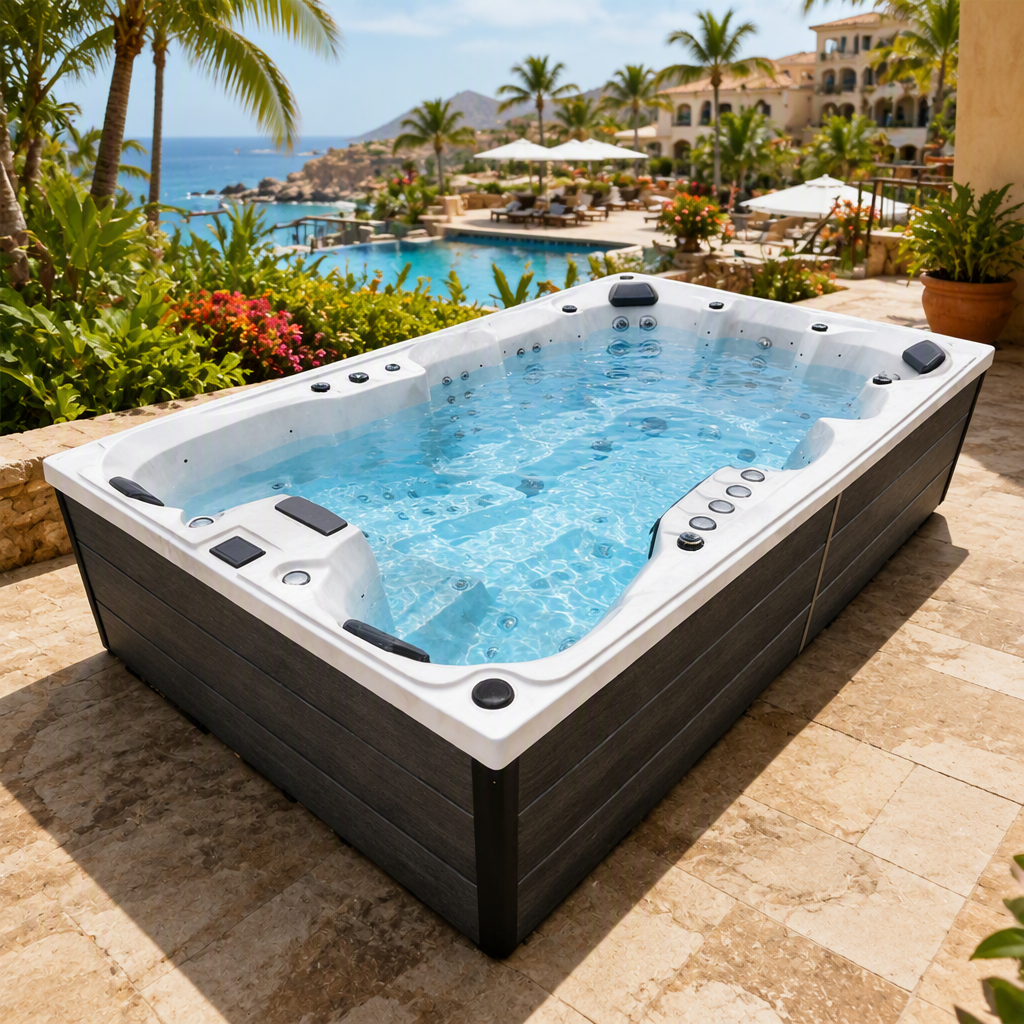
Maintenance Frequency for Outdoor Swim Spas: How Often Should You Check?
A sound maintenance plan for an outdoor swim spa distinguishes between routine upkeep, periodic inspections, and professional servicing. While not every task requires a technician, critical systems demand ongoing attention.
1. Daily or After Each Use: Checking Basic Operational Status
After each use, observe the water surface for unusual foam, odors, or visible debris, and check the control panel for any error codes. Additionally, listen for any abnormal noises coming from the pumps, heaters, or counter-current system, and watch for any irregularities in water flow.
If your unit is equipped with an automatic sanitization system or smart controls, ensure these are functioning correctly—check for depleted chemical supplies, sensor malfunctions, or system alerts. These daily checks typically take only a few minutes; the goal is to identify issues early, preventing minor concerns from escalating into major equipment failures.
2. Weekly: Test Water Quality and Inspect Filters
Water quality management is the core of maintaining an outdoor swim spa hot tub combo. It is recommended that residential users test the water quality at least once a week, increasing the frequency based on the number of users, weather conditions, and changes in water quality.
For systems using chlorine disinfection, a pH range of 7.2–7.8 is a common reference; however, specific targets should align with the equipment manufacturer’s manual, the labels on disinfection products, and applicable health regulations. Depending on the disinfection method used, other parameters—such as residual disinfectant levels and total alkalinity—should also be monitored.
Filters should be checked for the accumulation of hair, skin cells, dust, and other debris. The frequency of filter cartridge cleaning depends on usage intensity and the manufacturer’s requirements; a specialized cleaner should be used for deep cleaning when necessary. If a filter cartridge is damaged, deformed, or shows a significant decline in filtration performance, it must be replaced promptly.
It is important to note that clear water does not necessarily mean the water is safe. Regular testing is far more reliable than simply observing the water’s color or odor.
3. Monthly: Check Equipment Functionality
It is recommended to check the water pumps, heaters, counter-current systems, and control panels of your outdoor swim spa hot tub combo on a monthly basis to ensure that the equipment starts, stops, and regulates temperature correctly.
If you notice a significant reduction in water flow, slower heating, increased vibration, or abnormal operating noise, you should investigate the cause immediately. Additionally, check the area around the equipment for standing water, leaks in the plumbing, or unusual dampness.
While these checks help identify early-stage issues, any tasks involving electrical systems, the disassembly of pump units, or repairs to the heater should be handled by a qualified professional technician.
4. Every 3–6 Months: Schedule Professional Maintenance
For most residential outdoor swim spas, it is recommended to schedule professional maintenance every 3–6 months. This is one of the most critical components of an overall maintenance plan.
A professional technician will typically inspect the circulation pumps, counter-current pumps, heating system, filters, plumbing connections, and seals to ensure everything is functioning correctly. They will also examine automatic disinfection systems, temperature sensors, and control systems, while checking for potential leaks, blockages, or flow irregularities. If the unit is used daily, serves a large number of household members, or if the counter-current (swim-against-the-current) system is frequently under heavy load, consider scheduling maintenance every 2–3 months. Even for units used infrequently, regular inspections should not be skipped; prolonged periods of inactivity can lead to water quality deterioration and component issues.
5. At least once a year: Comprehensive equipment inspection
The focus of annual maintenance is to assess the overall operational status of the outdoor swim spa and identify any long-term usage risks. A professional should inspect critical electromechanical components, plumbing, seals, insulation structures, and safety features, and determine whether any wear-prone parts need replacement based on the specific model.
In regions where freezing temperatures occur in winter, it is also essential to check anti-freeze measures, the thermal cover, and the protection of plumbing lines. It is best to keep a written record of annual maintenance—documenting inspection results, repairs performed, and parts replaced—to serve as a reference for the following year’s maintenance plan.
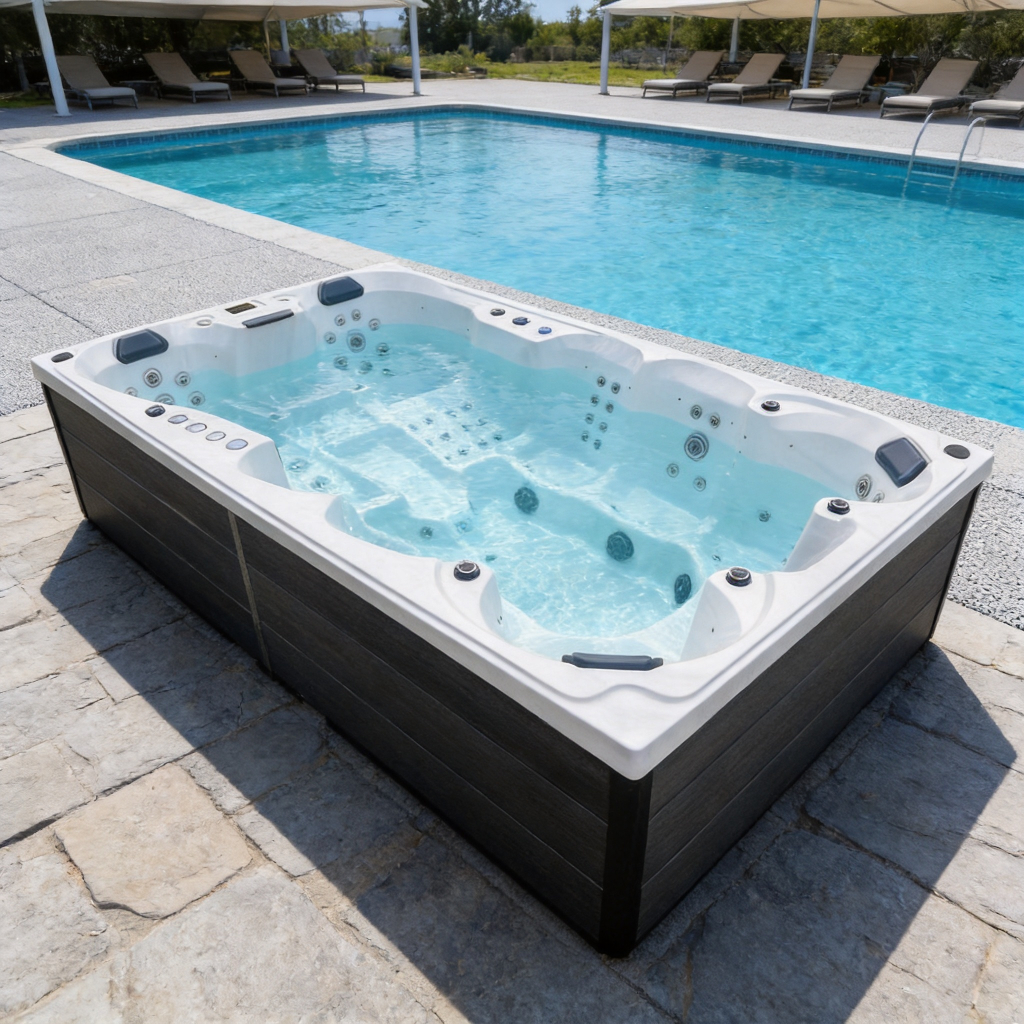
What factors influence the maintenance schedule for an outdoor swim spa?
Not all outdoor swim spas require the exact same maintenance frequency. A sound maintenance plan should be tailored to actual usage conditions.
First is usage frequency. If an outdoor swim spa hot tub combo is used daily, substances such as sweat, skin oils, and other organic pollutants will continuously enter the water, increasing the workload on the filtration and disinfection systems. Conversely, units used less frequently may not require such intensive professional inspections, though basic water quality management and routine equipment checks remain necessary.
Second is the number of users. When a unit is shared by many people, the pollution load in the water is typically higher, which can accelerate the depletion of disinfectants and the accumulation of debris in filter cartridges. Following family gatherings or periods of heavy, consecutive use, water quality should be tested promptly, with filtration and disinfection measures adjusted as needed.
Third is climate conditions. High temperatures in summer can accelerate the depletion of disinfectants; the autumn season may increase the burden on filters due to falling leaves; and low temperatures in winter pose a risk of pipes freezing. Therefore, outdoor swim spas should be managed with a seasonal maintenance strategy, rather than applying the exact same procedures rigidly throughout the year.
Fourth is the equipment configuration. Outdoor swim spas equipped with multiple pumps, variable-frequency counter-current systems, automatic disinfection units, and complex control systems require attention to a broader range of functional components. The more complex the equipment, the more critical it becomes to conduct system inspections in strict accordance with the manufacturer’s requirements. For commercial applications—such as hotels, vacation rentals, or fitness facilities—maintenance plans must account for actual foot traffic, local health regulations, and operational requirements; the maintenance standards used for residential equipment cannot simply be applied here.
What systems are the primary focus of professional maintenance for outdoor swim spas?
The value of regular professional maintenance lies in its ability to uncover hidden issues that routine daily cleaning might miss. The following systems deserve particular attention:
1. Water Quality and Sanitization Systems
Water quality management is directly linked to the hygiene of an outdoor swim spa hot tub combo. Professionals should check residual sanitizer levels, pH values, and other water quality parameters specified by the equipment manufacturer, while also verifying that automatic dosing systems and relevant sensors are functioning correctly.
Even when using salt-chlorine generators, ozone, or UV-based treatment, one cannot assume that the water no longer requires sanitizer management. Each technology operates via a different mechanism, and maintenance must be performed in accordance with the manufacturer’s design specifications.
If the water consistently develops an odor, becomes cloudy, or exhibits unusual foaming, the filtration, circulation, and sanitization systems should be inspected—rather than simply adding more chemicals.
2. Filtration and Circulation Systems
A clogged filter increases water flow resistance, which can impair the performance of the water pump, heater, and sanitization system. Professionals should assess the condition of filter cartridges, the performance of pump units, and the associated piping to identify any blockages, leaks, or insufficient flow.
Users should avoid neglecting filter cartridge cleaning for extended periods and must not operate the system if there is insufficient water or if circulation is abnormal. Regular cleaning and timely replacement of filter cartridges are essential for maintaining optimal filtration efficiency.
3. Heating Systems
Outdoor swim spas generally require the maintenance of a specific water temperature; therefore, the condition of the heater and the insulation structure directly impacts operating costs.
If the time required for the water to heat up increases significantly, or if electricity costs rise steadily, the insulation cover, circulation flow, temperature sensors, and heating system should be inspected—rather than immediately assuming the heater itself is faulty.
Effective insulation and stable water circulation help minimize unnecessary heat loss, though the actual energy-saving results depend on the equipment design, ambient temperature, set water temperature, and usage habits.
4. Counter-Current Swimming Systems and Water Pumps
The counter-current (swim-against-the-current) system is a key feature that distinguishes an outdoor swim spa hot tub combo from a standard hot tub or whirlpool. The condition of the pump unit, jets, and flow-regulating devices directly affects water flow stability and the overall swimming experience.
If you notice a significant drop in water flow, abnormal vibrations in the pump, or increased operating noise, the cause could be a clogged filter, obstructed water intake, air entering the plumbing, or wear and tear on the pump components. A professional should diagnose the root cause rather than simply replacing parts at random.
5. Plumbing, Seals, and Electrical Safety
Outdoor equipment is constantly exposed to humidity, temperature fluctuations, and changing weather, which can cause plumbing connections and seals to degrade over time. Professionals should inspect all accessible plumbing, valves, pump connections, and the equipment compartment for leaks or signs of unusual dampness.
Electrical system inspections must be performed by qualified personnel. If you detect a burning odor, if the residual current device (RCD/GFCI) trips repeatedly, or if you suspect water has entered the electrical components, stop using the unit immediately, disconnect the power supply (if safe to do so), and contact a professional technician.
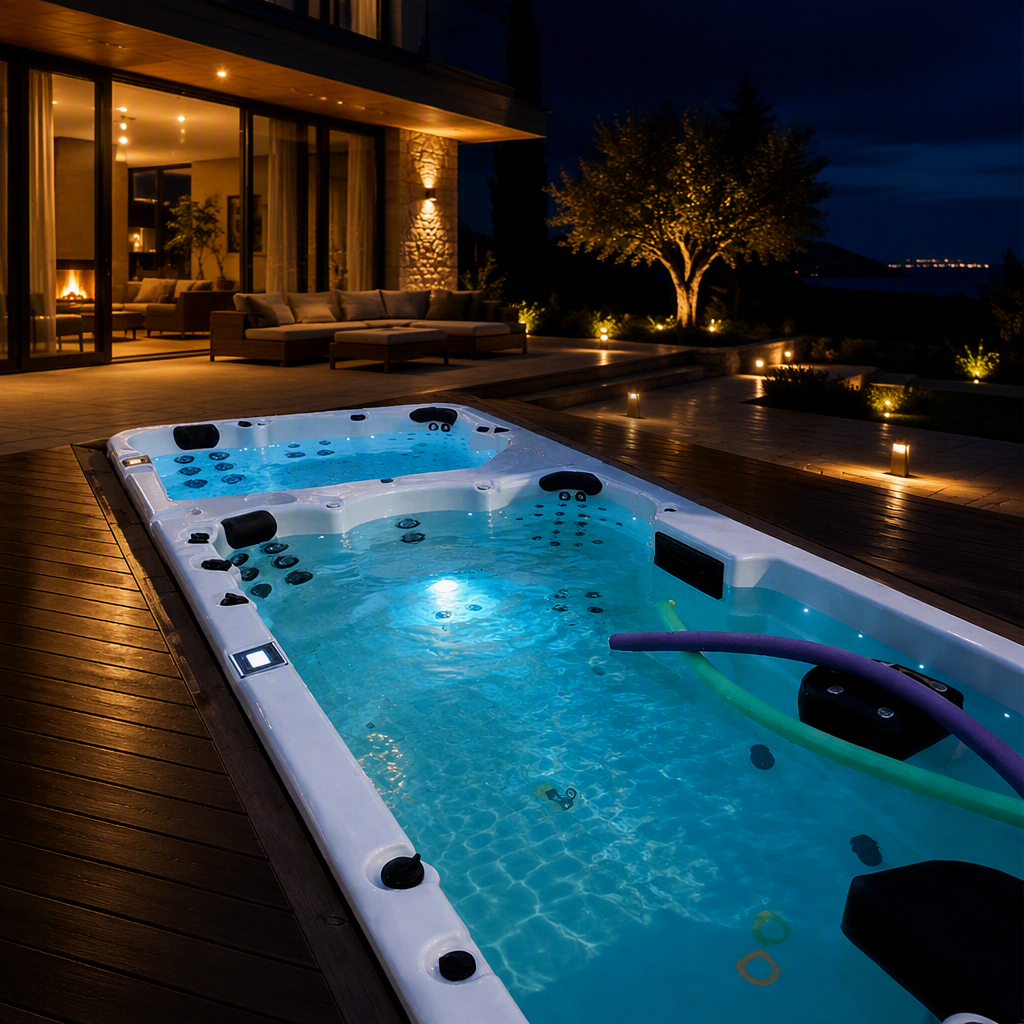
Four Common Pitfalls in Outdoor Swim Spa Maintenance
Pitfall 1: Relying solely on water clarity
The visual appearance of the water does not accurately reflect disinfectant levels or overall sanitary conditions. The solution is to establish a regular water testing schedule, increasing the frequency of tests during periods of heavy use, hot weather, or whenever the water quality appears unusual.
Pitfall 2: Assuming automated equipment requires no maintenance
While automated dosing, temperature control, and smart monitoring systems reduce the need for manual intervention, sensors may still require calibration, and dosing mechanisms can become clogged. The solution is to periodically verify water test results and inspect automated systems in accordance with the manufacturer’s guidelines.
Pitfall 3: Neglecting winter freeze protection
In regions where freezing temperatures occur, simply shutting down an outdoor swim spa hot tub combo can cause residual water to freeze, potentially damaging the pump or plumbing. The solution is to verify the equipment’s freeze-protection capabilities before winter arrives and to follow the manufacturer-approved procedures—whether that involves keeping the system running or performing a professional drainage/winterization process.
Pitfall 4: Waiting until a breakdown occurs to perform repairs
Without regular inspections, issues such as increased filtration resistance, minor leaks, or irregular water flow can escalate into more complex problems. The solution is to adopt a proactive, preventive maintenance approach—keeping records of inspections, error codes, and parts replacements—to monitor whether the equipment’s performance is gradually declining.
How to Create a Reasonable Maintenance Plan for an Outdoor Swim Spa?
For most residential outdoor swim spa hot tub combo owners, the following maintenance schedule is recommended:
| Maintenance Frequency | Key Maintenance Tasks |
| Daily or after use | Check water quality, equipment alerts, and unusual noises. |
| Weekly | Test water quality and inspect the filter condition. |
| Monthly | Inspect the pumps, heater, swim current system, and visible plumbing. |
| Every 3–6 months | Have a professional inspect key systems and identify potential issues. |
| At least once a year | Conduct a comprehensive inspection of equipment condition, safety features, and wear-prone components. |
This plan serves as a general reference rather than a rigid standard applicable to every model. For units subject to high-frequency use, commercial operation, or extreme climatic conditions, the frequency of inspections should be increased based on actual operating circumstances.
It is recommended that owners keep records of the equipment model, filter replacement dates, water quality test results, error codes, and professional maintenance reports. Maintaining a continuous log helps technicians diagnose issues more quickly and facilitates the creation of a maintenance schedule tailored to specific, real-world needs.
Frequently Asked Questions (FAQ)
FAQ 1: Is one professional maintenance service per year sufficient for an outdoor swim spa?
Not recommended. While an annual comprehensive inspection is essential, it cannot replace year-round water quality management and routine equipment checks. For most residential units, a professional maintenance service every 3–6 months—adjusted based on usage intensity—is more appropriate.
FAQ 2: How often should the filter cartridge in an outdoor swim spa be replaced?
The replacement interval depends on the filter material, frequency of use, and the manufacturer’s specifications. Filters should be inspected and cleaned regularly; they should be replaced if they show signs of damage, deformation, or a noticeable decline in filtration performance—rather than relying solely on a fixed calendar schedule.
FAQ 3: If the water in an outdoor swim spa looks clean, is testing still necessary?
Yes. Clear water does not necessarily have the correct sanitizer concentration or pH level. It is recommended to perform regular testing according to the manufacturer’s requirements, with increased frequency following heavy use or if any irregularities in water quality are observed.
FAQ 4: Can an outdoor swim spa hot tub combo be shut down during the winter?
This depends on the equipment design and local temperatures. In regions where freezing is possible, shutting down the unit without proper precautions can damage the plumbing and pump systems. Always follow the manufacturer’s guidelines for winter operation or professional draining procedures.
FAQ 5: In what situations should I immediately contact a professional technician for my outdoor swim spa?
You should seek professional assistance if you notice visible leaks, severe vibration in the pump system, a sudden drop in the counter-current flow, persistent heater alarms, or any suspected electrical faults. Never attempt to disassemble live electrical components yourself.