


Packaging and Shipping Guide for OEM Outdoor Hot Tubs
2026-11-13 15:30As the global outdoor leisure industry and the market for home wellness products continue to grow, the demand for outdoor spa hot tubs has risen steadily across North America and Europe—in private residences, hotels, resorts, and high-end commercial projects. An increasing number of overseas brands and importers are opting for an OEM (Original Equipment Manufacturer) partnership model to tailor product dimensions, features, aesthetics, and branding to the specific needs of their local markets.
However, given the large size, significant weight, and complex internal structure of outdoor spa hot tubs, the completion of manufacturing is merely the first step in the delivery process. Every stage—from factory packaging, forklift handling, and container loading to international ocean freight, customs clearance at the destination, and final delivery—can impact the product's ultimate quality. Inadequate packaging can lead to scratches on the acrylic shell, deformation of the exterior, or the loosening of pumps and plumbing; meanwhile, insufficient moisture protection during transit may compromise the safety of electrical components.
For OEM manufacturers of outdoor hot tubs, the challenge lies in ensuring product safety while simultaneously controlling packaging costs, maximizing container loading efficiency, and minimizing the rate of transit-related damage—a critical aspect of international supply chain management.
This article outlines a practical solution for the packaging and shipping of outdoor hot tubs, covering areas such as packaging design, pre-shipment inspection, and logistics methods.

Key Challenges in the International Transport of Outdoor Hot Tubs
Unlike standard furniture or household goods, an outdoor spa hot tub is a complex, integrated system comprising an acrylic shell, a load-bearing base, insulation layers, a water circulation system, massage pumps, heaters, and electrical control systems. These structural characteristics necessitate specialized protective measures during transport.
1. Large dimensions and high weight demand rigorous load-bearing standards for packaging.
Typical outdoor hot tubs designed for 2–8 people generally have external dimensions ranging from 1800×1800mm to 2300×2300mm. For instance, a 6-person OEM outdoor hot tub can weigh between 250kg and 400kg (unloaded), depending on its specific construction and configuration. This substantial weight places high demands on the packaging base, wooden pallets, and the procedures used for forklift handling. If the bottom support points are not positioned appropriately, the product may undergo deformation or even structural damage during handling or transport.
2. Complex internal equipment is susceptible to the effects of sustained vibration.
Outdoor spa hot tubs typically house multiple water pumps, PVC piping, jets, filters, and control components. Long-duration ocean freight and multiple stages of land transport can cause equipment mounts to loosen, pipe connections to shift, or electrical connections to malfunction. Consequently, the packaging must go beyond merely protecting the product’s exterior; it must also ensure that critical internal components are securely anchored.
3. Long-distance transport presents risks related to moisture and temperature fluctuations.
International ocean shipments often take several weeks, during which temperature swings—between day and night—can lead to condensation inside the shipping container. Inadequate moisture protection can damage metal fittings, electrical connectors, and packaging materials. Furthermore, if any residual water remains in the system during winter transport, it could freeze, potentially causing damage to the piping or equipment.
These challenges highlight the need for a comprehensive packaging solution for exported outdoor hot tubs—one that addresses load-bearing, cushioning, moisture resistance, and the secure stabilization of internal components.
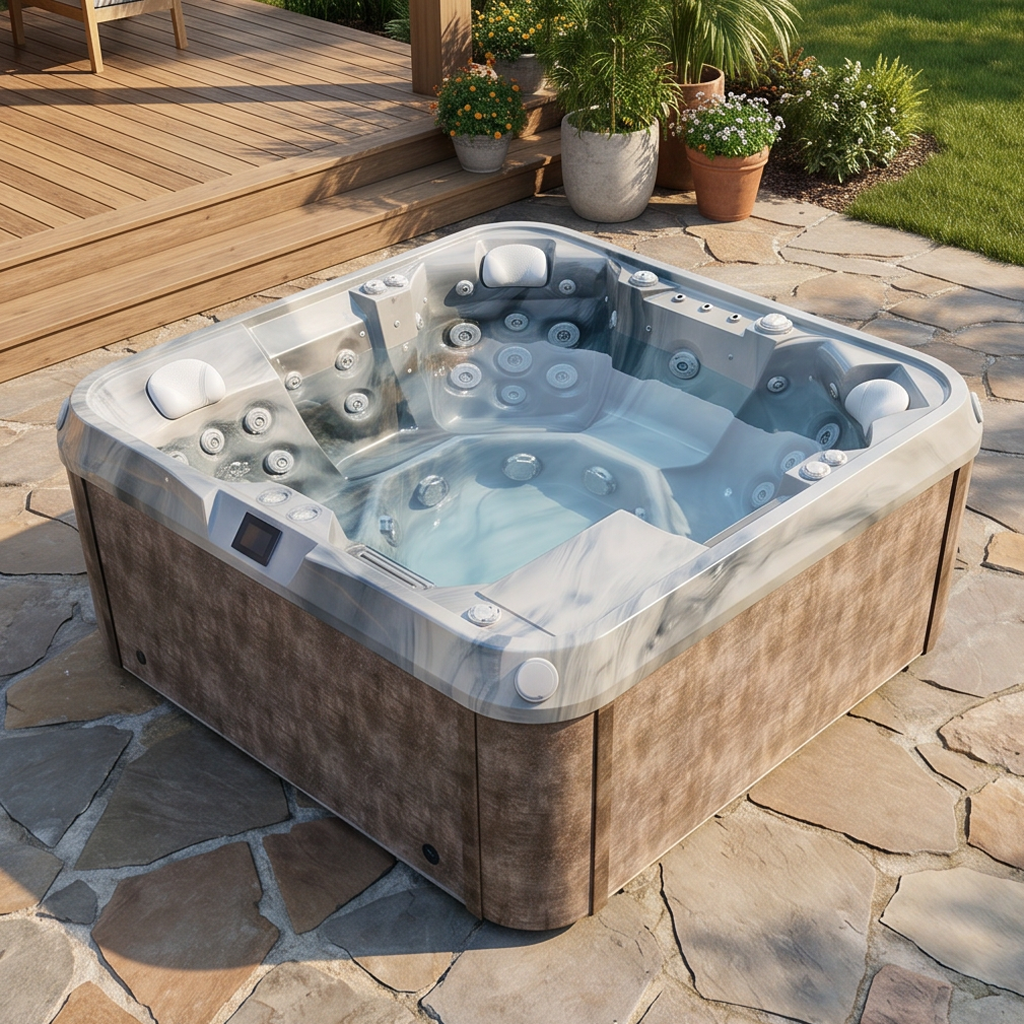
Packaging Design for OEM Outdoor Hot Tubs: A Four-Layer Protection Strategy
Effective professional packaging is not simply about adding more materials; it is about providing targeted protection based on the product’s specific structure and the conditions of the transport environment. For OEM outdoor hot tubs, the following four-layer protection strategy is recommended:
1. Surface Protection
The acrylic shell is a key component of an outdoor spa hot tub; its surface luster and integrity are vital to the product's overall appearance. Before packaging, the surface should be covered with a protective film suitable for acrylic. Additionally, EPE (expanded polyethylene) foam or flexible foam padding should be applied to protruding areas, such as corners, armrests, jets, and control panels.
Fragile components—such as LED lights, touch-sensitive control panels, and waterfall features—require dedicated, individual protective structures to prevent impact or abrasion during transit.
2. Securing Internal Equipment
Before shipment, all water pumps, heaters, filters, and pipe connections must be thoroughly inspected. For heavier equipment, ensure that the mounts and anchor points meet the product’s design specifications. Where necessary, incorporate specialized support structures to minimize any displacement caused by vibrations during transport. Additionally, cable connections, pipe fittings, and the installation status of components should be inspected to prevent loosening caused by prolonged vibration.
3. Cushioning and Moisture-Proofing Materials
Common packaging materials for outdoor hot tubs include EPE (expanded polyethylene) foam, EVA foam, PE dust-proof film, honeycomb cardboard, and moisture-proof bags. The choice of material should be based on its intended function rather than simply prioritizing thickness.
EPE foam is suitable for cushioning the edges and surfaces of the product, while EVA foam provides localized support where greater stability is required. PE film offers basic protection against dust. For long-distance ocean freight, desiccants can be strategically placed within the packaging to reduce internal humidity.
It is important to note that cushioning materials cannot serve as a substitute for load-bearing structures. For heavy outdoor hot tubs, the product's weight must be distributed through an appropriate base and support framework.
4. Reinforced Wooden Pallets or Custom Wooden Crates
The base packaging is critical for forklift handling and transport stability. Depending on the product's actual weight, center of gravity, and base configuration, one should select reinforced wooden pallets, skid-style bases, or custom-built wooden crates.
For instance, when designing the load capacity for a pallet supporting an outdoor spa hot tub with an empty weight of approximately 350 kg, one must account for the product's weight, the weight of the packaging itself, dynamic transport loads, and the requirements for forklift handling.
If solid wood pallets or crates are used for exports, compliance with the ISPM 15 international phytosanitary standard is mandatory. Solid wood packaging materials must undergo approved treatment and bear the IPPC mark to meet the import requirements of the destination countries.
Quality and Packaging Inspection Prior to Shipment
The quality of packaging depends not only on the materials used but also on the thoroughness of pre-shipment inspections. OEM manufacturers of outdoor hot tubs should establish a standardized pre-shipment inspection protocol.
First, conduct a visual and functional inspection of the product. Ensure that the acrylic interior shell is free of visible scratches, cracks, or surface defects, and verify that the exterior skirting, jets, grab bars, and control panels are correctly installed. For products equipped with electrical control systems, perform all necessary electrical safety and functionality tests in accordance with the manufacturer’s specifications.
Second, ensure that drainage and anti-freeze checks are completed. Outdoor hot tubs contain complex internal water circulation piping; simply draining the main basin does not ensure that all components are free of water. Water pumps, filters, heaters, and low-lying pipes must be handled according to the manufacturer’s specifications to check for any residual water. This step is particularly critical for shipments destined for regions that experience cold winter temperatures.
Third, verify the accessories list. For OEM orders that include items such as filters, headrests, steps, thermal covers, cleaning tools, and installation hardware, it is recommended to pack these in separate, labeled accessory boxes—marked with the product model and order number—to prevent missing or mixed-up components upon receipt by the overseas client.
Finally, create a visual record of the shipment. Photograph the product’s exterior, internal components, and accessories before packing; after packing, document the pallet structure, the overall packaging, and all shipping labels. For bulk orders, full traceability can be maintained through product serial numbers and packing records.
How should one choose an international shipping method for outdoor hot tubs?
The choice of shipping method directly impacts the delivery costs and lead times for OEM outdoor hot tubs. Manufacturers should select the most appropriate logistics solution based on the destination, order volume, product dimensions, and the client’s specific delivery requirements.
1. Sea Freight: Suitable for Large-Volume Exports
For Chinese manufacturers exporting to markets such as Europe, North America, or Australia, sea freight is the most common shipping method—especially given the large size and significant weight of outdoor spa hot tubs.
Reference dimensions for standard shipping containers are as follows:
| Container Type | Internal Dimensions (L × W × H) |
| 20ft Standard Container | Approx. 5.9 × 2.35 × 2.39 m |
| 40ft Standard Container | Approx. 12.0 × 2.35 × 2.39 m |
| 40ft High Cube Container | Approx. 12.0 × 2.35 × 2.69 m |
The figures above are for general reference; actual dimensions and container door clearances should be verified against specific container specifications.
The number of hot tubs that can be loaded into a container is determined not only by weight limits but also by the dimensions of the external packaging, the width of the container doors, and the arrangement of the units. Therefore, it is advisable to conduct a loading simulation before production begins to finalize packaging dimensions and container configurations.
2. Land Transport: Suitable for Port Transshipment and Final-Mile Delivery
Upon arrival at the destination port, outdoor whirlpool spa hot tubs typically require onward transport by truck to overseas warehouses, distributors, or the end customer’s location.
Since land transport often involves multiple rounds of loading and unloading, the packaging base must be designed with adequate clearance for forklift tines. Furthermore, the center of gravity, handling orientation, and areas where pressure must not be applied should be clearly marked on the packaging. For large products, it is also necessary to verify in advance the load capacity of transport vehicles and the availability of unloading equipment.
3. Multimodal Transport: Enhancing Delivery Flexibility
Some export orders require a combination of sea and land transport, or other forms of multimodal transport. Since risks vary across different stages of the journey, packaging must account for the vibrations experienced during sea freight, the shocks encountered during land transport, as well as the demands of warehouse stacking and loading/unloading operations—rather than being designed for a single mode of transport alone.
Container Loading: How to Reduce the Risk of Damage to Outdoor Hot Tubs During Transit?
Container loading is a critical step in the international transport of outdoor whirlpool spa hot tubs. Even if the product is properly packaged, an inadequate loading plan can still lead to the cargo tilting, colliding, or shifting.
First, the loading layout should be designed based on the dimensions, weight, and center of gravity of the packaged products, ensuring there are no excessive or unreasonable gaps between them. Additionally, the dimensions of the container doors must be checked beforehand to ensure that large outdoor spa hot tubs can be loaded without difficulty.
Second, the cargo must be securely braced. Depending on the packaging structure, straps, chocks, and wooden supports should be used to restrict any forward, backward, or lateral movement during transit. Straps should be applied to the packaging base or designated load-bearing points; they must never exert direct pressure on the acrylic shell, skirting panels, or control panels.
Third, implement moisture protection measures within the container. During sea freight, temperature fluctuations between day and night can cause condensation to form inside the container—a phenomenon known as "container rain." Before loading, ensure the container is dry and free of leaks, and utilize appropriate desiccants based on the specific shipping route and season.
Finally, maintain detailed loading records, including product models, quantities, gross and net weights, packaging dimensions, and photographs of the loaded cargo. This documentation assists overseas customers in verifying their shipments upon arrival and provides a basis for traceability should any transport-related damage occur.
Packaging Testing and International Transport Standards
For outdoor whirlpool spa hot tubs exported on a regular basis (such as in OEM arrangements), packaging solutions must be validated through rigorous testing; one should not rely solely on visual inspection to judge the effectiveness of the protective measures.
Common packaging tests include:
•Vibration Testing: Simulates the continuous vibration experienced during transport to check for any loosening of water pumps, piping, or internal securing structures.
•Impact Testing: Evaluates the cushioning and protective capacity of the packaging against shocks during loading, unloading, and handling.
•Compression Testing: Assesses the load-bearing capacity of the packaging base and its external structure.
•Environmental Testing: Evaluates the impact of temperature and humidity fluctuations on the packaging and product components.
Companies can refer to standards from organizations like ISTA and ASTM when developing testing protocols. For instance, ASTM D642 covers compression testing for shipping containers, ASTM D999 addresses vibration testing for shipping packaging, and ASTM D4169 provides a framework for performance testing of shipping packaging systems.
It should be noted that the drop-test conditions typically applied to standard cardboard boxes are not directly applicable to large, outdoor spa hot tubs. Testing methods and parameters must be determined based on the product’s weight, the specific packaging configuration, and the actual transport environment.

How can the packaging costs and delivery efficiency of OEM outdoor hot tubs be optimized?
Packaging must ensure safe transport while keeping costs under control. For overseas brands and bulk purchasers, an effective packaging strategy can reduce logistics-related losses and enhance supply chain efficiency.
First, promote packaging standardization. Manufacturers can establish standardized pallet specifications and packaging modules based on product dimensions and weight, which reduces the need for redundant designs and improves production and packaging efficiency.
Second, incorporate transport requirements during the product design phase. For example, carefully planning the load-bearing base structure, providing adequate space for forklift handling, and securing internal components can significantly reduce the complexity of the final packaging.
Third, optimize container load utilization. By measuring the dimensions of the outer packaging in advance and simulating various loading configurations, companies can minimize wasted space and lower the logistics cost per unit.
Finally, establish a system for tracking transport quality data. Regularly monitor metrics such as packaging costs, transit damage rates, customer complaints, and claims. For instance, if a particular hot tub model frequently exhibits deformation at the base, the pallet structure should be re-evaluated; if the control panel is often damaged by impacts, the local cushioning design should be improved.
By continuously analyzing transport data, OEM manufacturers of outdoor whirlpool spa hot tubs can refine their packaging solutions, achieving an optimal balance between safety and cost-effectiveness.
FAQ: Packaging and Shipping of Outdoor Hot Tubs
Q1: What packaging methods are typically used for exporting outdoor hot tubs?
A: Packaging usually consists of a combination of EPE foam, protective foam padding, PE dust-proof film, and reinforced wooden pallets or custom-built wooden crates. The specific approach depends on the product's dimensions, weight, and the intended shipping route.
Q2: Why must an outdoor spa hot tub be completely drained before export?
A: Hot tubs contain water pumps, heaters, and complex plumbing. Any residual water can freeze and expand in low-temperature environments, potentially damaging the pipes or equipment. Therefore, it is essential to drain the unit and verify that no water remains, in accordance with the manufacturer’s instructions.
Q3: Can outdoor spa hot tubs be stacked during transport?
A: Whether stacking is permitted depends on the packaging structure and load-bearing capacity. Without structural verification, it is not recommended to place other cargo on top of a hot tub, as this could cause deformation to the shell or interior basin.
Q4: How can moisture damage be prevented during the sea freight of outdoor spa hot tubs?
A: It is recommended to use appropriate moisture-proof packaging and desiccants. Before loading, ensure the shipping container is dry and free of leaks, and confirm that the whirlpool spa hot tub has been thoroughly drained and dried.
Q5: Is it possible to customize export packaging for OEM outdoor hot tubs?
A: Yes. Manufacturers can tailor packaging dimensions, pallet configurations, branding, accessory boxes, and shipping labels to meet specific brand requirements, product specifications, and the standards of the destination market.