


How long does the chlorine from an outdoor hot tub remain on your skin?
2026-07-31 15:30Outdoor whirlpool spa hot tubs are popular among consumers because they offer a range of experiences—such as temperature-controlled soaking, hydrotherapy massage, muscle relaxation, and social entertainment—and can be used year-round. However, while enjoying this relaxing spa experience, many users wonder about a practical issue: how long does the chlorine in the water stay on the skin?
After soaking in an outdoor whirlpool spa hot tub, many people notice their skin feels slightly dry or detect a lingering "pool-like" odor on their bodies. This leads to concerns that chlorine might remain on the skin's surface for an extended period or even be absorbed into the body. Various claims circulate online—such as "chlorine stays on the skin all day," "you must immediately use special cleansing products after soaking," or "chlorine permanently damages the skin barrier"—causing confusion for first-time spa hot tub users.
In reality, from a scientific perspective, the chlorine in an outdoor spa hot tub does not remain on the skin indefinitely. Chlorine is a common and highly effective water disinfectant; within the proper concentration range, its primary function is to inhibit the growth of bacteria, viruses, and other microorganisms, thereby maintaining water hygiene. What truly affects how your skin feels is not just the chlorine itself, but a combination of factors including water temperature, soaking duration, water chemistry balance, individual skin type, and post-soak skincare routines.
This article provides a comprehensive analysis covering the role of chlorine in outdoor whirlpool spa hot tubs, how long it stays on the skin, the factors influencing skin sensation, ways to minimize chlorine's impact, and proper water maintenance. Our goal is to help you understand chlorine in outdoor spa hot tubs from a scientific standpoint so you can enjoy a healthy, comfortable spa experience with peace of mind.
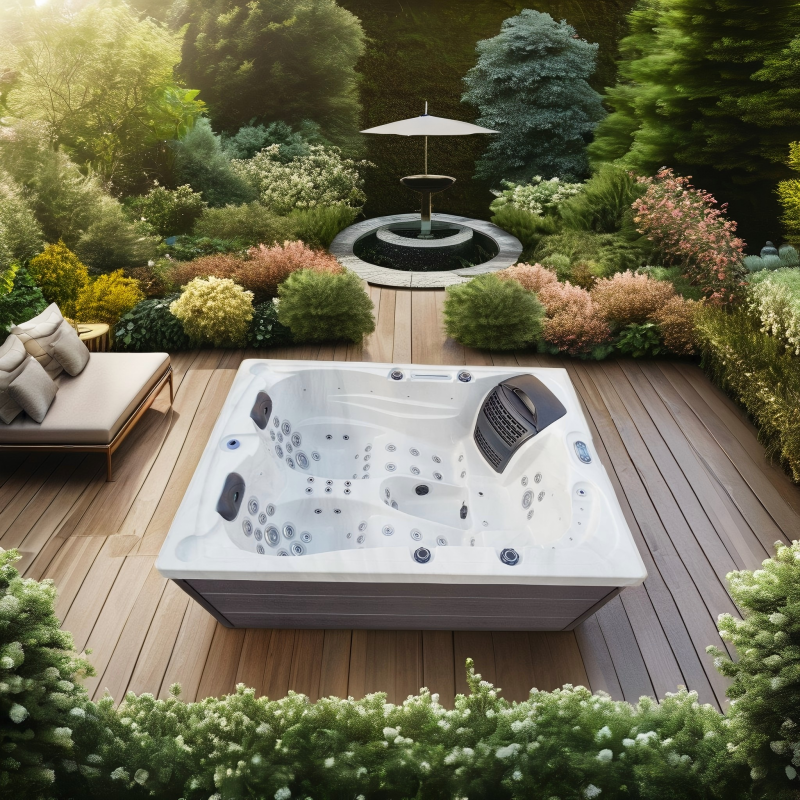
Why do outdoor spa hot tubs require chlorine disinfection?
Outdoor whirlpool spa hot tubs operate using a recirculating water system. Although the equipment includes filters, circulation pumps, and sometimes auxiliary disinfection systems like ozone or UV, the water is in constant contact with the human body. Every time someone enters the spa hot tub, they introduce sweat, sebum, skincare products, sunscreen, cosmetic residues, and small amounts of microorganisms. If these organic substances are not treated promptly, they become a nutrient source for bacterial growth. When chlorine disinfectants enter the water, they form "free available chlorine"—the active agent responsible for disinfection—which rapidly reduces microbial counts and helps maintain water safety. According to guidelines from the World Health Organization (WHO), the U.S. Centers for Disease Control and Prevention (CDC), and various national standards for pool management, maintaining an appropriate level of residual chlorine (alongside a proper pH balance) effectively controls most common waterborne microorganisms while ensuring user comfort.
Therefore, for most residential outdoor whirlpool spa hot tubs, chlorine is not a "harmful additive" but a crucial measure for ensuring water hygiene.
How long does chlorine from an outdoor spa hot tub remain on the skin?
Scientifically speaking, chlorine does not adhere to the skin's surface for long periods. Once a person exits the spa hot tub, moisture on the skin evaporates quickly, carrying away the vast majority of free chlorine through volatilization or rinsing. If one showers with fresh water immediately after soaking, any residual chlorine on the skin can usually be significantly reduced within minutes.
Even without an immediate rinse, chlorine does not cling to the skin tenaciously like oils or grease. Because free chlorine is highly volatile—and because the body continuously secretes sebum and sweat—the amount of active chlorine remaining on the skin gradually diminishes over time. In other words, the "chlorine smell" people often notice does not necessarily indicate that significant amounts of chlorine remain on the skin.
In fact, while many mistakenly believe the strong "chlorine odor" in pools or spa hot tubs comes from the chlorine itself, research shows it actually stems largely from chloramines—byproducts formed when chlorine reacts with organic substances like sweat and urea. Consequently, better water maintenance often results in a milder chlorine scent.
Why does skin feel dry after using an outdoor spa hot tub?
Although chlorine does not linger on the skin for long, some users still experience dryness, tightness, or even mild itching after using an outdoor whirlpool spa hot tub. This sensation is not necessarily caused by chlorine residue but rather results from a combination of factors.
First, outdoor spa hot tubs typically maintain a constant temperature between 37°C and 40°C. High water temperatures cause the skin's stratum corneum (outermost layer) to absorb water and swell, while simultaneously accelerating the loss of natural sebum. When the body leaves the water, moisture evaporates rapidly, often causing a temporary sensation of skin dryness.
Furthermore, while chlorine acts as an effective oxidizing disinfectant that maintains water quality at standard concentrations, prolonged or frequent exposure can slightly affect the skin's natural oil barrier. This effect may be more pronounced in individuals with dry or sensitive skin, or those suffering from conditions such as eczema.
Additionally, soaking for too long can increase moisture loss from the skin. Most dermatologists recommend limiting outdoor whirlpool spa hot tub sessions to between 15 and 30 minutes; this helps minimize stress on the skin while ensuring physical comfort.
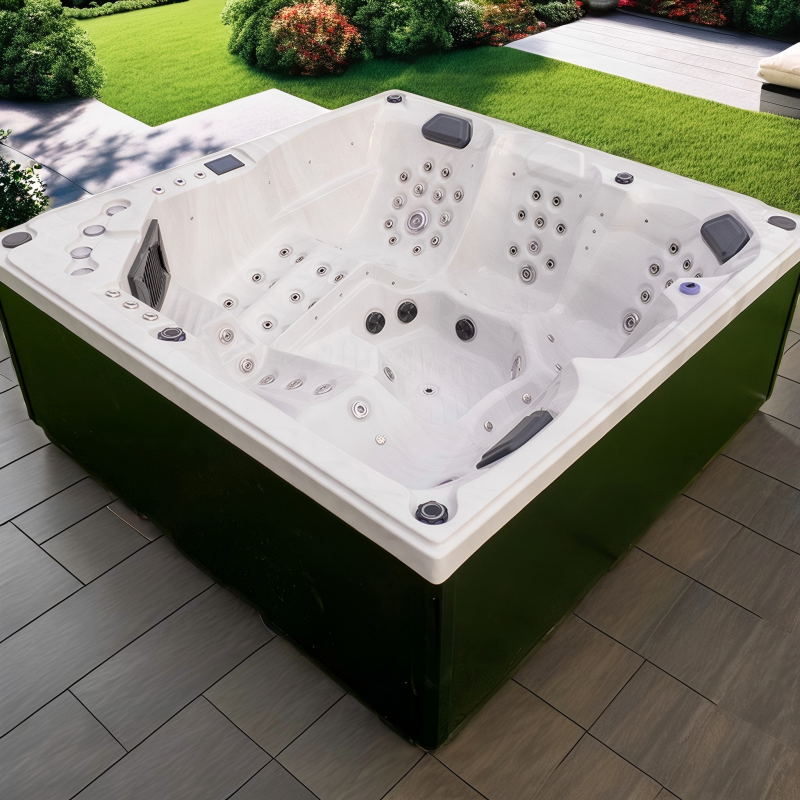
What factors influence how chlorine in outdoor hot tubs affects the skin?
1. Chlorine concentration levels
In properly maintained outdoor whirlpool spa hot tubs, residual chlorine levels are typically kept within industry-recommended ranges. Moderate concentrations ensure effective disinfection while maintaining skin comfort. If chlorine levels significantly exceed recommended values, the risk of skin irritation increases; therefore, regular water quality testing is essential.
2. Water balance
Beyond chlorine, pH levels also impact the skin experience. Ideally, the pH of an outdoor spa hot tub should be maintained between 7.2 and 7.8. If the pH is too high or too low, it can compromise skin comfort and reduce disinfection efficiency, even if chlorine levels are within the normal range.
3. Duration of soaking
The longer the soak, the more the skin is exposed to the water, leading to greater loss of natural oils. Consequently, prolonged, continuous soaking—especially in high-temperature water—is not recommended.
4. Individual skin type
While healthy skin typically restores its barrier function relatively quickly, sensitive skin, as well as the skin of children and the elderly, has a weaker barrier. These groups are more prone to dryness or mild irritation, making post-soak skincare particularly important.
Ways to Minimize the Impact of Chlorine on the Skin
Although chlorine at appropriate concentrations rarely causes significant issues, simple measures can further enhance comfort during your soak.
First, it is advisable to rinse off before entering the hot tub to reduce the amount of sweat, sunscreen, and skincare products introduced into the water. This not only helps lower chlorine consumption but also reduces the formation of chloramines, resulting in cleaner water overall.
Additionally, taking a warm shower after your soak helps rinse away any residual disinfection byproducts and minerals from your skin without the need for harsh cleansing products.
Afterward, you should promptly apply a moisturizing lotion or emollient to replenish the skin's moisture and lipids, helping to restore its natural barrier. This step is particularly important for users with dry skin.
Furthermore, maintaining good water quality in your outdoor whirlpool spa hot tub can also reduce the burden on your skin. Regularly testing residual chlorine levels, adjusting pH, cleaning the filtration system, and changing the water on schedule all contribute to a more comfortable soaking experience.
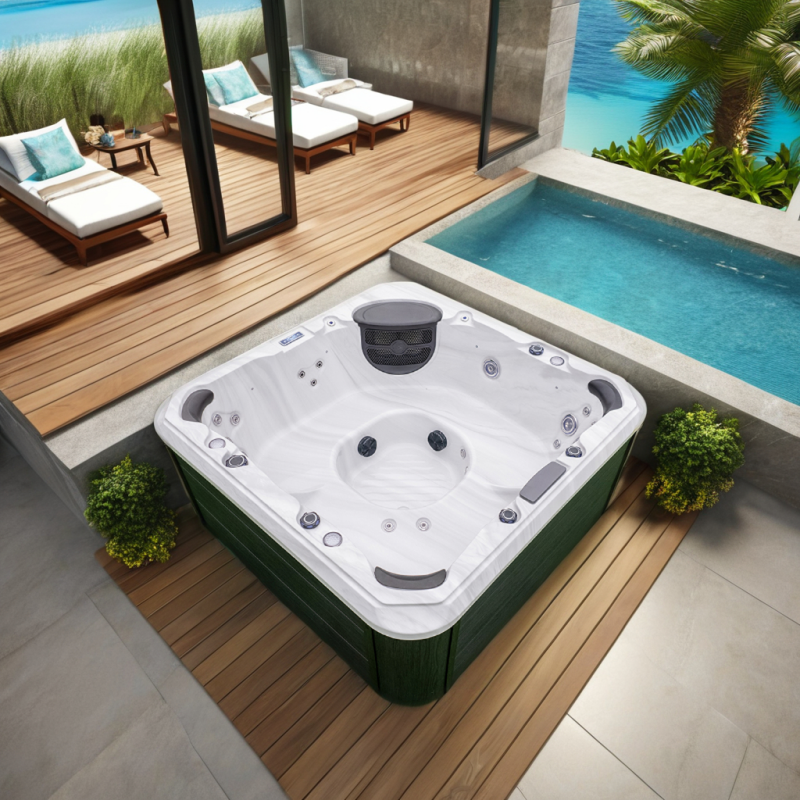
Can other disinfection methods be used for outdoor spa hot tubs?
In recent years, with technological advancements, some outdoor spa hot tubs have begun using supplementary disinfection systems such as ozone, ultraviolet (UV) light, mineral ions, or saltwater electrolysis.
It is important to note that while these technologies can reduce the amount of chemical disinfectants needed, in most residential outdoor spa hot tubs, they serve as supplementary measures rather than complete replacements for chlorine. This is because ozone and UV systems primarily operate within the circulation system and have limited ability to maintain continuous disinfection throughout the entire body of water; therefore, a certain level of residual chlorine is still required for long-term protection.
Consequently, consumers need not blindly seek out "completely chlorine-free" outdoor spa hot tubs; instead, they should focus more on whether the equipment can consistently maintain optimal water quality.
Proper Water Quality Management Is More Important Than Simply Reducing Chlorine Usage
Many users believe that minimizing chlorine usage will reduce its impact on the skin. In reality, this approach is not scientifically sound.
If the chlorine concentration in an outdoor spa hot tub is too low, bacteria, fungi, and other microorganisms can multiply rapidly, actually increasing the risk of water quality issues and skin irritation. Furthermore, as organic contaminants accumulate in the water, chlorine reacts with them more readily to form chloramines, leading to a more noticeable odor.
Therefore, the truly healthy approach to maintenance is not merely to lower chlorine levels, but to maintain appropriate residual chlorine concentrations, a stable pH, efficient filtration, and a proper water-changing schedule. Only by establishing a comprehensive water quality management system can you ensure hygiene, safety, and comfort simultaneously.
FAQ
Does the chlorine from an outdoor whirlpool spa hot tub remain on the skin?
No. After soaking, the free chlorine on the skin's surface gradually diminishes through evaporation, rinsing with fresh water, and the skin's natural metabolic processes; it generally does not linger on the skin for an extended period.
Is it necessary to shower immediately after using an outdoor whirlpool spa hot tub?
It is recommended to rinse your body briefly with warm water. This helps remove residual disinfection byproducts, minerals, and other impurities from the skin's surface while enhancing comfort. Harsh cleansing products are usually unnecessary.
Why does skin feel dry after using an outdoor whirlpool spa hot tub?
The primary causes include the loss of natural skin oils due to high water temperatures, prolonged soaking, and individual skin type; it is not solely caused by chlorine. Applying moisturizer promptly after soaking helps restore the skin barrier.
Does a stronger chlorine smell indicate higher chlorine levels in the spa hot tub?
Not necessarily. Often, the strong odor comes from chloramines—compounds formed when chlorine reacts with organic matter like sweat and urea—rather than from free chlorine itself. Properly maintained outdoor spa hot tubs usually have cleaner water and, consequently, less odor.
How can I minimize the impact of chlorine on my skin when using an outdoor spa hot tub?
Maintaining appropriate residual chlorine levels and pH balance, limiting soaking time, rinsing off before entering the tub, and showering with warm water followed by moisturizing afterward are effective ways to reduce skin discomfort and improve the overall hot tub experience.