


How to Resolve the "Sandpaper-Like" Texture on Outdoor Hot Tub Vents?
2026-07-31 15:30During long-term use, many users encounter a peculiar issue: the vents on their outdoor whirlpool hot tubs develop a distinct "sandpaper-like" feel—becoming rough, scratchy, or uneven to the touch. When first encountering this, many consumers mistakenly assume the material is aging or that there is a serious quality defect with the vent itself.
In reality, a sandpaper-like texture does not necessarily indicate equipment damage; it is often linked to factors such as limescale buildup, mineral crystallization, the adhesion of airborne pollutants, improper cleaning methods, and the surrounding environment. However, if left unaddressed, this issue can detract from the spa hot tub's aesthetics and comfort, and potentially even impact its operational efficiency.
The "sandpaper-like texture" refers to the sensation users experience when touching the ventilation area, the vicinity of the air outlet, or related surfaces. Instead of the smooth feel typical of plastic or acrylic materials, the surface feels rough and gritty—resembling the texture of sandpaper—due to the presence of tiny particles. This phenomenon is particularly common in spa hot tubs installed in open-air environments like courtyards, terraces, or gardens.
This article provides a detailed analysis of how to resolve this issue, offering users a comprehensive solution that covers causes, potential impacts, proper treatment steps, and daily maintenance methods to ensure the spa hot tub remains in excellent condition over the long term.
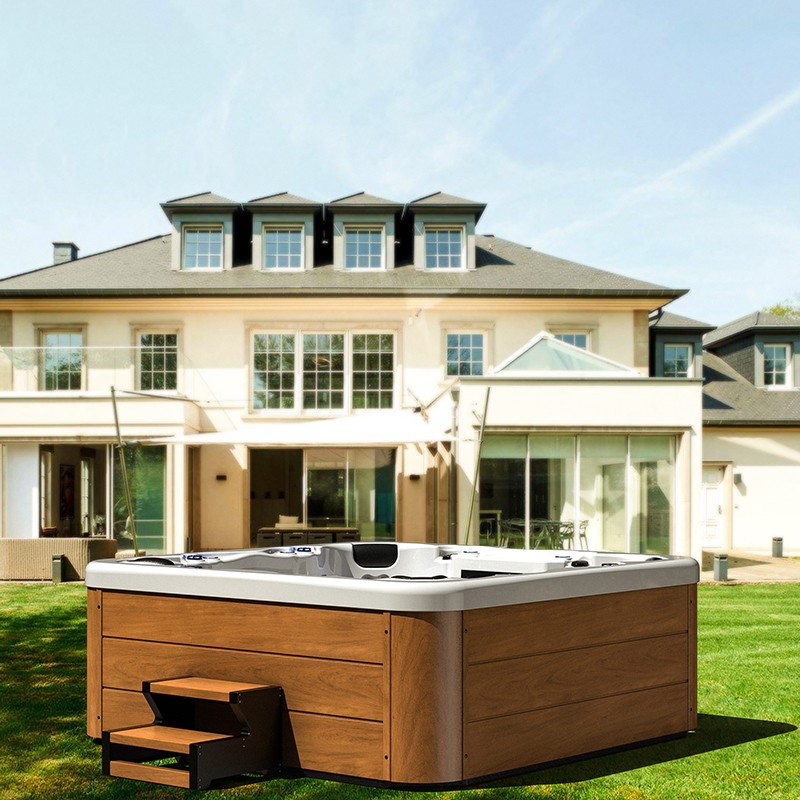
What is the "sandpaper-like texture" on outdoor hot tub vents, and why does it occur?
The "sandpaper-like texture" on outdoor whirlpool hot tub vents is not a technical term for a mechanical failure, but rather a phenomenon described by users based on tactile experience. It typically manifests as a gritty sensation around the vent or on the surface area, feeling rough to the touch—almost as if fine sand has adhered to the surface.
Under normal conditions, the shell, panels, and ventilation areas of an outdoor whirlpool hot tub should remain relatively smooth. A noticeably rough texture usually indicates the accumulation of deposits or slight alterations to the material's surface.
The primary causes of this sandpaper-like texture on outdoor spa hot tub vents include the following:
First, limescale and mineral deposits are the most common causes. Many households are located in areas with hard water, which contains high concentrations of minerals such as calcium and magnesium. When an outdoor whirlpool hot tub operates over an extended period, these minerals gradually accumulate on the equipment's surfaces due to water vapor, splashing, and the circulation process. As the minerals dry, they form tiny crystals, creating a rough texture.
Secondly, dust, pollen, and airborne pollutants in the outdoor environment can affect the vent areas. Because outdoor whirlpool hot tubs are constantly exposed to the air and require continuous airflow through their vents, they are prone to attracting microscopic airborne particles. In particularly windy or dusty regions, airborne dust particles can settle on the equipment surfaces, creating a gritty, sandpaper-like feel.
Thirdly, improper cleaning methods can also cause this sandpaper-like texture. Some users employ harsh detergents, coarse brushes, or highly abrasive cleaning tools to remove stains. Such actions can damage the spa hot tub's protective surface coating, making the surface more susceptible to dirt accumulation.
Fourthly, a lack of long-term maintenance can lead to similar issues. If an outdoor whirlpool hot tub does not undergo deep cleaning for an extended period, dust, grease, limescale, and other contaminants tend to accumulate around the vents, eventually resulting in a noticeably rough texture.
Does a sandpaper-like texture on the hot tub vents indicate equipment damage?
Upon discovering this rough texture on the vents, many users worry that the spa hot tub is aging or that there is an internal system malfunction. In reality, however, this phenomenon usually does not indicate equipment damage.
The primary functions of an outdoor spa hot tub's ventilation system are to dissipate heat, maintain airflow, and support the operation of certain features. A rough texture on the vent surface is typically a matter of surface contamination or a maintenance issue rather than a failure of the core structure.
For instance, if the roughness is concentrated on the exterior of the vent, it can often be remedied through cleaning or descaling. If the texture originates from a detachable vent component, that part can be removed for inspection and treatment.
However, further inspection is required if any of the following conditions occur:
First, there is visible discoloration, cracking, or material crumbling near the vents. This may indicate that plastic components have suffered from prolonged UV exposure or chemical corrosion.
Second, the spa hot tub produces abnormal operating noises. For instance, increased fan noise or reduced air circulation efficiency may indicate an internal blockage in the ventilation system.
Third, abnormal equipment temperatures. If poor heat dissipation triggers frequent control system alarms, it is also necessary to check the ventilation area for severe blockages.
Therefore, determining the severity of the "sandpaper-like" texture on outdoor whirlpool hot tub vents requires looking beyond mere tactile sensation and considering the equipment's overall operating condition.
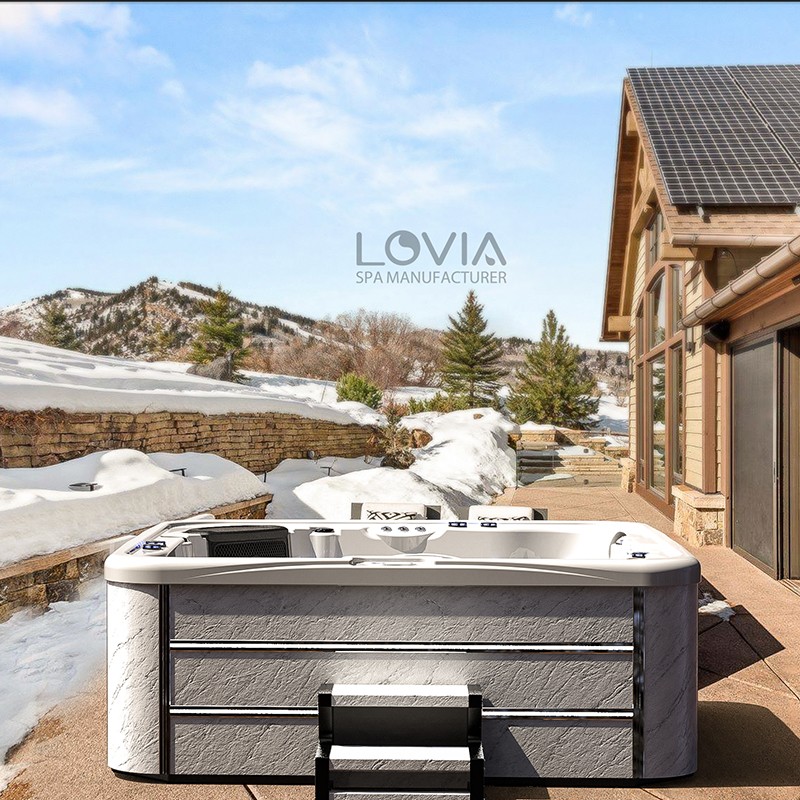
Analysis of the Main Causes of the "Sandpaper-Like" Texture On Outdoor Hot Tub Vents
1. Mineral deposits (limescale) from hard water
Hard water is a common issue in outdoor whirlpool hot tub maintenance. Water quality studies show that tap water in many regions has high levels of calcium and magnesium ions; prolonged heating causes these to form calcium carbonate deposits—commonly known as limescale.
Because outdoor whirlpool hot tubs maintain high water temperatures for extended periods, water evaporates faster than in standard water environments, leading to a gradual increase in mineral concentration. When mineral-rich water droplets land near the vents and evaporate, they leave behind tiny crystals.
Initially, these crystals may appear as faint white marks, but after weeks or months of accumulation, they can form a noticeably rough layer.
Addressing this issue requires descaling methods specifically designed for outdoor whirlpool hot tubs rather than simple wiping, as plain water usually cannot effectively dissolve established mineral deposits.
2. Airborne dust and particles entering the ventilation area
The primary difference between outdoor and indoor hot tubs is that outdoor models are constantly exposed to an open environment.
Dust, soil particles, plant pollen, and insect debris from the yard can all enter the ventilation area via airflow. The concentration of fine airborne particles increases significantly, particularly during dry, windy seasons.
Once these particles adhere to damp surfaces, they create a rough, "sandpaper-like" texture.
Environmental monitoring data indicates that outdoor urban air often contains high levels of particulate matter smaller than 10 micrometers; while invisible to the naked eye, long-term accumulation can noticeably affect the surface condition of outdoor equipment.
3. Surface roughness caused by cleaning product residue
Many outdoor spa hot tub owners seek quick stain removal and may resort to using kitchen cleaners, strong acidic descalers, or abrasive cleaning products.
This practice carries risks. Outdoor whirlpool hot tubs are typically made of acrylic, ABS plastic, or composite materials, all of which require the preservation of their protective surface layer. Using overly harsh cleaning products can cause microscopic surface damage, making the material more prone to attracting dust.
Therefore, when cleaning an outdoor whirlpool hot tub, choose specialized cleaning products and avoid tools such as steel wool or stiff-bristled brushes.
4. Material changes caused by prolonged UV exposure
When outdoor spa hot tubs are exposed to sunlight for extended periods, ultraviolet (UV) rays can gradually affect certain plastic materials.
Although most high-quality outdoor spa hot tubs feature UV-resistant treatments, the surface may still show signs of slight aging if the unit is left exposed to the sun without cover for a long time.
As the material ages, the surface loses its smoothness and may develop a texture resembling sandpaper.
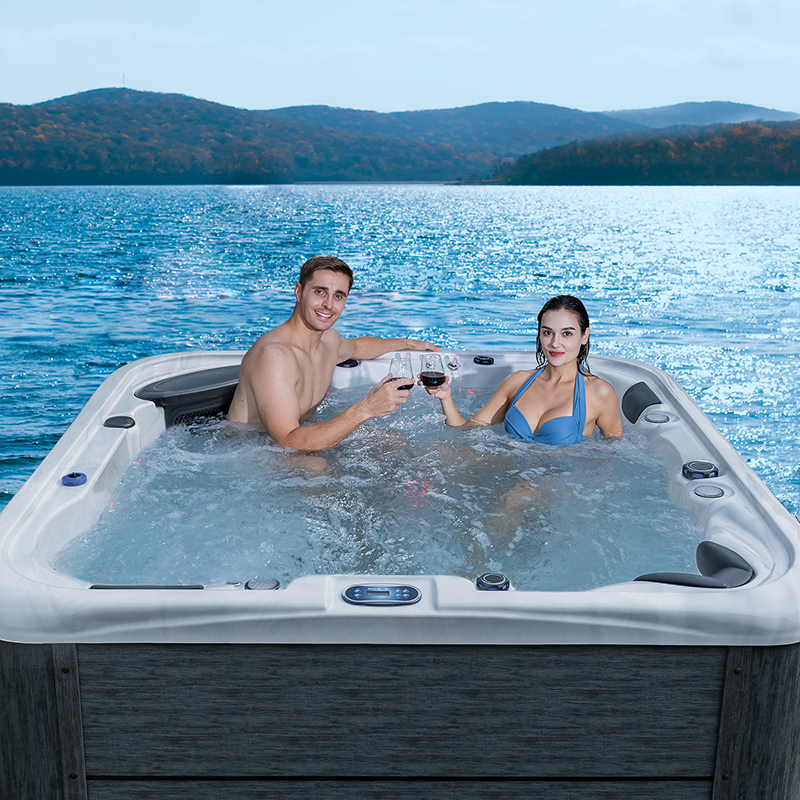
How can the "sandpaper-like" texture on outdoor hot tub vents be properly addressed?
If you notice a sandpaper-like texture on the vents, it is recommended to proceed with a step-by-step approach, moving from simple measures to more intensive ones.
First, perform a basic cleaning.
After turning off the power to the spa hot tub, wipe the vent area with a soft, damp cloth to remove surface dust. If the issue is simply due to accumulated dust, this step often significantly improves the texture.
Second, check for limescale buildup.
If you find white particles, white spots, or hard deposits, use a mild descaler suitable for outdoor whirlpool hot tubs. Be sure to dilute the product according to the instructions to prevent high concentrations of chemicals from damaging the equipment.
Third, remove detachable parts for a deep clean.
Some vent components on outdoor whirlpool hot tubs can be removed. If possible, take off the relevant parts and clean them individually to more thoroughly remove hidden dirt.
Fourth, consider repair if the sandpaper-like texture is caused by surface damage.
For minor surface abrasion, professional plastic care products can be used to improve the surface condition. However, if significant cracking or chalking (powdering) is present, it is advisable to contact a professional technician for inspection.
How can the recurrence of a sandpaper-like texture on outdoor hot tub vents be prevented?
Solving the problem is only the first step; establishing a long-term maintenance routine is key.
First, clean the exterior areas of the outdoor whirlpool hot tub regularly. Generally, a simple weekly wipe-down helps prevent long-term dust accumulation.
Second, use a high-quality spa hot tub cover. A spa hot tub cover not only reduces heat loss but also minimizes the entry of airborne pollutants into the equipment area.
Third, manage water quality based on local conditions. If you live in an area with hard water, consider using water-softening measures to slow the rate of mineral buildup.
Fourth, avoid using improper cleaning tools. Maintenance should follow the principle of "gentle cleaning"; abrasive products are not recommended.
Fifth, regularly inspect the ventilation system. Keeping ventilation areas clear reduces dust accumulation and ensures effective heat dissipation for the equipment.
Key Indicators for Daily Outdoor Spa Hot Tub Maintenance
In addition to addressing the "sandpaper-like" texture on the vents, users should focus on the overall maintenance of the outdoor whirlpool hot tub.
Regarding water quality, regularly test pH levels, sanitizer concentrations, and water hardness. It is generally recommended to maintain the pH between 7.2 and 7.8 to ensure comfort while minimizing the risk of scale buildup.
For the filtration system, clean the filter cartridge based on usage frequency. With frequent use, it is advisable to check the filter's condition weekly.
Regarding the exterior, pay attention to the condition of seals, panels, ventilation areas, and the control system.
Many issues with outdoor spa hot tubs do not arise suddenly but accumulate gradually due to long-term neglect of maintenance. Therefore, regular inspections can lower repair costs and extend the equipment's lifespan.
Why is outdoor spa hot tub maintenance receiving increasing attention?
In recent years, the market for outdoor whirlpool hot tubs has continued to grow, with more households incorporating them into their backyard upgrades.
Compared to traditional indoor bathtubs, outdoor whirlpool hot tubs offer a more leisure-oriented experience but face greater environmental challenges, such as temperature fluctuations, dust pollution, rainfall, and UV exposure.
Data shows that a well-maintained outdoor whirlpool hot tub can last for many years, whereas neglected units may suffer from premature surface aging, reduced filtration efficiency, and water quality issues.
Therefore, proper maintenance is crucial not only for the user experience but also for the long-term value of the equipment.

FAQs Regarding the "Sandpaper-Like" Texture on Outdoor Hot Tub Vents
FAQ 1: Is the "sandpaper-like" texture on the vent a quality issue?
In most cases, it is not a quality defect but is caused by the accumulation of limescale, dust, or other contaminants, or by insufficient cleaning and maintenance. If accompanied by cracking, deformation, or functional issues, further inspection is required.
FAQ 2: Can I use sandpaper on the vents of an outdoor spa hot tub?
It is not recommended. Sandpaper can damage the protective surface layer, making the unit more prone to accumulating dirt. Gentle cleaning methods should be used instead.
FAQ 3: Why do outdoor spa hot tubs tend to develop a rough texture more easily than indoor units?
Because outdoor spa hot tubs are constantly exposed to the elements, including dust, pollen, rain, UV radiation, and temperature fluctuations.
FAQ 4: How can I tell if the rough, sandpaper-like texture on the vents is due to limescale or material aging?
If the residue can be wiped or dissolved away, it is likely a deposit issue; if the surface structure itself has changed—showing signs like chalking or cracking—it is likely due to material aging.
FAQ 5: How often should an outdoor spa hot tub undergo a deep clean?
It is generally recommended to schedule cleaning based on usage frequency; for units used frequently, inspect them monthly and regularly clean the filtration system and internal piping.
FAQ 6: Can installing a spa hot tub cover help reduce the rough texture on the vents?
Yes. A cover helps prevent dust, leaves, and airborne pollutants from entering the spa hot tub, thereby slowing the rate at which contaminants accumulate on the surfaces.