


Can outdoor spa hot tub jets cause back pain?
2026-07-01 15:30In recent years, driven by the growing popularity of wellness-oriented lifestyles and the upgrading of home outdoor spaces, outdoor spa hot tubs have become an integral part of high-quality living. While hot tubs were once the exclusive domain of luxury hotels, hot spring resorts, or mansions, an increasing number of ordinary households are now installing them in their courtyards, on terraces, or in backyards for relaxation, socializing, and physical recovery. Data shows consistent growth in the global spa hot tub market, with outdoor models commanding the largest share—largely because they satisfy the dual needs for leisure and wellness.
However, as the user base expands, reports of negative experiences have also surfaced. One of the most common complaints involves users experiencing lower back soreness, localized muscle stiffness, or even aggravated pain after using an outdoor spa hot tub. This has led many to wonder: can the jets—the massage spray systems—actually cause back pain? It is a topic worth exploring in depth, as the answer is not a simple "yes" or "no."
In reality, the jets themselves do not directly cause back pain; they are designed specifically to relieve muscle fatigue, boost blood circulation, and aid physical recovery. The issues that do arise are usually attributable to how the tub is used, the design of the equipment, and the individual's physical condition.
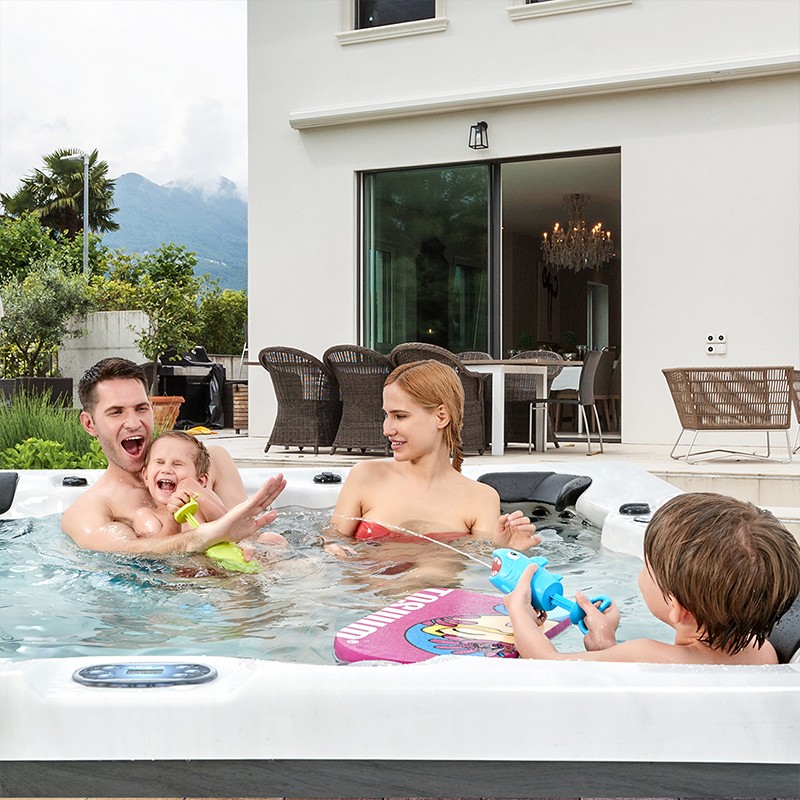
What are outdoor spa hot tub jets?
Jets are spray devices installed inside the spa hot tub; they use a circulation pump to mix water and air, spraying the mixture at specific pressure levels onto targeted areas of the body. This high-pressure stream acts on muscles, fascia, and soft tissues, creating an effect similar to a deep-tissue massage. Modern outdoor spa hot tubs typically feature multiple jets distributed across various seating areas, targeting the neck and shoulders, back, lower back, buttocks, calves, and even the soles of the feet.
Functionally speaking, jets are far more than simple "water nozzles"; they serve as the core component of the entire hydrotherapy system. High-quality outdoor spa hot tubs often come equipped with various types of jets—such as directional, rotary, pulsating, and air-bubble jets—each offering a distinct massage experience. Straight-stream jets are better suited for deep muscle stimulation, while rotating jets mimic manual kneading massage; bubble jets, on the other hand, are geared towards soothing relaxation.
Physiologically, the combination of warm water and massage effectively promotes blood circulation. Studies show that in water temperatures between 38°C and 40°C, surface blood flow in the body increases by approximately 20% to 30%. When jets provide moderate stimulation to the muscles, local tissue oxygen supply improves and the rate of lactic acid metabolism accelerates, leading to a noticeable reduction in muscle tension. Theoretically, therefore, the jets in an outdoor spa hot tub should help alleviate back discomfort rather than cause pain.
Why might outdoor hot tub jets make your back feel more painful?
Although jets are designed for therapy and relaxation, some people do experience increased back pain after using them. This does not necessarily indicate a problem with the spa hot tub itself; rather, it is often related to how it is used.
One of the most common reasons is excessive jet intensity. Many users mistakenly believe that stronger massage pressure yields better results, but human muscles do not function that way. When external pressure exceeds the level a muscle can comfortably withstand, the body does not relax; instead, it triggers a protective mechanism, causing the muscle to contract defensively. In other words, if you turn the jets to maximum power and continuously target the same area of your lower or upper back, the muscles may perceive this as excessive external force and become even more tense. In the short term, this protective contraction can manifest as soreness or aching, and in severe cases, it may even trigger muscle spasms.
Another common reason is a mismatch between jet positioning and human anatomy. Not every outdoor spa hot tub is suitable for every height and body type; there are significant individual differences in back curvature, shoulder width, and the position of the lumbar spine. If the jets are positioned for a taller user but the actual user has a smaller frame, jets intended for the lumbar muscles might instead target the spine or the edges of the shoulder blades. This misalignment significantly reduces massage comfort and can cause localized pain. Consequently, high-quality outdoor whirlpool hot tubs often feature multi-level seating designs to accommodate users of varying heights.
Poor Posture Can Exacerbate the Risk of Back Pain
Many people overlook a crucial factor: posture. In reality, even with a top-quality outdoor spa hot tub, incorrect posture can prevent the jets from functioning effectively.
Due to buoyancy, users often naturally slide forward, causing their buttocks to lift off the seat. This leaves the lower back unsupported and the lumbar spine suspended. To maintain stability, the back muscles must constantly engage. Simultaneously, the jets exert continuous pressure, creating a dual load: the active effort to maintain posture versus the passive impact of the water jets. Prolonged exposure to this state can easily lead to increased muscle fatigue.

How Can You Tell If Your Posture Is Correct?
Determining this is simple. While sitting in the spa hot tub, check the following: Are your buttocks firmly against the seat? Do you feel support in your lower back? Are your shoulders and neck relaxed? If the answer to any of these is no, you need to adjust your seating position. Ideally, your body should be stably supported by the seat, with your back resting naturally against the backrest, rather than relying on muscle tension to stay upright.
Excessive Use Can Also Cause Discomfort
Many users assume that since outdoor spa hot tubs promote relaxation, longer soaking sessions yield better results. In reality, this is a common misconception.
Most hydrotherapy experts recommend limiting a single session to 15–30 minutes, especially when the water temperature is between 38°C and 40°C. Prolonged exposure to high temperatures causes core body temperature to rise, blood vessels to dilate significantly, and places a heavier burden on the cardiovascular system. Additionally, the body regulates temperature through sweating, which can lead to mild dehydration. Dehydration reduces muscle elasticity and recovery capacity, thereby increasing the risk of soreness.
Studies show that after soaking for more than 30 minutes in water above 39°C, some users experience slower muscle response times and reduced postural stability. This means that staying in the whirlpool hot tub for too long diminishes your body's ability to maintain proper posture, increasing the likelihood of abnormal strain on the back.
Who should exercise special caution when using an outdoor hot tub?
While most healthy individuals can safely use outdoor spa hot tubs, certain groups need to be extra careful—particularly those with pre-existing spinal conditions.
If you have a history of herniated discs, spinal stenosis, sciatica, chronic fasciitis, or persistent, severe lower back pain, it is best to consult a doctor before using an outdoor whirlpool hot tub. The reason is that while the high-temperature environment helps relax muscles, the mechanical impact from the jets can irritate already sensitive nerve tissue. For some patients with herniated discs, moderately warm water helps relieve surrounding muscle tension, but high-pressure jets directed at the lumbar spine area could briefly aggravate symptoms.
How should these individuals use the jets?
It is recommended to start with lower temperatures and lower intensity settings to test your body's reaction. Avoid aiming high-pressure jets directly at the areas where pain is most acute; instead, focus on the surrounding muscle groups to promote overall relaxation rather than localized irritation.
What are the actual benefits of outdoor whirlpool hot tub jets?
Despite concerns regarding back pain, outdoor whirlpool hot tub jets offer significant health benefits overall. When used correctly, they are highly effective for physical recovery.
First, jets promote blood circulation. The warm water environment dilates blood vessels, and jet massage further enhances local blood flow, improving oxygen supply to tissues. Second, jets are highly effective at relieving muscle tension. For individuals who work at desks, lead sedentary lifestyles, or engage in high-intensity exercise, tension often accumulates in the back, shoulders, neck, and lower back; outdoor whirlpool hot tubs can effectively help these areas recover. Third, regular use may improve sleep quality. Sleep studies indicate that soaking in warm water for 15 to 20 minutes about 90 minutes before bedtime can help you fall asleep faster and increase the proportion of deep sleep.
Regarding patients with mild to moderate chronic back pain, a hydrotherapy study showed that after four weeks of warm water massage sessions (20 minutes, three times a week), over 70% of participants reported a reduction in pain scores. This demonstrates that proper use of outdoor whirlpool hot tub jets does not cause pain; rather, it can serve as a valuable aid in relieving back pain.
How do you correctly use outdoor whirlpool hot tub jets?
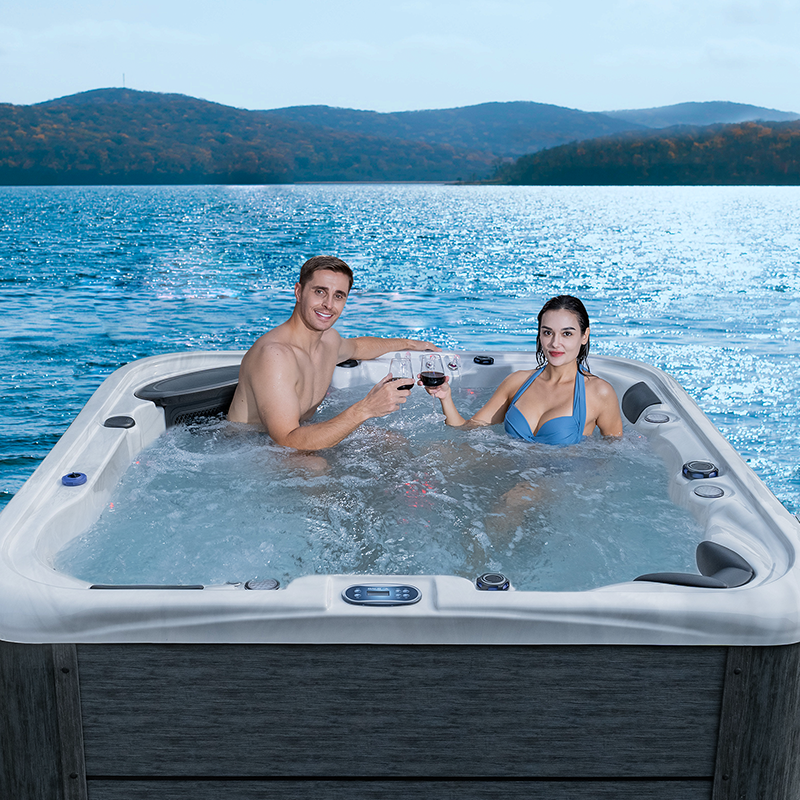
To avoid back pain and ensure the best experience, mastering the correct usage technique is key. First, do not immediately set the jets to maximum intensity upon entering the outdoor whirlpool hot tub. It is recommended to start at a low setting to allow your body to gradually adjust to the water pressure. Second, avoid letting the jets target the same area for an extended period. Ideally, you should shift your seating position every few minutes to ensure different areas receive massage in turn.
Temperature control is also crucial. In most cases, a temperature range of 37°C to 39°C is ideal for outdoor whirlpool hot tubs. Temperatures below this range may not provide sufficient therapeutic heat, while temperatures above 40°C can place undue strain on the body. For post-exercise recovery, 38°C is often the best choice; for pre-sleep relaxation, the temperature can be slightly lowered to between 37°C and 38°C.
Finally, it is important to dispel a common consumer misconception: the number of jets does not equate to massage quality. Many consumers focus solely on the number of jets when purchasing an outdoor spa hot tub, assuming that more jets mean a more premium product. In reality, the experience is determined by nozzle design, pump system performance, pressure regulation capabilities, and ergonomic layout. A high-quality spa hot tub with 40 premium jets often provides a better experience than one with 100 low-quality jets.
FAQ
1. Is it better to have the jets on the highest setting?
No. Excessive water pressure can cause muscle tension; it is recommended to start at a low intensity and adjust gradually.
2. What is the ideal duration for using an outdoor spa hot tub?
A session of 15 to 30 minutes is generally recommended; in high-temperature settings, it is best to limit the time to around 20 minutes.
3. Can I use an outdoor spa hot tub if I have lumbar spine issues?
Yes, but it is advisable to consult a doctor first and avoid letting high-pressure jets directly target painful areas.
4. Why might my back feel more sore the day after using an outdoor spa hot tub?
Common causes include excessive water pressure, incorrect posture, soaking for too long, or pre-existing inflammation in the body.
5. Can outdoor spa hot tubs help relieve chronic back pain?
Proper use can generally be beneficial for mild to moderate back pain caused by muscle tension or prolonged sitting.