


Can I add calcium and chlorine to my outdoor hot tub at the same time?
2026-07-03 15:35For many new jacuzzi outdoor spa tub owners, maintaining water quality often proves more complex than the initial purchase of the unit itself. While the buying process focuses on factors like size, jet count, heating efficiency, insulation, and aesthetics, daily use quickly reveals that the quality of the experience depends as much on water chemistry management as it does on hardware specifications. Although water chemistry might seem like a simple matter of "adding a few chemicals," it actually involves multiple variables—such as hardness, alkalinity, pH levels, sanitizer concentrations, and mineral balance—that often interact with one another.
A common question among these maintenance concerns is: "Can I add calcium and chlorine to the whirlpool hot tub at the same time?" While the question seems basic, the answer involves considerations of chemical stability, the sequence of chemical reactions, and equipment protection. Users often ask this because they discover simultaneous imbalances during water testing: low calcium hardness (requiring a calcium boost) and insufficient free chlorine (requiring sanitization). Naturally, they wonder if they can simply pour both in at once to save time and effort.
The answer isn't a simple "yes" or "no." Theoretically, both calcium and chlorine can be added to the whirlpool hot tub on the same day, but adding them simultaneously, in the same spot, or at the exact same moment is generally not recommended. Doing so can trigger reactions caused by localized high concentrations, leading to clumping, precipitation, or cloudy water, and potentially compromising sanitization effectiveness. More precisely, the issue isn't whether they *can* be added, but rather *how* to add them safely and effectively without disrupting the water's chemical balance.
This article provides an in-depth look at the logic behind using calcium and chlorine in whirlpool hot tubs, covering the basics of water chemistry, their respective roles, potential risks, and the correct application methods.
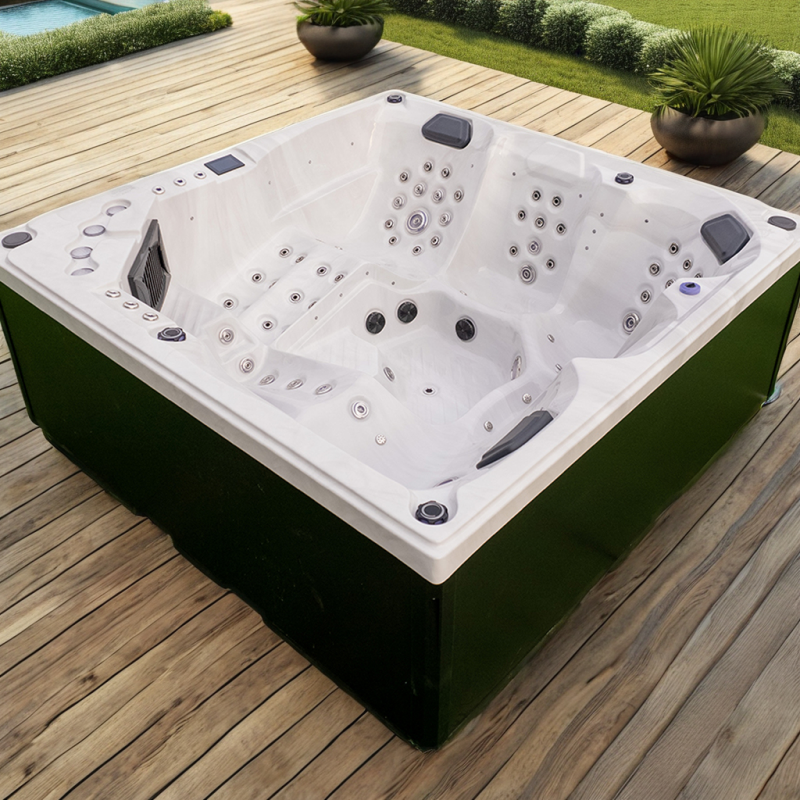
Why do jacuzzi outdoor spa tubs need calcium supplementation?
Many new owners wonder: since water naturally contains minerals, why is it necessary to manually add calcium?
The "calcium" referred to here is not a nutritional supplement, but rather a measure of "calcium hardness." Calcium hardness refers to the concentration of dissolved calcium ions in water, typically measured in ppm (parts per million). It is a key parameter in the maintenance of outdoor whirlpool hot tubs.
Most industry guidelines recommend maintaining calcium hardness between 150 and 250 ppm for outdoor whirlpool hot tubs, although a range of 100–200 ppm is acceptable for some acrylic models. Why is this figure important? Because both excessively low and excessively high calcium hardness levels can cause problems.
When calcium hardness is too low, the water becomes "aggressive" (often described as "hungry" water). This term refers to water with insufficient mineral content that tends to leach minerals from surrounding materials to achieve chemical balance. While this concept may sound abstract, the consequences are tangible: low-hardness water can gradually corrode metal components, heating elements, seals, and even piping materials. Over time, this accelerates equipment wear and tear.
Studies show that when calcium hardness remains below 75 ppm for extended periods, the corrosion rate of certain heating elements can increase by more than 20%. For jacuzzi outdoor spa tubs used over the long term, this significantly drives up maintenance costs.
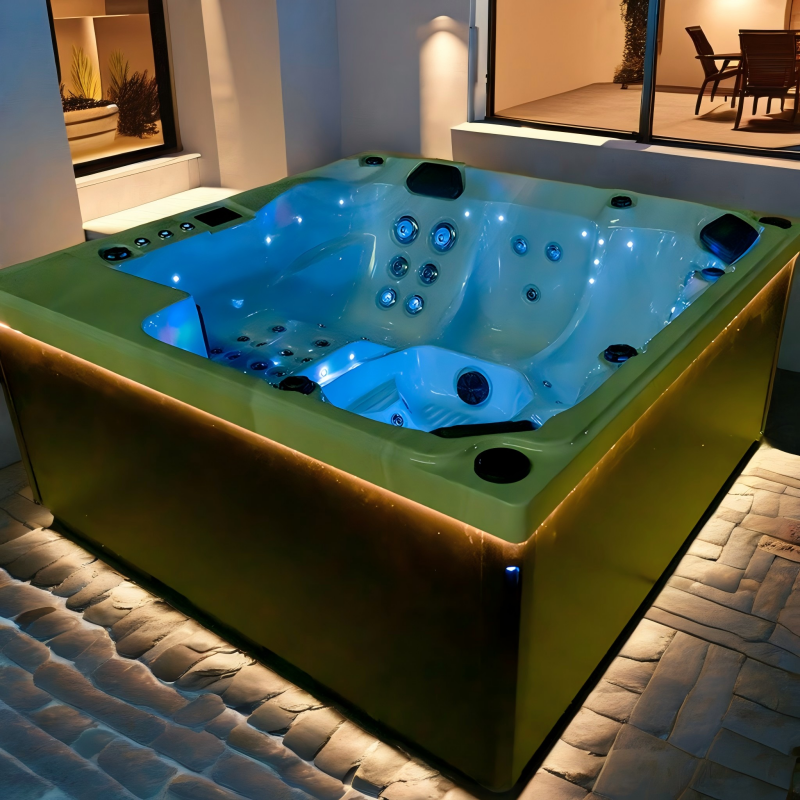
Why must chlorine be added to outdoor hot tubs?
Unlike calcium, the role of chlorine is more straightforward: disinfection.
Jacuzzi outdoor spa tub water is not changed daily; instead, it is reused over a long period via a circulation system. This means that sweat, body oils, skincare residues, environmental dust, and microorganisms are continuously introduced into the water. Without a disinfectant, the water would quickly become a breeding ground for bacteria.
Chlorine is the most common disinfectant for jacuzzi outdoor spa tubs because it is highly effective, stable, and cost-efficient. Free chlorine kills bacteria, viruses, and some algae while oxidizing organic contaminants.
Generally, the recommended free chlorine level for jacuzzi outdoor spa tubs is 3–5 ppm. Levels below 2 ppm may provide insufficient disinfection, while levels above 10 ppm can irritate the skin and eyes.
Research related to the U.S. Centers for Disease Control and Prevention (CDC) indicates that certain bacteria multiply much faster in warm water environments. For instance, at temperatures between 37°C and 40°C, the population of certain microorganisms can surge rapidly within just a few hours. This is why jacuzzi outdoor spa tubs rely more heavily on stable sanitizer levels than standard swimming pools—high temperatures accelerate microbial activity.
Can calcium and chlorine be added to an outdoor hot tub at the same time?
They can be added on the same day, but it is not recommended to mix them directly or pour them into the same area of the spa hot tub simultaneously.
Why? The issue lies in localized concentrations and chemical reactions.
Common calcium supplements are usually calcium chloride, while chlorine sanitizers may be sodium hypochlorite, dichlor granules, trichlor tablets, or other chlorine-based compounds. Although these chemicals can safely coexist within the jacuzzi outdoor spa tub's total water volume once fully mixed, their localized concentrations are extremely high the moment they are added.
If you pour calcium supplements and chlorine granules directly into the same spot, several things can happen: localized temperature spikes, accelerated chemical reactions, granule clumping, uneven dissolution, and even the formation of white precipitates. These precipitates can adhere to the whirlpool hot tub's surfaces, filters, or heating elements.
Furthermore, high-concentration localized reactions can affect chlorine's effectiveness. In some cases, chlorine may be consumed too rapidly, resulting in reduced sanitization efficiency.
Why is the order of addition important?
When maintaining an outdoor whirlpool hot tub, the sequence is often just as important as the chemicals themselves.
The correct order generally involves addressing basic water balance before sanitization. That is:
1.Adjust Total Alkalinity (TA) first
2.Adjust pH
3.Adjust calcium hardness
4.Add chlorine last
Why add calcium first? Calcium hardness is a structural parameter of the water that determines the overall mineral balance, whereas chlorine is a dynamic parameter that is constantly consumed and requires frequent replenishment.
Reversing the order—adding a large amount of chlorine before calcium—can sometimes increase the risk of localized precipitation. This risk is particularly pronounced when the pH is already high.
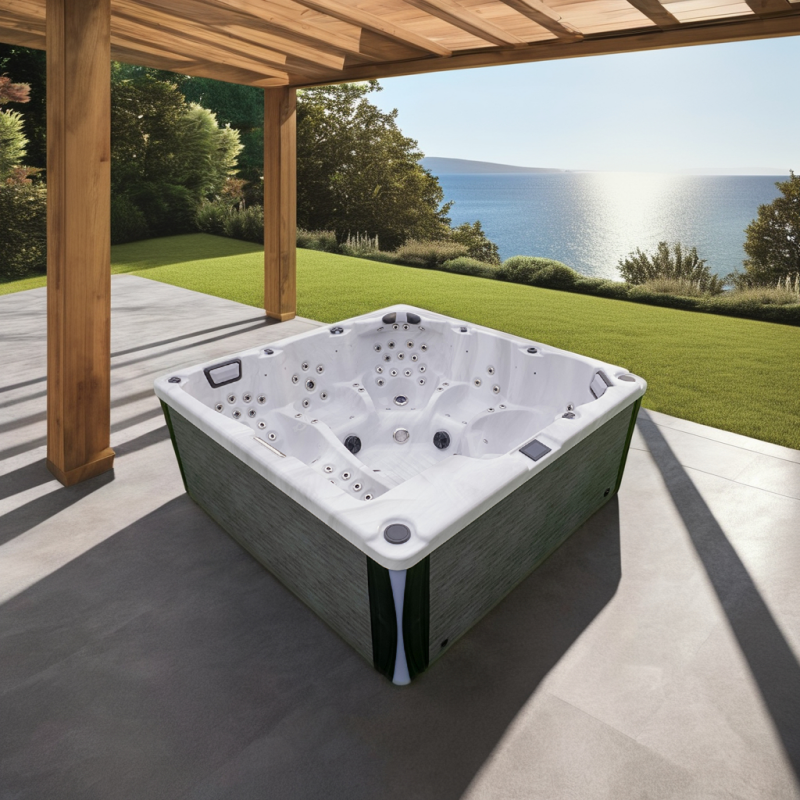
What problems can arise from simultaneous addition?
While serious hazards rarely occur, incorrect addition can still cause significant issues.
The most common problem is cloudy water. Many users notice the water turning milky white after quickly adding multiple chemicals to their hot tub. This is usually not a bacterial issue, but rather the result of mineral precipitation. Studies show that when calcium hardness is excessively high and the pH exceeds 7.8, the likelihood of calcium carbonate precipitation rises significantly. Adding high concentrations of chemicals under these conditions makes cloudiness much more likely to occur.
The second issue is scaling. Scaling significantly affects jacuzzi outdoor spa tubs, particularly the heater. A layer of scale just 1 mm thick can reduce heating efficiency by approximately 7% to 12%, resulting in higher electricity costs and slower heating times.
The third issue is localized equipment damage. Undissolved chemical granules settling on the acrylic surface can cause localized bleaching or material damage.
Which scenarios carry the highest risk?
The highest-risk situations typically involve:
•Water temperature above 40°C
•pH above 7.8
•Already high calcium hardness
•Adding a large amount of chemicals at once
•Chemicals coming into direct contact with stagnant water areas where circulation is poor
When these conditions combine, the probability of water quality issues in the jacuzzi outdoor spa tub increases significantly.
How do you correctly add calcium and chlorine to an outdoor hot tub?
This is the most practical part.
If you need to add both calcium and chlorine to your outdoor whirlpool hot tub on the same day, it is recommended to follow these steps:
First, use test strips or an electronic tester to check current parameters and record the following:
•pH
•Total alkalinity
•Calcium hardness
•Free chlorine
Once you confirm that calcium hardness is indeed low, add the calcium first. It is recommended to pre-dissolve the calcium product in a bucket (following the product instructions) and then slowly add it to the hot tub while the circulation pump is running.
Wait at least 20–30 minutes after addition to allow the water to circulate thoroughly.
Afterward, check the water condition again to ensure there is no cloudiness or sediment. Only then should you add the chlorine.
After adding chlorine, it is recommended to continue circulation for another 15–20 minutes to ensure the chemical is evenly distributed.
What is the safest time interval?
Many users want to know the specific interval.
Industry maintenance guidelines generally suggest:
A gap of at least 15–30 minutes between adding calcium and chlorine—ideally, a one-hour interval.
If the whirlpool hot tub has a large capacity or low circulation efficiency, extending the interval is a safer approach. High-end hot tubs often feature more efficient circulation systems, allowing chemicals to mix more quickly. However, even with this efficiency, it is not advisable to pour them in simultaneously just to save time.
Can I premix calcium and chlorine before adding them to the whirlpool hot tub?
Absolutely not. Regardless of the size of your whirlpool hot tub, never mix calcium products and chlorine products directly together in a container.
The reason is simple: when high concentrations of chemicals mix in a small volume, the reaction rate is far higher than when they are dispersed in a large volume of water. This can lead to rapid heat generation, gas release, or even dangerous reactions.
A fundamental rule of chemical safety is: do not mix different chemicals unless the product instructions explicitly permit it.
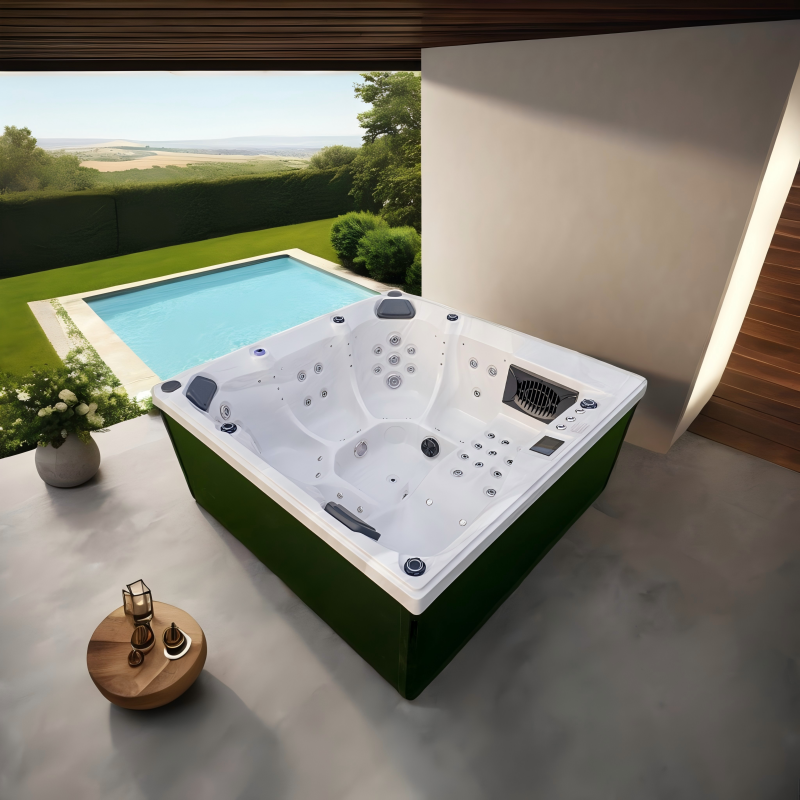
FAQ
1. Can calcium and chlorine coexist in an outdoor whirlpool hot tub?
Yes. They can coexist in the water, but it is not recommended to add them both at the same time.
2. How long should I wait between adding calcium and chlorine to the hot tub?
A wait of at least 15–30 minutes is recommended; one hour is ideal.
3. Why did the jacuzzi outdoor spa tub water turn cloudy/white after adding calcium?
This is likely due to calcium precipitation, usually caused by high pH levels or excessively high localized concentrations.
4. What happens if I don't add calcium to the outdoor whirlpool hot tub water?
Low calcium hardness can lead to corrosion and damage the jacuzzi outdoor spa tub's internal components.
5. Should I add chlorine or calcium to the outdoor whirlpool hot tub first?
It is generally recommended to add calcium first, followed by chlorine.