


Why is the water in an outdoor spa hot tub cloudy but not dirty?
2026-11-06 15:30Many outdoor whirlpool hot tub owners encounter a situation where, despite the absence of visible debris and clean interior surfaces, the water takes on a milky or hazy appearance—sometimes to the point where the bottom of the tub is no longer clearly visible. This phenomenon does not necessarily mean the water is full of visible filth; rather, it often points to issues with water balance, sanitization, or the filtration system.
Water that looks clean is not necessarily safe, and cloudy water isn't always just a sign of a dirty filter. Cloudiness in an outdoor whirlpool hot tub can be caused by suspended particles, organic matter from bathers, mineral deposits, insufficient sanitizer, or poor water circulation—often a combination of several of these factors.
Compared to a standard swimming pool, an outdoor spa hot tub typically operates at temperatures between 37°C and 40°C (98.6°F–104°F). High temperatures, frequent use by multiple people, the turbulence created by massage jets, and exposure to outdoor elements like dust and pollen all make water maintenance more challenging. Furthermore, substances such as sweat, skin oils, sunscreen, and body lotions can place an additional burden on the filtration and sanitization systems.
Therefore, determining the cause of cloudy water in an outdoor spa hot tub requires more than just a visual check or a sniff test. You should also examine water quality parameters, the condition of the filter, the performance of the circulation pump, and consider when the water quality began to change.
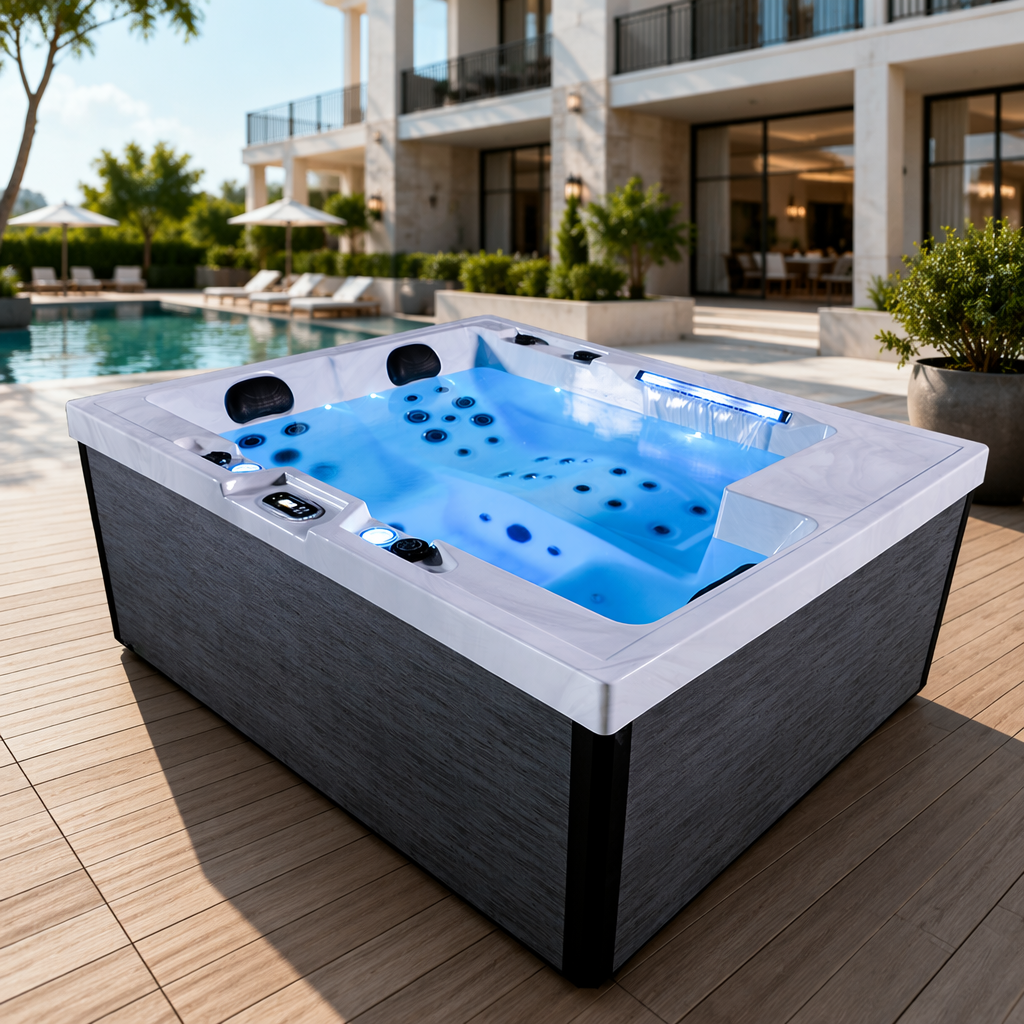
Six Primary Causes of Cloudy Water in Outdoor Hot Tubs
1. Insufficient Sanitizer Leading to the Accumulation of Organic Contaminants
This is one of the first things to check when the water quality in an outdoor spa hot tub becomes compromised. When people enter the tub, they introduce sweat, skin oils, dead skin cells, sunscreen, and other organic matter. If the sanitizer concentration is too low—or if the contaminant load exceeds the system's treatment capacity—impurities will accumulate in the water. This results in reduced clarity, increased foaming, and potentially the development of unpleasant odors.
In an outdoor whirlpool hot tub, sanitizer consumption can accelerate significantly when used by multiple people in succession. If you wait until the water becomes cloudy to check its quality, you may have already missed the optimal window for effective treatment. According to the U.S. Centers for Disease Control and Prevention (CDC), when using chlorine for disinfection in a hot tub, the free chlorine level should be at least 3 ppm; when using bromine, the concentration should be maintained between 4–8 ppm. It is recommended to keep the pH level between 7.0 and 7.8. Specific requirements should also take into account the equipment manufacturer’s instructions, the labels on disinfection products, and local regulations.
Solution: Regularly test disinfectant concentrations, increasing the frequency of checks after heavy use. If disinfectant levels are insufficient, replenish them according to the product instructions and retest. If the disinfectant is being consumed unusually quickly, investigate the organic contaminant load, filtration efficiency, and circulation system, rather than simply increasing the dosage.
2. Imbalance in pH or Total Alkalinity, Leading to Cloudy/Milky Water
pH levels affect both the efficacy of disinfectants and the solubility of minerals in the water. When the pH is too high, the effectiveness of chlorine disinfection may decrease, and calcium in the water is more likely to precipitate, resulting in milky, cloudy water or the formation of white scale on the spa hot tub surfaces.
Total alkalinity helps stabilize the pH. If total alkalinity is too high, adjusting the pH becomes difficult; if it is too low, the pH may fluctuate significantly. Focusing solely on disinfectant concentrations while ignoring pH and total alkalinity makes it difficult to maintain stable water quality, even with constant replenishment of disinfectants.
If the water in an outdoor spa hot tub suddenly turns cloudy or milky after refilling or water treatment adjustments, check the pH, total alkalinity, and calcium hardness before resorting to the addition of a clarifier.
Solution: Use test strips or liquid reagent test kits to monitor key parameters and make adjustments incrementally based on the results. Avoid adding large quantities of chemicals at once, and do not mix different water treatment products. After making adjustments, allow the water to circulate thoroughly, then retest according to the product instructions.
3. Excessive Calcium Hardness, Leading to Mineral Precipitation
If the water in an outdoor whirlpool hot tub appears milky—especially after heating or adjusting the water chemistry—consider the possibility of mineral precipitation.
Calcium hardness is typically expressed in mg/L (as calcium carbonate). In some regions, tap water or well water may contain high levels of minerals such as calcium and magnesium. When water hardness is high and conditions—such as pH levels—are conducive to mineral precipitation, fine particles may remain suspended in the water, giving it a milky or hazy appearance.
Water in an outdoor whirlpool hot tub evaporates continuously during use. If water is merely topped up over a long period without being replaced, minerals and other dissolved substances can gradually accumulate. Furthermore, scale may form on heaters, jets, and internal piping, reducing heat exchange efficiency and increasing equipment maintenance costs.
Solution: Test the hardness of your water source when filling the tub for the first time. If the hardness is high and precipitation occurs, develop a treatment plan based on pH, total alkalinity, and calcium hardness levels; perform a partial water change if necessary. If scale has already formed on heaters or piping, use cleaning methods approved by the equipment manufacturer, and avoid strong acid-based cleaners that could damage components.
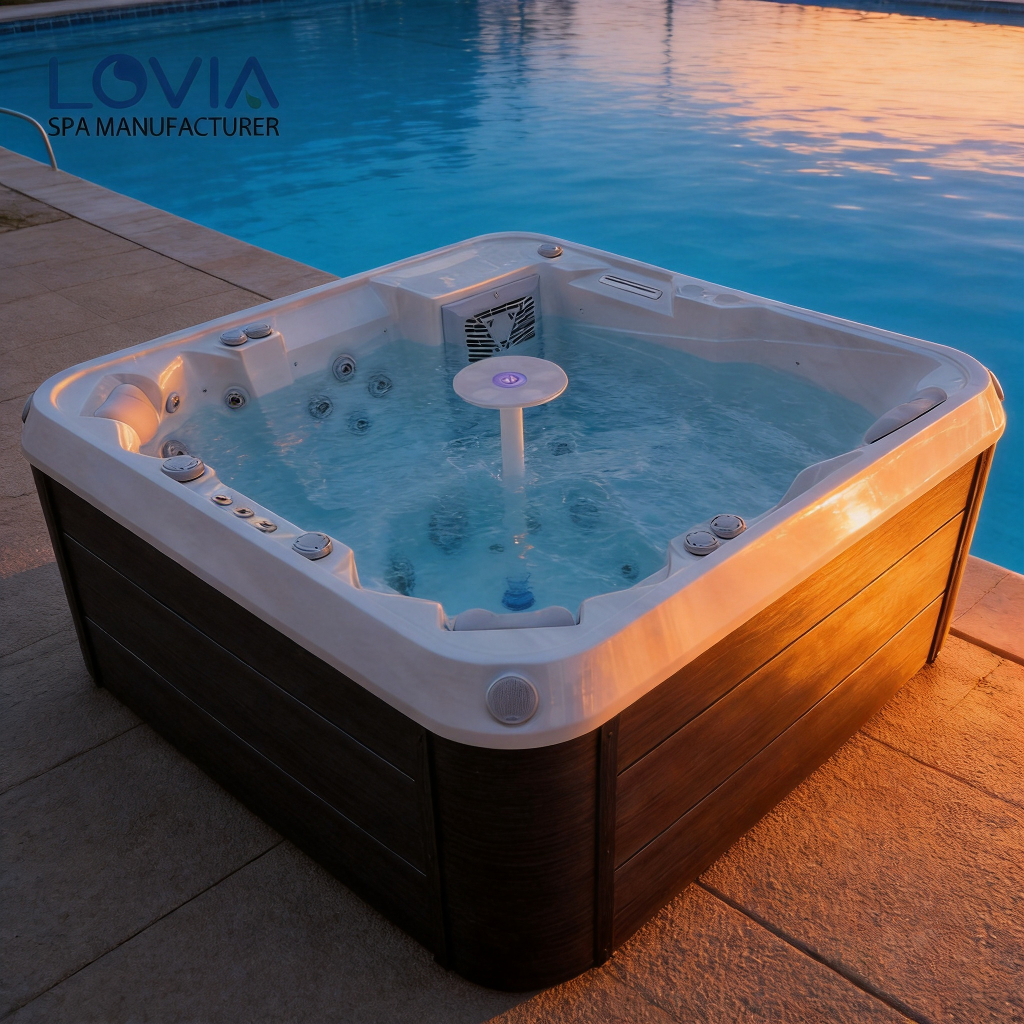
4. Clogged Filter or Reduced Filtration Efficiency
The filter in an outdoor whirlpool hot tub is designed to trap skin cells, dust, pollen, and other fine particles. When the filter cartridge becomes clogged with oils, skincare product residues, or mineral deposits, filtration efficiency can drop significantly—even if the circulation pump is still running.
A common misconception is that a filter only needs cleaning when visible dirt appears on its surface. In reality, the filter media may already be saturated with oils and fine particles, even if it does not look particularly dirty. A quick rinse with plain water is often insufficient to remove these deeply embedded contaminants.
Additionally, filter cartridges that are aged, damaged, the wrong model, or improperly installed will compromise filtration performance. Neglecting long-term filter maintenance can also place an unnecessary burden on the circulation pump.
Solution: Clean the filter cartridge according to the manufacturer’s recommendations, and adjust your maintenance schedule based on how frequently the spa hot tub is used. If a filter remains clogged, deformed, or damaged after cleaning, replace it promptly. Never operate the spa hot tub for extended periods without a filter cartridge installed; doing so could allow debris to enter the piping and heating system.
5. Inadequate Water Circulation, Preventing the Filtration System from Effectively Processing the Entire Volume of Water
The fact that a filter is functioning correctly does not necessarily mean that the entire water circulation system of an outdoor spa hot tub is operating as it should. The circulation pump is responsible for pushing water through filtration and treatment equipment before returning the treated water to the spa hot tub. If the circulation duration is insufficient, the suction intake is blocked, the pump’s actual flow rate drops, or air enters the plumbing, the volume of water processed by the filtration system will decrease.
It is also important to note that strong water flow from massage jets does not necessarily mean the filtration circulation is functioning correctly. Some outdoor hot tubs use separate pumps for circulation and massage: the circulation pump handles water treatment, while the massage pump primarily provides the massage flow. If the filtration circulation pump is not operating properly, simply activating the massage function cannot serve as a substitute for effective filtration.
Solution: Check the operating status of the circulation pump, the flow rate at the return inlets, and whether the filter is clogged. If the water flow is noticeably weaker, the pump produces unusual noise, or the control system displays an error, inspect the equipment and plumbing further—and contact a professional technician if necessary.
6. Accumulation of human-derived residues and dissolved substances; water that has been in the tub for too long
Outdoor whirlpool hot tubs are susceptible to external contaminants such as pollen, dust, and insect debris. Additionally, substances introduced by users—including sweat, skin oils, sunscreen, and detergent residues—can cause the water to become foamy, cloudy, or less transparent.
Furthermore, circulation and filtration cannot remove all dissolved substances from the water. Over time, certain contaminants and disinfection byproducts may gradually accumulate. Even if disinfectant levels and pH remain within an acceptable range, "old" water can become increasingly difficult to keep clear.
Solution: Rinse your body before use to minimize the introduction of skincare products and detergent residues into the spa hot tub; promptly replace the cover after use and remove any floating debris. Schedule water changes based on the tub’s capacity, frequency of use, water quality, and the manufacturer’s recommendations. If water quality remains consistently unstable, consider draining the tub, cleaning the plumbing, and refilling it with fresh water.

How can you diagnose issues based on the appearance of the water in an outdoor hot tub?
While the visual appearance of the water can help narrow down the potential causes, it is not a substitute for proper water quality testing.
| Water Appearance or Symptom | Possible Cause | Recommended Action |
| Milky-white water | High pH or mineral precipitation | Test pH, alkalinity, and calcium hardness |
| Cloudy water after heavy use | Low sanitizer or organic contaminants | Test sanitizer and clean the filter |
| Cloudy water with foam | Body oils, cosmetics, or detergent residue | Clean the filter and check water chemistry |
| Cloudiness despite normal test results | Poor circulation or aging water | Inspect the pump, filter, and water age |
| White deposits around jets | Mineral scaling | Check hardness and pH |
| Cloudiness with unusual odor | Possible sanitation problem | Stop use and verify water quality |
If the water appears cloudy immediately after filling, first check the hardness of the water source and the overall water balance. If the water becomes cloudy quickly after use by multiple people, focus on checking disinfectant levels, the filtration system, and the pollutant load. If the water remains cloudy despite repeated adjustments, investigate the circulation system, potential contamination within the plumbing, and the age of the water.
What are the correct steps to take when the water in an outdoor hot tub becomes cloudy?
Step 1: Stop using the whirlpool hot tub and test the water quality. Prioritize checking disinfectant levels and pH; if necessary, also test total alkalinity and calcium hardness. Do not resume use simply because the water looks clear—ensure it meets all safety standards first.
Step 2: Adjust the water quality based on your test results. If disinfectant levels are low, add more according to the product instructions; if the pH is imbalanced, make the necessary adjustments. If there is a high load of organic pollutants, perform a "shock treatment" (superchlorination) following the product label and manufacturer’s recommendations. Note, however, that shock treatment cannot resolve issues such as clogged filter cartridges, mineral deposits, or circulation pump failures.
Step 3: Clean the filter and inspect the circulation system. Clean or replace the filter cartridge according to the equipment manual, and ensure the circulation pump is operating correctly with a steady flow of water returning to the tub. If you notice unusual noises, significantly reduced water flow, or error codes, do not force the system to continue running.
Step 4: Allow for full circulation and re-test the water quality. After making adjustments, let the system run as recommended by the manufacturer, then observe the water clarity and re-test key parameters. If you choose to use a water clarifier, ensure it is compatible with both your spa hot tub and your existing filter cartridge. Remember that clarifiers are not a substitute for disinfectants and cannot resolve every type of cloudiness.
Step 5: Replace the water if necessary. If the water is "old" (has been in the tub for a long time), or if it remains cloudy even after you have adjusted the water chemistry, cleaned the filter, and checked the circulation system, you should drain the tub, clean it, and refill it with fresh water. If you suspect the buildup of scale or biofilm within the plumbing, use a pipe-cleaning product designed for your equipment, following the provided instructions for cleaning and flushing.
Why does the water in an outdoor hot tub keep becoming cloudy?
Recurring water quality issues often stem from addressing only the surface-level symptoms rather than the root causes.
For starters, there is often a lack of routine testing. Many users wait until the water becomes cloudy before testing it, which means they fail to detect drops in disinfectant levels or shifts in pH in a timely manner. Another common issue is an over-reliance on a single water treatment product; clarifiers, disinfectants, and descalers serve different purposes and cannot be used interchangeably. Furthermore, the circulation system is often overlooked—strong water flow from massage jets does not necessarily mean that the filtration circulation is adequate. Finally, the hardness of the water source and the age of the water are frequently ignored, leading to a continuous accumulation of minerals or dissolved solids.
A more reliable maintenance approach involves a "test—evaluate—treat—retest" workflow. It is also advisable to keep records of disinfectant concentrations, pH levels, filter cleaning dates, water replacement schedules, and any unusual occurrences. For settings with high usage frequency, such as hotels or vacation rentals, more rigorous water quality testing and equipment inspection protocols should be established.
FAQ: Common Issues Regarding Cloudy Water in Outdoor Hot Tubs
1. Can I continue using an outdoor hot tub if the water is cloudy but has no odor?
It is not recommended. The absence of an odor does not guarantee that the water is sufficiently disinfected. You should test the disinfectant and pH levels and ensure the water meets safety standards before use.
2. Why does the water in my outdoor spa hot tub look milky or white?
This may be due to high pH, high calcium hardness, or mineral precipitation. You should test the pH, total alkalinity, and calcium hardness, and inspect the filter.
3. Will cleaning the filter solve the cloudiness in an outdoor spa hot tub?
If the issue is caused by a clogged filter, cleaning it may be effective. However, if the cloudiness is due to insufficient disinfectant, mineral precipitation, or the water being too old, targeted treatment will be required.
4. Must the water be replaced immediately if it becomes cloudy?
Not necessarily. In cases of mild cloudiness, you can first test the water quality, adjust the parameters, and clean the filter. If the water quality cannot be stabilized over the long term, you should consider replacing the water and cleaning the plumbing lines.
5. Can a clarifier be used as a substitute for a disinfectant in an outdoor hot tub?
No. Clarifiers are designed to help the filter capture suspended particles; they cannot replace disinfectants, which are necessary for controlling microorganisms.