


Why Do Maintenance Methods for Outdoor Hot Tubs Differ Between Summer and Winter?
2026-11-28 15:30Whether you are enjoying an outdoor spa session in the summer or a warm, soothing soak in the winter, an outdoor whirlpool hot tub offers a unique relaxation experience.
However, unlike indoor tubs, outdoor hot tubs are constantly exposed to the elements—including temperature fluctuations, sunlight, rain, and wind-blown debris. Because environmental conditions vary significantly between summer and winter, the requirements for water quality management, equipment operation, and thermal insulation differ accordingly.
For instance, in the summer, higher temperatures and UV exposure can accelerate the breakdown of certain sanitizers, while sweat, sunscreen, and dust can easily contaminate the water. In the winter, the focus shifts to maintaining heat, preventing pipes from freezing, and ensuring the proper functioning of heating systems and electrical components. Relying on the same maintenance routine year-round can lead to unstable water quality in the summer and excessive energy consumption in the winter—or, in more severe cases, frozen, cracked pipes and damaged equipment.
So, what exactly are the differences in maintaining an outdoor hot tub spa between summer and winter? What should you prioritize during the summer months? And how can you effectively manage insulation and freeze protection during the winter? This article explores these topics, covering water quality, equipment, energy consumption, and seasonal maintenance strategies.

Why do outdoor hot tubs require different maintenance approaches in summer and winter?
Outdoor hot tubs typically consist of an acrylic shell, an insulation structure, a circulation pump, a filtration system, a heater, and massage jets. Environmental conditions in different seasons directly affect the operation of these components.
1. Temperature fluctuations affect water quality and equipment performance. In the summer, higher ambient temperatures make the water more susceptible to external heat. Prolonged direct sunlight can cause water temperatures to rise, making it more difficult to control microorganisms and accelerating the depletion of certain sanitizers. In the winter, the situation is reversed: the temperature gap between the whirlpool hot tub and the outside environment increases, causing the water to lose heat more rapidly. This forces the heater to consume more energy to maintain the set temperature. Furthermore, when temperatures drop below 0°C (32°F), circulation pipes and pumps are at risk of freezing.
2. The types and impact of outdoor contaminants vary. During the summer, hot tubs are more susceptible to contaminants such as insects, pollen, dust, leaves, and sunscreen. Once these substances enter the water, they place an increased burden on the filtration and sanitization systems. In winter, while some of these contaminants may decrease, factors like rain, snow, low temperatures, and freeze-thaw cycles can affect the hot tub spa shell, thermal cover, and plumbing infrastructure.
3. Differences in usage habits: In the summer, some households may lower the water temperature or reduce heating duration. In contrast, winter users typically prefer to have hot water available for a soak at any time, leading them to maintain a constant water temperature. Consequently, summer maintenance focuses primarily on water quality and cleanliness, whereas winter maintenance must also address heating efficiency, heat retention, and freeze protection.
What should be the primary focus when maintaining an outdoor hot tub in the summer?
The core of summer maintenance lies in water quality management, contaminant control, cleaning the filtration system, and properly regulating the water temperature.
1. Enhance water quality testing to prevent microbial growth
In the warm water environment of summer, microbial control requires extra attention. Substances such as human sweat, skin oils, sunscreen, and cosmetics can accelerate the depletion of sanitizers. If sanitizer levels are insufficient, bacteria may proliferate within the hot tub water and internal plumbing.
Notably, *Pseudomonas aeruginosa* can cause "hot tub folliculitis," while *Legionella* bacteria can enter the human respiratory tract through contaminated water mist. Therefore, the visual clarity of the water alone is not a reliable indicator of whether an outdoor whirlpool hot tub is hygienic.
For systems using chlorine, a free chlorine level of 3–5 mg/L is a common maintenance benchmark; for systems using bromine, the range is typically 4–6 mg/L. It is generally recommended to keep the pH level between 7.2 and 7.8, though you should always refer to the equipment manufacturer’s instructions and local health regulations.
If the whirlpool hot tub is used frequently or by multiple people in succession, increase the frequency of testing and adjust sanitizer levels accordingly.
2. Prevent sunlight from accelerating sanitizer decomposition
Strong summer ultraviolet (UV) rays can accelerate the breakdown of certain unstabilized chlorine-based sanitizers, causing a drop in free chlorine levels. If you continue to add sanitizer based on a fixed schedule or dosage, you may fail to maintain effective, consistent sanitization. It is recommended to select sanitizing products specifically designed for whirlpool hot tubs—following the manufacturer’s instructions—and to regularly test the residual sanitizer levels. Please note that stabilizers intended for swimming pools should not be used indiscriminately; in particular, avoid products containing cyanuric acid unless explicitly permitted by the whirlpool hot tub manufacturer.
Additionally, keep the hot tub spa covered with an insulating cover when not in use to minimize exposure to direct sunlight, dust, and other contaminants.
3. Manage water temperature wisely to reduce unnecessary energy consumption
Many users keep their outdoor hot tubs set between 38°C and 40°C year-round. However, during the summer, when ambient temperatures are higher, you can lower the water temperature—for instance, to 35°C–37°C—depending on your personal comfort preferences and the equipment’s specifications.
Lowering the water temperature reduces the need for heating, which in turn lowers energy consumption. Note, however, that a lower temperature does not mean you can stop sanitizing or filtering the water. As long as there is water in the tub, proper water quality management must be maintained.
4. Regularly clean the filter and remove surface debris
In summer, an increase in leaves, pollen, insects, and dust can place a heavier burden on the filter. If the filter cartridge is not cleaned regularly, water flow may decrease, which can impair the circulation system and the heater.
Clean the filter according to the manufacturer’s guidelines and your frequency of use. For residential users, it is advisable to check the filter cartridge weekly; rinse it if it becomes clogged, and replace it if it is damaged or can no longer be cleaned effectively.
At the same time, promptly remove any floating debris from the water surface to prevent organic contaminants from remaining in the tub.
5. Minimize contamination from sunscreen and skincare products
During the summer, users frequently apply sunscreen, body lotion, and other skincare products. When these substances enter the hot tub spa, they can create oily films and foam, putting extra strain on the filtration and sanitization systems.
It is recommended to shower before using the hot tub to wash away sweat, skincare products, and sunscreen. If an oily film or foam appears, clean it promptly and take appropriate corrective measures based on the results of your water quality tests.
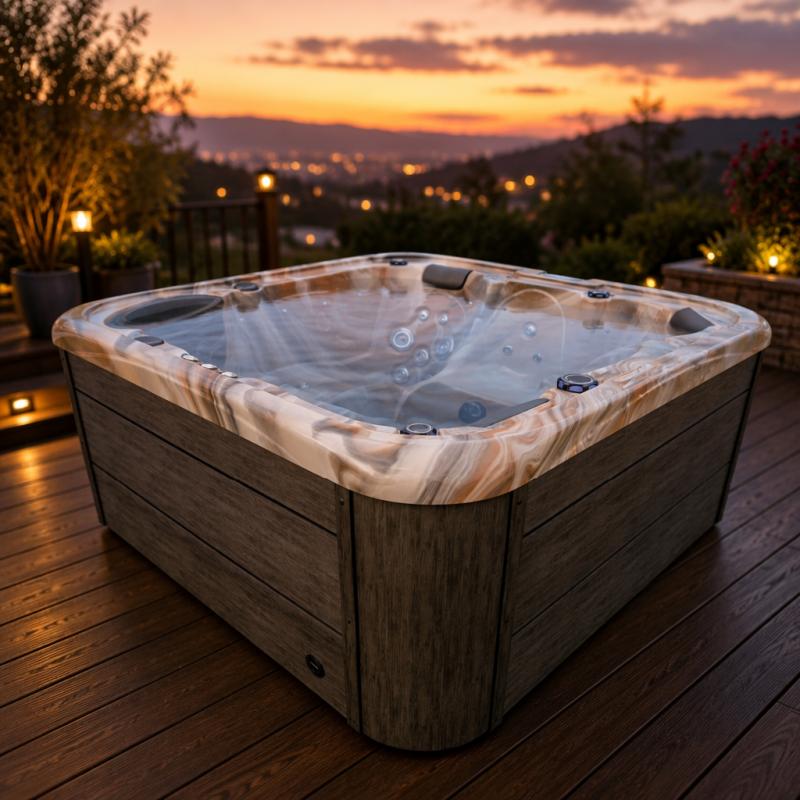
What are the most important considerations for maintaining an outdoor hot tub during the winter?
Winter maintenance focuses on thermal insulation, freeze protection, inspection of heating systems, and electrical safety. In regions where temperatures consistently remain below 0°C, frozen plumbing can cause severe damage to the equipment.
1. Ensure Proper Insulation to Minimize Heat Loss
In cold winter weather, an outdoor whirlpool hot tub loses heat continuously through its cover, shell, base, and plumbing. If insulation is inadequate, the heater will need to cycle on more frequently, leading to increased power consumption.
Pay special attention to the following three areas:
•Insulated Cover: Check for damage, deformation, or poor sealing to minimize heat loss from the water surface.
•Shell and Base: Ensure the insulation layer is intact to prevent significant heat loss through the hot tub’s structure.
•Circulation Plumbing: Inspect the insulation on pipes and connections to reduce heat loss.
For outdoor hot tubs used regularly during the winter, it is advisable to choose models with comprehensive insulation and to ensure the cover is securely in place whenever the tub is not in use.
2. Implement Freeze Protection to Prevent Equipment Damage
One of the primary concerns during winter is the freezing of plumbing. When ambient temperatures stay below 0°C, water in the circulation system may begin to freeze if it stops flowing. As water freezes, it expands, which can cause pipes to crack, fittings to break, pumps to rupture, and heating systems to fail.
It is important to note that even if the water in the main tub basin has not frozen, the plumbing, jets, and pumps—often concealed within the unit—may still be affected by the low temperatures.
If you continue to use your outdoor whirlpool hot tub during the winter, keep the unit powered on as per the manufacturer’s instructions to ensure the circulation system and freeze-protection features remain operational. Additionally, check the water level regularly to ensure the pump can function correctly.
If the hot tub will not be used at all during the winter, simply draining the main basin is not sufficient. You must follow a professional winterization procedure to remove any residual water from the pumps, filters, heaters, jets, and internal plumbing. For outdoor hot tubs with complex designs, it is recommended to have a professional handle the winterization process.
3. Inspect the Heater and Circulation System
Outdoor hot tubs face a heavier workload during the winter. To maintain a water temperature between 37°C and 40°C, the heater may need to run more frequently than it does in the summer.
It is recommended to periodically check that the heater, temperature sensors, and circulation pump are functioning correctly, and to ensure there are no error alerts from the system.
For example, with a 3kW heater and a 1500L tub capacity, raising the water temperature from 20°C to 38°C would theoretically take about 10.5 hours. In winter, due to heat loss to the surrounding environment, the actual heating time may be even longer.
Therefore, if you notice slow heating during the winter, do not immediately assume the heater lacks sufficient power. Instead, first inspect the thermal cover, plumbing, and circulation system. Improving insulation is often more cost-effective than blindly replacing the heater with a higher-wattage unit.
4. Clean the Filter to Ensure Consistent Water Flow
If the filter becomes clogged during the winter, water flow may decrease, which can interfere with the heater’s operation. Some outdoor hot tubs are equipped with "low-flow protection"—if the system detects abnormal water flow, it may automatically stop the heating process.
Consequently, filter maintenance should not be neglected in the winter. Clean the filter cartridge regularly according to the manufacturer’s instructions, and check the circulation pump, jets, and water conduits to ensure proper water circulation.
5. Prioritize Outdoor Electrical Safety
Winter conditions—such as rain, snow, and high humidity—can increase the risks associated with using outdoor electrical equipment. Since an outdoor whirlpool hot tub involves a heater, water pump, and control system, it is essential to ensure that all power lines, junction boxes, and protective devices are rated for outdoor use.
Regularly inspect power cables for damage, check for any standing water around the equipment, and verify that the residual-current device (RCD/GFCI) is functioning properly. Any electrical faults should be addressed by a qualified professional; never bypass or remove safety devices in an attempt to keep the equipment running.
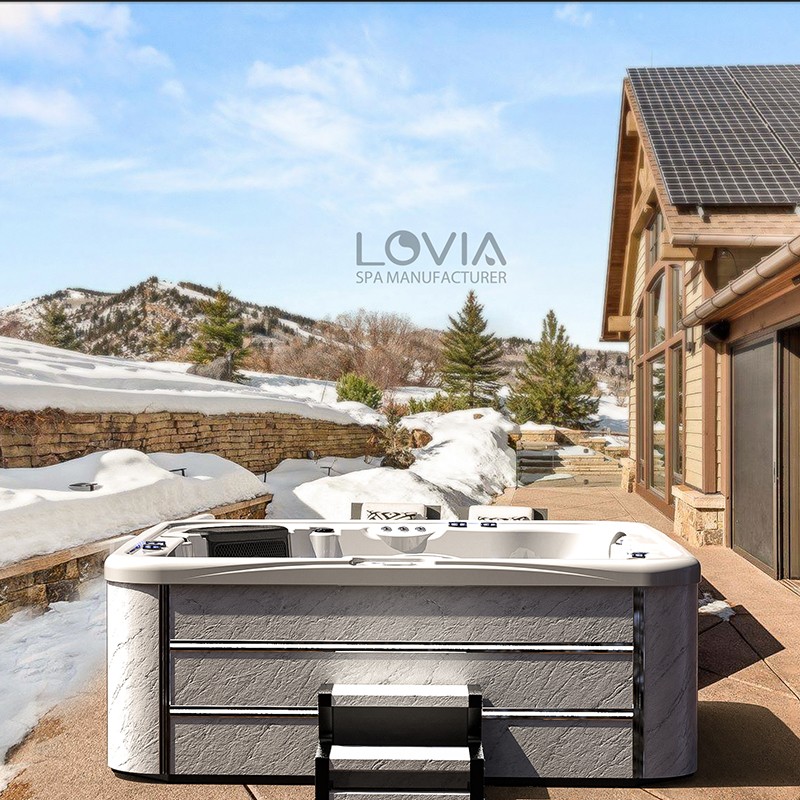
Outdoor Hot Tub Maintenance: Summer vs. Winter
To help outdoor hot tub spa owners better understand the requirements, the key maintenance priorities for each of the two seasons are summarized below:
| Maintenance Item | Summer Maintenance for Outdoor Hot Tubs | Winter Maintenance for Outdoor Hot Tubs |
| Water Quality | Monitor sanitizer and pH | Maintain sanitizer and pH |
| Water Temperature | Avoid unnecessary overheating | Maintain stable temperature |
| Insulation Cover | Keep debris out and reduce sunlight exposure | Minimize heat loss |
| Filter System | Remove pollen, insects and debris | Maintain stable water flow |
| Plumbing | Check leaks and circulation | Prevent freezing and pipe damage |
| Heater | Reduce unnecessary heating | Check heating and freeze protection |
| Water Pump | Maintain normal circulation | Ensure proper operation |
| Main Priority | Water quality and cleanliness | Insulation and freeze protection |
In short, summer maintenance focuses primarily on preventing water quality degradation, while winter maintenance focuses on preventing heat loss and equipment freezing. Regardless of the season, however, the disinfection, filtration, and circulation systems must never be neglected.
Spring and Autumn: Inspecting Your Outdoor Hot Tub During Seasonal Transitions
Beyond summer and winter, spring and autumn are also critical periods for outdoor whirlpool hot tub maintenance.
As summer transitions into autumn, ambient temperatures begin to drop. It is advisable to inspect the thermal cover, cabinet, and plumbing, and to adjust your heating schedule in preparation for winter operation.
As winter transitions into spring, if the equipment has been exposed to freezing temperatures, check the water pump, heater, plumbing connections, and massage jets for cracks caused by freezing or for any leaks. Before putting the unit back into service, verify its overall integrity, then follow the manufacturer’s instructions for filling the tub, purging air from the system, and starting the circulation pump.
If the hot tub spa has been out of use for an extended period, check the water quality and—depending on its condition—drain and replace the water to ensure that any residual contaminants do not affect future use.
Common Challenges in Seasonal Outdoor Hot Tub Maintenance and Their Solutions
1. Water quality often deteriorates in summer, leading to unpleasant odors and foam. This is primarily caused by sweat, sunscreen, and other organic pollutants that place an increased burden on sanitizers, compounded by infrequent filter cleaning. Solutions include showering before use, regularly testing sanitizer and pH levels, cleaning filters promptly, and—when necessary—flushing the plumbing and replacing the water.
2. Increased electricity costs in winter are sometimes mistaken for a drop in heater efficiency. In reality, poor sealing of the thermal cover, inadequate cabinet insulation, or heat loss through the plumbing can drive up energy consumption. Instead of simply replacing the heater with a more powerful unit, focus on improving insulation, minimizing the time the cover remains open, and setting an appropriate water temperature.
3. Sudden power outages in winter can lead to frozen internal plumbing—a significant risk in cold climates. To prevent this, check your anti-freeze system and power supply status before a cold snap arrives. If the unit is to remain unused for a long period, perform a thorough, professional draining and winterization process.
4. Relying on a single, year-round maintenance plan ignores seasonal variations. Since the risks differ between summer and winter, a static maintenance approach may overlook critical issues. It is recommended to establish distinct maintenance plans for summer, winter, and seasonal transitions, adjusting inspection frequencies based on actual usage.
How to Create a Year-Round Maintenance Plan for Your Outdoor Hot Tub?
For residential users, there is no need for complex daily equipment inspections; however, establishing a consistent maintenance routine is recommended.
| Maintenance Schedule | Recommended Tasks |
| Daily | Check sanitizer, pH and water condition |
| Weekly | Clean filters and remove surface debris |
| Monthly | Inspect pumps, jets and equipment connections |
| Before Summer | Check water quality, filtration and cover |
| Before Winter | Inspect insulation, heater and freeze protection |
| After Winter | Check plumbing, pumps and heating system |
| Before Long-Term Shutdown | Drain pipes, pumps, heater and filter system |
Note: The above information serves as a general guide for residential maintenance. The actual frequency should be adjusted based on the number of users, the manufacturer’s instructions, and the local climate. Additionally, the CDC recommends maintaining free chlorine levels at a minimum of 3 mg/L (or bromine at 4 mg/L), a pH level between 7.0 and 7.8, and a water temperature not exceeding 40°C. For public hot tubs, more frequent water quality testing is required in accordance with local health regulations.
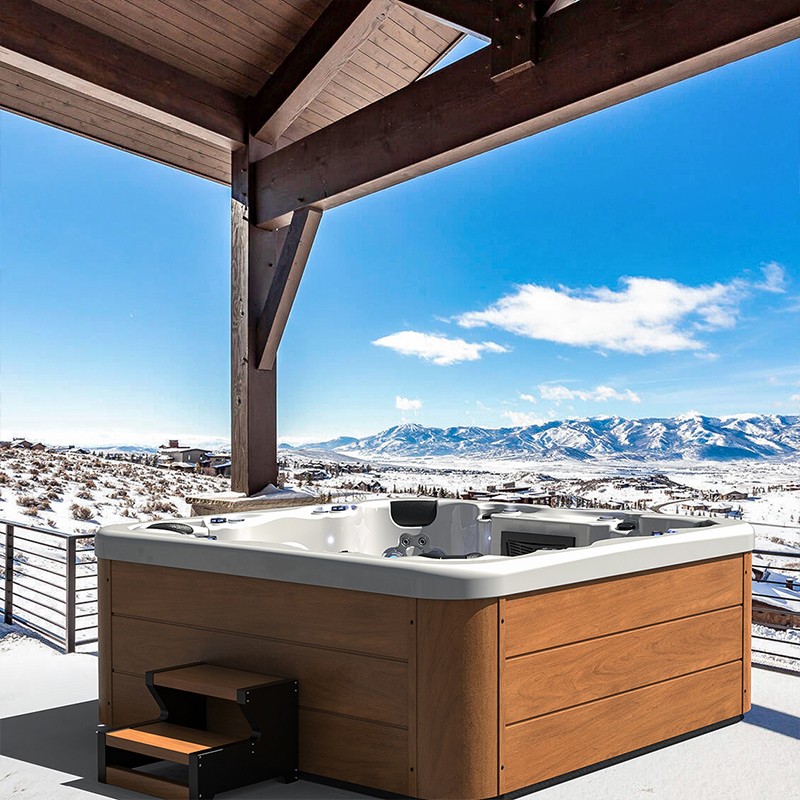
FAQs: Outdoor Hot Tub Maintenance in Summer and Winter
Q1: Can I turn off the heater for an outdoor hot tub spa during the summer?
You may lower the water temperature or adjust the heating mode based on your needs. However, if the tub still contains water, you must continue regular filtration, circulation, and disinfection—water quality management cannot be neglected.
Q2: Should an outdoor whirlpool hot tub remain powered on during the winter?
If you intend to continue using the hot tub during the winter—especially in regions where temperatures may drop below 0°C—the unit should generally remain powered on to ensure that anti-freeze protection functions properly. Please follow the manufacturer’s specific operational guidelines.
Q3: What should I do if I don’t plan to use my outdoor hot tub for an extended period during the winter?
You should follow a professional winterization procedure, which involves completely draining any residual water from the tub shell, filters, pumps, heaters, and internal plumbing. Simply emptying the water from the tub itself is not sufficient to prevent freeze damage.
Q4: Which season—summer or winter—incurs higher maintenance costs?
Summer maintenance primarily involves water quality management, disinfectants, and filter cleaning. Winter maintenance may entail higher electricity costs for heating, insulation upkeep, and anti-freeze measures. In colder regions, winter operating costs are typically a greater concern.
Q5: What is an appropriate water temperature setting for using an outdoor hot tub spa in the winter?
A typical operating temperature is between 37°C and 40°C, but it should never exceed 40°C. Users should also adjust the water temperature and duration of their soak based on their individual health status.