


Can Snow Accumulate and Damage Your Outdoor Spa Hot Tub Cover?
2026-11-28 15:30Using an outdoor spa hot tub in the winter offers a warm, relaxing soak; however, snow accumulation, low temperatures, and the freeze-thaw cycle can present maintenance challenges. The spa hot tub cover—which serves to retain heat, keep out debris, and minimize heat loss—is critical not only for operational costs but also for safety during the winter months.
Snow accumulation can indeed damage an outdoor hot tub cover, especially when the snow is deep or heavy (wet snow), or if the cover is aging or lacks sufficient internal structural support. Common issues include the cover sagging, the foam core cracking, the waterproof outer layer splitting, water seeping into the interior, and a decline in insulation performance. To mitigate these risks, it is essential to understand the weight of snow, the structural characteristics of your cover, and the proper methods for winter cleaning and maintenance.
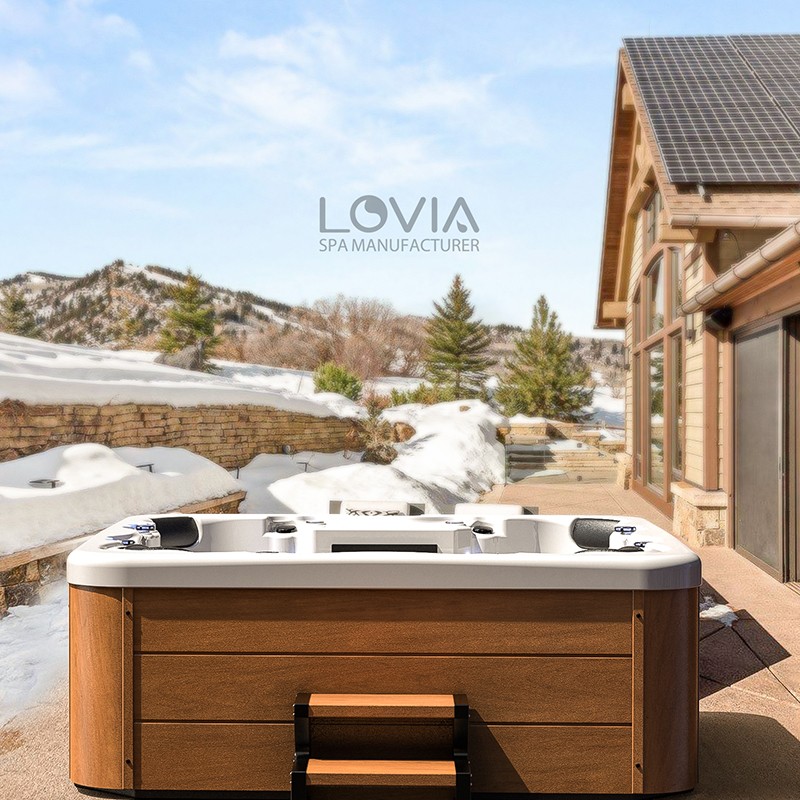
Why Can Snow Damage an Outdoor Hot Tub Cover?
Outdoor spa hot tub covers typically consist of a waterproof outer layer, an insulating foam core, an internal support structure, and components such as hinges and latches. While materials and construction vary by product, all covers must balance thermal insulation, waterproofing, and weather resistance.
Snow can damage an outdoor hot tub cover in the following four ways:
1. Snow Weight Exceeding the Cover’s Load-Bearing Capacity
Although snow may appear light, its weight is determined by its density, moisture content, and depth. Fresh, dry snow is generally light, whereas wet snow—which has been compacted, partially melted, or mixed with rain—can be significantly heavier.
Snow load can be estimated using the following formula:
Snow Load (kg/m²) = Snow Density (kg/m³) × Snow Depth (m)
For example, if the snow density is 100 kg/m³ and the depth is 10 cm, the weight of the snow is approximately 10 kg per square meter. If the density reaches 300 kg/m³ and the depth increases to 20 cm, the weight rises to approximately 60 kg per square meter. Assuming an outdoor spa hot tub cover with an area of 2.5 m², the total weight of accumulated snow in the latter scenario would be approximately 150 kg.
This is merely an estimation and does not represent the load-bearing standard for any specific cover. Actual snow density may be higher, and factors such as the age of the cover and the condition of its internal support structure will also affect its load-bearing capacity.
When snow accumulates and remains concentrated in the center of the cover, the pressure can cause the insulating core to bend, damage the internal supports, or lead to permanent sagging of the surface. Therefore, one should not assume that a cover is capable of supporting heavy snow simply because it appears sturdy; under no circumstances should an outdoor hot tub cover be used as a load-bearing platform.
2. Infiltration of Meltwater and Reduced Insulation Performance
Outdoor spa covers typically feature an insulating core—often made of closed-cell foam—encased in a waterproof outer layer designed to keep out rain and snow. If the outer layer is damaged, seams split, or cracks develop near the hinges, meltwater can seep into the interior.
Water ingress not only increases the weight of the cover but also compromises its insulating properties, causing the hot water in the tub to lose heat more rapidly and forcing the heating system to run for longer periods. In cold winter temperatures, the repeated freezing and thawing of trapped water can further widen existing cracks and cause the outer layer to delaminate from the insulating core.
If you notice that your spa hot tub cover feels unusually heavy, shows localized bulging, exhibits visible sagging, or remains damp for extended periods, you should check for internal water ingress rather than simply clearing the snow from the surface.
3. Increased Risk of Material Cracking in Low Temperatures
Cold winter temperatures can reduce the flexibility of certain plastics, vinyl outer layers, and sealing materials, making aged components more prone to cracking. Under these conditions, using metal shovels or sharp tools to clear snow—or forcibly bending the cover—can damage the waterproof layer and the internal support structure.
Consequently, when removing snow in winter, use soft tools, avoid striking ice layers forcefully, and do not attempt to pull or pry the cover if it has frozen to the edge of the spa hot tub.
4. Repeated Freeze-Thaw Cycles Exacerbate Structural Fatigue
Weather patterns characterized by daytime snowmelt and nighttime freezing often lead to the accumulation of meltwater, which then refreezes as temperatures drop. If the cover has already developed a depression, it becomes even more difficult for this water to drain away. Once ice forms, the cover must bear additional weight; over time, this repetitive stress can accelerate the degradation of seams, hinges, and supporting structures.
Consequently, even if a single snowfall does not cause visible damage, failing to clear snow over the long term can shorten the lifespan of an outdoor hot tub cover.
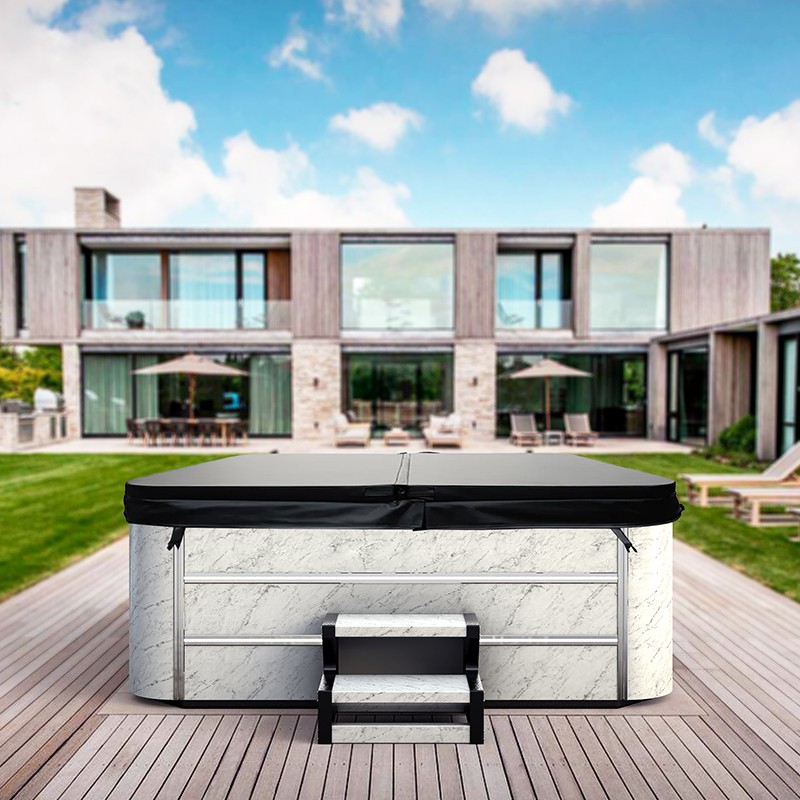
Which types of outdoor spa covers are most vulnerable to snow accumulation?
Different covers offer varying levels of resistance to snow. When purchasing, one should look beyond mere appearance or insulation thickness; it is essential to consider structural design, water resistance, and the load-bearing specifications provided by the manufacturer.
Soft-type insulating covers typically feature a waterproof outer layer encasing a foam core, balancing thermal insulation with ease of daily use. However, if snow is allowed to pile up in the center, the foam core may bend or crack. If the waterproof layer is compromised, the core can absorb water, further increasing its weight. For these covers, it is important to regularly inspect the outer seams, the condition of the foam core, and the surface for any signs of sagging.
The snow-resistance of hard-shell covers depends on their shape, internal reinforcement, hinges, and attachment methods. While some arched designs help snow slide off, this does not mean they can support snow of any depth. Users should consult the specific product manual to verify load-bearing limits; a rigid exterior does not necessarily imply that the cover can support the weight of a person standing on it.
Older covers are generally at a higher risk of damage. Prolonged exposure to UV radiation, precipitation, and temperature fluctuations can cause the outer layer to harden, fade, or crack, while the internal moisture barrier may gradually fail. While some outdoor hot tub covers have a typical service life of 3–5 years, this varies based on product quality, local climate, and maintenance—it should not be treated as a fixed replacement schedule.
If a cover shows visible sagging, unusual weight gain, cracked foam, or loose hinges, you should contact the manufacturer or a repair professional for an assessment; it should not be left to bear the weight of heavy snow.
At what point should you clear snow from an outdoor spa cover?
Determining whether snow needs to be cleared depends not just on its depth, but also on its density and water content. For instance, a 10 cm layer of dry snow and a 10 cm layer of wet snow can exert vastly different loads—potentially differing by a factor of several times.
| Snow Density | Snow Depth | Approximate Load |
| 100 kg/m³ | 5 cm | 5 kg/m² |
| 100 kg/m³ | 10 cm | 10 kg/m² |
| 300 kg/m³ | 10 cm | 30 kg/m² |
| 300 kg/m³ | 20 cm | 60 kg/m² |
| 400 kg/m³ | 20 cm | 80 kg/m² |
The information above is provided solely to illustrate how the weight of snow can vary; it does not represent the load-bearing specifications for any specific spa hot tub cover.
For spa hot tub owners, the best approach is to perform regular checks based on weather conditions, rather than waiting for the snow to reach a specific depth. Increase the frequency of inspections during periods of continuous snowfall, or when wet snow, freezing rain, or standing water are present. If the cover begins to sag, clear the snow immediately—regardless of its depth—and inspect the structural integrity of the cover.
Manufacturers may provide specific snow-load limits or maintenance requirements for different models; always prioritize the instructions found in your product manual. In the absence of clear load-bearing data, do not assume that any particular snow depth is inherently safe.
How should you properly clear snow from a spa hot tub cover?
Improper removal methods can cause more damage than the snow itself. In cold weather, the materials used for spa hot tub covers become less flexible; using sharp tools or applying excessive force can easily damage the outer waterproof layer and the internal core.
1. Use soft tools for snow removal
Use a soft-bristled broom or a manufacturer-approved, non-abrasive snow removal tool to gently sweep snow off the surface. Avoid using metal shovels, ice picks, or any sharp objects that could puncture or tear the outer material. If the snow is wet and compacted, remove it in smaller, manageable portions rather than attempting to push large, heavy chunks at once.
If the cover shows visible sagging or begins to make unusual noises, stop immediately and contact a professional to prevent further damage.
2. Do not walk or stand on the cover
A spa hot tub cover is not designed to support human weight. Even if the surface appears sturdy, the concentration of a person's weight in a small area can crack the foam core or compromise the internal support structure. When clearing snow, ensure you are standing on safe, stable ground. Do not climb onto the cover, and do not allow children or pets to play on a snow-covered cover.
3. Do not use hard objects to forcibly chip away ice
Ice that forms after snow melts can be difficult to remove; however, using metal tools to chip it away can easily scratch the outer surface or even cause the cover to crack. If ice has frozen onto the cover, do not attempt to pry or pull it off by force. Consult the manufacturer’s maintenance instructions to determine the appropriate removal method for the specific material, and avoid using boiling water, as the sudden temperature change could cause damage.
4. Inspect the cover and fasteners after clearing snow
Once the snow has been removed, check the surface for cracks, dents, or standing water. Also, verify that the hinges, straps, latches, and seals are in good condition. If the cover does not close flush or the securing straps have become loose, perform repairs promptly.
In high-wind conditions, an improperly secured outdoor hot tub cover can be lifted off, leading to damage to the cover itself or leaving the hot tub exposed to freezing temperatures. Therefore, winter maintenance should not focus solely on snow removal; it must also ensure that the cover can be properly closed and secured.
How can you reduce the risk of snow-related damage when purchasing an outdoor spa cover?
In regions that experience frequent snowfall, selecting a cover specifically suited to the local climate is more cost-effective than dealing with repairs later.
First, confirm the cover’s load-bearing capacity, operating temperature range, and winter maintenance limitations with the manufacturer. If a product lacks clear specifications regarding snow load, do not assume it can support the weight of heavy snow accumulation.
Second, pay attention to the quality of the insulation core, moisture barrier, and outer material. Insulation thickness is not the only criterion; water resistance, internal structural support, seam construction, and edge sealing are equally important. For areas prone to wet, heavy snow and freeze-thaw cycles, the weather resistance of the cover is particularly critical.
Third, examine the cover’s slope and drainage design. A well-designed slope facilitates the runoff of melted snow, reducing the risk of water pooling and ice formation. However, if the cover has become deformed, new areas where water can pool may form—even if the original design included a drainage slope—making regular inspections necessary.
Finally, before purchasing, check whether the warranty covers damage caused by snow accumulation, water pooling, or excessive weight. Some manufacturers exclude damage resulting from improper use or loads exceeding specified limits. Verifying these terms in advance can help reduce future repair or replacement costs.
It is not advisable to place bricks, wooden boards, or other heavy objects on the cover as a "reinforcement" measure. Adding weight that has not been accounted for in the design can increase the load on the cover and actually accelerate damage. If additional support is required, consult the manufacturer first to see if they offer suitable accessories or recommended solutions.
Should you repair or replace an outdoor hot tub cover damaged by snow?
If the cover has only minor surface scratches that haven't compromised the waterproof layer, you may be able to use compatible repair materials—consult the manufacturer for guidance. Damaged latches, straps, or certain connectors can also be replaced in accordance with the manufacturer’s specifications.
However, if the cover shows significant, permanent sagging, a fractured foam core, water ingress, or an unusual increase in weight, a more thorough inspection is needed. Simply patching the surface may not restore the internal structural integrity or thermal insulation performance.
It is recommended that users document the cover’s model, age, and the location of the damage, and take clear photographs to assist the manufacturer or a professional technician in their assessment. If the cover no longer closes properly or has lost its insulating properties, it should be repaired or replaced as soon as possible.
If the spa hot tub still contains water during freezing weather, do not simply shut off the heating and circulation systems just because the cover is damaged. Maintain safe operation according to the equipment manual, and consult a professional if necessary. If you plan to shut the unit down for the season, follow the manufacturer’s instructions for draining and winterizing to prevent residual water from freezing and damaging the plumbing, pumps, or heating equipment.
Frequently Asked Questions (FAQ)
FAQ 1: Do I need to clear snow if there are only a few centimeters on my outdoor hot tub cover?
While a small amount of light, dry snow generally poses less risk than heavy, wet snow, you cannot determine safety based on depth alone. In the event of continuous snowfall, wet snow, or aging of the cover, inspect and clear it promptly, while adhering to the manufacturer’s maintenance requirements.
FAQ 2: Can accumulated snow crush the foam core of an outdoor hot tub cover?
Yes. Sustained pressure can cause the core material to bend, crack, or break. If the waterproof layer is also compromised, water may seep inside, increasing the cover's weight and further degrading its thermal insulation properties.
FAQ 3: Can I use a shovel to clear snow from an outdoor spa hot tub cover?
This is not recommended. The hard edge of a shovel can easily puncture the outer layer of the cover, and forceful shoveling may damage its internal structure. It is best to use a soft-bristled broom or a snow-removal tool approved by the manufacturer.
FAQ 4: Will placing wooden boards on an outdoor hot tub cover prevent damage from snow accumulation?
Do not assume this is effective. Wooden boards may add extra weight or create concentrated pressure points. Any auxiliary support method should be verified by the manufacturer first.
FAQ 5: If an outdoor spa hot tub cover becomes very heavy, must it be replaced?
Not necessarily, but it should be inspected as soon as possible. A significant increase in weight may indicate that the cover has absorbed water internally. If you also notice sagging, cracks, or a decline in thermal insulation, consult a professional to determine whether the cover can be repaired or if it requires replacement.