


Where does biofilm typically hide in outdoor whirlpool hot tubs?
2026-07-11 15:30Outdoor whirlpool hot tubs have become a key leisure feature in an increasing number of residential backyards, vacation rentals, high-end hotels, and wellness centers. Unlike traditional bathtubs, outdoor hot tubs offer year-round temperature-controlled soaking, hydrotherapy massage, and a relaxing experience, making them highly popular with consumers. However, while enjoying these comforts, many users overlook a problem that is more insidious than limescale and harder to remove than ordinary stains: biofilm.
In fact, biofilm can form in both newly installed outdoor whirlpool hot tubs and units that have been in use for years, provided there is long-term water circulation, human contact, and a suitable temperature environment. Many users mistakenly believe that clear, transparent water indicates a clean hot tub, or that regularly adding disinfectants like chlorine or bromine completely prevents bacterial growth. The reality is quite different. Extensive research shows that the vast majority of microorganisms do not float freely in the water but instead attach to equipment surfaces, forming a protective biofilm.
Once formed, biofilm not only continuously releases bacteria that compromise water quality but also reduces the effectiveness of disinfectants. This can lead to issues such as unpleasant odors, cloudy water, excessive foaming, and the discharge of black, flaky debris from jets—and can even shorten the equipment's lifespan. Therefore, gaining a thorough understanding of how biofilm forms, where it hides, how to remove it, and how to prevent it is crucial for ensuring the long-term, safe, and stable operation of outdoor whirlpool hot tubs.
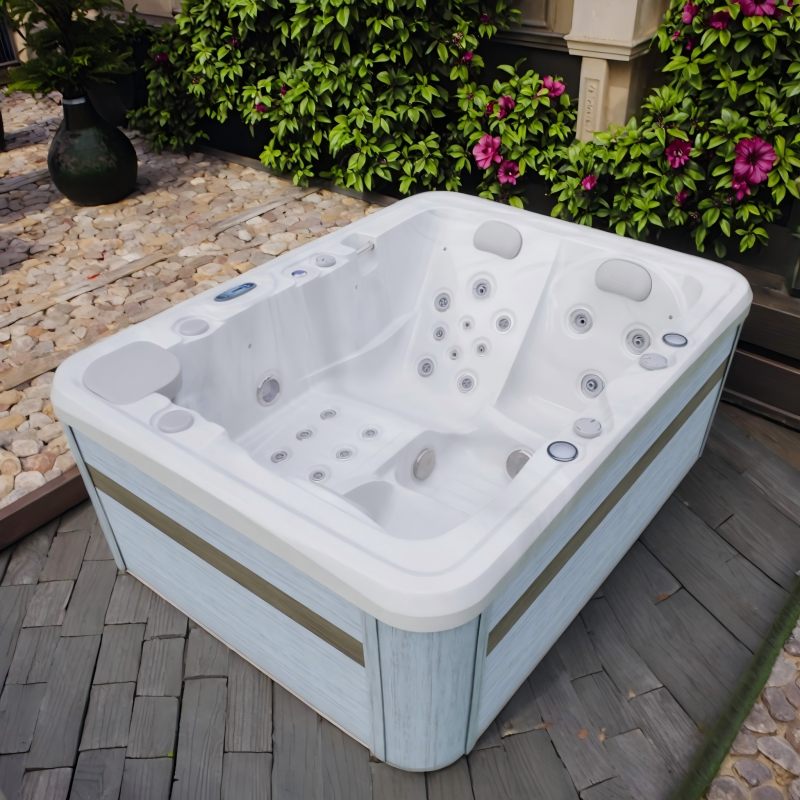
What is biofilm? Why are outdoor hot tubs prone to biofilm formation?
Biofilm can be understood as a "protective community" constructed by bacteria, fungi, algae, and other microorganisms. When microorganisms enter an outdoor whirlpool hot tub, they first attach to surfaces such as pipes, jets, or equipment components and begin secreting a sticky substance known as Extracellular Polymeric Substances (EPS). Acting like a natural adhesive, EPS firmly binds large numbers of bacteria together while continuously trapping minerals, organic contaminants, and tiny particles from the water. This process ultimately creates a biofilm layer that is nearly invisible to the naked eye yet offers robust protection. Outdoor whirlpool hot tubs possess almost all the conditions conducive to biofilm formation. First, the vast majority of outdoor whirlpool hot tubs maintain a constant temperature of around 36°C to 40°C—the optimal range for the proliferation of many bacteria. Second, during use, the human body continuously releases organic substances such as sweat, sebum, dead skin cells, skincare residues, sunscreen, and cosmetics; these serve as vital nutrient sources for microorganisms. Furthermore, environmental contaminants—including dust, leaves, pollen, insects, and airborne microbes—constantly enter the water, creating favorable conditions for biofilm development.
Research indicates that under suitable conditions, bacteria can attach to equipment surfaces in just a few hours, with initial biofilm formation occurring within 24 to 72 hours. The biofilm begins to mature after 5 to 7 days; without systematic cleaning over the long term, a thick layer of biofilm can coat the interior of the piping within weeks or even months, harboring bacterial densities reaching millions or even hundreds of millions per square centimeter. Notably, bacteria within mature biofilms exhibit extreme tolerance to disinfectants—studies suggest their resistance can be tens or even hundreds of times greater than that of free-floating bacteria. This explains why many users fail to improve water quality despite continuously increasing disinfectant dosages.
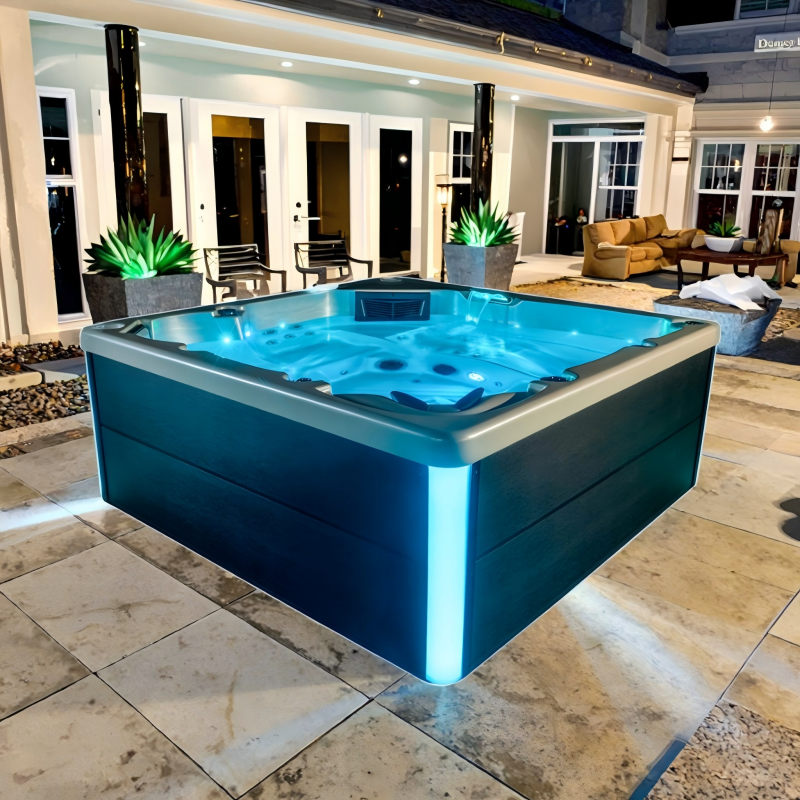
Where does biofilm typically hide in outdoor whirlpool hot tubs?
When cleaning outdoor whirlpool hot tubs, people often focus on visible areas—such as the inner walls, water surface, and seating—assuming that if these spots are clean, the entire unit is problem-free. In reality, however, massive biofilm growth often occurs within the circulation system, hidden from direct view; this is precisely why biofilm is so difficult to eradicate completely.
Circulation piping is the primary hiding place for biofilm
If one were to identify the location most prone to biofilm formation in a jacuzzi hot tub outdoor, circulation piping would undoubtedly rank first. The circulation system transports large volumes of warm water daily and remains constantly damp. Combined with the presence of numerous elbows, connectors, joints, and zones of varying flow rates, the interior of the piping provides an ideal environment for bacterial attachment. After a jacuzzi hot tub outdoor stops running, some water remains in the plumbing; this warm, stagnant environment promotes rapid bacterial growth. Over time, microorganisms accumulate on the pipe walls, forming increasingly thick layers of biofilm. Since these areas are hidden from view, simply changing the water often fails to solve the problem, as the fresh water quickly becomes re-contaminated by bacteria released from the pipes.
Massage jets are prone to accumulating significant organic contaminants
Massage jets not only provide water flow and massage functions but are also among the most complex components of a jacuzzi hot tub outdoor. Their interiors contain intricate channels, swirl mechanisms, and connecting lines. During use, residues such as body oils, skincare products, sunscreen, and toiletries enter the jets via the circulating water and gradually settle there. When these organic substances combine with bacteria, they fuel the rapid expansion of biofilm. Users may notice black, brown, or grayish-white flakes spraying out when the jets are activated; this often indicates a buildup of detached biofilm rather than just ordinary dirt.
Filters and filter cartridges are also hotspots for biofilm growth
Filtration systems are responsible for trapping impurities, leading to a constant accumulation of hair, dust, pollen, insect debris, and body oils on the filter cartridge surface. Without regular deep cleaning, bacteria utilize these organic materials as nutrients to form biofilm within the filter fibers. Many users mistakenly believe that a functioning filter requires little maintenance; however, the filter is a critical component of whirlpool hot tub hygiene. If a cartridge becomes coated in biofilm, filtration efficiency drops significantly, and the filter continuously releases microorganisms into the circulation system, complicating water quality management.
Internal components such as pumps and heaters also require attention
In addition to circulation pipes and jets, areas such as pump impellers, the space around heaters, seals, and drainage systems are also prone to biofilm accumulation. These areas tend to remain constantly moist and are difficult to maintain; once a biofilm forms, it can easily spread throughout the entire jacuzzi hot tub outdoor via the circulation system. The area near the waterline also requires special attention, as it sits at the interface of air and water, leading to the continuous accumulation of body oils, scale, and airborne contaminants. Without timely cleaning, this buildup forms a visible, slimy layer that eventually develops into a mature biofilm.
What impact does biofilm have on outdoor whirlpool hot tubs?
Many users assume biofilm merely affects aesthetics, but the risks it poses are far greater than imagined. First, biofilm continuously releases bacteria, causing microbial levels in the whirlpool hot tub to rise; even if the water appears clear, a high bacterial load may already be present. Second, because biofilm shields the bacteria within, traditional disinfectants struggle to penetrate it effectively. Users are often forced to increase chlorine or bromine dosages, which not only raises maintenance costs but can also make the water irritating to the skin and eyes, thereby compromising bathing comfort.
At the same time, biofilm reduces circulation efficiency. As the layer thickens on the inner walls of the piping, water flow resistance increases, requiring the circulation pump to consume more energy to maintain normal flow rates. Over time, this not only drives up electricity costs but also accelerates wear and tear on the pump, motor, and heating system, ultimately shortening the whirlpool hot tub's lifespan. For commercial facilities, equipment failure implies not only higher repair costs but also potential disruptions to business operations and a negative impact on the customer experience.
Furthermore, mature biofilms can harbor opportunistic pathogens. Inadequate water quality management can lead to issues such as skin itching, eye irritation, and ear infections—risks that are particularly significant for children, the elderly, and individuals with compromised immune systems. Therefore, biofilm should not be overlooked from the perspectives of hygiene, safety, or equipment maintenance.
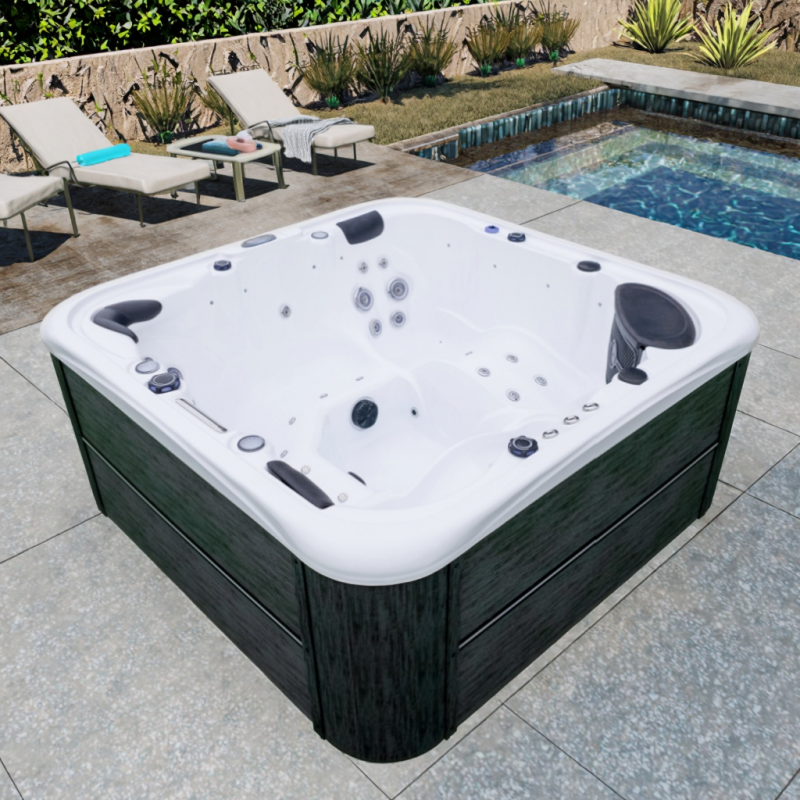
How can biofilm be thoroughly removed from a jacuzzi hot tub outdoor?
Truly eliminating biofilm from a jacuzzi hot tub outdoor requires a comprehensive cleaning process rather than a simple reliance on disinfectants. First, before draining the tub, a professional-grade pipe cleaner should be added. The circulation system should then be activated according to the product instructions, ensuring the cleaner fully permeates internal components such as circulation pipes, massage jets, pumps, and heaters. As the circulation process proceeds, the cleaning agent gradually softens and detaches the biofilm adhering to the equipment surfaces. During this process, black, brown, off-white, or even gelatinous flocculent matter may be observed discharging from the jets; this typically indicates that biofilm hidden within the piping is sloughing off.
Once the circulation cleaning is complete, the old water must be drained immediately. It is important to note that if the water is not drained promptly after circulation, the large volume of detached microorganisms and organic contaminants could re-adhere to the surfaces; therefore, draining the old water is a crucial step that cannot be skipped.
Next, use a soft sponge or a specialized cleaning cloth to thoroughly scrub the interior walls, waterline, seats, backrests, and the exterior of the jets of the jacuzzi hot tub outdoor. Focus on removing residual oils, limescale, and detached biofilm. Avoid using abrasive tools like steel wool, as they can scratch the tub's surface and create new attachment points for biofilm.
The filter requires removal for deep cleaning. First, rinse it with a high-pressure water sprayer, then soak it for several hours in a specialized filter cleaning solution to fully break down the oils and biofilm trapped within the filter media. If the filter is worn out or chronically clogged, replace it with a new one to restore filtration efficiency.
After completing these tasks, refill the jacuzzi hot tub outdoor with clean water and test water quality parameters—such as pH, total alkalinity, calcium hardness, and sanitizer concentration—to ensure the system returns to optimal operating condition. Finally, perform a "shock treatment" according to the product instructions to further eliminate any remaining microorganisms, and resume use only after confirming that all water quality indicators have returned to normal levels.
How can biofilm reformation in outdoor hot tubs be prevented?
Establishing a sound preventive strategy is undoubtedly more important—and more cost-effective—than thoroughly removing biofilm after it has already formed. For residential users, it is recommended to test the whirlpool hot tub water at least once a week to ensure the pH remains between 7.2 and 7.8 and that sanitizer levels are adequate to maintain effective disinfection capabilities. The filter cartridge should be thoroughly cleaned every two to four weeks to prevent the long-term accumulation of organic contaminants. Additionally, a deep cleaning of the plumbing lines should be performed every three to four months—ideally in conjunction with a water change—to minimize biofilm formation within the circulation system.
Good personal hygiene habits are also crucial during daily use. Showering before entering the jacuzzi hot tub outdoor significantly reduces the amount of sweat, oils, sunscreen, and skincare products introduced into the water. Avoiding eating, drinking alcohol, or soaking for excessively long periods can also lower the organic contaminant load. Furthermore, after family gatherings or periods of heavy use by multiple people, a "shock treatment" (high-dose disinfection) should be performed promptly to prevent rapid biofilm growth caused by a sudden influx of organic matter.
For whirlpool hot tubs that will be out of use for extended periods, maintain necessary circulation as recommended by the manufacturer, or completely drain the system and apply freeze protection. Stagnant water left in the pipes creates an ideal environment for rapid biofilm development.
FAQ
How quickly does biofilm form in a jacuzzi hot tub outdoor?
Given suitable temperatures and nutrient levels, bacteria can begin adhering to equipment surfaces within 24 to 72 hours, forming an initial biofilm layer in about 5 to 7 days. Without regular deep cleaning, mature biofilm can develop over several weeks or months, making routine maintenance essential.
Why is there still biofilm even if the whirlpool hot tub water looks clear?
Water clarity indicates a low level of suspended particles but does not guarantee that the internal components are clean. Large colonies of bacteria often adhere to circulation pipes, jets, pumps, and filters to form biofilm; while these sources of contamination do not directly affect water clarity, they continuously release microorganisms, leading to recurring water quality deterioration.
Can simply increasing the dosage of chlorine or bromine completely remove biofilm?
No. Mature biofilm offers strong protection that prevents disinfectants from penetrating the inner layers; therefore, merely increasing disinfectant concentration is usually ineffective at completely eliminating it. The correct approach involves a combination of measures, including the use of professional pipe cleaners, complete water replacement, filter cleaning, and shock disinfection.
How often should a jacuzzi hot tub outdoor undergo a deep clean?
For typical household use, it is recommended to perform a complete deep clean—including the plumbing, biofilm removal, filter maintenance, and water chemistry balancing—every 3 to 4 months, ideally coinciding with a water change. If usage is heavy, shared by multiple people, or for commercial purposes, the interval for comprehensive maintenance should be shortened to every 2 to 3 months.
How can you tell if biofilm has built up in an outdoor whirlpool hot tub?
Signs such as water becoming cloudy easily, an abnormal increase in sanitizer consumption, black or brown flakes spraying from the jets, unpleasant odors, excessive foaming, frequent filter clogging, or persistently unstable water quality may indicate significant biofilm accumulation inside the system. In such cases, a systematic deep clean should be performed promptly, rather than simply adding more sanitizer.