


Can I run the jets on my outdoor hot tub while the cover is closed?
2026-07-10 15:35A common question among outdoor whirlpool hot tub owners is: "Can I turn on the jets while the cover is on?"
For many new outdoor spa hot tub owners, the various function buttons on the control panel can raise a number of questions. One very common—yet often overlooked—question is whether it is safe or advisable to run the jets while the cover is closed.
On the surface, this might seem like a simple matter of usage preference. Since the cover serves to retain heat, keep out dust, and save energy, some users assume there is no harm in running the jets while the cover is closed when the tub isn't in active use. This question arises frequently in specific scenarios: perhaps a user has just added chemicals and wants the jets to help mix them into the water; or they are concerned about heat loss in winter and want to run the jets without opening the cover; or they simply want to test if the equipment is working properly without fully uncovering the tub.
However, when considering equipment design, thermodynamics, air circulation, safety, and long-term maintenance, the answer isn't a simple "yes" or "no." While jet operation logic varies by brand and model, running the jets with the cover closed is generally not recommended for long-term or frequent use; doing so—especially in high-power massage mode—can introduce additional risks.
To answer this question properly, we first need to understand the functions of the jets and the cover, as well as what happens when they operate simultaneously.
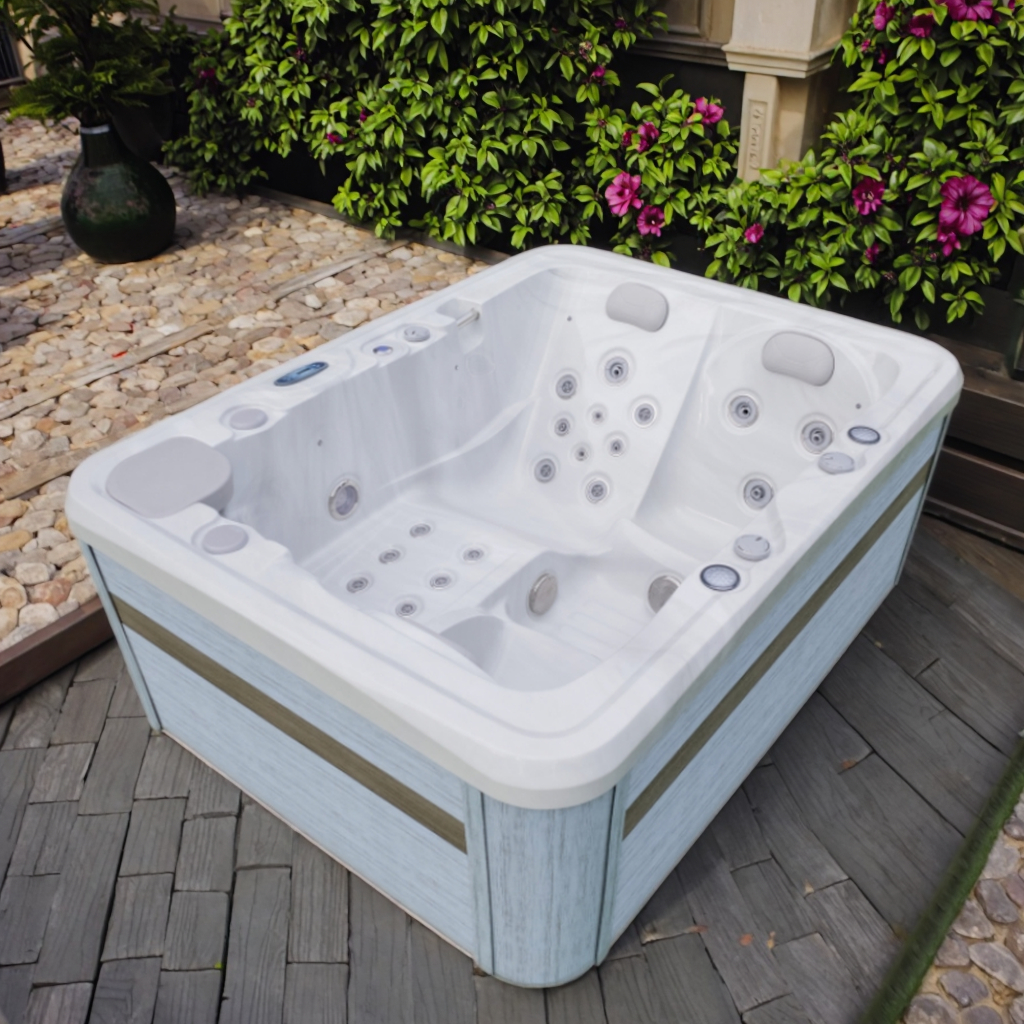
Outdoor Hot Tub Jets Do More Than Just Spray Water
Many people view whirlpool hot tub jets simply as a means for "water massage," but the jet system is actually far more complex than it appears.
Hot tub jets are typically connected to either a circulation pump or a massage pump. The pump draws water from inside the tub, accelerates it under high pressure, and then forces it out through the nozzles to create a high-speed stream of water. In most modern outdoor whirlpool hot tubs, the jets incorporate an air-mixing system that uses the Venturi effect to draw air into the water stream. This creates an air-water mixture, thereby enhancing the intensity of the massage.
This means that when the jets are running, the activity inside the whirlpool hot tub involves more than just water circulation; it encompasses high-speed water turbulence, air entrainment, heat redistribution, bubble formation, and vigorous surface agitation.
In standard circulation mode, an outdoor whirlpool hot tub might circulate 100 to 200 liters of water per minute; however, when massage jets are activated, the total flow rate in some high-end models can reach 800 to 1,500 liters per minute. Such high flow rates significantly alter the fluid dynamics within the tub.
Consequently, activating the jets while the cover is in place essentially means operating a system characterized by high flow, high turbulence, and high bubble generation within a relatively enclosed space. This setup gives rise to a number of noteworthy effects.
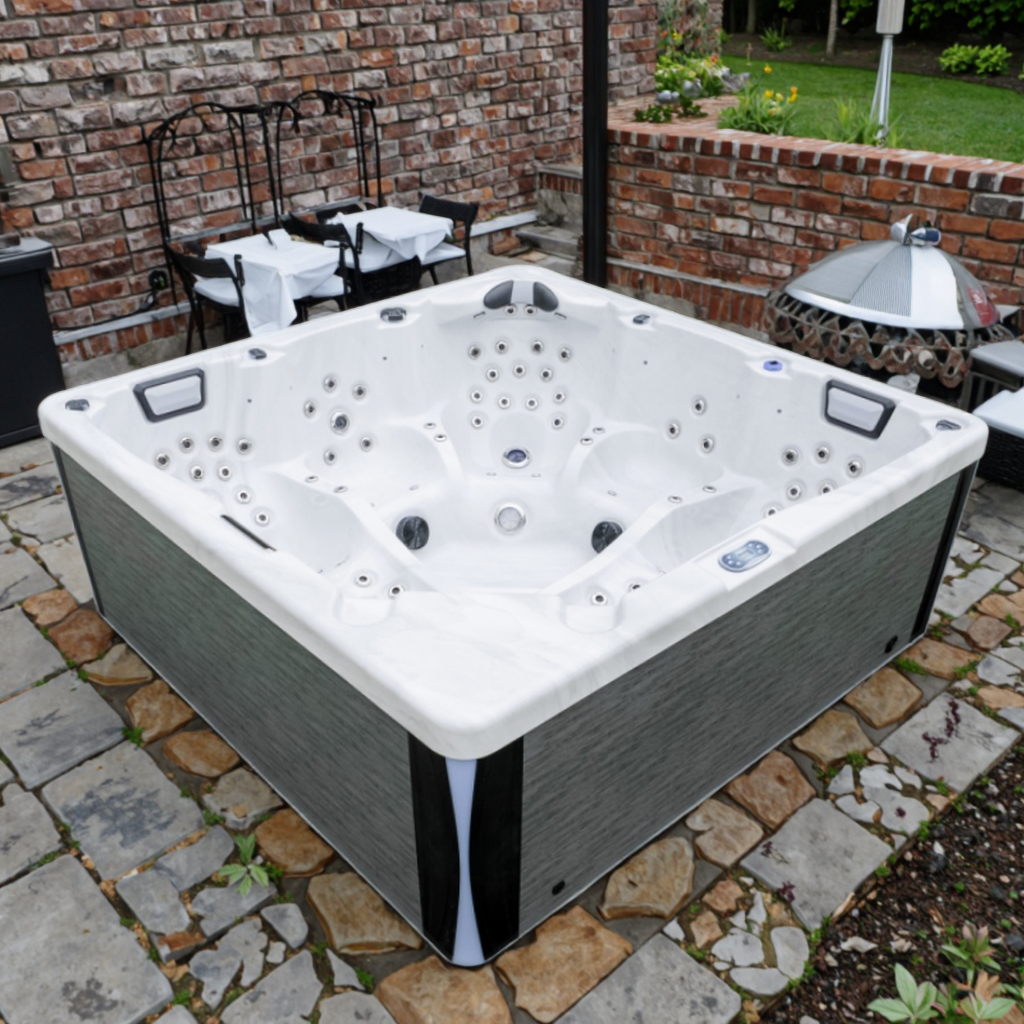
What is the intended purpose of an outdoor hot tub cover?
Outdoor spa hot tub covers generally serve four primary functions: heat retention, contamination prevention, evaporation control, and safety protection.
First is heat retention. Industry statistics indicate that high-quality covers can reduce heat loss by approximately 60% to 80%. Since outdoor spa hot tubs are typically maintained at temperatures between 37°C and 40°C, the absence of a cover would allow heat to escape rapidly through evaporation and air convection, leading to significantly higher heating costs.
Second is contamination prevention. Because outdoor whirlpool hot tubs are located in open-air environments, debris such as fallen leaves, dust, insects, pollen, and impurities from rainwater can easily enter the water. A cover significantly minimizes exposure to these contaminants.
Third is evaporation control. Water evaporation not only dissipates heat but also alters the water's chemical balance and accelerates the depletion of sanitizers.
Finally, there is safety protection. A cover reduces the risk of children, pets, or others accidentally falling into the tub.
From a design perspective, most outdoor whirlpool hot tub covers are intended for static use; in other words, they function optimally when the tub is not in use, the water surface is relatively calm, and the internal air pressure is close to the ambient atmospheric pressure. However, the high-humidity, high-temperature steam and air turbulence generated during jet operation create conditions that not all covers are designed to withstand over the long term.
While running the jets for short periods is usually acceptable, prolonged high-power operation is not recommended
From a practical standpoint, if the question is "Can the outdoor whirlpool hot tub jets be turned on while the cover is closed?" the answer is generally: yes, for short durations in most cases.
For example, running the jets briefly with the cover closed is usually fine in situations such as:
Mixing chemicals into the water;
Testing the jets after maintenance;
Briefly checking circulation during winter;
Running a low-power filtration cycle.
Most outdoor spa hot tub control systems do not automatically lock out the jets when the cover is closed, so mechanical operation is usually permitted.
The key factor here, however, is the duration—"short periods."
Running high-power jets with the cover closed for extended periods can lead to several issues, including increased internal pressure, moisture accumulation, cover damage, and reduced equipment efficiency.
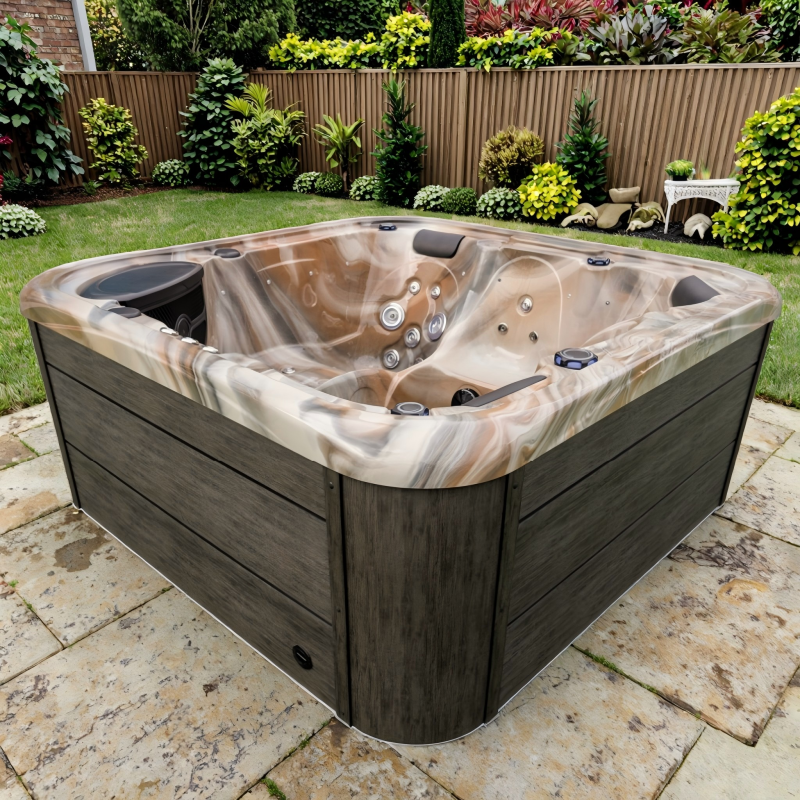
One major issue: rapid accumulation of heat and moisture inside the hot tub cover
This is the most common yet frequently overlooked problem.
When the jets are running, the water surface is agitated violently, significantly accelerating evaporation. Studies show that the evaporation rate from a still hot water surface is far lower than that from an agitated one; when jets run at high speed, evaporation can be two to five times higher than in a static state.
This means a large amount of hot steam is generated in a short time.
If the cover is closed, this steam cannot escape effectively, creating a hot, humid environment inside. The internal air temperature can quickly approach the water temperature, while relative humidity may reach near 100%.
Prolonged exposure to these conditions leads to several problems.
First, the cover's lining materials age more rapidly. Many whirlpool hot tub covers feature foam cores and vinyl layers; prolonged exposure to high heat and humidity can cause these materials to absorb water, swell, or degrade.
Second, the cover gains weight. A common issue in the industry is covers becoming "heavy," often caused by the foam core absorbing water. A standard cover typically weighs between 10 and 20 kg, but this weight can double after absorbing water.
Third, thermal insulation performance declines. Moisture absorption reduces the material's insulating properties, thereby increasing the whirlpool hot tub's energy consumption.
Therefore, while short-term operation may not be a major issue, frequently running the jets with the cover closed can shorten the cover's lifespan.
High-power jets can increase pressure on the spa hot tub cover
Many people focus only on heat and moisture, overlooking changes in air pressure.
Some high-performance whirlpool hot tubs feature powerful air-assisted massage systems. When the jets run, large amounts of air enter the water to create bubbles. As these bubbles burst, they release warm, humid air beneath the cover.
If the cover creates a tight seal, limiting internal air exchange, the pressure inside can experience brief fluctuations.
Although most outdoor spa hot tubs do not generate dangerous levels of pressure, repeated, long-term pressure changes can affect components such as:
Cover hinges;
Latches;
Stitching;
Sealing gaskets.
Older covers, in particular, are more prone to edge warping or seam splitting.
Extra caution is required when running the jets with the cover closed after adding chemicals
Many users like to close the cover and run the jets after adding chlorine, bromine, or shock treatments, hoping to speed up the mixing process.
This practice requires special care.
Chemicals—especially shock treatments—can release volatile gases as they dissolve. High concentrations of chlorine, for instance, can release irritating fumes in localized areas.
Running the jets with the cover closed under these conditions allows gases to accumulate in the enclosed space, potentially causing two problems.
First, the cover's internal materials may suffer chemical corrosion. Prolonged exposure to high concentrations of oxidizing vapors can accelerate the degradation of the vinyl, stitching, and adhesive layers.
Second, opening the cover could result in a sudden release of concentrated, irritating gas, causing discomfort to the eyes and respiratory tract.
Therefore, most maintenance guidelines recommend leaving the cover open for a period after "shocking" the water or adding high doses of chemicals, allowing volatile substances to dissipate before closing it again. This is why many professional technicians advise against running the jets for shock treatment while the cover is closed.
Will it damage the outdoor spa hot tub jets themselves?
The good news is that it generally won't directly damage the jets.
Hot tub jets are designed for continuous water circulation, so having the cover closed doesn't directly increase the risk of mechanical damage to the nozzles. The jets, pumps, and plumbing are primarily affected by:
Clogging;
Scale buildup;
Water chemistry imbalances;
Dry running;
Overheating.
Closing the cover itself is rarely the direct cause of jet damage.
What is actually affected includes:
The lifespan of the cover, the humidity level inside the enclosure, the accumulation of chemical vapors, and overall energy efficiency.
When is it not recommended to run the jets with the cover closed?
While not strictly prohibited, it is particularly discouraged in the following scenarios:
First, running high-power massage modes for more than 15–20 minutes. Prolonged high-intensity agitation significantly increases moisture buildup.
Second, immediately after adding shock treatment or high concentrations of sanitizer. Chemical off-gassing becomes more pronounced.
Third, if the cover is already aging or waterlogged. Additional moisture will further accelerate deterioration.
Fourth, if the manufacturer's manual explicitly forbids it. Different brands may have specific recommendations; always prioritize the official manual.
When is it okay to run the jets for a short time?
The following situations generally carry lower risk:
Low-power circulation mode;
Brief nozzle testing;
Light mixing of standard water care products;
Short system checks during cold weather.
Even so, it is advisable to limit the duration and avoid prolonged operation with the cover closed.
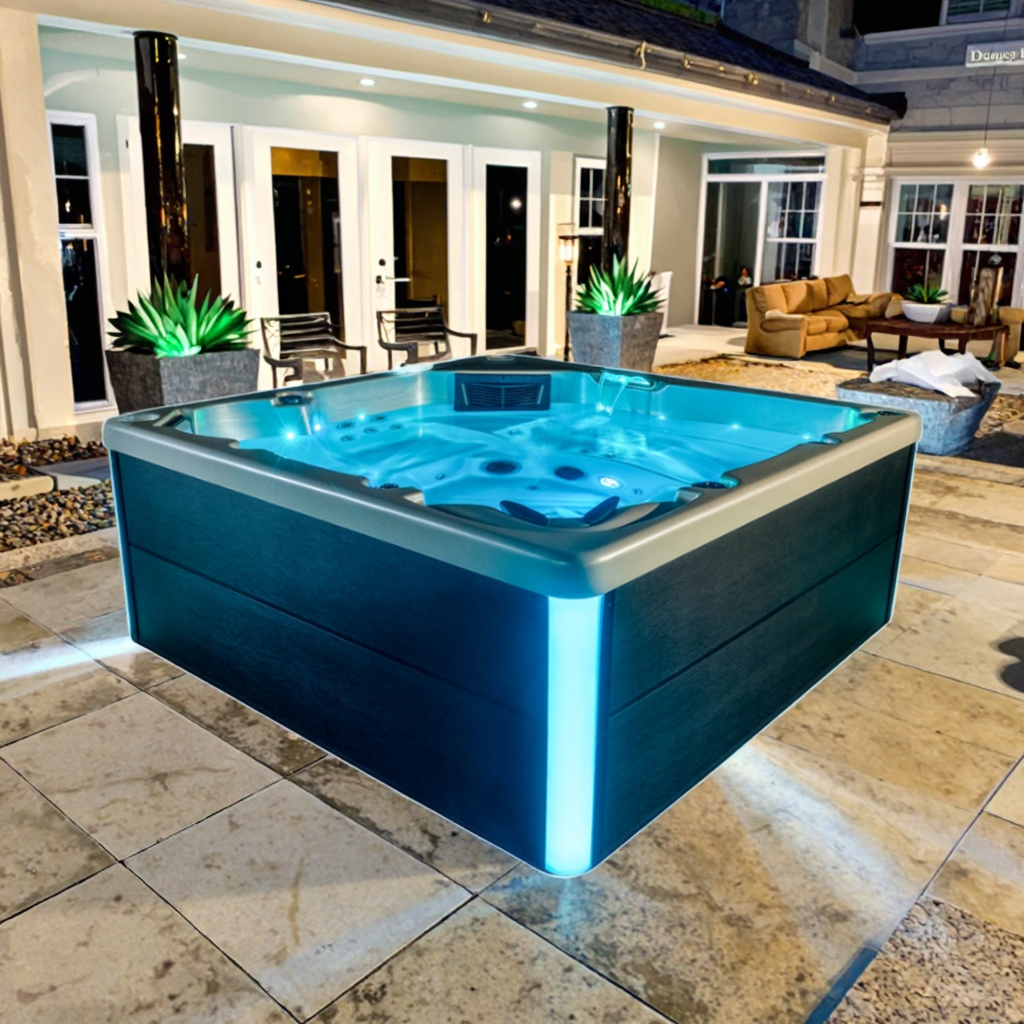
FAQ
Will running the jets with the cover closed immediately damage the outdoor spa hot tub?
It usually won't cause immediate damage, but frequent, long-term use this way may shorten the cover's lifespan.
Can I shock the hot tub with the cover on?
It is not recommended; chemical vapors can accumulate and damage the cover material.
Is low-power circulation mode okay?
Generally, yes; running the outdoor spa hot tub for short periods in this mode carries lower risk.
Why do outdoor spa hot tub lids become heavy?
Prolonged exposure to high humidity can cause the foam inside the cover to absorb water, leading to increased weight.
Is it better to run the jets with the cover on an outdoor spa hot tub during winter?
While doing so can reduce heat loss, operating at high power for extended periods is not recommended, as the issue of moisture accumulation remains.