


What Should Not Be Used in Acrylic Hot Tubs?
2025-12-22 15:30Acrylic hot tubs are widely used in home bathrooms, hotel suites, and various spa hot tub products due to their comfort, lightweight, corrosion resistance, and excellent heat retention. Although acrylic material has good stability, it is not invincible. To ensure that your acrylic spa hot tub remains shiny, sturdy, and safe for a long time, it is crucial to understand "what should not be used on acrylic hot tubs."
Incorrect chemicals, tools, cleaning methods, or everyday items can cause scratches, corrosion, discoloration, and even structural damage to the acrylic surface. This article will provide a comprehensive and systematic analysis of material characteristics, types of substances that may damage the tub, prohibited cleaning items, usage taboos, and environmental considerations.
Whether you currently use an acrylic spa hot tub or plan to purchase a new one, this article will help you clearly understand which substances should absolutely not come into contact with your acrylic hot tub, thus protecting its appearance and lifespan.
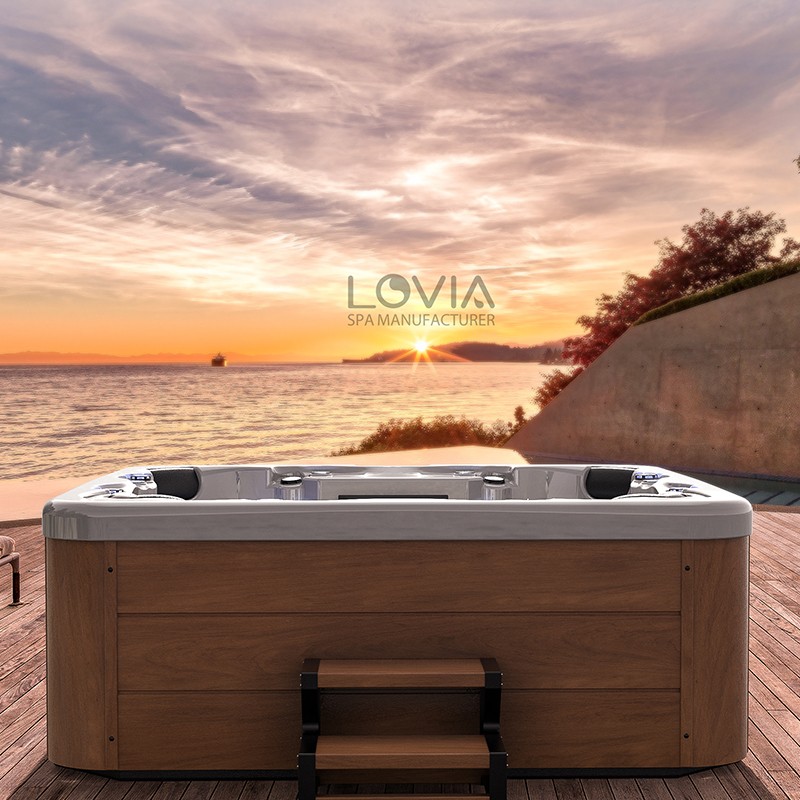
Why are Acrylic Hot Tubs Sensitive to Certain Substances?
To determine what cannot be used in an acrylic spa hot tub, it's essential to understand the properties of acrylic itself.
Acrylic (PMMA) possesses the following characteristics:
• High-gloss surface
• Good plasticity
• Flexibility
• Smooth touch
• Moderate chemical stability
However, it also has the following weaknesses:
• Susceptible to solvent corrosion
• Easily damaged by strong acids and alkalis
• Easily scratched by rough tools
• Slight softening under prolonged high temperatures
• Certain chemical components can cause the surface to lose its gloss
Based on these characteristics, it's crucial to clearly identify which substances and products absolutely must not come into contact with an acrylic hot tub.
Can strong acids or alkalis be used in an acrylic hot tub? Why absolutely not?
The answer is very clear:
➡ Strong acids and alkalis must absolutely not be used in an acrylic spa hot tub.
Specifically, this includes:
• Strong acids such as concentrated sulfuric acid and hydrochloric acid
• Strong alkalis such as soda ash and sodium hydroxide
• Strong chlorine-containing bleach
• Powerful drain cleaners
Reasons:
1. Strong acids will corrode the acrylic surface, causing loss of gloss, whitening, and cracking.
2. Strong alkalis will damage the acrylic molecular structure, making the material brittle and prone to cracking.
3. Chemical corrosion causes irreversible surface damage, requiring replacement of the entire bathtub.
Acrylic spa hot tubs do not require these excessively strong cleaning agents because they are less hard than ceramic and require gentle care.
Can solvent-based cleaners be used on acrylic spa hot tubs?
Absolutely not.
The following solvent-based products should not be used:
• High concentration alcohol
• Acetone
• Nail polish remover
• Turpentine
• Thinner (paint thinner)
• Industrial cleaning solvents
• Adhesive remover
Why can't they be used?
- - Because solvents will:
• Dissolve or soften the acrylic surface
• Create corrosion spots
• Cause a blurry "white haze"
• Cause stress cracking
• Destroy the acrylic's shine
These damages are irreversible and cannot be repaired by ordinary polishing.
Can rough or abrasive tools be used on an acrylic hot tub? What damage will it cause?
No.
The following tools are prohibited:
• Metal brushes
• Steel wool
• Abrasive sponges
• Hard-bristled brushes
• Sandpaper
• Any abrasive powder cleaner
Although the surface of an acrylic spa hot tub is smooth and durable, it is not resistant to hard scratches.
Using these tools will:
• Scratch the surface
• Cause permanent roughness
• Dull the shine
• Create grooves that can harbor bacteria
Acrylic is very sensitive to scratches, so it should only be cleaned with a soft cloth or sponge.
Can cleaners containing bleach be used on an acrylic hot tub?
It is not recommended to use these products, especially those containing chlorine bleach or high levels of oxidizing agents.
Including:
• 84 disinfectant
• High-concentration bleach
• Chlorine-based cleaners
Reasons:
• Oxidizing agents weaken the molecular structure of acrylic
• Easily cause discoloration or yellowing
• Long-term use can lead to a rough surface
If you need to disinfect an acrylic spa hot tub, you should use a mild formula specifically designed for acrylic or hot tubs, not regular bleach.
Can aromatherapy oils or oil-based bath products be used in acrylic hot tubs?
Mostly not recommended!
In particular:
• Pure plant essential oils
• Shower gels with scented bath salts
• Oily bath sponges
• Strongly scented bath liquids
Reasons include:
1. Oils easily adhere to acrylic surfaces
2. Difficult to clean, forming a film-like stain over time
3. Some essential oils contain solvents that can slightly corrode acrylic
4. Excessive foam can interfere with the circulation system and filter pump
Especially for acrylic spa hot tubs with circulation systems, oily bath products should be avoided.
Are there any "natural ingredients" that cannot be used in acrylic hot tubs?
The answer is:
➡ Yes, some natural ingredients still cannot be used.
- - For example:
• Lemon juice (acidic)
• Vinegar (acidic, corrodes the surface)
• Salt (abrasive properties)
• Coarse-grained bath salts
Although these are natural materials, they can still damage the surface structure of acrylic hot tubs. Bath salts, in particular, can swirl with the water flow, forming abrasive particles that cause fine scratches on the surface.
Can high temperatures damage acrylic hot tubs? What temperatures are dangerous?
Acrylic material typically only withstands temperatures up to ~80℃, therefore:
Do not pour hot water exceeding 70℃ directly into the tub.
Reasons:
• Rapid temperature changes can cause uneven material expansion.
• Surface deformation or slight softening may occur.
• Prolonged improper use can cause stress cracks.
Use warm water mixed with hot water, not scalding water poured directly into an empty tub.
Can dye products be used in acrylic hot tubs? Will they cause staining?
No.
The following items can cause staining:
• Hair dye
• Dyed bath sponges
• Dyed foam
• Dyed bath salts
• Edible dye powder
The microporous structure of acrylic material easily absorbs pigments, and once stained, it is difficult to remove, causing permanent spots.
Can pet supplies or hard objects be placed in an acrylic hot tub?
Not recommended because:
• Pets' nails can scratch the acrylic surface.
• Plastic pet bowls and cages may scratch the bathtub.
• Heavy metal items may cause impact marks.
Acrylic spa hot tubs are most susceptible to damage from hard contact, so avoid placing any hard-edged items inside.
Are there any seemingly harmless everyday items that could damage an acrylic hot tub?
Yes, many seemingly harmless everyday items can actually damage the acrylic bathtub surface, such as:
• Powdered laundry detergent (contains abrasives)
• Bathroom lime cleaner (acidic)
• Mold remover gel (highly corrosive)
• Toilet paper rolls with hard edges
• Hard plastic edges of squeegees
Using these items may unknowingly cause micro-scratches or acid corrosion.
List of 15 Substances That Should Not Be Used with Acrylic Hot Bathtubs
For quick reference, the following are the main categories of substances that should not come into contact with acrylic hot bathtubs:
1. Strong acids
2. Strong alkalis
3. Chlorine bleach
4. Industrial solvents
5. High-concentration alcohol (>70%)
6. Acetone, thinners, adhesive removers
7. Abrasive cleaning tools
8. Abrasive cleaners
9. Hot water
10. Dye products
11. Essential oil bath products
12. Abrasive bath salts
13. Pet supplies
14. Strong drain cleaners
15. Any tools that generate abrasive friction
How to safely clean and maintain an acrylic hot bathtub?
Now that we know what not to use, here are the safe cleaning methods:
• Warm water + neutral detergent
• Soft sponge or cotton cloth
• Special acrylic cleaner
• Descaling agent specifically designed for hot tubs
• Rinse and dry after each use
This will ensure your acrylic spa hot tub stays shiny and durable for a long time.