


What does the OHH code on an outdoor whirlpool hot tub mean?
2026-08-17 15:30Outdoor Hot Tub Industry Pain Points: Why are more and more users troubled by the "OHH code"?
As leisure lifestyles are increasingly moving outdoor whirlpool hot tubs that are installed outdoors have come to be an important feature of outdoor living spaces in European and American houses, gardens, courtyards, as well as for high-end homestays, hotel resorts, health centers, commercial spa centers, and other such facilities. Compared with regular indoor bathtubs only, outdoor whirlpool spa hot tubs offer not only functions like massage, spa treatment, and constant-temperature bathing, but they also provide an additional way of enjoying one's outdoor living space, such as sitting, relaxation, and getting together, and so forth, when combined with gardens, terraces, or pools. Unfortunately, with the growing popularity of outdoor hot tubs and the expanding outdoor whirlpool spa hot tub market in general, one problem among many others that has troubled consumers for a long time has gradually been brought to the fore by dealers and service technicians: various fault codes on the control panel, especially "OHH" code, which is now a very frequent question from users.
When people who are the first users of an outdoor whirlpool hot tub find out that "OHH" has been displayed on the control panel, they immediately conclude that there is a serious malfunction in the machine, perhaps even that both the heating system and the electrical system might be entirely broken. On the one hand, some users have immediately shut off the power. At the other extreme, some have kept on turning it on and off the machine. Others have replaced parts without knowing for one minute how they should have acted in order to fix the problem. In reality, things are quite often more complicated than people imagine. The OHH code is not necessarily pointing out that something has gone wrong at the hardware part of the machine. Actually, it is one of the safety features of smart outdoor whirlpool hot tub control system that activates the machine in case that it detects a temperature going beyond the safe level in order to prevent equipment failure as well as potential threats to safety.
The OHH code for outdoor whirlpool hot tub makers shows an even bigger picture of the situation involving product design, water recirculation system, temperature sensing equipment, and heating component, not forgetting to mention users' habits as well. Without question, it is essential for an outdoor whirlpool hot tub to maintain clean water flow at a constant level, and its temperature sensing devices should be precise enough. A good heating control system is also needed, as is proper and comprehensive logic for fault prevention. Only when the above elements are well taken care of will the machine be able to run stably for a long time irrespective of the weather conditions.
Take for instance many outdoor whirlpool spa hot tubs sold in European and American markets. They are usually expected to endure all four seasons without being damaged in the process. In winter for starters, the hot tub machine could possibly be required to maintain a nice water temperature of 38 degrees Celsius approximately, but all while operating under temperatures of below freezing. In summer, the heat can result in the tub's cooling being more challenging if not nearly impossible so that high-temperature protective warnings such as OHH could easily get triggered. From all this, one can clearly see that knowing what the OHH code means, what causes it, and what to do are very important points that both outdoor whirlpool hot tub users and potential customers need to have a grasp of.
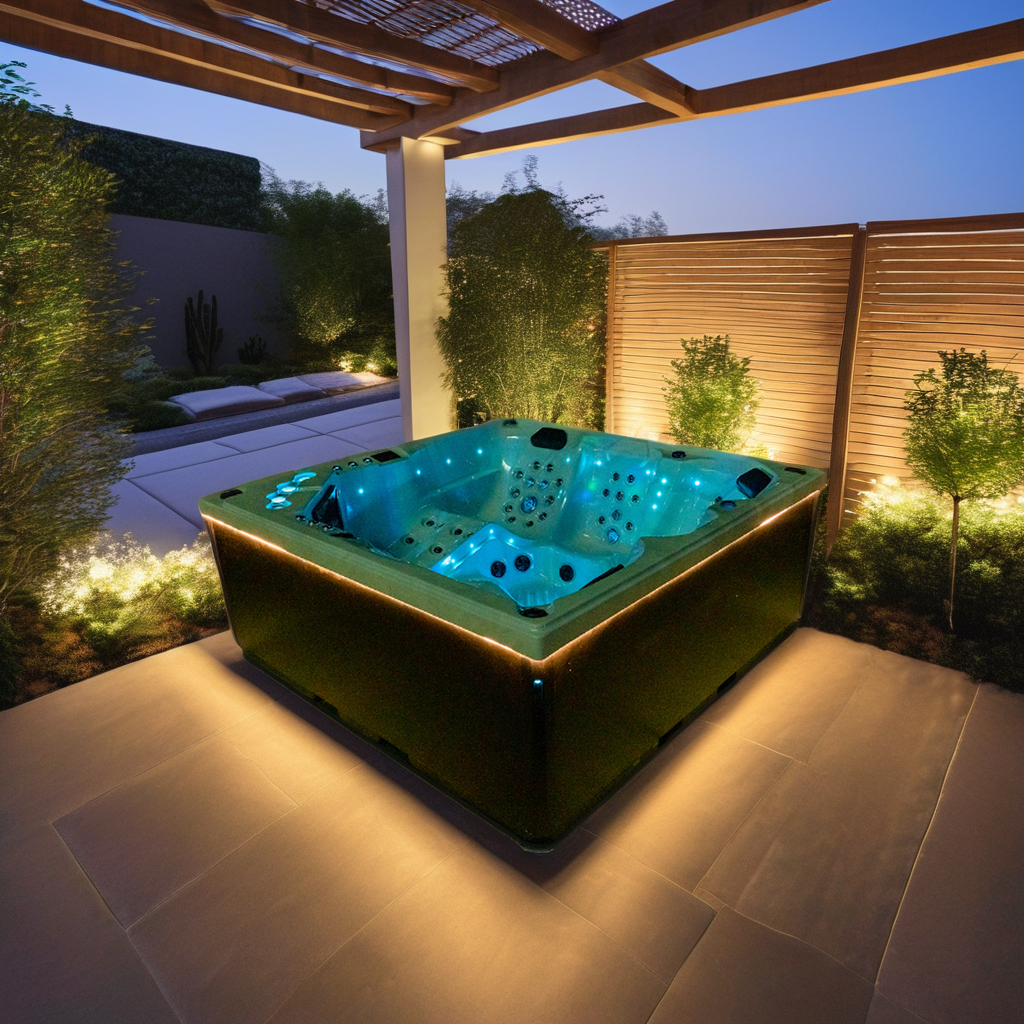
What does the OHH code on an outdoor whirlpool hot tub mean?
The "OHH" warning of outdoor whirlpool spa hot tubs is usually Over-Heat-High, in short, overheating at the hottest end of your hot tub system. Therefore, it simply means that the machine has spotted at the moment an issue with water temperature exceeding the system's set safe range of temperatures; so the heating gets auto stopped and the user is alerted through the control panel.
Most contemporary outdoor whirlpool hot tubs work with smart system control units which constantly monitor the temperature of water with the help of temperature sensors. When the user sets a certain temperature goal, let's say, 38°C, the controls system will adjust the workings of the heater through sensor feedback. Once the water reaches close in temperature to its user-preference, the heater lowers its power or halts in order to keep the temperature of the tub's water around that target temperature level.
Yet, the system will give out an OHH alarm when an abnormally fast heating is detected, like temperature rising so rapidly that even safely thresholds have been crossed. OHH alarm settings can be different for different brands and models of outdoor whirlpool hot tubs. Normally, a high temperature protection will be activated when the temperature detected is around 42°C to 45°C.
Of course, one should bear in mind that the OHH message on the hot tub is not necessarily indicative of the overall water in the whirlpool spa hot tub being at a dangerously high level. It may be that a relatively small area, such as the vicinity of the heater or the temperature probe, has experienced a temporary heating problem. For instance, when the water circulation flow has been reduced, the heater's heating can only be released slowly if at all, thus, sensor can read that there is something wrong about the temperature and protection mechanism activated as well as. Therefore, even if the water temperature throughout the bath is normal, still this local temperature problem can cause protection to be engaged.
Presently, high-standard outdoor whirlpool hot tub products are most often equipped with smart control systems. For example, some items use professional SPA control systems that are provided by companies such as Balboa Water Group, which control and monitor various aspects of the functioning of a whirlpool spa hot tub such as temperature levels, water circulation, and electronic controllers. In case the system gets alerted to the heating being too intense it simply stops the heater from working automatically to avoid the machine's getting ruined.
Why do outdoor whirlpool hot tubs display OHH codes? Main Reasons
OHH codes in outdoor whirlpool hot tubs are usually related to abnormal water temperature, circulation system problems, sensor malfunctions, and control system abnormalities. Although the surface manifestation is always a "high temperature alarm," the actual causes may be completely different. Therefore, when dealing with OHH problems, one cannot simply assume it's just too hot; a system analysis is necessary.
Insufficient Water Circulation Leading to Overheating in the Heating Area
Water circulation problems are one of the most common causes of OHH codes in outdoor whirlpool hot tubs. Outdoor whirlpool spa hot tubs work by using a circulation pump to drive water flow, continuously passing the filtration system and heater before re-entering the tub, thus maintaining a uniform water temperature.
If the circulation system is functioning properly, the heat generated by the heater will be quickly dispersed with the water flow, maintaining a stable water temperature throughout the bathtub. However, if the water flow rate decreases, the heat around the heater cannot be dissipated in time, potentially causing a rapid increase in localized temperature.
Causes of insufficient water circulation include clogged filters, reduced circulation pump efficiency, blockage of the inlet by debris, and scale buildup inside the water system.
For example, in a typical household outdoor whirlpool hot tub, if the filter is not cleaned regularly, a large amount of hair, dust, skin oils, and limescale will adhere to the filter element surface, increasing water flow resistance. When the circulation flow decreases, the temperature near the heater may rise rapidly, triggering the OHH (Overheating and Heating) protection.
Therefore, often resolving OHH issues does not require replacing expensive parts, but rather restoring normal water circulation.

Why does a clogged filter affect the temperature of an outdoor hot tub?
Many users believe that the filter is only responsible for keeping the water clean and has no direct relation to the heating system. In fact, the filtration system in an outdoor whirlpool hot tub is closely related to temperature control.
The filter not only filters impurities but is also an important component of the entire water circulation system. When the filter is in good condition, water flows smoothly through the circulation pipes, and the heater operates stably.
However, if the filter becomes clogged, the circulation pump needs to withstand greater pressure, the water flow rate decreases, and a heat concentration area forms around the heater, which may eventually lead to abnormal temperature sensor readings.
It is generally recommended that home users clean the filter regularly according to usage frequency. For ordinary household use, the filter cartridge can be checked every 2 to 4 weeks; if the outdoor whirlpool hot tub is used in hotels, guesthouses, or commercial spas, the filtration system maintenance frequency needs to be increased due to the large number of users daily.
For professional outdoor whirlpool hot tub manufacturers, excellent design not only needs to provide powerful filtration capabilities but also needs to reduce maintenance difficulty. For example, using an easily removable filter structure, a large-capacity filter cartridge, and an optimized water circuit design can effectively reduce OHH alarms caused by insufficient circulation.
Why does a malfunctioning temperature sensor cause false OHH alarms?
Besides actual high temperatures, temperature sensor failure is also a significant cause of OHH codes in outdoor whirlpool spa hot tubs.
The temperature sensor is like the device's "temperature eye." It is responsible for detecting the water temperature and sending the data to the control board. If the sensor data is accurate, the system can correctly determine when to heat and when to stop heating.
However, after prolonged use, sensors may be affected by factors such as scale buildup, corrosion, and circuit aging, leading to inaccurate data readings.
For example, if the actual water temperature is only 38℃, but the sensor incorrectly reads 44℃, the control system will interpret it as overheating and immediately trigger the OHH (Overheating and Heating) alarm.
Common sensor problems include:
Scale buildup on the sensor probe surface, affecting temperature measurement accuracy;
Loose sensor wiring;
Aging electronic components;
Improper sensor installation location.
Therefore, when outdoor whirlpool hot tubs frequently experience OHH, and the water circulation system is found to be functioning correctly, the temperature sensor should be the primary focus of inspection.
Can a heating system malfunction cause OHH in outdoor hot tubs?
Heating system malfunctions are also a significant factor contributing to OHH.
Under normal circumstances, the outdoor whirlpool hot tub heater is automatically managed by the control system. Once the water temperature reaches the set value, the control board will shut off the heating function.
However, if the heating relay malfunctions, such as contact sticking, the heater may continue to operate, even after the water temperature has reached the set temperature.
In this case, the water temperature will continue to rise, eventually triggering the OHH alarm.
For example:
User-set temperature: 38℃;
Normal operating range: 37℃ to 39℃;
After heating control malfunction: Temperature may continue to rise above 43℃.
If this occurs, users will usually notice a clear characteristic: even after lowering the temperature setting, the device continues to heat.
In this case, the control board, relays, and heating components need to be checked, rather than simply adjusting the temperature parameters.
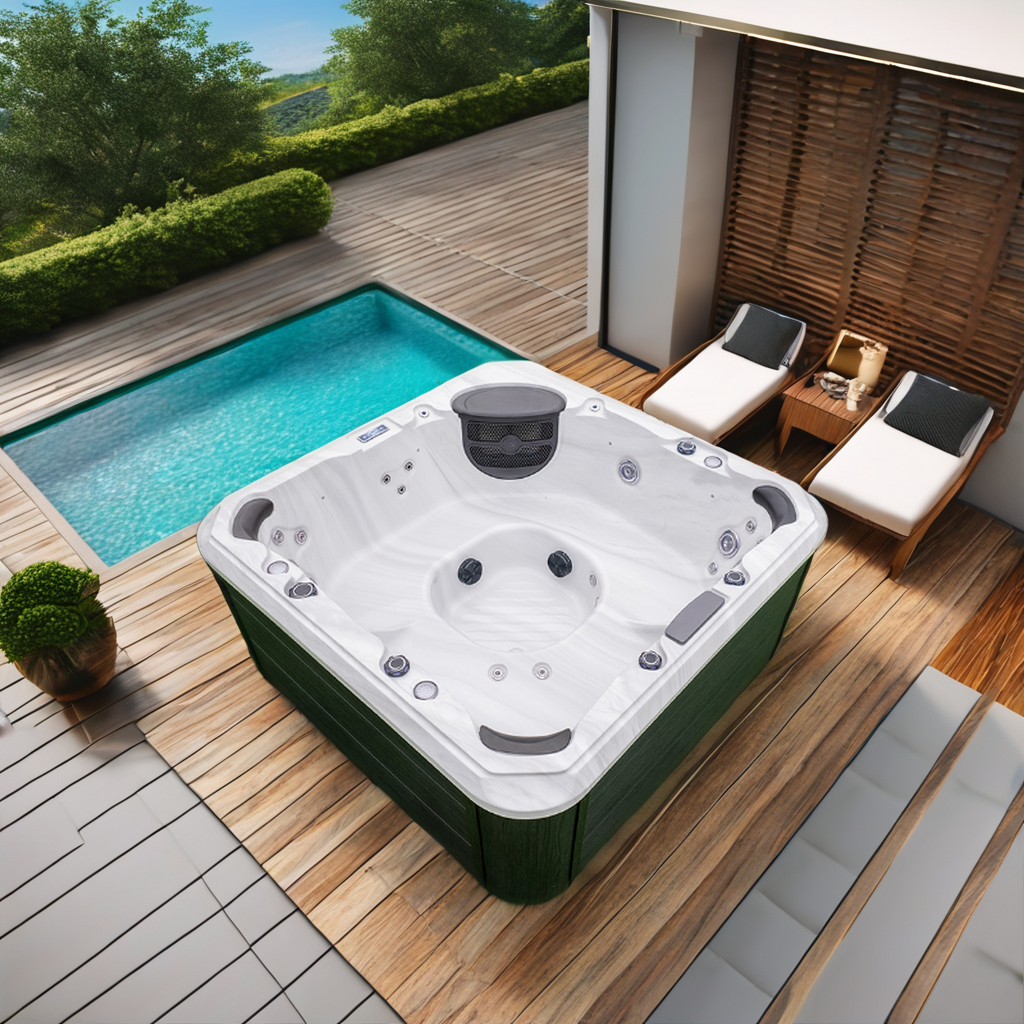
Does high summer temperature increase the risk of OHH (Overheating and Heating) in outdoor hot tubs?
Many consumers believe that outdoor whirlpool spa hot tubs are only prone to problems in winter. In fact, high summer temperatures can also increase the risk of OHH.
Outdoor whirlpool spa hot tubs are installed outdoors for extended periods and are affected by sunlight, air temperature, and the installation environment. If the installation area lacks shade, direct sunlight in summer can cause the internal temperature of the casing to rise.
Especially in areas where the ambient temperature reaches above 35℃, if the equipment's insulation design is inadequate and there is insufficient heat dissipation space, the pressure on the control system will increase.
Furthermore, some users habitually keep the bathtub lid closed for extended periods, preventing internal heat from escaping, which can also cause abnormal temperatures.
Therefore, high-quality outdoor whirlpool spa hot tubs typically employ multi-layered insulation structures, such as high-density polyurethane insulation layers, insulated base plates, and protective outer shells, to improve energy efficiency and reduce prolonged operation.
What are the right steps after encountering an OHH (Oh No H) error in an outdoor hot tub?
When an outdoor whirlpool spa hot tub shows OHH code, the best way is to first follow these steps while troubleshooting the problem. After turning the power supply off, let the water cool down until the temperature has dropped significantly. Only then, one should check the water inlet filter. If the filter seems to be heavily loaded, it will require a cleaning or even the replacement of the filter.
Next, one should check for water flow. If circulation pumps are turned on, and you check out whether your jet outlets and the flow of the outlet water are working as you expected, the circulation is in good order. If the flow of the water is quite weak, it would mean checking circulation pump and lines are necessary.
Once the water flow has been verified, then the temperature sensor is to be checked. If the device is repeatedly issuing incorrect alarms, it is best to have the sensor checked for its accuracy by professionals.
Last of all, one should look into the heater of the whirlpool spa hot tub. In such a case where the heater will not cease being on and running, it is likely to point the problem in either board or relays control.
Outdoor whirlpool spa hot tubs combining water and electric systems with a power unit, heater, water pump system, and control unit.
Users with little or no repair experience are advised against taking apart control panel without the proper tools.
How to lower the odds of getting an OHH signal at your outdoor hot tub?
The key to avoid OHH codes is to prevent them rather than deal with the problems once they have cropped up.
First, make sure the water circulates well. Keeping a water filter clean all the time avoids any debris from clogging the flow of water.
Second, it is recommended to keep the water in whirlpool spa hot tubs at suitable levels. When the water has been off the balanced state for a long time, hardness will develop, which will then form scaling or limescale, all of which, will interfere with not only the heat production of your heater, but also the temperature sensors. Therefore, maintaining the water pH levels within a safe value range like, for example, 7.2 to 7.8 and also controlling how often disinfection and other maintenance activities are carried out, according to the level of usage, are really important.
Third, the temperature of water should be chosen appropriately. Usually at 38℃ it is comfortable for most people; therefore, it is a good idea not to keep temperatures extremely high for an extensive period of time.
Fourth, go for a solid outdoor whirlpool spa hot tub brand choice if you can.
For potential buyers, what sets apart a good hot tub from other is how it looks, how it can meet your physical and mental needs, and the design of the internal structure, the strength of the essential components, and availability of the necessary aftersales support.
Established whirlpool spa hot tub makers generally test the water circuit, electricity, controlling temperature, and long-term performance running equipment tests as part of their production process before delivery so that the product's working performance is consistent across all types of operating environments.
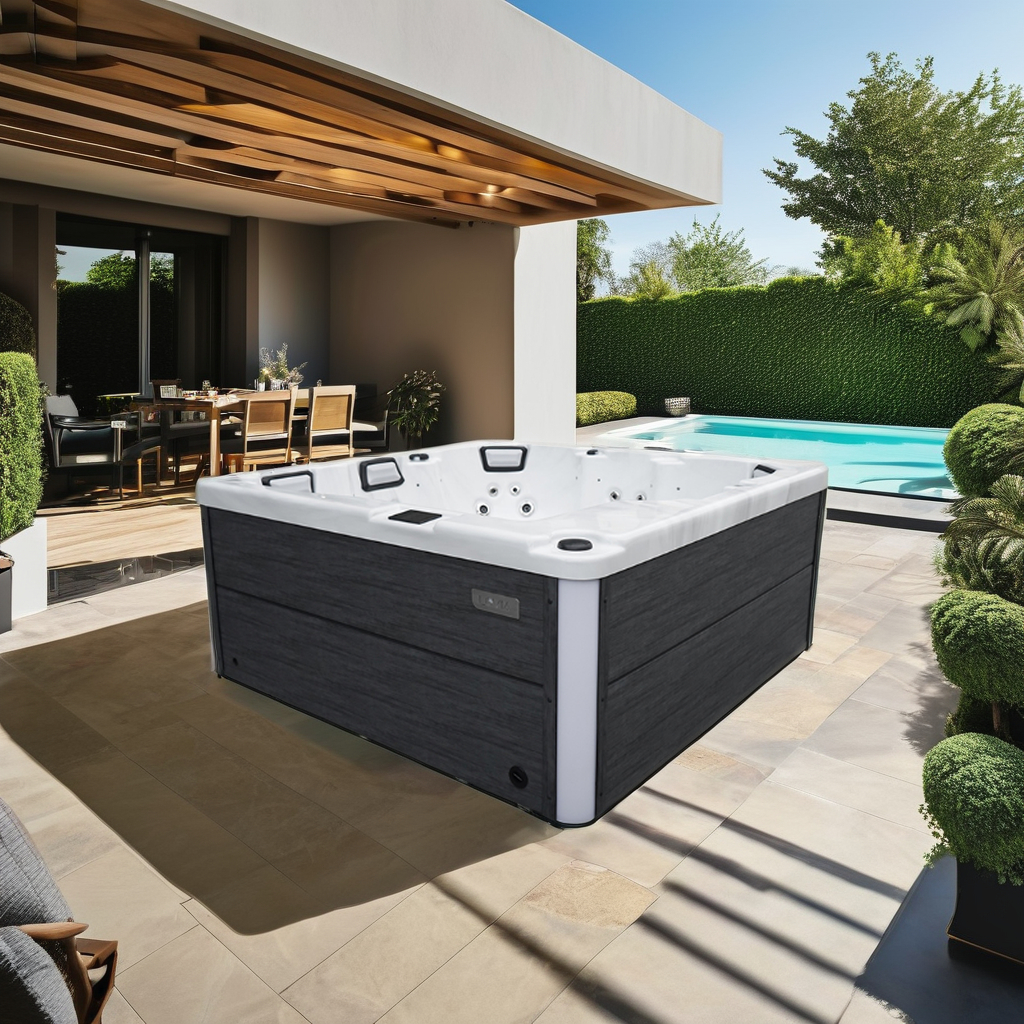
Common FAQs About OHH Codes In Outdoor Hot Tubs
FAQ 1: Can I continue using my outdoor whirlpool spa hot tub if it displays OHH?
It is not recommended to continue using it. When the device displays OHH (Overheating Hazard), it indicates that the system detects a high temperature risk. Use should be stopped, the device allowed to cool down, and the cause investigated.
FAQ 2: If OHH disappears after powering off and restarting, does it mean the problem is solved?
Not necessarily. Restarting may only temporarily clear the alarm. If the filter blockage, water pump malfunction, or sensor failure is not resolved, OHH may reappear.
FAQ 3: What is the appropriate temperature setting for an outdoor whirlpool spa hot tub?
Generally, a setting between 37℃ and 40℃ is recommended for home use. The specific temperature can be adjusted according to personal comfort and the usage environment.
FAQ 4: Does OHH always require professional assistance?
Not necessarily. If it's just a clogged filter or insufficient water circulation, users can resolve it through cleaning and maintenance. However, for issues involving the control board, heater, or circuitry, a professional should be contacted.
FAQ 5: How to purchase a more stable outdoor whirlpool spa hot tub?
It is recommended to focus on the manufacturer's technical strength, control system configuration, heating system quality, insulation structure, water circulation design, and after-sales service capabilities, rather than just comparing product prices. A stable and reliable manufacturer can help users reduce later failures and maintenance costs.