


What Do I Need to Do to Use an Outdoor Spa Hot Tub?
2026-11-11 15:35An outdoor spa hot tub is more than just a piece of recreational spa equipment; it is a complex installation that involves site preparation, electrical supply, plumbing (water supply and drainage), structural load-bearing capacity, and safety management. For those planning to install an outdoor hot tub in a residential garden, villa, terrace, or hotel, purchasing the unit is only the first step. Before it can be put into regular use, one must ensure that the installation environment meets all necessary requirements and that the supporting infrastructure can sustain the long-term operation of the equipment.
When shopping for an outdoor spa hot tub, many users focus primarily on dimensions, seating capacity, the number of massage jets, pump power, and heating systems, while overlooking the practical installation requirements. For instance: Can the ground support the weight of the tub when filled with water? Is the home’s electrical system capable of powering the heater and pumps simultaneously? Is the drainage system adequate? How can the pipes be protected from freezing in cold winter weather?
Failing to address these issues in advance can lead to increased installation costs, equipment malfunctions, or even safety hazards. This article outlines the essential requirements for installing an outdoor whirlpool spa hot tub—covering site selection, load-bearing capacity, electrical supply, and plumbing—and provides corresponding solutions.

Choosing the Right Location for Your Outdoor Hot Tub
The installation location is the primary factor determining whether an outdoor spa hot tub can function properly. Even if you purchase a high-end model, an unsuitable location can hinder maintenance, compromise user comfort, and pose safety risks.
1. Ensuring Sufficient Installation Space
Outdoor spa hot tubs come in various sizes and seating capacities. Typical residential models are designed for 2–6 people, while larger versions can accommodate even more. Before making a purchase, measure your intended installation area against the product's external dimensions, and be sure to account for the necessary operational space.
For example, for a spa hot tub measuring 2.0m × 2.0m, the required space is not simply the 4-square-meter footprint; you must also factor in room for users to enter and exit, space for the cover to be opened, and access for maintenance. In particular, ensure there is ample clearance on the side where the pumps, heater, and control system are located to allow for future repairs and servicing. In addition, the installation site should be kept as far away as possible from areas prone to water accumulation, preventing rainwater or cleaning water from pooling at the base of the unit over extended periods.
2. Ensure a Level Surface and Proper Ventilation
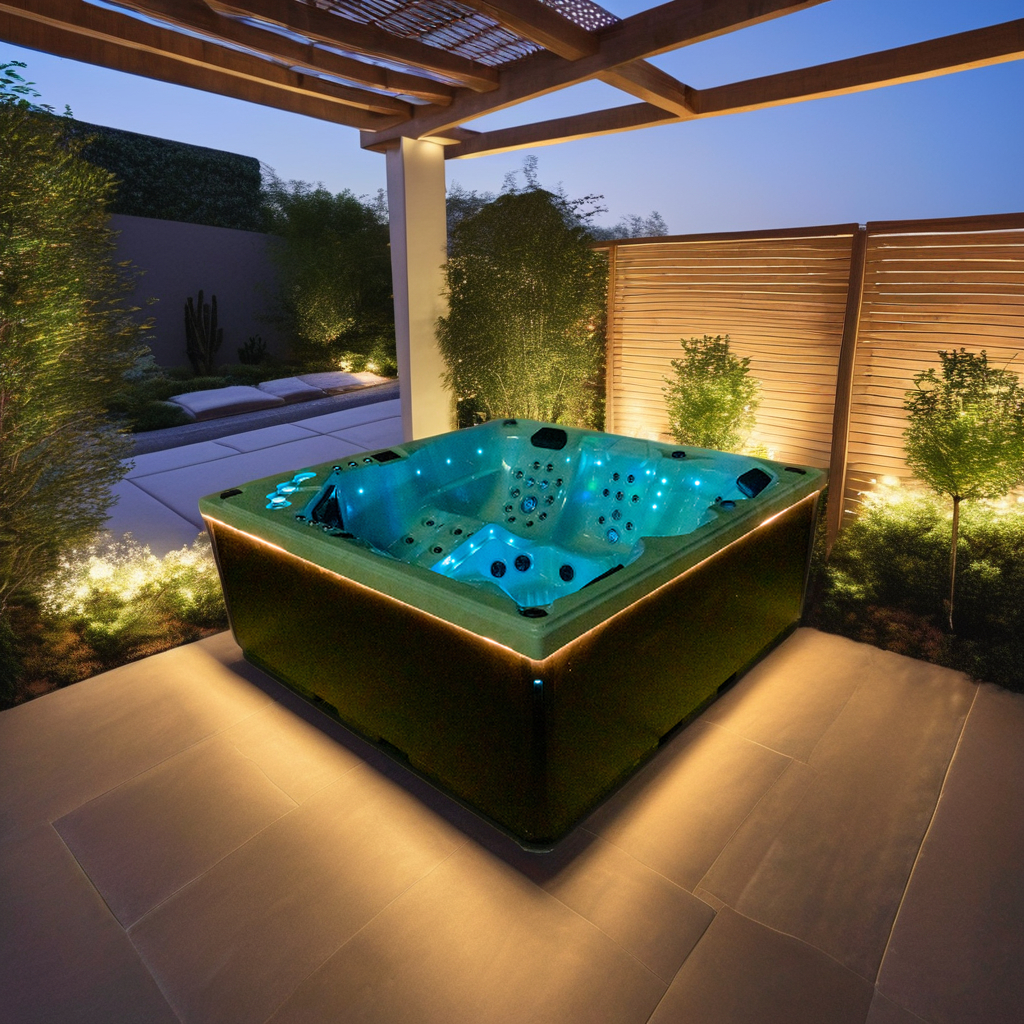
An outdoor spa hot tub must be installed on a level, solid surface. An uneven surface can cause uneven pressure on the base of the tub, increasing the risk of structural damage over time.
Common installation foundations include reinforced concrete platforms, strengthened decks, or specialized support platforms designed to meet load-bearing requirements.
If the installation area is semi-enclosed, consider ventilation and moisture removal. Prolonged exposure to high humidity can negatively affect the lifespan of surrounding building materials and electrical equipment.
3. Consider Privacy and Convenience
Outdoor whirlpool spa hot tubs are typically installed in courtyards, on balconies, or on terraces; therefore, the surrounding environment should be taken into account. It is advisable to choose an area that offers a degree of privacy, has adequate lighting, and allows for easy access.
If the unit is located too close to a bedroom or a neighbor’s home, noise from the water pump may cause a disturbance. This can be mitigated by adjusting the installation location, installing sound barriers, or opting for a low-noise pump.
The Surface Must Have Sufficient Load-Bearing Capacity
Load-bearing capacity is one of the most frequently overlooked factors when installing an outdoor spa hot tub. Once filled with water and occupied by several users, the total weight of a standard hot tub can reach several tons.
1. Calculate the Operational Weight of the Unit
The total weight of an outdoor spa hot tub consists of the weight of the unit itself, the water, and the users.
The density of water can be estimated at 1 kg/L—meaning 1,000 liters of water weighs approximately 1,000 kg.
For example, consider the following weight specifications for a residential outdoor hot tub:
| Item | Weight |
| Empty Hot Tub Weight | 350 kg |
| Water Capacity | 1,200 L |
| Water Weight | 1,200 kg |
| Occupants (5 ร— 75 kg) | 375 kg |
| Total Operating Weight | 1,925 kg |
This indicates that the total weight of this outdoor spa hot tub during normal use is nearly 1.93 tons.
If the effective support area at the base of the unit is 4 square meters, the average load is approximately 481 kg/m². However, this is merely a preliminary estimate; in practice, one must also account for the base structure, load distribution, and the specific support conditions of the ground surface.
2. Choose a Reliable Foundation
For most ground-level installations, a well-designed reinforced concrete pad is a highly reliable foundation.
While some residential projects may use a concrete slab approximately 100–150 mm thick as a baseline, this is not a universal standard applicable to every installation environment. The actual thickness, steel reinforcement, and subgrade preparation must be determined based on the equipment's weight, soil conditions, and local building codes.
If the ground consists of soft soil or uncompacted fill, the subgrade must be properly prepared to prevent settlement over time.
3. Special Considerations for Balconies and Rooftop Terraces
If you plan to install an outdoor spa hot tub on a second-story balcony or a rooftop terrace, a professional structural assessment is mandatory.
Typical residential balconies may not be designed to support the concentrated load of several tons. Even if the surface area is large, safety cannot be determined simply by calculating the average load.
Solution: Before installation, provide a structural engineer with the hot tub’s dry weight, filled weight, maximum occupancy, and base dimensions. A professional must verify that the floor slabs, beams, and supporting structures meet the necessary requirements. Installing a large outdoor spa hot tub on an elevated floor slab or rooftop terrace without such an assessment is strongly discouraged.
The Electrical System Must Meet Operational Requirements
Outdoor whirlpool spa hot tubs require electricity to power water pumps, heaters, filtration systems, control panels, and lighting. Therefore, you must verify that your home’s electrical circuit meets the equipment's specifications before installation.
1. Verify Voltage and Power Ratings
Depending on the product design and the target market, outdoor spa hot tubs may require different power configurations, such as 120V, 220V, or 240V.
| Electrical Configuration | Typical Application |
| 120V / 15A | Small Plug-and-Play Hot Tubs |
| 220V–240V / 30A | Selected Residential Hot Tubs |
| 220V–240V / 40A | Medium-Sized Hot Tubs |
| 220V–240V / 50A–60A | Large Hot Tubs |
The above are common examples; always refer to the manufacturer’s technical specifications and wiring instructions for the exact requirements.
Pay particular attention to the fact that heaters and water pumps may operate simultaneously. If the electrical circuit lacks sufficient capacity, it may lead to frequent circuit breaker trips, slower heating, or the inability of the equipment to start properly.
2. Install a Dedicated Circuit and Residual Current Protection
For outdoor spa hot tubs that require permanent (hard-wired) electrical connections, a dedicated power circuit—configured according to the equipment’s specifications—must be installed. This circuit should include appropriate residual current protection, such as a Ground Fault Circuit Interrupter (GFCI).
Given the high humidity of outdoor environments and the proximity of large volumes of water, electrical safety is paramount. Key installation considerations include:
•The gauge of the power supply wiring must be determined based on the rated current and the length of the circuit.
•The circuit breaker must be sized to match the equipment’s rated current requirements.
•A grounding system that complies with local building codes is mandatory.
•All electrical connections must be performed by a qualified, licensed electrician.
•Outdoor electrical components must be adequately rated for water and moisture resistance.
Never attempt to power a large outdoor spa hot tub using an extension cord connected to a standard household outlet.
3. Verify Residential Electrical Capacity in Advance
Some users discover only after purchasing an outdoor spa hot tub that their home’s existing electrical system cannot meet the equipment's requirements—necessitating additional wiring or even an upgrade to the electrical distribution panel (breaker box).
To avoid unexpected costs during installation, it is highly recommended to have a qualified electrician review the equipment’s specifications—including rated voltage, maximum current, heater wattage, and pump configuration—before placing your order.
Plan Water Supply and Drainage in Advance
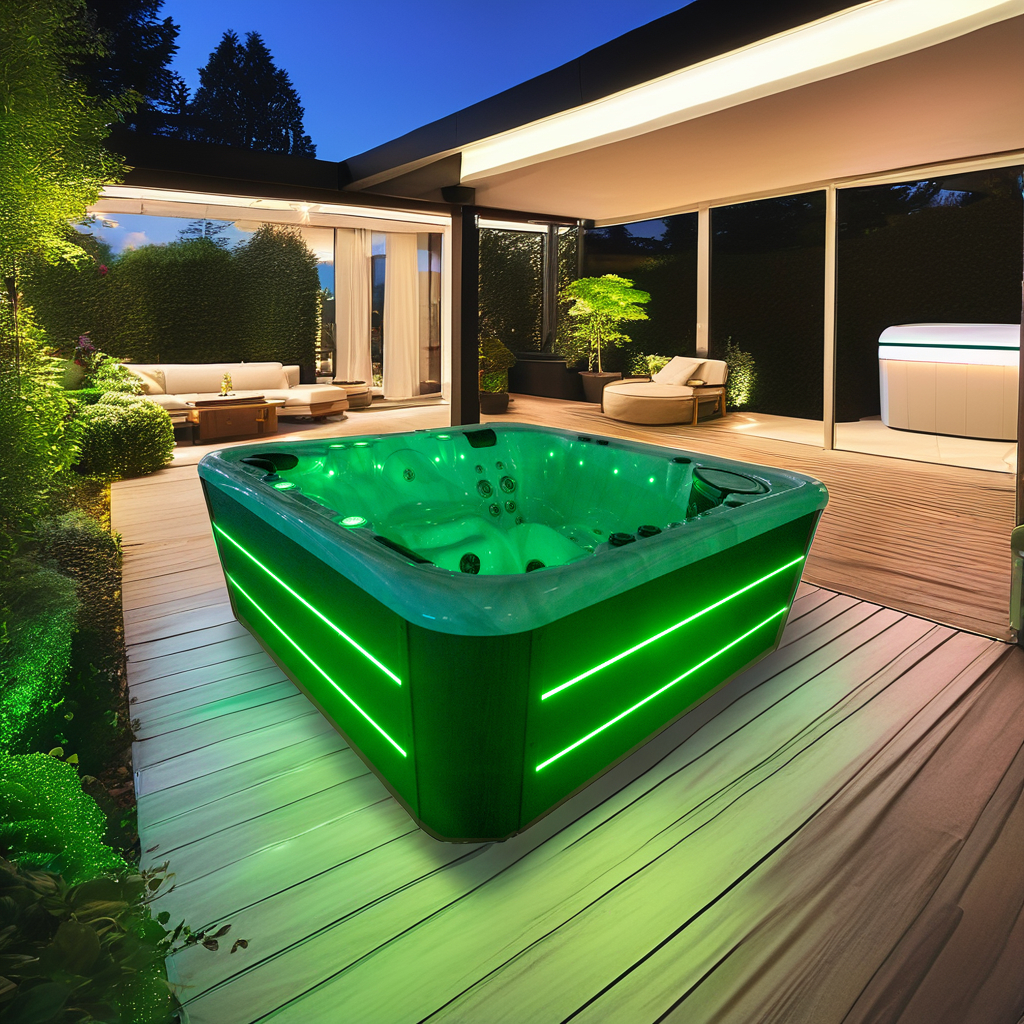
Although outdoor whirlpool spa hot tubs typically utilize a self-contained water circulation system, they still require reliable access to a water supply and a drainage point for initial filling, periodic water changes, and cleaning.
1. Ensure Access to a Reliable Water Source
Most residential outdoor whirlpool spa hot tubs can be filled using a standard garden hose; however, you should confirm the location of the water source and the adequacy of the supply beforehand.
For example, filling a whirlpool spa hot tub with a 1,200-liter capacity at a flow rate of 15 liters per minute would theoretically take approximately 80 minutes. The actual time may vary depending on water pressure and the diameter of the hose.
Use a clean water source and check the water quality before filling. If the local water supply has high hardness, it may lead to the buildup of limescale within the heater, jets, and internal plumbing.
2. Plan for Proper Drainage
Drainage is an aspect often overlooked when installing an outdoor spa hot tub.
A hot tub with a capacity of 1,500 liters generates approximately 1.5 tons of wastewater each time it is fully drained. If this water is discharged directly onto the ground in your yard, it can lead to pooling, muddy conditions, and potentially even damage to the building's foundation.
Before installation, verify the following:
•Is there a suitable drain nearby?
•Is the drainage piping sufficient to handle the volume of water?
•Does the discharge of wastewater comply with local regulations?
•Will the chosen drainage location negatively affect nearby structures or landscaping?
Please note that rainwater drainage systems and domestic sewage/wastewater systems are not necessarily interchangeable. Wastewater containing water-treatment chemicals—such as chlorine or bromine—must be disposed of in accordance with local environmental and drainage regulations.
Ensure Comprehensive Safety Measures
Because outdoor spa hot tubs involve high-temperature water, electrical equipment, and water circulation systems, safety cannot rely solely on the product itself; it must also be addressed through careful planning of the installation environment.
1. Install Safety Covers and Child-Proofing Features
For households with children, preventing unsupervised access to the spa hot tub is critical.
When the hot tub is not in use, the safety cover should be closed and locked. Where feasible, consider installing fencing, self-closing/self-latching gates, or other access-restriction measures.
The U.S. Consumer Product Safety Commission (CPSC) emphasizes a "layered" approach to water safety, rather than relying exclusively on adult supervision.
2. Regulate Water Temperature to Prevent Overheating
While most outdoor whirlpool spa hot tubs feature control panels for temperature adjustment, higher temperatures are not necessarily better.
The U.S. Centers for Disease Control and Prevention (CDC) recommends that spa hot tub water temperatures should not exceed 104°F (40°C). Excessive heat increases the risk of overheating and burns.
First-time users should consider starting at a lower temperature. Children, the elderly, and individuals with cardiovascular conditions or other health issues should be particularly cautious and, if necessary, consult with a medical professional before use. Additionally, using an outdoor whirlpool spa hot tub after consuming alcohol is not recommended, as the combination of alcohol and high temperatures can increase the risks of dehydration, impaired judgment, and accidental drowning.
3. Check the design of suction and drainage ports
Outdoor hot tubs generate water flow via pumps and circulation systems. If the suction ports are poorly designed, they may pose safety hazards, such as the risk of hair becoming entangled or a person’s body being held against a suction point.
When purchasing, ensure the unit is equipped with anti-entrapment drainage structures and suction port covers that meet relevant safety standards, as well as a well-designed water circulation system.
For commercial installations—such as those in hotels or resorts—ensure that safety designs also comply with local regulations governing public spa facilities.
4. Ensure non-slip flooring and adequate lighting
Water droplets and splashes often accumulate around a spa hot tub, making the ground slippery—especially when users are entering or exiting the unit.
It is advisable to install non-slip floor tiles or outdoor anti-slip mats in the surrounding area, and to provide stable steps or handrails for access. If the whirlpool spa hot tub is used at night, ensure there is sufficient lighting to prevent accidents caused by poor visibility.
The outdoor environment must be suitable for long-term equipment operation
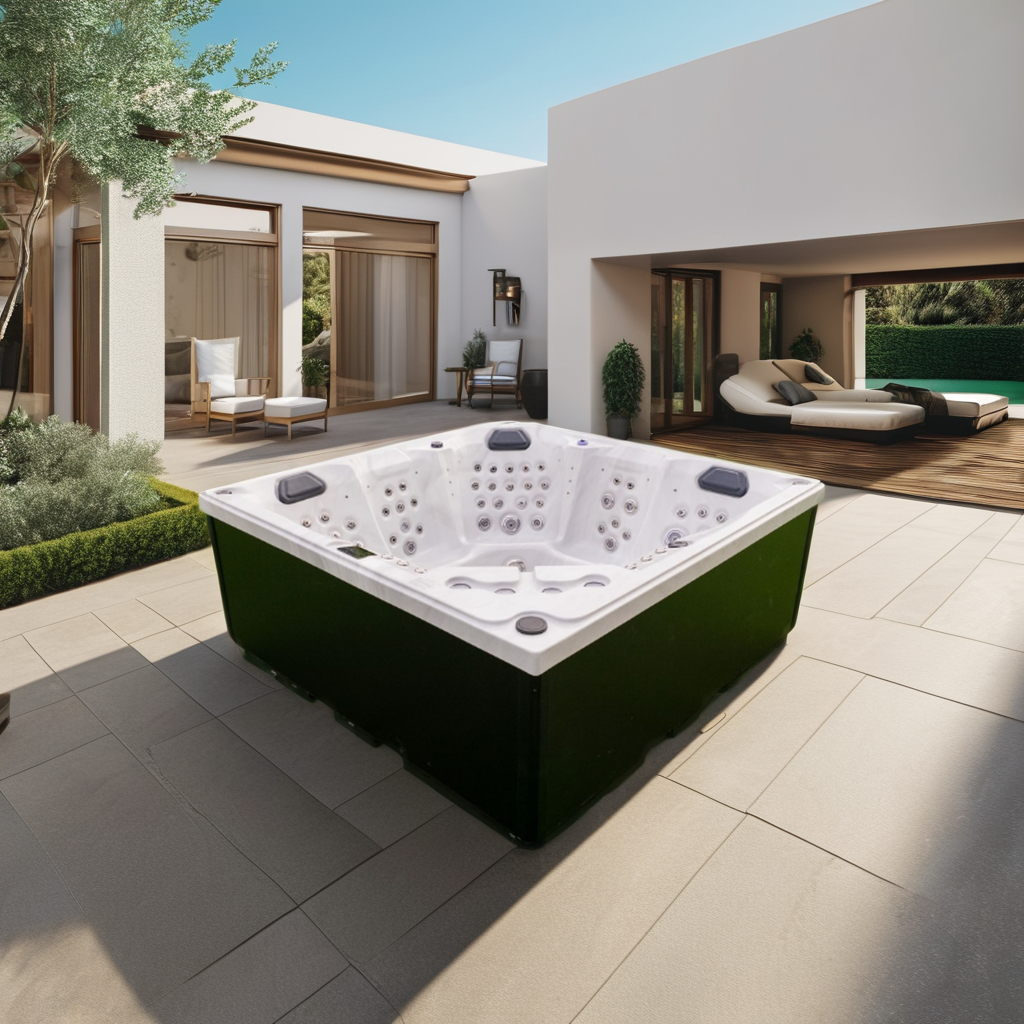
Unlike indoor units, outdoor spa hot tubs are constantly exposed to sunlight, rain, wind, dust, and temperature fluctuations. Therefore, environmental suitability is a critical factor to evaluate before installation.
1. Consider the impact of sunlight and UV radiation
Prolonged exposure to intense sunlight can accelerate the degradation of the whirlpool spa hot tub’s exterior shell, seals, and cover.
If the installation site receives high levels of direct sunlight, consider constructing a shade canopy or a pergola. However, ensure that any shading structures do not obstruct equipment ventilation, maintenance access, or the proper opening of the hot tub cover.
Additionally, when purchasing, verify the weather resistance of the hot tub’s shell, acrylic surface, insulation layer, and sealing materials.
2. Implement freeze protection for cold-weather environments
In colder regions, special attention must be paid to protecting the water pump, heater, and circulation piping from freezing.
If the equipment is shut down while water remains inside, the expansion of the water as it freezes can cause pipes to burst or the pump housing to crack.
The following measures are recommended:
•Choose products with effective thermal insulation;
•Verify whether the equipment is equipped with an automatic freeze-protection system;
•Use thermal covers suitable for the local climate;
•Operate the unit in accordance with the manufacturer’s instructions during cold weather;
•Drain all residual water from the pump and circulation piping if the unit is to be left unused for an extended period.
Please note that draining the water from the spa hot tub basin does not mean the circulation system is completely empty. Residual water may remain inside the pipes and the pump; therefore, if the unit is to be taken out of service for the winter, follow the manufacturer’s instructions for comprehensive winterization (freeze-protection).
FAQ: Common Questions Regarding Outdoor Hot Tub Usage
Q1: Is a concrete base required for installing an outdoor hot tub?
Not necessarily. While a concrete pad is a common foundation, a professionally designed, reinforced wooden deck or other suitable structure may also work. The essential requirement is that the foundation must be able to support the total weight of the unit when filled with water, providing a uniform and stable base.
Q2: Can an outdoor spa hot tub be connected to a standard household power outlet?
This depends on the unit’s rated voltage and power requirements. Small, "plug-and-play" models may be compatible with standard household outlets, but medium-to-large outdoor whirlpool spa hot tubs typically require a dedicated circuit and a residual current device (RCD/GFCI). Consult a professional electrician beforehand.
Q3: Can an outdoor spa hot tub be installed on a balcony?
Yes, but only after a structural load-bearing assessment has been conducted. A large unit can weigh several tons when filled with water; you must verify that the floor slab, beams, and supporting structure can safely accommodate this weight.
Q4: Does the water in an outdoor spa hot tub need to be changed daily?
Generally, no. However, you must regularly test the water quality, clean the filters, and replace the water based on usage frequency and water condition. Follow the manufacturer’s recommendations and local health regulations regarding specific maintenance intervals.
Q5: Can an outdoor whirlpool spa hot tub be used during the winter?
Yes, provided the unit features thermal insulation and freeze-protection suitable for the local climate, and is operated according to the manufacturer’s instructions. If the unit is to be left unused for an extended period, ensure that all residual water is drained from the circulation piping and the pump.