


What Are the Most Popular Outdoor Hot Tub Features in the Global Market?
2026-11-06 15:35Driven by a growing demand for home leisure, wellness, and outdoor living, outdoor whirlpool spa hot tubs are increasingly being installed in private residences, vacation villas, hotels, and wellness facilities. When purchasing an outdoor hot tub, consumers now look beyond basic heating and soaking capabilities, focusing instead on features such as hydrotherapy, energy efficiency, smart controls, water quality management, and all-weather operational reliability.
For manufacturers, buyers, and distributors, understanding which features are most sought after globally is key to optimizing product configurations, managing manufacturing costs, and enhancing market competitiveness. User needs vary by region: those in colder climates prioritize insulation and freeze protection; consumers who value lifestyle quality focus on massage features and smart technology; while hotels and resorts place a premium on durability, hygiene management, and ease of maintenance.
This article analyzes the core functions, common industry pain points, and purchasing criteria for outdoor hot tubs, helping consumers and buyers determine which configurations offer the best return on investment.
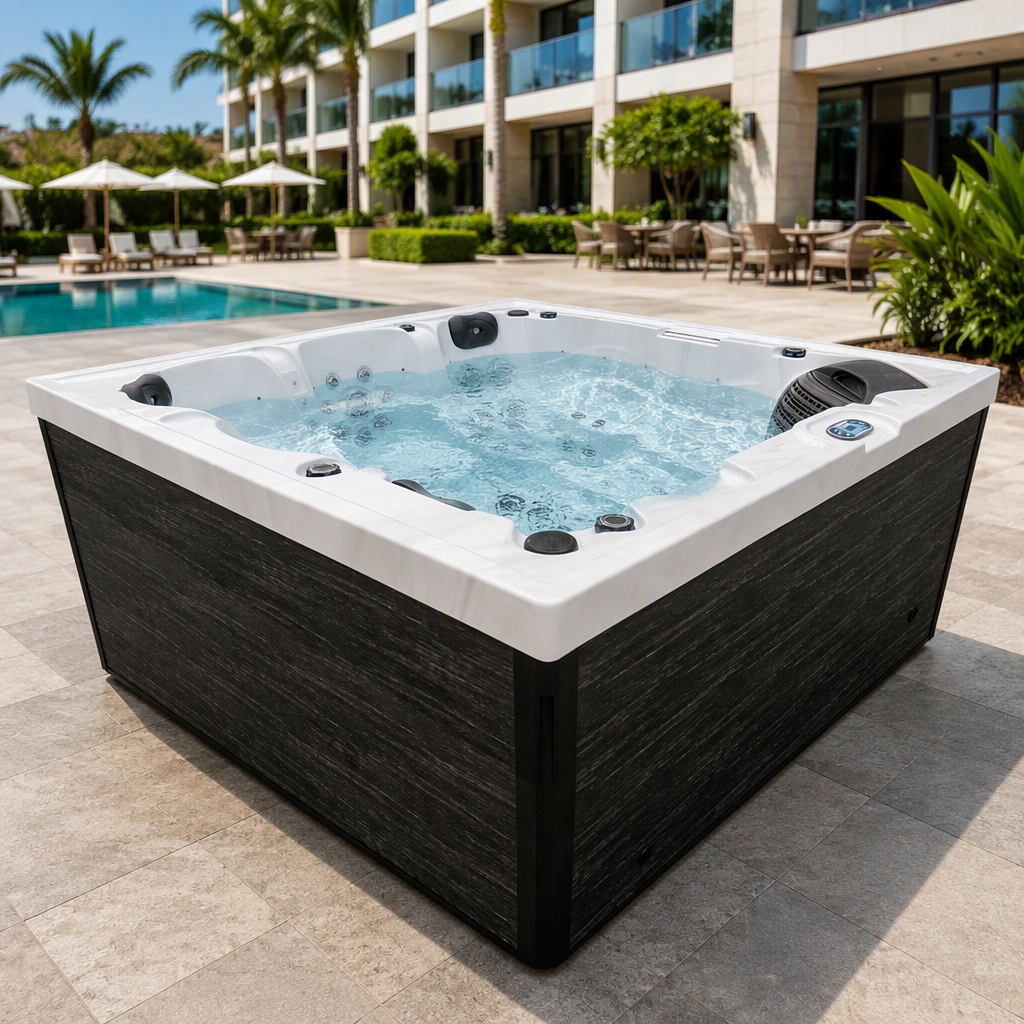
Trends in Functional Demand for the Global Outdoor Hot Tub Market
Competition in the outdoor whirlpool spa hot tub market is shifting from a focus on single functions to overall, comprehensive performance. Consumers today seek not only a comfortable soaking experience but also long-term operational stability, lower energy consumption, and reduced maintenance costs.
First, energy efficiency has become increasingly critical. Outdoor hot tubs must maintain water within a specific temperature range; in colder environments, this can lead to higher power consumption. Consequently, factors such as insulation layers, sealed covers, heating systems, and circulation controls collectively determine a product’s actual energy usage.
Second, health and comfort have emerged as key selling points. Multi-zone hydrotherapy, ergonomically designed seating, and adjustable jets significantly enhance the user experience. Furthermore, features like automatic filtration, disinfection, and smart maintenance reminders help simplify daily upkeep.
Finally, smart technology and personalized design are expanding the range of available options. Some high-end models now offer remote control via smartphone, LED ambient lighting, Bluetooth audio systems, and automated operating programs. However, a greater number of features does not necessarily equate to a better product; manufacturers must still ensure robust core performance, system stability, and reliable after-sales support.
8 Most Popular Features for Outdoor Hot Tubs in the Global Market
1. Efficient Heating and Precise Temperature Control
The heating system is the core component of an outdoor hot tub, directly influencing heat-up time, soaking comfort, and energy consumption. Typically, outdoor hot tubs are designed for a temperature range of approximately 37–40°C; specific settings should follow the manufacturer’s instructions and local safety guidelines, with the temperature never exceeding 40°C.
Heating speed depends on factors such as heater power, water volume, initial water temperature, ambient temperature, and insulation performance. For instance, heating 1,000 liters of water from 15°C to 38°C theoretically requires about 26.7 kWh of energy. Using a 3 kW heater—under ideal conditions with zero heat loss—the theoretical heating time would be approximately 8.9 hours; in practice, it usually takes longer.
Therefore, when purchasing an outdoor whirlpool spa hot tub, one should look beyond just the heater’s power rating and also consider temperature control precision, actual heating duration, insulation structure, and power supply requirements. A stable temperature control system prevents unnecessary heating and enhances the overall user experience.
2. Multi-Zone Hydro-Massage and Adjustable Jets
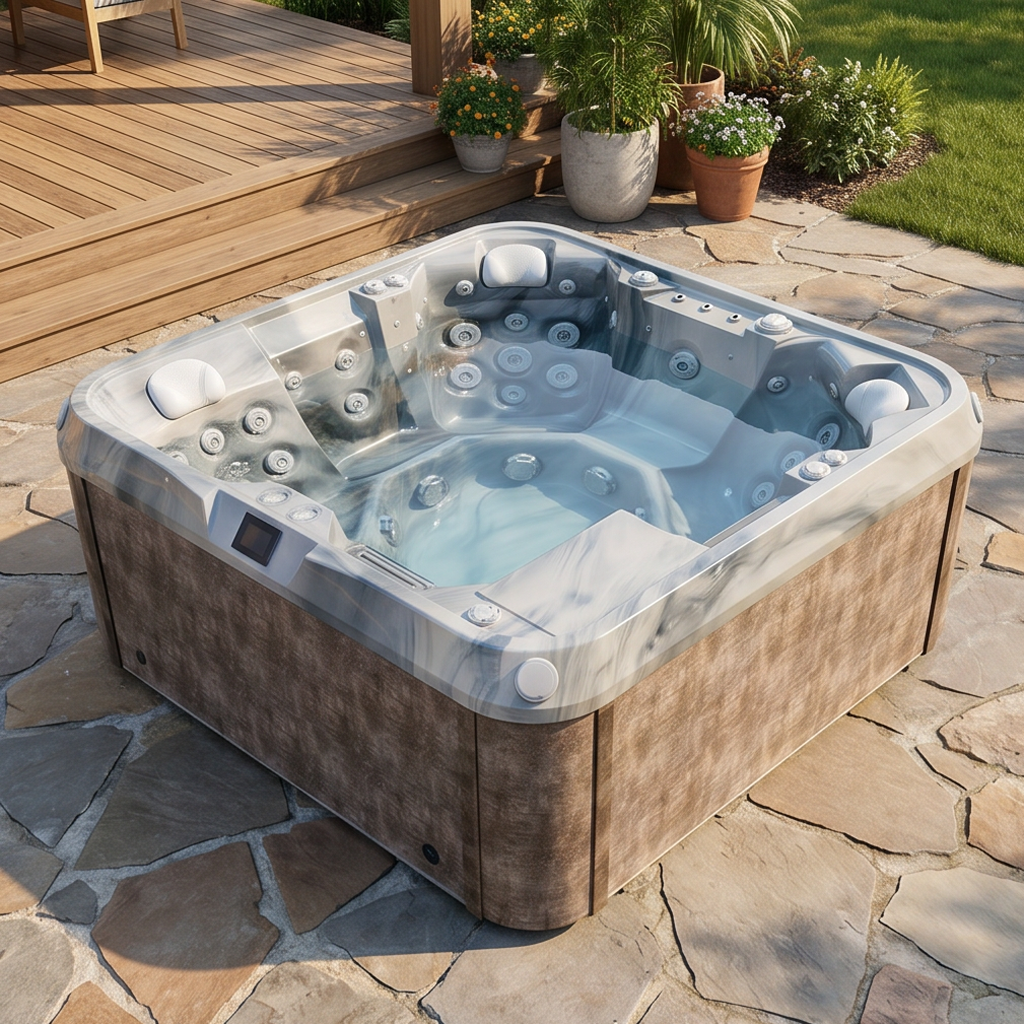
Hydro-massage is a key selling point for mid-to-high-end outdoor hot tubs. Powered by water pumps, the jets deliver targeted massage experiences to areas such as the shoulders, back, lower back, and legs.
Common jet types include directional, rotary, and wide-flow jets, each creating a distinct water-flow effect. However, the quality of the massage is not determined solely by the number of jets; it also depends on pump flow rate, plumbing resistance, jet layout, and water distribution.
If a hot tub features a large number of jets without a well-matched pump and plumbing system, the water flow at some seats may be too weak. Consequently, manufacturers should optimize jet placement through hydraulic testing and offer adjustable massage intensity.
For consumers, when evaluating massage features, the focus should be on the actual experience at each seat, whether the jets meet individual needs, and the noise levels and energy consumption of the pumps—rather than simply pursuing a higher number of jets.
3. High-Performance Insulation and Energy-Efficient Design
Outdoor hot tubs typically require maintaining high water temperatures for extended periods, making insulation performance a direct factor in electricity costs. Common energy-saving features include insulation for the shell and base, insulated plumbing, well-sealed covers, and intelligent temperature control systems.
Among these, the insulated cover is particularly important. When the whirlpool spa hot tub is not in use, the cover minimizes water evaporation and heat loss, while also preventing debris—such as dust and leaves—from entering the water.
For users in colder climates, the focus should be on the overall insulation design rather than just the thickness of the insulation material. Poorly sealed shell joints, inefficient plumbing layouts, or inadequate cover seals can all compromise actual energy efficiency.
Manufacturers should provide clear energy consumption test data, specifying the ambient temperature, set water temperature, and usage conditions under which the tests were conducted. For buyers, comparing the actual energy consumption of different models under identical conditions is far more reliable than relying solely on the energy-saving percentages claimed in promotional materials.
4. Automatic Filtration and Water Quality Management
Water quality management is essential for the safe use of outdoor hot tubs. In a heated water environment, inadequate filtration and disinfection can lead to issues such as cloudy water, unpleasant odors, and microbial contamination.
Typical systems include circulation pumps, filter cartridges, disinfection equipment, and water quality monitoring functions. While filtration systems effectively remove suspended particles, hair, and other debris, they cannot fully replace the need for disinfection. Users must still follow the manufacturer’s instructions to regularly test water quality and apply appropriate disinfectants.
Automatic circulation facilitates the passage of water through the filtration system, reducing the accumulation of impurities, while water quality monitoring and maintenance alerts help users identify issues promptly. It is important to note, however, that sensors require proper calibration, and filter cartridges must be cleaned or replaced on a regular basis.
For high-frequency usage scenarios—such as in hotels or vacation rentals—it is advisable to prioritize whirlpool spa hot tubs designed for easy maintenance, featuring accessible filter cartridges and plumbing that is simple to clean. A well-thought-out maintenance design not only helps ensure water quality but also reduces long-term operational costs.
5. Intelligent Control and Remote Management via Mobile Devices
Intelligent control systems are increasingly becoming a key feature in mid-to-high-end outdoor hot tubs. Some products allow users to adjust water temperature, set filtration schedules, control massage systems, or receive error alerts via a mobile app.
Remote preheating is particularly useful for vacation homes and secondary residences, enabling users to initiate the heating process in advance so that the water is at the desired temperature upon their arrival. However, the actual performance depends on network connectivity, the stability of the control module, and the power status of the unit.
When purchasing, consider the app’s ease of use, the stability of the connection, and whether the unit can still be operated via a local control panel in the event of a network outage. Manufacturers should also provide necessary software maintenance and technical support to ensure that smart features do not create an undue burden in terms of after-sales service.
For commercial users, remote management capabilities allow staff to monitor the operational status of the equipment and schedule maintenance proactively; however, the extent of these management functions depends on the specific software and hardware configuration of the product.
6. LED Lighting and Modern Aesthetic Design
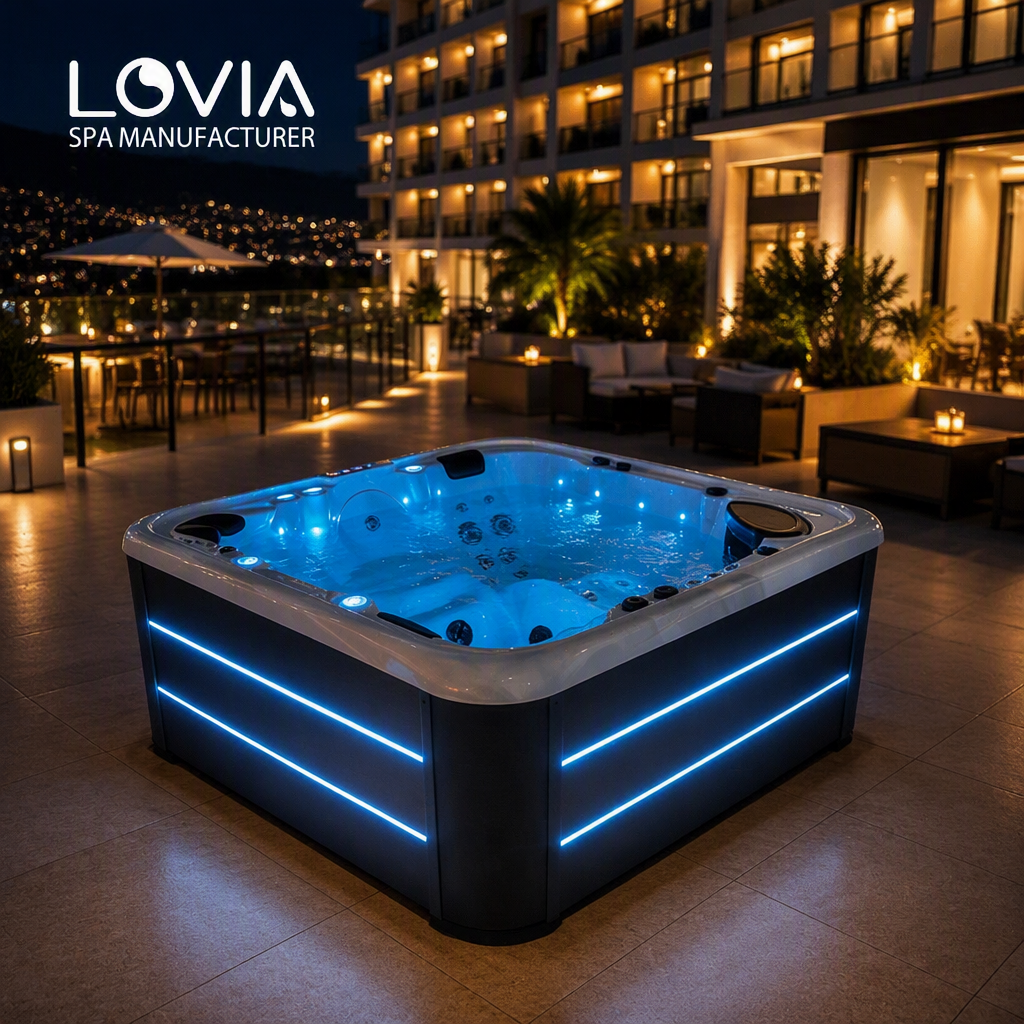
LED lighting enhances the visual appeal of an outdoor hot tub when used at night. Common configurations include underwater lights, perimeter lighting, and backlit control panels, with some models offering multi-color options.
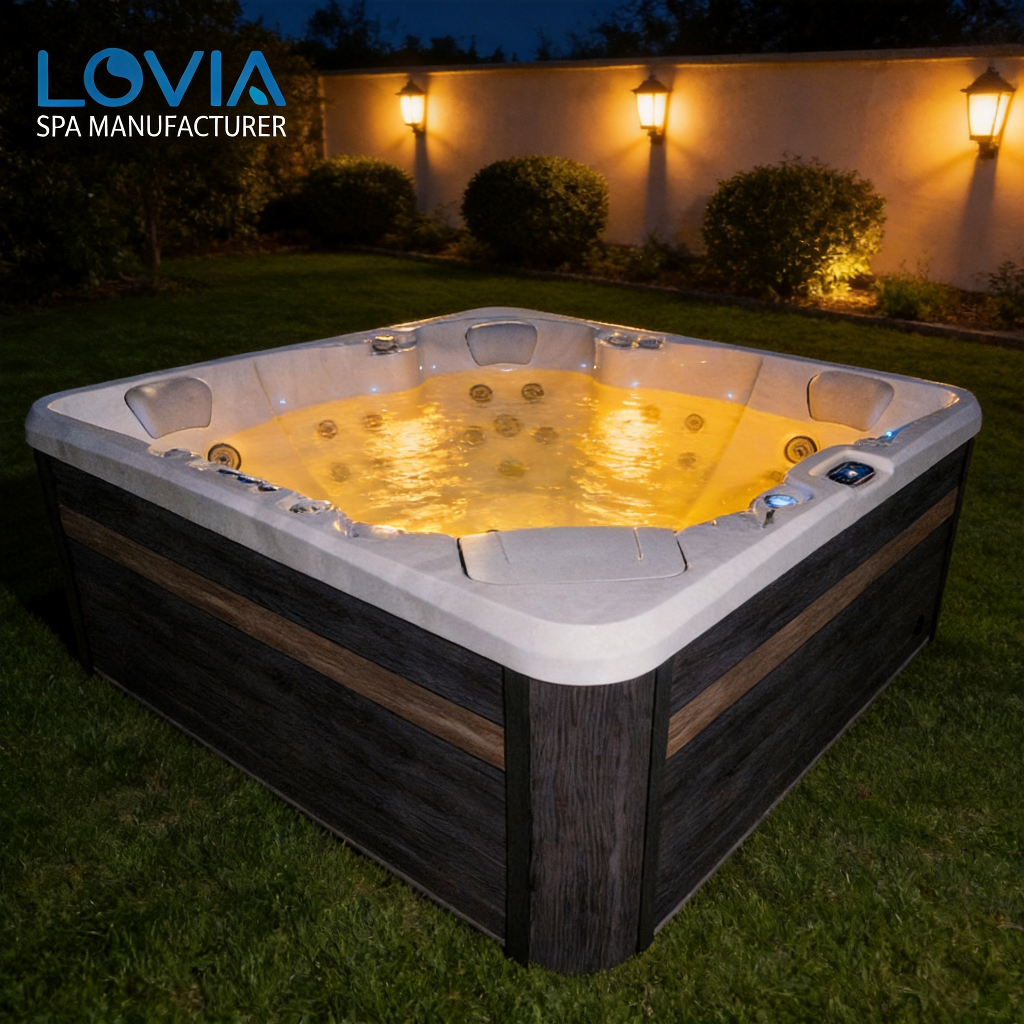
Aesthetic design also influences a product's market appeal. Features such as faux-wood cabinetry, neutral color palettes, and minimalist control panels make it easier to integrate the unit with patios, decks, and outdoor furniture. For hotels and resorts, the design and lighting can further elevate the overall attractiveness of the space.
It is important to note that lighting systems must be designed for humid, outdoor environments; therefore, buyers should evaluate the water resistance of the fixtures, electrical safety, and the ease with which components can be replaced. LED lighting is an experiential enhancement and cannot serve as a substitute for essential safety measures, such as anti-slip surfaces and proper electrical protection.
7. Ergonomic Seating and Flexible Layouts
The design of the seating directly impacts the comfort of an outdoor whirlpool spa hot tub. Factors such as seat height, backrest angle, legroom, and water depth should align with the user’s body dimensions and preferred soaking posture.
Standard 4–5 person hot tubs are well-suited for many households, while models designed for 6–7 people—or even larger—are better for larger families or social gatherings. It is worth noting, however, that the stated seating capacity does not necessarily imply that every seat offers the same level of comfort.
High-quality products typically incorporate a variety of seat depths, backrest supports, and massage jet configurations to accommodate users of different heights. For residential users, it is also important to consider the ease of entering and exiting the hot tub, as well as the inclusion of appropriate anti-slip features.
Manufacturers can optimize seating layouts through ergonomic testing and prototype validation. Buyers should make selections based on the actual number of users, the dimensions of the hot tub, and the available installation space—avoiding the common pitfall of prioritizing larger capacity at the expense of comfort.
8. Freeze Protection and All-Weather Operational Capability
In colder regions of North America and Europe, freeze protection is a critical feature for outdoor hot tubs. Low temperatures can cause water-filled components—such as plumbing, pumps, and other parts—to freeze, potentially leading to cracks, leaks, and equipment failure.
Common freeze-protection measures include low-temperature sensors, automatic water circulation, low-temperature alerts, and the activation of the heating system when necessary. Insulating the equipment compartment and employing a well-planned plumbing layout also enhance operational reliability during the winter.
It should be noted, however, that freeze-protection systems cannot guarantee immunity from freeze damage under all extreme conditions. Extended power outages, heater malfunctions, or ambient temperatures falling outside the product’s specified operating range can still pose risks.
Consequently, consumers in cold climates should select outdoor hot tubs that explicitly state their low-temperature operational capabilities and must perform winter maintenance in accordance with the manufacturer’s instructions. If the unit is to be taken out of service for the season, both the whirlpool spa hot tub and the plumbing lines must be properly drained—simply emptying the water from the tub itself is insufficient.
Functional Requirements for Outdoor Hot Tubs Across Different Markets: What Are the Differences?
Variations in climate, housing structure, and usage habits across different regions influence the features consumers look for in an outdoor hot tub. Manufacturers should tailor product configurations to specific target markets rather than attempting to pack every possible feature into a single model.
| Target Market | Preferred Features | Key Considerations |
| Cold Climate Regions | Insulation, freeze protection, hydrotherapy | Winter reliability and energy costs |
| European Markets | Energy efficiency, compact design, water care | Operating costs and space utilization |
| Asia-Pacific Markets | Smart controls, modern design, massage jets | Convenience and product differentiation |
| Hotels and Resorts | Filtration, durable construction, remote monitoring | Maintenance and high-frequency use |
| Private Homes | Ergonomic seating, thermal cover, lighting | Comfort, aesthetics, and ease of use |
The points above serve as a guide for product planning; specific requirements should be determined based on local market research and user feedback.
For instance, hot tubs designed for cold climates should prioritize insulation, freeze protection, and low-temperature operational capability. Conversely, products intended for hotels and resorts—while still emphasizing a comfortable user experience—should place a greater focus on durability, hygiene management, and ease of maintenance.
How to Select a Market-Competitive Outdoor Hot Tub?
When selecting an outdoor whirlpool spa hot tub, consumers, buyers, and distributors should first clearly define the target user base, expected frequency of use, and the installation environment, before proceeding to compare key technical specifications.
| Evaluation Item | Key Specifications | Purchasing Value |
| Heating System | Heater power, temperature control, heating time | Stable water temperature |
| Insulation | Shell insulation, thermal cover, energy consumption | Lower operating costs |
| Massage System | Jet layout, pump performance, adjustable water flow | Better user experience |
| Water Care | Filtration, disinfection, filter maintenance | Improved water hygiene |
| Smart Control | Remote access, fault alerts, local controls | Convenient operation |
| Safety | Electrical protection, anti-slip design, freeze protection | Reduced operational risks |
| After-Sales Service | Warranty, spare parts, technical support | Lower maintenance costs |
Furthermore, one should consider the total cost of ownership—the sum of procurement, installation, cumulative energy, maintenance, and repair costs. A product with a lower initial price may end up costing more in the long run if it has high energy consumption, a high failure rate, or if spare parts are difficult to source.
For manufacturers of outdoor whirlpool spa hot tubs, the key to enhancing competitiveness lies not in continuously adding more features, but in ensuring that the heating, massage, insulation, filtration, and smart control systems work together reliably. For consumers, the priority should be choosing a product that meets their actual needs, operates stably, and is easy to maintain.
Outdoor Hot Tub Frequently Asked Questions (FAQ)
FAQ 1: What features should be prioritized when choosing an outdoor hot tub?
For outdoor whirlpool spa hot tubs, priority should be given to stable heating systems, efficient heat retention, reliable filtration and disinfection, comfortable seating, and safety features. If your budget allows, you can then consider additional features such as massage functions, smart controls, and LED lighting.
FAQ 2: What is the typical temperature setting for an outdoor hot tub?
The common range is approximately 37–40°C (98.6–104°F). However, you should always follow the manufacturer’s instructions and local safety guidelines; the water temperature should never exceed 40°C. Users should also avoid prolonged immersion, and extra caution is advised for children and individuals with specific health risks.
FAQ 3: How can energy consumption be reduced for an outdoor hot tub?
Choose a model with excellent insulation, use a well-sealed thermal cover, and set the water temperature and heating schedule appropriately. Before purchasing, look for actual energy consumption data rather than relying solely on the figures provided in promotional materials.
FAQ 4: Does a higher number of jets mean a better massage experience?
Not necessarily. The quality of the massage depends on the type of jets, pump performance, plumbing design, water flow distribution, and seat layout. Focus instead on the actual water flow performance and the ability to adjust the massage intensity.
FAQ 5: Can an outdoor whirlpool spa hot tub be used in the winter?
Products designed with proper insulation and freeze protection can operate within the environmental conditions specified by the manufacturer. However, extreme cold or prolonged power outages can still lead to freeze damage. Before using the unit in winter, verify its operating temperature range and follow the relevant maintenance requirements.