


Should You Turn Off Your Outdoor Spa Hot Tub When Draining It?
2026-11-19 15:30Outdoor whirlpool hot tubs are increasingly common in residential gardens, hotels, guesthouses, and vacation villas. Whether it is a standard outdoor hot tub or a model equipped with massage jets, thermostatic heating, and circulation/filtration systems, regular draining, cleaning, and water replacement are essential to ensure an optimal user experience and extend the lifespan of the equipment.
However, a common question arises during routine maintenance: Should the power to the outdoor spa hot tub be turned off before draining?
Some users believe that simply opening the drain valve and letting the water flow out is sufficient. Others worry that cutting the power might interfere with automatic draining or anti-freeze functions, so they prefer to keep the unit powered on. Yet, such practices can expose the heater, water pump, and electrical control system to unnecessary risks.
So, should you disconnect the power before draining your outdoor whirlpool spa hot tub? What is the correct draining procedure? And what precautions should be taken if the unit is left unused for an extended period during the winter? This article explores these questions by examining the equipment's operating principles, safe handling procedures, and routine maintenance.
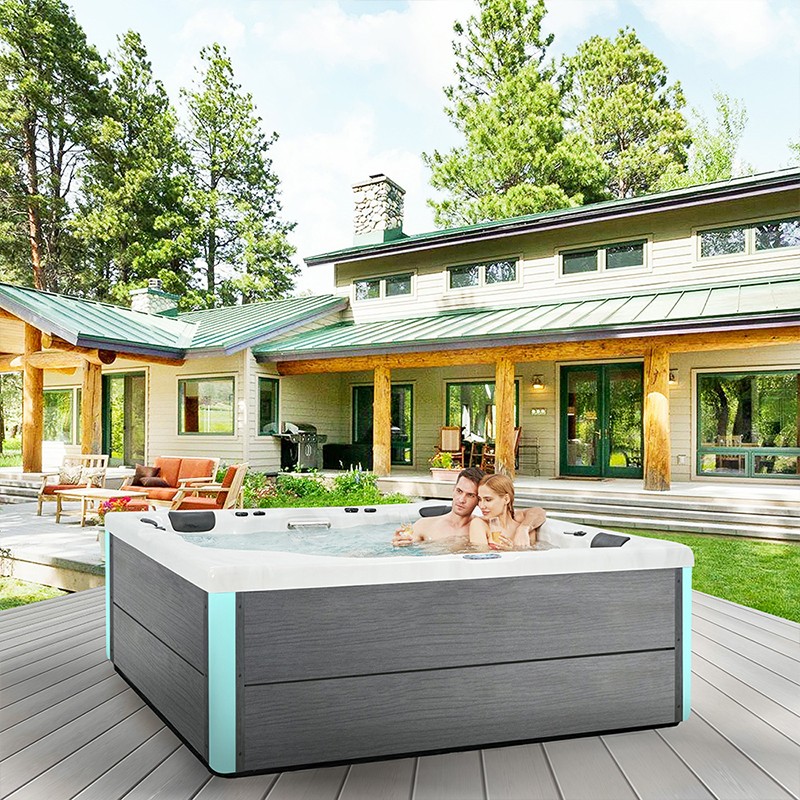
Should You Turn Off the Power to Your Outdoor Hot Tub Before Draining It?
The answer is: Yes, you should generally turn off the power—and this should be done before opening the drain valve.
Most outdoor spa hot tubs utilize electric heating and water circulation systems, consisting primarily of a heater, a circulation pump, a filter, a control panel, and associated plumbing. These components are designed to operate only when the tub is filled to the proper water level and water is circulating. If the power remains on while the tub is being drained, the following three issues may occur:
1. Preventing "Dry Firing" of the Heater
Outdoor spa hot tubs typically use electric heaters to bring the water to a set temperature—commonly between 37°C and 40°C. Depending on the unit's capacity and configuration, the heating power can range from 2kW to 6kW.
Under normal conditions, the water absorbs the heat generated by the heating element. As the water level drops during draining, the heater may lose the necessary water flow required for cooling. If the heating system continues to operate under these conditions, it can lead to localized overheating, potentially damaging the heating element, temperature sensors, or other related components. Although some high-end outdoor spa hot tubs are equipped with low-water-level protection and overheat protection, these features are not a substitute for proper power disconnection.
2. Avoid dry-running the water pumps
Circulation pumps are responsible for pushing water through filters and heaters, while also providing the flow required for massage jets.
Once a spa hot tub is drained, the pumps may draw in air, preventing them from maintaining proper circulation. Continued dry-running can lead to pump overheating, wear on mechanical seals, and other mechanical failures.
Therefore, all circulation pumps, massage pumps, and filtration systems must be turned off before draining. Never attempt to accelerate the draining process by running the whirlpool spa hot tub’s internal pumps.
3. Prevent accidental activation of the automatic control system
Modern outdoor spa hot tubs often feature automatic temperature maintenance, scheduled filtration, remote control, and freeze protection.
Even if a user turns off the massage function via the control panel, the unit may still execute automatic filtration or heating cycles. In cold weather, the freeze-protection system might also automatically activate the pumps and heater.
Consequently, simply turning off the control panel does not necessarily mean the unit is completely powered down. For hardwired outdoor whirlpool spa hot tubs, the power supply should be disconnected via a dedicated circuit breaker or isolation switch, in accordance with the manufacturer’s instructions.
Professional advice: Disconnect the power before draining, keep it disconnected throughout the draining process, and only restore power after the tub has been refilled and the circulation system has been verified to be functioning correctly.

What preparations are needed before draining an outdoor hot tub?
Proper draining not only protects the equipment but also reduces the effort required for subsequent cleaning and maintenance. Before proceeding, consider the following preparations:
1. Lower the water temperature. Outdoor whirlpool spa hot tubs often operate at high temperatures. Before draining, turn off the heating function and allow the water to cool naturally. This prevents scalding and minimizes the impact of hot water on drainage hoses and the surrounding environment.
2. Check water quality. If the whirlpool spa hot tub has recently undergone "shock" disinfection (using high concentrations of chemicals), test the levels of residual chlorine or other disinfectants. Ensure the water is handled in compliance with local wastewater disposal regulations. Water containing high concentrations of disinfectants should not be discharged directly into flower beds, lawns, or natural bodies of water.
3. Prepare drainage tools. It is recommended to have a drainage hose, adapters, a cleaner specifically designed for whirlpool spa hot tubs, a filter cleaning tool, and—if necessary—a wet/dry vacuum cleaner on hand.
4. Determine the drainage location. Outdoor spa hot tubs are typically installed on patios, decks, or rooftops. Before draining, plan the path for the water to ensure it does not pool in a way that could damage the surface, the waterproofing layer, or surrounding vegetation. Ensure the drainage hose is securely connected to prevent it from detaching or leaking.
Eight Steps for Properly Draining an Outdoor Spa Hot Tub
Following the correct drainage procedure can effectively reduce the risk of equipment failure. For most outdoor spa hot tubs equipped with a dedicated drain valve, you can follow the steps below.
Step 1: Stop the unit. Turn off the massage jets, heating system, filtration cycle, and any other active functions. Ensure no one is in the spa hot tub, and wait for the water temperature to drop.
Step 2: Disconnect the power. Turn off the dedicated circuit breaker or power disconnect switch as specified in the product manual to ensure the heater and pumps do not accidentally activate during the drainage process. Any work involving fixed wiring or electrical distribution systems should be performed by a qualified electrician.
Step 3: Connect the drainage hose. Locate the drain valve—usually found at the bottom of the spa hot tub or near the equipment compartment—and attach a suitable hose, ensuring the connection is secure.
Step 4: Open the drain valve. Allow the water to drain out via gravity. For larger spa hot tubs, you may use an external submersible pump to assist with drainage (if permitted by the manufacturer’s instructions), but do not use the hot tub’s own circulation pump for this purpose.
Step 5: Clean the interior surfaces. Once drained, use a specialized hot tub cleaner to wipe down the interior walls, seats, the waterline area, and around the massage jets to prevent the long-term buildup of oils, grime, and scale.
Step 6: Clean the filtration system. Remove the filter cartridge, rinse it, and inspect it according to the manufacturer’s guidelines. If the filter is damaged, deformed, or severely clogged, replace it promptly.
Step 7: Check for residual water. Standard drainage methods often fail to completely remove water trapped within internal plumbing, pumps, and the heater. For routine water changes, follow the product’s specific guidelines. If you intend to keep the unit out of service for an extended period during the winter, you must perform a comprehensive winterization (draining) procedure to prevent freezing.
Step 8: Close the drain valve and refill the unit. Inspect the drain valve and all seals to ensure there are no leaks, then fill the whirlpool spa hot tub to the required water level. Verify that the filter is correctly installed and that the pump has successfully primed (is moving water properly) before restoring power.
Important Note: Never power on an outdoor whirlpool spa hot tub when it is empty or lacks sufficient water. After refilling, confirm that the water level, circulation system, and filtration system are all functioning correctly before activating the heating feature as per the instruction manual.

What should you keep in mind when draining an outdoor hot tub for winter?
Routine water changes (for water quality maintenance) are different from winterization (draining to prevent freezing). The latter is specifically intended to protect the equipment from internal freezing caused by low temperatures.
1. If you continue to use the spa hot tub during winter, do not drain it
If your outdoor spa hot tub features robust insulation, an automatic thermostat, and freeze-protection functions—and you have a stable power supply—you can generally continue to use it throughout the winter.
Maintain the proper water level, regularly check the heater and circulation pump, and ensure the thermal cover is tightly sealed. Especially when temperatures drop below 0°C (32°F), monitor the equipment’s operation closely to prevent pipes from freezing due to power outages or pump malfunctions.
Please note that automatic freeze-protection systems are not infallible; in the event of a prolonged power outage or a failure in the circulation system, the water inside the unit could still freeze.
2. If the hot tub will be out of service for an extended period during winter, you must completely drain the plumbing
Simply emptying the main tub basin is not sufficient for long-term winter storage.
Residual water may remain in the massage jets, circulation piping, heater, pump housing, and filter compartment. If this water freezes, it will expand, potentially causing pipes to crack, fittings to break, and the equipment to leak.
Follow these steps for winterization:
•Disconnect the power supply to the outdoor whirlpool spa hot tub.
•Open the main drain valve to empty the tub basin.
•Open any auxiliary drain ports as specified in the instruction manual. •Remove any residual water from the pump, heater, and plumbing lines.
•Check areas prone to water accumulation, such as massage jets and diverter valves.
•Inspect the equipment compartment to ensure there is no standing water.
•Complete winterization (freeze protection) procedures as specified by the manufacturer.
Some models allow the use of a specialized, non-toxic propylene glycol-based antifreeze; however, you must verify that the product is explicitly approved for use in whirlpool spa hot tub plumbing. Never use automotive-grade ethylene glycol antifreeze, as it is toxic and will contaminate the system.
If you are unfamiliar with the internal plumbing layout, it is recommended to contact a professional service technician to perform the winter drainage to avoid hidden damage caused by improper handling.
How often should an outdoor hot tub be drained and refilled?
The drainage frequency depends on the tub's capacity, the number of users, frequency of use, the sanitization method, and filtration efficiency.
For residential outdoor spa hot tubs using standard chlorine or bromine sanitization systems, a water change every 3–4 months is generally recommended. However, if the tub is used frequently, or if the water becomes cloudy, develops an odor, or exhibits persistent foaming, it should be drained and refilled sooner.
Below are the recommended intervals for routine maintenance tasks for outdoor hot tubs:
| Maintenance Item | Recommended Frequency | Purpose |
| Water Testing | 2–3 Times Per Week | Maintain Water Quality |
| Filter Rinsing | Every 1–2 Weeks | Remove Debris |
| Filter Deep Cleaning | Monthly | Improve Filtration |
| Water Replacement | Every 3–4 Months | Reduce Contaminants |
| Shell Cleaning | During Each Water Change | Remove Dirt and Residue |
| Equipment Inspection | Monthly | Prevent Equipment Failure |
| Winterization Inspection | Before Winter | Prevent Freeze Damage |
Ongoing water quality management is also essential for outdoor hot tubs. Focus on monitoring the following parameters:
| Water Parameter | Typical Range | Function |
| pH | 7.2–7.8 | Maintain Water Balance |
| Free Chlorine | 3–5 mg/L | Disinfection |
| Bromine | 4–6 mg/L | Disinfection |
| Total Alkalinity | 80–120 mg/L | Stabilize pH |
| Calcium Hardness | 150–250 mg/L | Reduce Scaling and Corrosion |
The figures above serve as general guidelines; always refer to the labels on your sanitizing agents, the equipment owner’s manual, and local health regulations. Chlorine and bromine are distinct sanitization systems and should never be mixed.
Five Common Mistakes When Draining an Outdoor Hot Tub
In many cases, equipment malfunctions are not due to product defects, but rather to improper user operation.
Mistake 1: Failing to turn off the power before draining. This is the most common and dangerous error; it can cause the heater to "dry fire" (run without water) and the pump to run dry. Always disconnect the power supply before draining.
Mistake 2: Only turning off the control panel. Some outdoor spa hot tubs may still execute automated cycles—such as filtration, temperature maintenance, or freeze protection—even when the control panel is off. Ensure the unit is completely powered down according to the manufacturer’s instructions.
Mistake 3: Restoring power immediately after draining the tub. Before restoring power, the unit must be refilled with water, and you must verify that the pump has successfully primed and the filtration system is operating correctly.
Mistake 4: Overlooking residual water in internal plumbing. Standard draining does not guarantee that the pipes are completely dry. If the unit is to remain unused for an extended period during winter, a professional anti-freeze draining procedure must be performed.
Mistake 5: Using unsuitable cleaning agents. Common household cleaners can damage acrylic surfaces, seals, or other components. It is recommended to use cleaning products specifically designed for outdoor whirlpool spa hot tubs.
Frequently Asked Questions (FAQ) About Draining Outdoor Hot Tubs
FAQ 1: Must the power be turned off when draining an outdoor hot tub?
Generally, yes. Before draining, the power should be disconnected according to the manufacturer’s instructions to prevent the heater from running dry, the pump from operating without water, or the automatic control system from activating unexpectedly.
FAQ 2: Is it sufficient to simply turn off the outdoor hot tub via the control panel?
Not necessarily. Even when the control panel is turned off, automatic filtration and anti-freeze functions may still operate. It is recommended to cut off the power supply using a dedicated circuit breaker or disconnect switch.
FAQ 3: How long should I wait before restoring power after draining an outdoor hot tub?
There is no set waiting period. You must first close the drain valve, refill the unit to the specified water level, ensure the filter is correctly installed, confirm that the pump has primed properly, and verify there are no leaks before restoring power.
FAQ 4: Can an outdoor spa hot tub be powered on when it is empty?
No. Operating the unit without water can cause the heater to overheat and damage the pump. Even if the equipment is equipped with protective features, you should not take the risk.
FAQ 5: If I am not using my outdoor hot tub during the winter, is it enough to just drain the main body of water?
No. You must also remove any residual water from the pump, heater, massage jets, and internal plumbing to prevent damage caused by freezing temperatures.