


How can scale buildup be prevented in an outdoor hot tub?
2026-11-19 15:35An outdoor whirlpool hot tub not only enhances the leisure experience in your backyard, on your patio, or at a vacation property, but it is also a piece of spa equipment that requires regular maintenance. However, many users encounter a recurring issue after cleaning their hot tubs: despite having scrubbed the interior surfaces, white scale—consisting of mineral deposits—eventually reappears. This can lead to clogged jets and reduced heating efficiency.
In reality, cleaning only removes existing grime and some scale; it does not fundamentally alter the mineral content of the water. If water quality is not properly managed after cleaning, minerals like calcium and magnesium can—due to rising water temperatures, evaporation, and continuous water circulation—redeposit themselves on the tub’s interior walls, heating elements, and plumbing.
This problem is particularly common in areas where the tap water or groundwater has high hardness. So, how can you prevent scale from forming in your outdoor whirlpool hot tub after cleaning? The key lies in controlling water hardness, maintaining a proper pH balance, using anti-scaling agents effectively, and establishing a long-term maintenance routine.
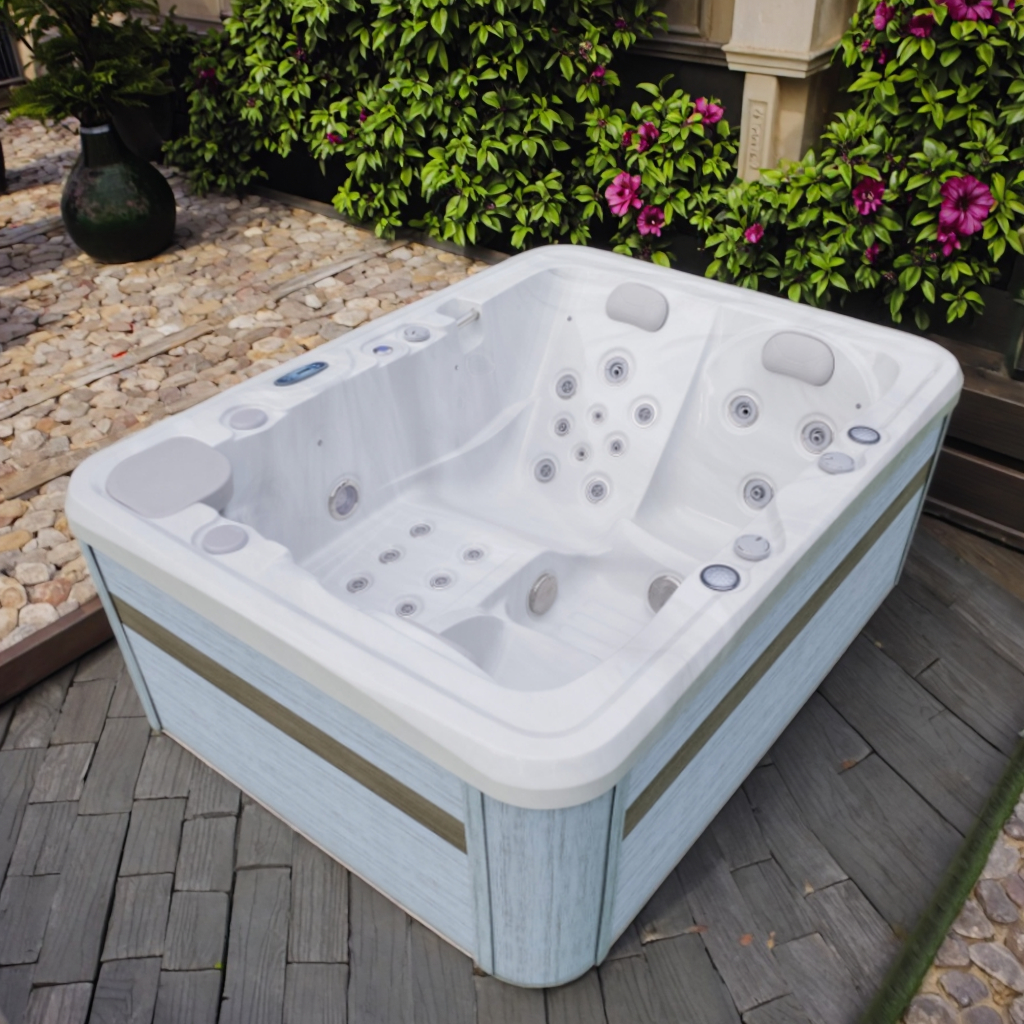
Why does scale still form in an outdoor hot tub after cleaning?
To address the issue of scale, one must first understand how it forms. Scale is primarily composed of minerals such as calcium and magnesium, with calcium carbonate precipitation being the most common culprit in whirlpool hot tubs.
1. High Water Hardness
Water hardness varies significantly by region. In some areas, the water supply contains high concentrations of calcium and magnesium ions. While these minerals remain dissolved in the water under normal conditions, changes in factors like water temperature or pH levels can cause them to precipitate.
Outdoor whirlpool hot tubs are typically kept at temperatures between 37°C and 40°C (approx. 98°F–104°F). As the temperature rises, the solubility balance of calcium carbonate shifts, making it more likely for minerals to precipitate out of the water. These deposits can then adhere to heaters, jets, circulation pipes, and the interior surfaces of the tub, gradually accumulating as white scale.
2. Excessively High pH Levels
pH levels are a significant factor in scale formation within outdoor whirlpool spa tubs. When the pH of the water remains consistently high, the proportion of carbonates increases, making it easier for calcium ions to precipitate as calcium carbonate.
If the water already has a high calcium hardness level—combined with a pH that consistently exceeds 8.0—the risk of scale formation increases significantly. Therefore, after cleaning, it is not enough to simply check that the whirlpool hot tub looks clean; you must also test the water’s pH level.
3. Increased Mineral Concentration Due to Evaporation
Outdoor whirlpool hot tubs are frequently exposed to sunlight, air, and high temperatures, which cause water to evaporate. However, minerals such as calcium and magnesium do not evaporate along with the water.
As the water volume decreases, the concentration of these minerals rises. If a user continuously tops off the tub with "hard" tap water (water with high mineral content) without regularly testing the water quality, minerals will accumulate over time, increasing the risk of scale buildup.
4. Standard Filters Cannot Remove Dissolved Minerals
Filters are designed to remove debris such as hair, dust, skin cells, and suspended particles; however, standard filter cartridges cannot effectively remove calcium and magnesium ions that have already dissolved in the water.
This explains why an outdoor whirlpool hot tub might appear crystal clear, yet still develop scale inside its heater and plumbing. Effective maintenance requires both mechanical filtration and proper water chemistry balance.
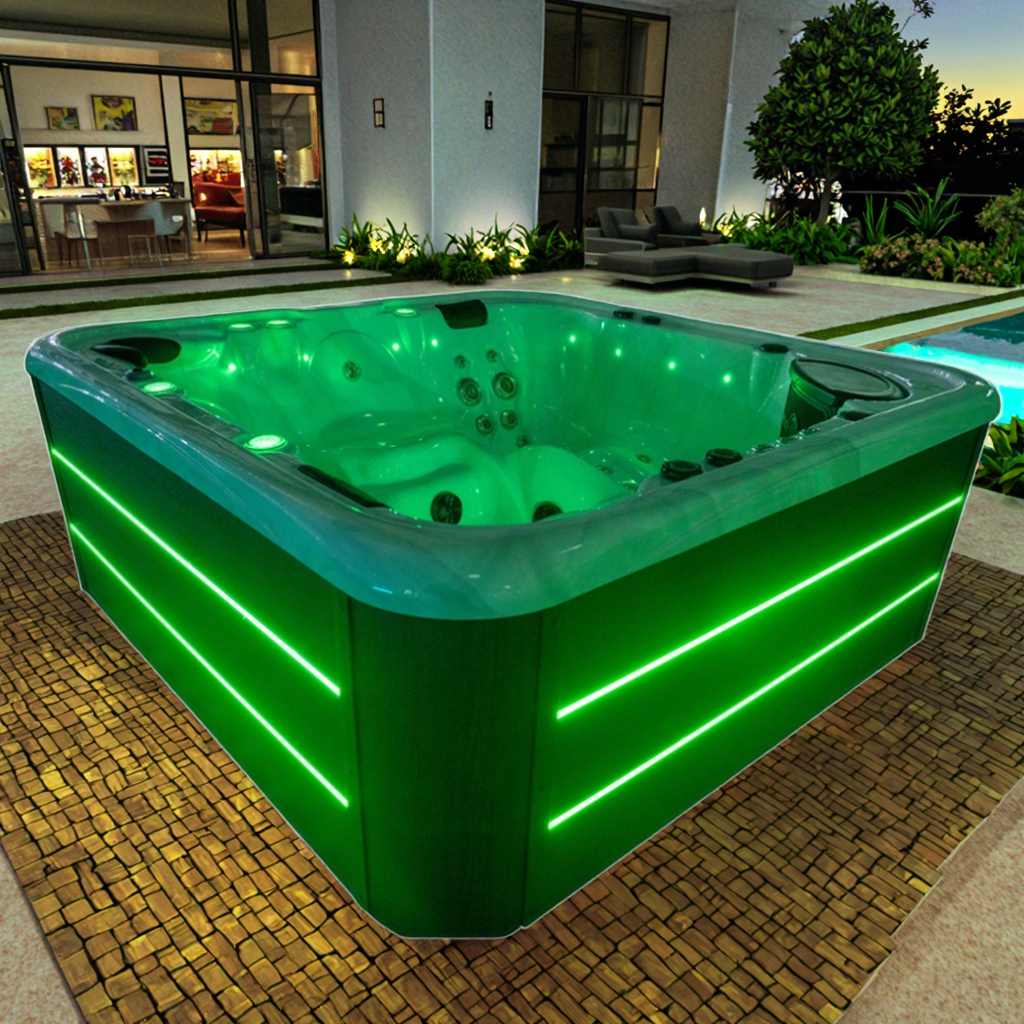
Four Key Steps to Prevent Scale Buildup in Outdoor Hot Tubs After Cleaning
Once cleaning is complete, it is best not to refill the tub and activate the heating system immediately. Instead, take the following precautions:
1. Thoroughly Remove Existing Scale and Cleaning Residue
Before refilling, inspect the interior walls, floor, jets, drains, and filter housing to ensure no visible scale or grime remains.
If you discover white mineral deposits, use a descaling agent specifically formulated for the material of your whirlpool spa hot tub. For acrylic hot tubs, avoid using steel wool, highly abrasive cleaners, or unverified strong acid-based products, as these can damage the surface of the tub shell.
After cleaning, rinse the surfaces thoroughly to ensure that no residual cleaning agents remain, as these could disrupt the chemical balance of the fresh water.
2. Inspect the Filter and Circulation System
The filter is a crucial component for maintaining water quality in an outdoor whirlpool spa tub. After cleaning, remove the filter cartridge and inspect it for grease, sludge, or mineral deposits; rinse or deep-clean it based on the level of contamination.
If the filter cartridge is damaged, deformed, or severely clogged, replace it promptly. Additionally, check the water pump, jets, and circulation piping to ensure proper water flow.
Pay special attention to the heater, as the high surface temperature of the heating element makes it a common site for mineral deposits.
3. Test Water Hardness Before Refilling
This is a vital step in preventing the recurrence of scale buildup in your outdoor whirlpool hot tub.
Use professional water testing tools to check the calcium hardness, pH level, and total alkalinity of the water source. If your local tap water has high hardness, consider installing an appropriate reverse osmosis (RO) pre-treatment system or an ion-exchange water softener.
Note that water softeners and reverse osmosis systems operate differently; choose the equipment based on the whirlpool hot tub manufacturer’s specific water quality requirements—softer water is not necessarily always better.
4. Re-establish Water Balance After Refilling
Once the whirlpool spa tub is refilled, test the water quality and adjust the total alkalinity, pH level, and calcium hardness based on the results.
If the water source is highly hard, you may also add a professional anti-scaling agent—specifically formulated for spa equipment—to help reduce the risk of mineral deposits.
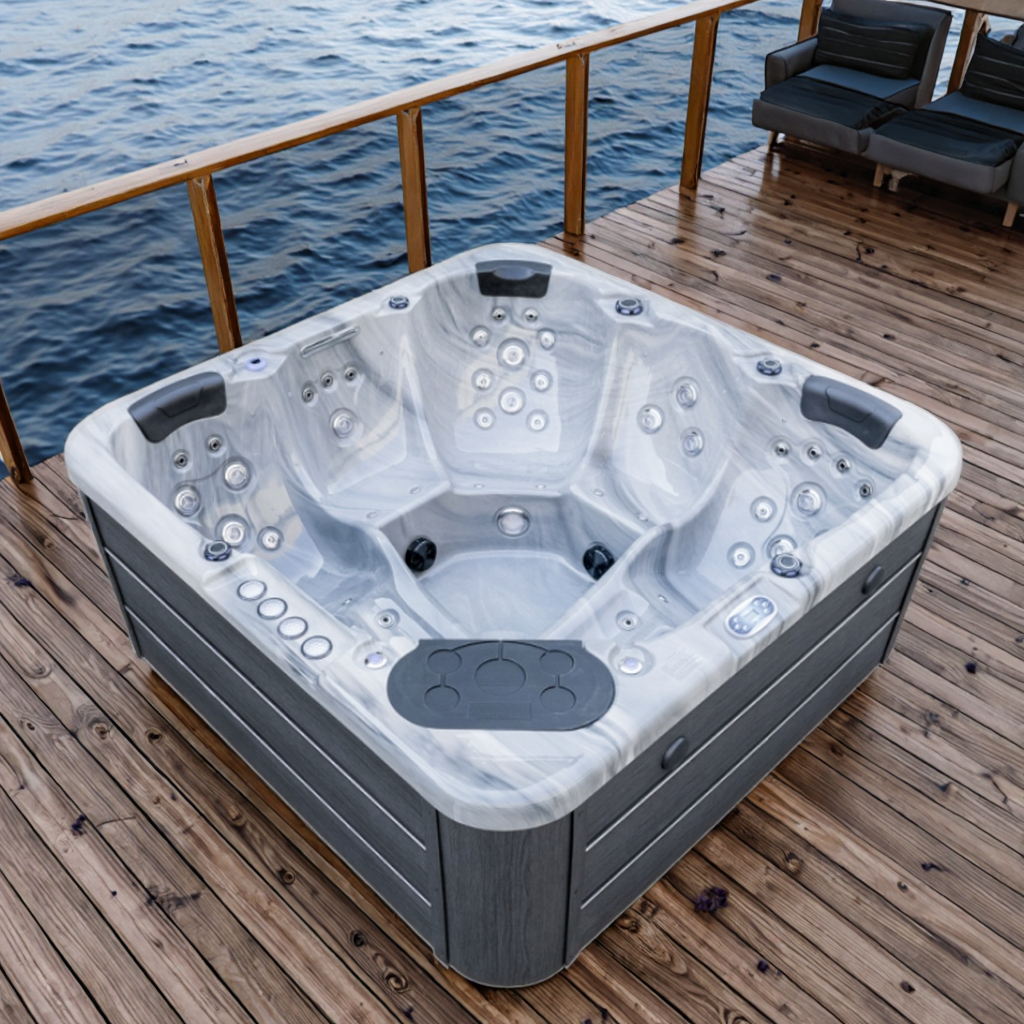
Manage Water Quality Parameters to Minimize Limescale at the Source
For outdoor whirlpool spa hot tubs, effective water quality management is more important than frequent cleaning. Focus on the following four key indicators.
| Water Quality Parameter | Recommended Range | Primary Function |
| pH Level | 7.2–7.8 | Maintains proper water balance |
| Total Alkalinity | 80–120 ppm | Stabilizes pH levels |
| Calcium Hardness | Approximately 150–200 ppm (reference target for some hot tubs) | Helps control mineral deposits |
| Water Temperature | Typically 37°C–40°C | Provides comfortable soaking conditions |
Note: The parameters provided above are for reference only. Requirements may vary depending on the specific equipment and water treatment system; always prioritize the manufacturer’s instructions and applicable water quality standards.
1. Maintain an Appropriate pH Level
It is recommended to keep the pH level of your outdoor whirlpool hot tub between 7.2 and 7.8. A pH that is too high increases the risk of calcium carbonate precipitation, while a pH that is too low can lead to the corrosion of metal components and the degradation of sealing materials. If testing reveals an excessively high pH level, use a pH-lowering agent designed for spas. Adjust the level in stages according to the product instructions, and re-test the water after it has fully circulated.
2. Maintain Stable Total Alkalinity
Total alkalinity determines the water's buffering capacity—its ability to resist changes in pH. If total alkalinity is too low, the pH level may fluctuate easily; if it is too high, adjusting the pH becomes difficult, complicating water quality management.
Therefore, it is advisable to test total alkalinity regularly and make adjustments based on the actual water conditions, rather than relying solely on the addition of acidic products to control scale formation.
3. Properly Manage Calcium Hardness
Calcium hardness is one of the most critical indicators for scale prevention in outdoor whirlpool spa tubs.
Excessively high calcium hardness often leads to cloudy water and mineral deposits, while excessively low calcium hardness can make the water highly corrosive, potentially damaging equipment components.
The U.S. CDC’s *Model Aquatic Health Code* suggests a reference range of 100–200 ppm for calcium hardness in spas and hot tubs with water temperatures exceeding 32°C (90°F). The specific target should be determined based on the materials of your equipment and the overall water quality balance.
If testing shows that calcium hardness is too high, consider options such as pre-treating the water source, performing partial water changes, or using professional water treatment adjustments.
4. Ensure the Disinfection System Functions Correctly
While chlorine and bromine are not the primary direct causes of scale formation, they are essential components of water quality management for outdoor whirlpool spa tubs.
According to CDC recommendations, when using chlorine for disinfection, free chlorine levels should be at least 3 ppm; for bromine, a range of 4–8 ppm is recommended. Always refer to specific product labels and equipment requirements.
It is important to note that disinfectants cannot replace anti-scaling agents; maintaining sanitary water conditions and controlling mineral content are two distinct aspects of water management.
How Do Professional Anti-Scaling Agents Help Reduce Scale in Outdoor Hot Tubs?
In regions where the water source has high hardness, simply adjusting the pH level or cleaning the filters may not be sufficient to completely resolve scale-related issues in an outdoor whirlpool hot tub. In such cases, you might consider using a professional scale inhibitor or a "stain & scale control" agent.
These products typically function through mechanisms such as complexation, chelation, or the inhibition of crystal growth. They reduce the tendency of minerals like calcium and magnesium to form deposits, thereby minimizing the likelihood of scale accumulating on heaters, jets, and the interior surfaces of the whirlpool spa hot tub.
When selecting a scale inhibitor for an outdoor hot tub, focus on three key criteria:
First, ensure the product is explicitly labeled for use in spas or whirlpool hot tubs and is compatible with acrylic shells, plumbing, and sealing materials.
Second, verify that it is compatible with your existing sanitization system—whether you use chlorine, bromine, or a salt-water (salt-chlorine generator) system.
Third, check that the product provides clear instructions regarding dosage, application methods, and maintenance intervals.
When adding a scale inhibitor, calculate the required amount based on the actual water capacity of your whirlpool spa tub. For instance, a 1,500-liter hot tub and a 2,000-liter hot tub will likely require different dosages; you cannot simply use the same amount for both.
It is also important to understand that scale inhibitors are not a substitute for water-softening equipment, nor can they guarantee the complete elimination of scale. If your water source has a very high mineral content (high hardness), you will still need to employ pre-treatment methods and perform regular water changes.
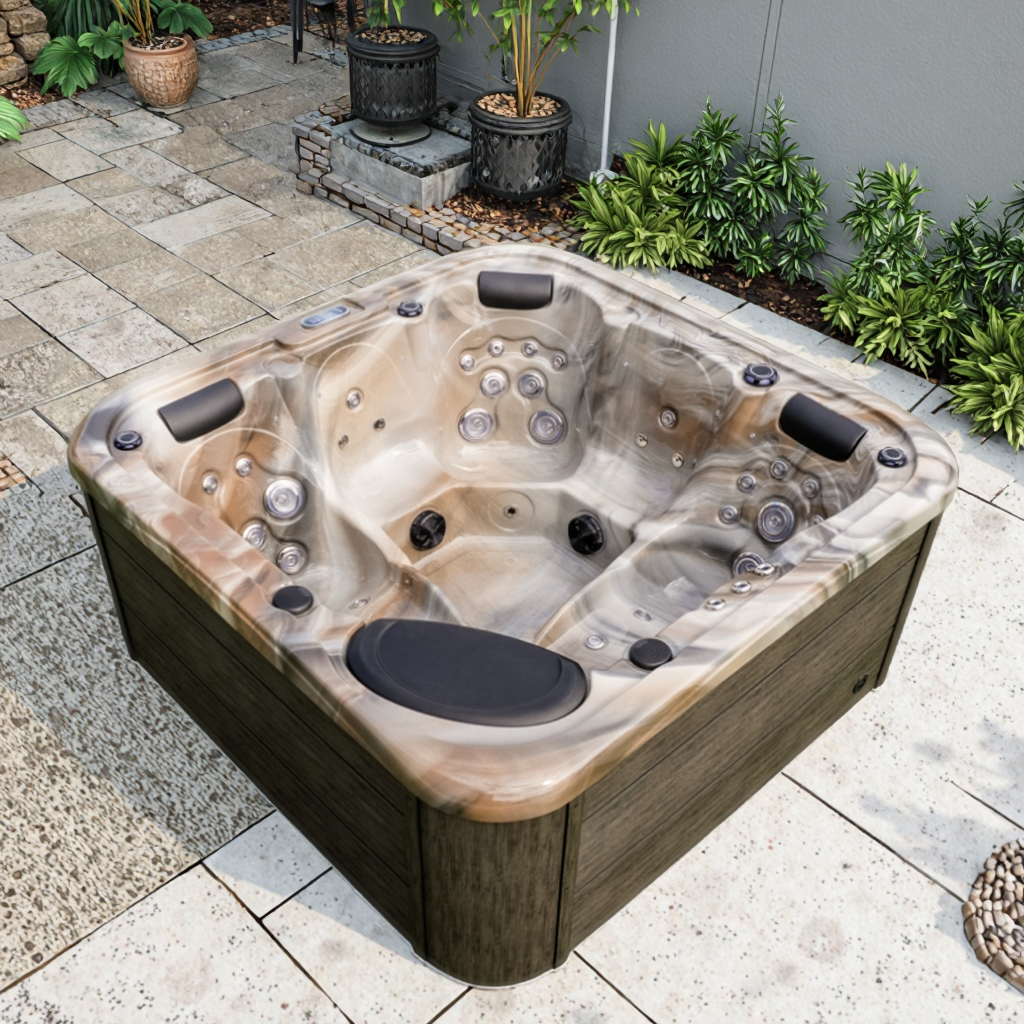
Routine Maintenance for Outdoor Hot Tubs: Establishing a Long-Term Anti-Scale Strategy
Preventing scale buildup in an outdoor whirlpool spa tub requires more than just occasional intensive cleaning; it necessitates a consistent, ongoing maintenance routine.
(1) Weekly: Clean the filters and test the water quality. Inspect the filter cartridges for grease, debris, or sediment, and clean them as needed. Additionally, check the pH level and sanitizer concentration, making adjustments promptly if any readings fall outside the recommended range.
(2) Monthly: Check water hardness and equipment status. Focus on testing calcium hardness, total alkalinity, and total dissolved solids (TDS). Inspect the jets to ensure proper water flow, check the heater for white mineral deposits, and examine the circulation system for any potential blockages.
(3) Periodically: Drain and perform a deep clean. For residential outdoor whirlpool hot tubs, evaluate the need for a full water change every 3–4 months, depending on usage frequency and water quality. Over time, minerals, organic pollutants, and disinfection byproducts can accumulate in the water; simple filtration is often insufficient to fully restore water quality.
Additionally, it is recommended to keep the thermal cover on your outdoor hot tub when it is not in use. This helps prevent dust, leaves, and other debris from entering the water while also reducing evaporation.
In cases of extreme heat, heavy rainfall, or frequent use by multiple people, you should increase the frequency of water quality testing to prevent significant fluctuations in water chemistry.
Three Common Issues with Scale Prevention in Outdoor Hot Tubs
Issue 1: White scale reappears shortly after cleaning.
This is typically caused by high water hardness, an elevated pH level, or an increase in mineral concentration due to evaporation. To address this, re-test your water source, adjust the calcium hardness and pH levels accordingly, and use a professional-grade anti-scaling agent if necessary.
Issue 2: Scale buildup on the heater, reducing heating efficiency.
Because the surface of the heater reaches high temperatures, it is a prime location for mineral deposits. Such buildup can hinder heat transfer and place an extra load on the heating system. It is advisable to maintain proper water balance and regularly inspect both the heater and the circulation system. If heavy scaling occurs, the unit should be cleaned and serviced by a professional.
Issue 3: Scale buildup in the jets, leading to noticeably weaker massage flow.
The complex structure of the jets and internal plumbing makes them prone to the accumulation of minerals and other contaminants. It is recommended to clean the filters regularly, inspect the jets and circulation pipes, and—if necessary—use specialized pipe-cleaning products approved by the equipment manufacturer.
Frequently Asked Questions (FAQ) About Scale Prevention in Outdoor Hot Tubs
FAQ 1: How often should an outdoor whirlpool hot tub be cleaned?
It is recommended to check the filters and water quality weekly, and to perform a more comprehensive equipment inspection monthly. The frequency of deep cleaning and water replacement should be based on usage levels and water quality; for residential units, consider evaluating the need for a water change every 3–4 months.
FAQ 2: Why does scale still appear even when the water in the hot tub looks clear?
Standard filters cannot effectively remove calcium and magnesium ions dissolved in the water. Water clarity does not necessarily indicate that mineral levels are within an appropriate range; therefore, it is advisable to regularly test for calcium hardness and pH levels.
FAQ 3: Can anti-scaling agents completely prevent scale buildup in an outdoor whirlpool spa tub?
No. While anti-scaling agents can reduce the risk of mineral deposits, they cannot replace the need for water quality testing, hardness control, and regular water changes. If the water source has high hardness, you may also need to consider pre-treating the water.
FAQ 4: Why does scale still form in an outdoor whirlpool spa tub when using tap water?
Tap water hardness varies by region. Some tap water contains high concentrations of calcium and magnesium ions; through continuous heating and evaporation, the concentration of these minerals can gradually increase, eventually forming scale.
FAQ 5: Does scale buildup in an outdoor hot tub affect the lifespan of the equipment?
Yes. Scale can reduce the heat transfer efficiency of the heater, clog jets and plumbing, and increase the operational strain on the water pump and heating system. If left untreated over the long term, it can lead to equipment malfunctions and higher repair costs.