


Is it bad for acrylic spa hot tubs to get cold?
2026-01-23 15:30Acrylic spa hot tubs are widely used in home bathrooms, outdoor patios, and many high-end residential projects due to their lightweight, durability, good heat insulation, and exquisite appearance. A common question for many users is: "What problems will acrylic spa hot tubs experience when exposed to cold?"
The answer is: Under normal use conditions, acrylic spa hot tubs will not experience serious problems when exposed to cold. Acrylic material itself has good stability, flexibility, and resistance to temperature differences, and will not directly crack or lose structural strength due to temperature drops.
However, different ambient temperatures do affect the comfort, maintenance, and appearance of the tub. Therefore, understanding the impact of low temperatures on acrylic spa hot tubs helps extend their lifespan and maintain optimal performance.
This article will analyze in depth the changes that acrylic spa hot tubs may face in low-temperature environments, usage precautions, and how to avoid the potential effects of temperature changes.
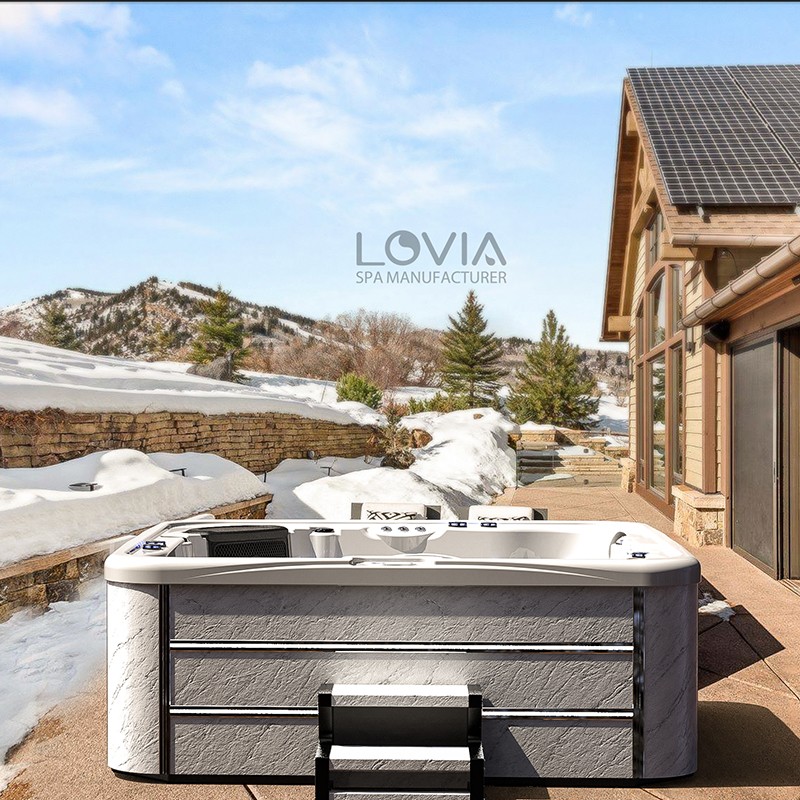
Why are acrylic spa hot tubs able to withstand low temperatures?
Acrylic material (PMMA) possesses the following physical properties that ensure its stability at low temperatures:
• Good toughness: Unlike ceramics or fiberglass, it is not brittle and is less prone to cracking at low temperatures.
• Controllable coefficient of thermal expansion: Temperature drops will not cause sudden structural changes in the acrylic spa hot tub.
• Highly dense outer layer: Effectively resists the penetration of cold air and moisture.
• Strong bond with the fiberglass underlayer: Reduces the risk of delamination due to temperature differences.
Therefore, acrylic spa hot tubs can still be used stably in normal winters or in areas with low temperatures, and will not break simply due to "cold exposure."
Will acrylic spa hot tubs become brittle when cold?
Many people worry that low temperatures will make acrylic brittle, thus affecting its durability.
So, will acrylic spa hot tubs become brittle when cold?
The answer is: No, under normal living temperature conditions.
Acrylic's low-temperature resistance generally reaches:
• Maintains basic structural stability between -20°C and -40°C
• Most home bathrooms, garages, and outdoor patios will not encounter extreme temperatures that would cause the material to crack.
If the temperature is only the common winter temperatures of -5°C, 0°C, or 5°C, this does not pose a threat to the acrylic spa hot tub.
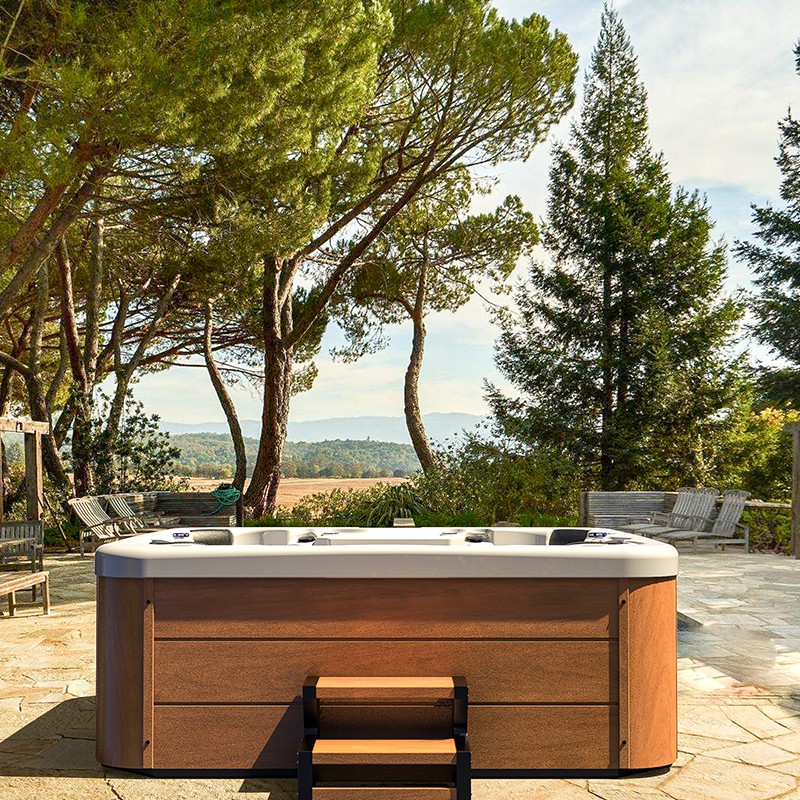
When will it "appear to harden"?
At low temperatures, the acrylic surface will become slightly harder (a normal physical phenomenon), but it will not lose its flexibility or crack, nor will it affect the bathtub structure.
Will an acrylic spa hot tub crack when cold?
The most common user concern is: "Will the acrylic spa hot tub crack due to the cold?"
Under normal circumstances:
No, because acrylic is flexible and will not develop structural cracks due to low temperatures.
However, the following "indirect factors," while not directly caused by temperature, are common contributing factors:
1. Large temperature differences leading to human error
For example, suddenly pouring hot water (e.g., 70–80°C) into an extremely cold environment can cause rapid expansion, resulting in changes in surface pressure.
It is recommended to avoid extreme temperature shocks; add warm water first and then gradually increase the temperature.
2. Water freezing in winter causing expansion pressure
If water accumulates in an outdoor or uninsulated acrylic spa hot tub, freezing will cause the ice to expand and compress the inner walls.
This is unrelated to the material; even stainless steel or fiberglass bathtubs can be damaged.
Therefore, when not using the tub in winter, ensure the following:
• Thoroughly drain
• Drain the pipes
• Empty any remaining water from the nozzles
3. Improper bottom support causing deformation in cold weather
While not "temperature-induced damage," low temperatures reduce the rate of thermal expansion and contraction of materials. Uneven support points can cause an imbalance in the tub's stress, leading to surface stress.
Proper installation can avoid all structural risks.
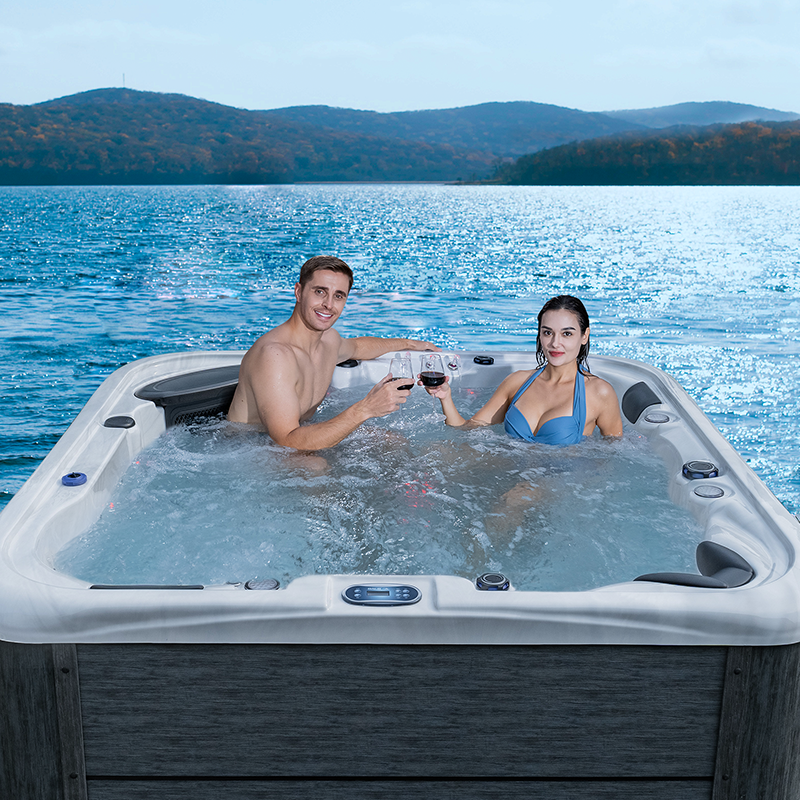
Will acrylic spa hot tubs deform in cold weather?
Many people believe that acrylic spa hot tubs are prone to deformation in cold environments, but the opposite is true:
• Acrylic is more prone to slight softening at high temperatures.
• Acrylic maintains its hardness and structural stability at low temperatures, and will not easily twist or collapse.
Therefore, acrylic spa hot tubs will not deform in cold weather.
The real causes of deformation are usually:
• Uneven installation base
• Uneven stress points
• Improper long-term load-bearing
• External impact damage
• Structural defects or non-standard manufacturing
Temperature is not the primary cause.
Will low temperatures affect the surface of acrylic spa hot tubs?
Low temperatures will not directly damage the acrylic surface, but may cause the following, which are within a controllable range:
1. The surface is more prone to "water stains"
When the bathtub is in a low-temperature environment, water vapor is more likely to condense on the surface, which may leave water stains after drying, requiring regular wiping.
2. Dryness Causes Surface to Dry Out
Acrylic surfaces are smooth polymer materials. Prolonged exposure to cold and dry environments may cause a slightly rough feel, but this does not affect the structure. Normal cleaning will restore its shine.
3. Water Temperature Drops Faster (Good Insulation Still Develops, but Environment Accelerates Heat Loss)
Acrylic has good insulation properties, but heat loss is faster in low temperatures. Therefore, in winter:
• The lid must be tightly closed.
• The water temperature will remain more stable.
• The heater load will be slightly higher, but this is normal and safe.
These are normal phenomena and not material damage.
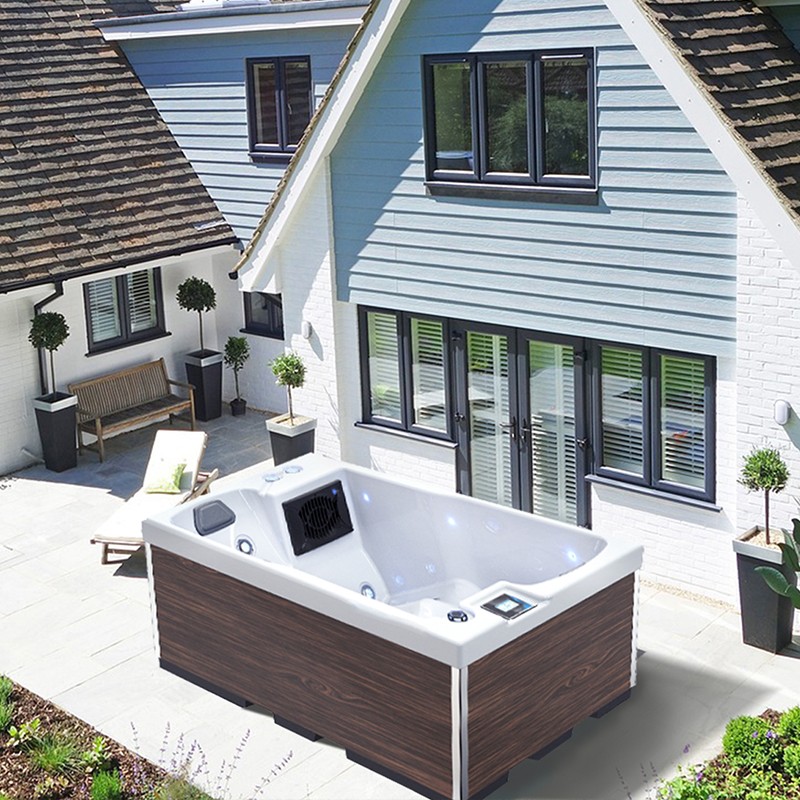
How to Use an Acrylic Spa Hot Tub Safely in Cold Environments?
To ensure optimal performance of the acrylic spa hot tub in winter or cold environments, refer to the following professional advice:
1. Use a complete insulated lid
This reduces heat loss and protects the surface from cold drafts.
2. Maintain Water Circulation
If the tub is used continuously, maintaining circulation mode will prevent the pipes from freezing.
3. Complete drainage is essential during winter shutdown
To prevent residual water from freezing and causing destructive expansion.
4. Avoid extreme temperature shocks
Avoid pouring hot water directly into a dry, cold environment.
5. Use professional cleaning agents, not strong acids or alkalis
Low temperatures do not damage acrylic, but improper use of cleaning agents is the main cause of surface damage.
6. Ensure a level and stable installation
Instable support is more likely to damage the tub than temperature.
Will cold temperatures affect the lifespan of an acrylic spa hot tub?
No.
Acrylic itself has a long lifespan and high stability; cold temperatures will not shorten its lifespan. Factors affecting lifespan mainly include:
• Whether the structural support is up to standard
• Whether the cleaning method is correct
• Whether the water chemistry is balanced
• Whether freezing pressure is avoided
• Whether impact or human-caused damage is avoided
With proper maintenance, an acrylic spa hot tub can last 10–20 years or even longer.
Low temperatures are not the cause of shortened lifespan.
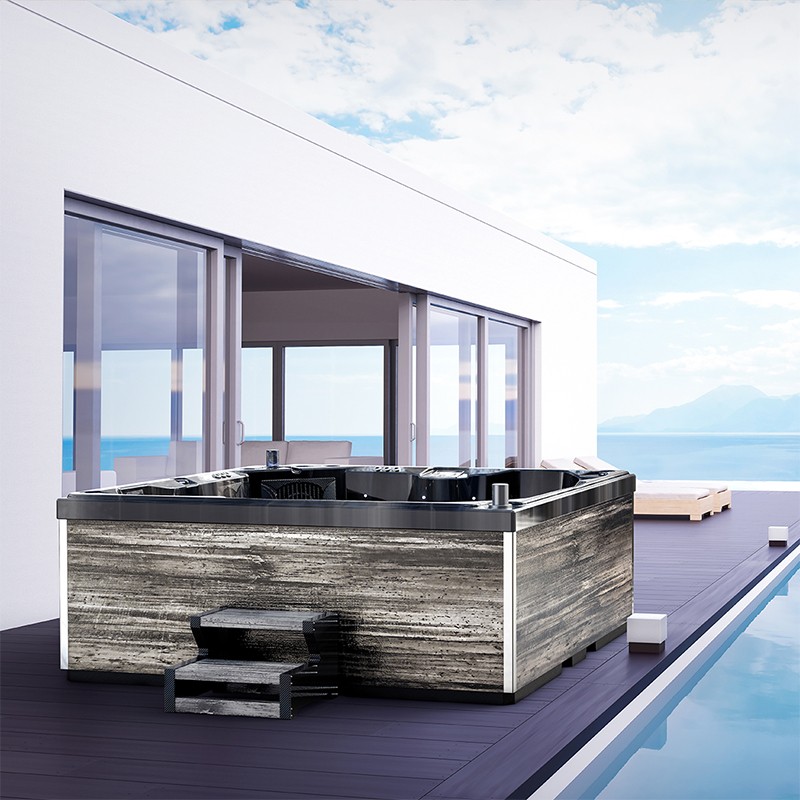
Acrylic Spa Hot Tubs Are Not a Concern in Cold Weather, Provided They Are Used Correctly
Acrylic spa hot tubs will not experience serious problems in cold weather and will not deform, crack, or be damaged due to low temperatures.
The material has good toughness, stability, and temperature resistance, making it perfectly suitable for use in ordinary homes, outdoors, or garages.
What you really need to pay attention to is not the temperature itself, but rather:
• Whether the water is drained when not in use during winter
• Whether the installation is done correctly
• Whether extreme temperature shocks are avoided
• Whether regular cleaning and maintenance are maintained
As long as these principles are followed, acrylic spa hot tubs will continue to operate stably in low-temperature environments, have a long lifespan, and maintain a bright appearance.